
Magic Item Generator 5e: Best D&D Tools for a 2026 Campaign
Magic item generator 5e guide: compare custom tools with random tables, then review rarity, curses, lore and rules for your homebrew campaign.
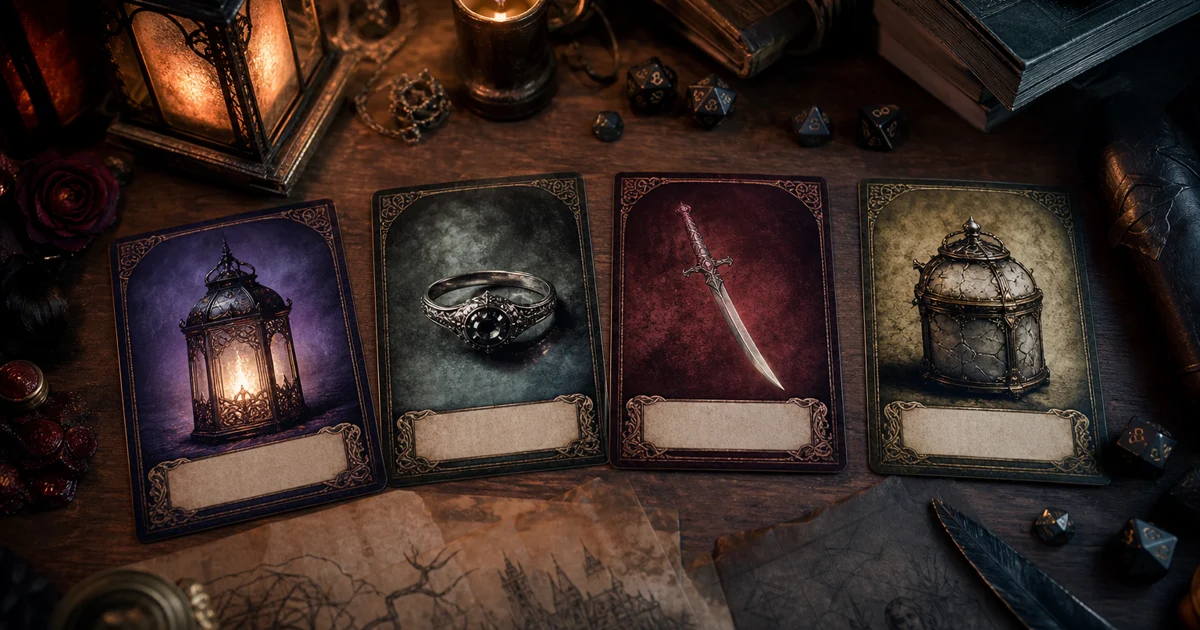
An ai magic item generator has to do a slightly dangerous job. For the search magic item generator 5e, I want more than a name and a damage bonus. It needs to make treasure exciting enough that players care, but not so strong that the next four encounters quietly collapse. I have handed out a sword that made a boss fight pointless, a cloak nobody remembered to use, and one cursed ring that caused more rules debate than the villain it came from. The ring was my fault. The villain is still sulking somewhere.
Magic items are getting extra attention in 2026, and horror D&D is back in the spotlight. Wizards released Ravenloft: The Horrors Within on 16 June. Its product page lists Darklords, Domains of Dread, supernatural curses, and Tarokka-based domain creation. That is exactly the sort of campaign where a plain +1 longsword feels anaemic. A haunted blade with a hidden debt, a reliquary that whispers in a saint's voice, or a lantern that burns memories instead of oil fits the mood much better.
CharGen's Magic Item Generator is my pick when I need that kind of item fast. It creates item names, rarity, category, attunement requirements, mechanical properties, charges, curses, quirks, lore, market value, tags, and artwork. More importantly, it sits beside the Loot Generator, NPC Generator, Dungeon Generator, and RPG Workshop, so the item can belong to a place, maker, monster, shop, or faction rather than floating into the campaign from nowhere.
Right, so this is my 2026 magic item tool list and workflow. I am not ranking tools by how much purple smoke they can add to a sword. I care about items that survive contact with players.
Why an ai magic item generator needs more than flavour text
The awkward truth about homebrew magic items is that players read them as permission. If the text says they can stun a creature once per round, they will try it on your final boss. If the curse says "the bearer hears whispers", at least one player will ask whether the whispers can give advantage on Investigation. If the item has a gold value, someone will try to sell it before the quest giver finishes breathing.
That is why a useful dnd magic item generator needs structure, not only prose. The official 2024 Basic Rules on D&D Beyond say every magic item has a rarity, and rarity is a rough measure of its power and value. The same rules also give crafting times and costs by rarity, including 5 days and 50 GP for a common item, 50 days and 2,000 GP for a rare item, and 250 days and 100,000 GP for a legendary one. Those numbers are a reminder: a magic item is not just a cool sentence. It has weight in the campaign economy.
The D&D Beyond guide to creating magic items with the 2024 Dungeon Master's Guide gives a sensible starting point: nail the item's pitch before writing mechanics. I agree with that completely. If the item cannot be explained in one sentence, it probably needs editing before it needs more effects.
Here is the checklist I use before any AI-created item reaches the table.
| Question | Why I ask it |
|---|---|
| What is the item type? | A weapon, armour, ring, potion, focus, or wondrous item carries different rules expectations. |
| What rarity is it? | Rarity sets the rough power ceiling and sale pressure. |
| Does it require attunement? | Attunement is one of the few clean limits D&D gives us. |
| What is the core effect? | One memorable effect beats four tiny bonuses nobody tracks. |
| What can go wrong? | Curses, charges, recharge limits, and costs keep the item interesting. |
| Who made it? | Creator, owner, or faction links stop it feeling random. |
| How will players discover the truth? | Hidden curses need fair clues, not gotcha wording. |
The curse question matters more than usual. The current D&D Beyond Basic Rules say most methods of identifying items, including the Identify spell, fail to reveal a curse, and attunement to a cursed item cannot be ended voluntarily until the curse is broken. That rule is fun, but it is also a loaded weapon. If I hide a curse with no clue, my players stop touching treasure. If I show the curse too early, the item becomes a museum label.
My rule is simple: hide the exact curse, but show the smell of trouble. Cold metal. A saint's name scratched out. A missing reflection. A previous owner who refuses to discuss it. Players should feel clever for being cautious, not punished for engaging.
Best AI magic item generators in 2026
Here is the short version for DMs who want a tool today.
| Tool | Best for | What I like | Main limit |
|---|---|---|---|
| CharGen Magic Item Generator | D&D and RPG items with lore, curses, artwork, and campaign links | structured item output, rarity, attunement, properties, hidden curse support, PDF/export paths, World Codex links | not a replacement for official sourcebook ownership or final DM balance checks |
| D&D Beyond Homebrew Magic Items | official sheet integration | best if your table lives on D&D Beyond and needs item entries on character sheets | slower for idea generation and visual handouts |
| Fables 5e Item Generator | quick free AI item drafts | clear 5e framing, simple describe-and-generate workflow | campaign linking and visual handoff are thinner |
| Kassoon Magic Item Generator | instant random D&D item sparks | fast, free, includes curses and origin flavour | output can need heavy tuning before play |
| Anima Magic Item Generator | one-click item concepts | tidy category, rarity, school, and mechanical effect framing | lighter on table workflow and campaign memory |
| I Loot the Body | old-school random item flavour | useful knobs for curses and extra options | not as polished for AI art or modern campaign handoff |
| ChatGPT or Claude | custom rules brainstorming | flexible, excellent for revisions and variants | easy to overbuild, needs stricter human review |
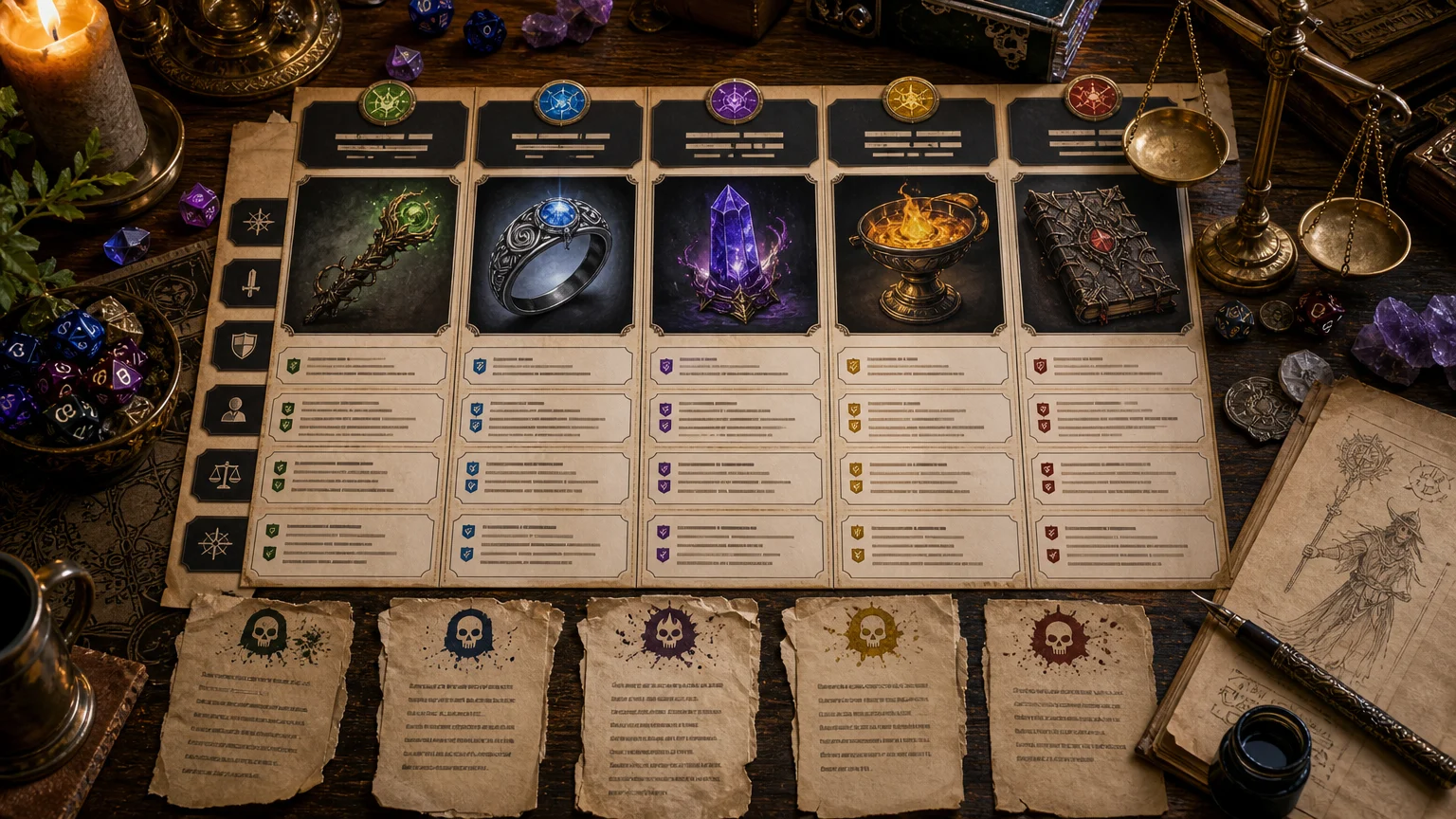
My practical recommendation is this: use D&D Beyond when the item must live inside an official character sheet, use Kassoon or Anima when you need a quick spark, and use CharGen when you want the item to become a campaign object with art, lore, rules text, export, and links to other prep.
That last point is the difference between a magic item and a campaign asset. A named item can belong to a dungeon, be forged by an NPC, sit in a shop inventory, appear in a loot hoard, become a quest reward, and later show up in a session recap. If your tool treats the item as a single loose paragraph, you have to glue all of that together yourself.
Where CharGen fits best
CharGen's Free Fantasy RPG Magic Item Generator starts with the empty state Your Magic Item Awaits. The page says it will generate properties, lore, curses, and mechanical effects for your campaign, which is the right promise. The main call to action is Generate a Magic Item.
The actual generator request supports the fields I want to see: Quick Prompt, Game System, Power Tier, Item Category, Curse Level, Theme, Attunement, Party Level, and extra description. The output then returns the item name, game system, category, subtype, rarity, power tier, attunement requirement, description, properties, charges, curse details, lore, history, creator, quirks, sentience, art style, market value, weight, and tags.
That sounds like a lot. In use, it means I can give the generator a specific job instead of begging it to be clever.
Not every item needs the full treatment. When I just want a portrait for a handout or a shop sign and do not need rarity, attunement, or curse text, I use CharGen's Item Art Generator instead. It uses the same art models and has no mechanics fields to fill in.
Here is a prompt I would actually use for a Ravenloft-adjacent session:
D&D 5E rare cursed lantern, carried by a priest who mapped a drowned village, helps reveal ghosts but consumes one pleasant memory each dawn, suitable for level 6 characters.
That prompt gives system, rarity, item type, owner, power, curse, tone, and party level. It is much better than make a scary magic lantern, which is how you get three paragraphs of mist and no useful rule.
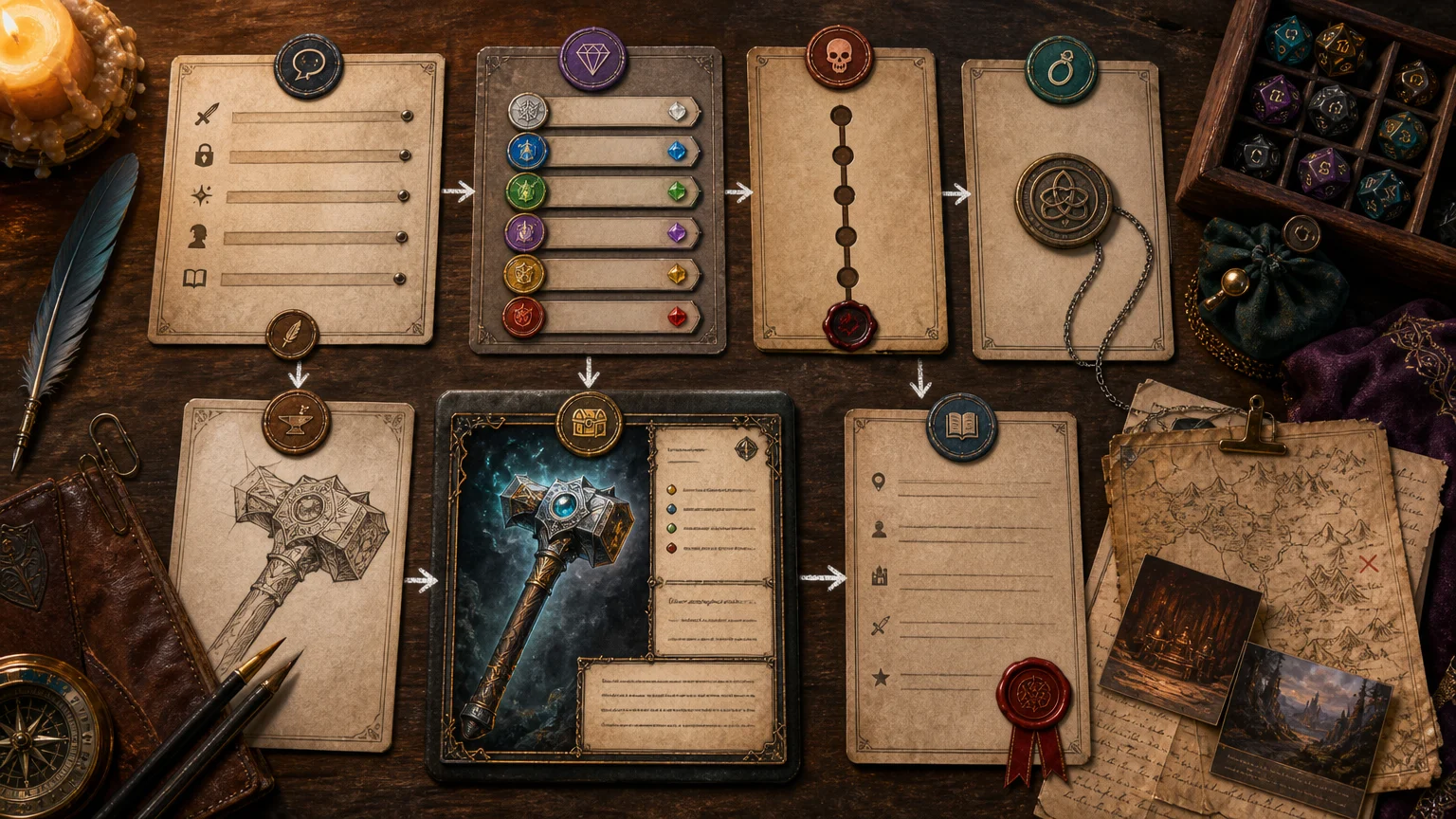
The generated item view is also built for editing. The ArcaneTome view shows rarity styling, item art, category icon, power tier, weight, system, properties, quirks, tags, curse content, and sentience when present. The toolbar includes sharing, and premium users can edit generated fields. That matters because AI gets you close, not finished. I want to rename effects, tighten wording, and cut anything I would not want argued about mid-combat.
I also like the linked item flow. CharGen has a LinkedMagicItemSection that lets rewards from quests, dungeons, monsters, and similar entities become full Magic Item entities. In plain English, if a puzzle reward is called The Bell Key, I can promote it into a proper item dossier instead of leaving it as a bullet point. The generator prompt keeps the source context, so the item knows it came from that dungeon or quest.
That is the sort of connection I want from a homebrew magic item generator ai workflow. The item should remember where it came from.
Magic item generator 5e in 2026: random table or custom item?
A random table and a custom magic item generator solve different jobs. The 2024 Basic Rules let the Dungeon Master choose an item's rarity. A DM can also roll on a rarity table based on the party's level. That table helps answer one question: how rare should this reward be? It does not build a complete item, explain a curse, or attach a maker to the story. The rules call rarity a rough measure of power and value. I treat that as guidance, not a balance guarantee. Read the 2024 Magic Items rules before you use a rarity table for a homebrew reward.
| Table need | Better starting point | Why |
|---|---|---|
| Routine treasure after a short encounter | Random rarity table | It is quick and keeps the reward inside a known rarity range. |
| A relic tied to a named NPC or location | Magic item generator | It can draft an item with a name, origin, properties, curse, and appearance. |
| A powerful effect that could change every fight | Your own rules review | A tool can draft text, but you must judge its timing, limits, and effect on the party. |
Use a random table when the item is a small part of the scene. Use a generator when the item should point towards another person, place, or choice. The two methods can work together. I can roll for rarity, then ask a generator for three item concepts that fit that rarity and the campaign.
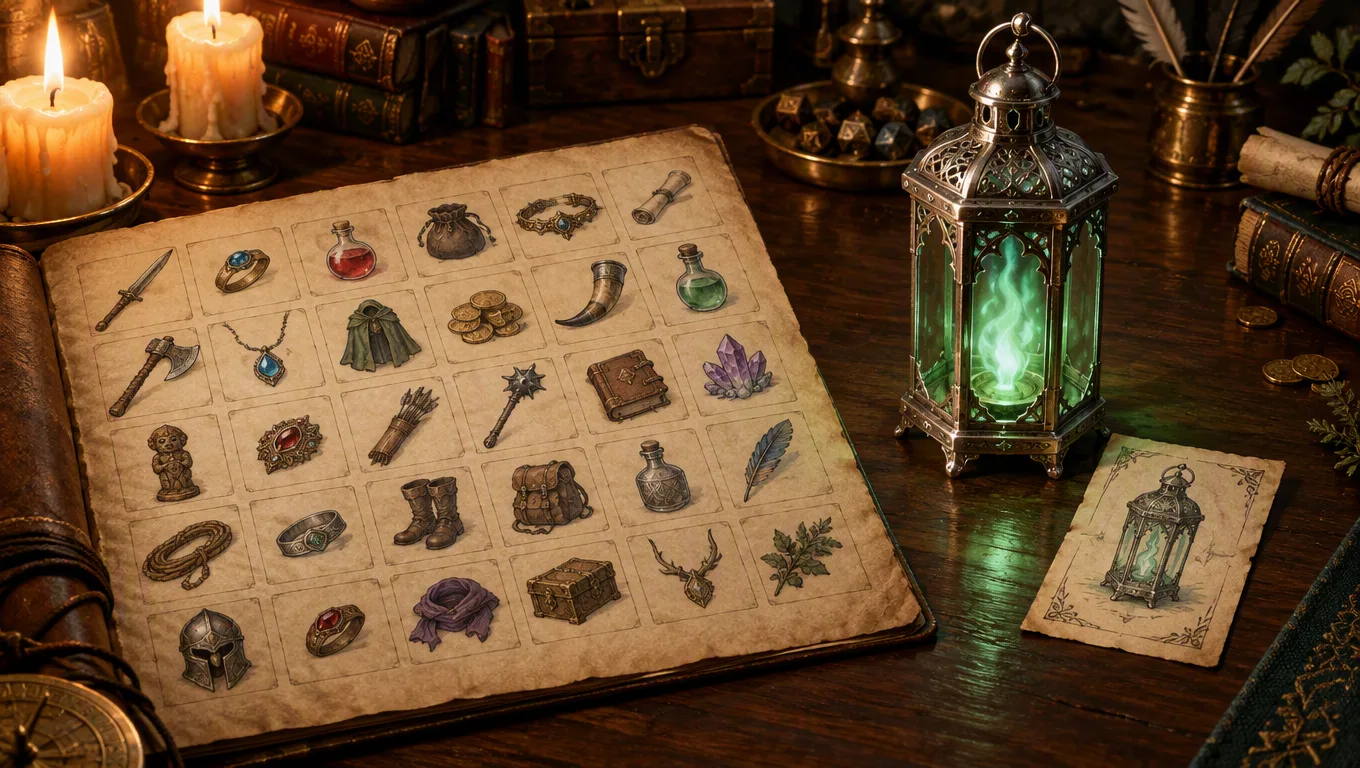
CharGen's Magic Item Generator is free to start. It can draft item properties, rarity, attunement, curse details, and lore. Text generation is free, while image generation uses Gold. The exact image cost appears before you create. The current generator page lists item editing and PDF export. Check the CharGen pricing page for current plan details.
A dnd cursed item generator can draft a drawback, but I still decide whether the clue is fair. Consider a rare brass lantern that reveals invisible spirits within 30 feet once per long rest. Its curse leaves wet footprints along the bearer's route for one hour. Salt gathers around the handle before attunement, and an old mapmaker can explain how to break the curse. The players see a warning, gain a useful clue, and can choose whether the lantern is worth the risk.
Prompt draft: D&D 5e rare cursed brass lantern. Once per long rest, reveal invisible spirits within 30 feet. Its curse leaves wet footprints along the bearer's route for one hour. Show salt around the handle before attunement and include a clear way to end the curse.
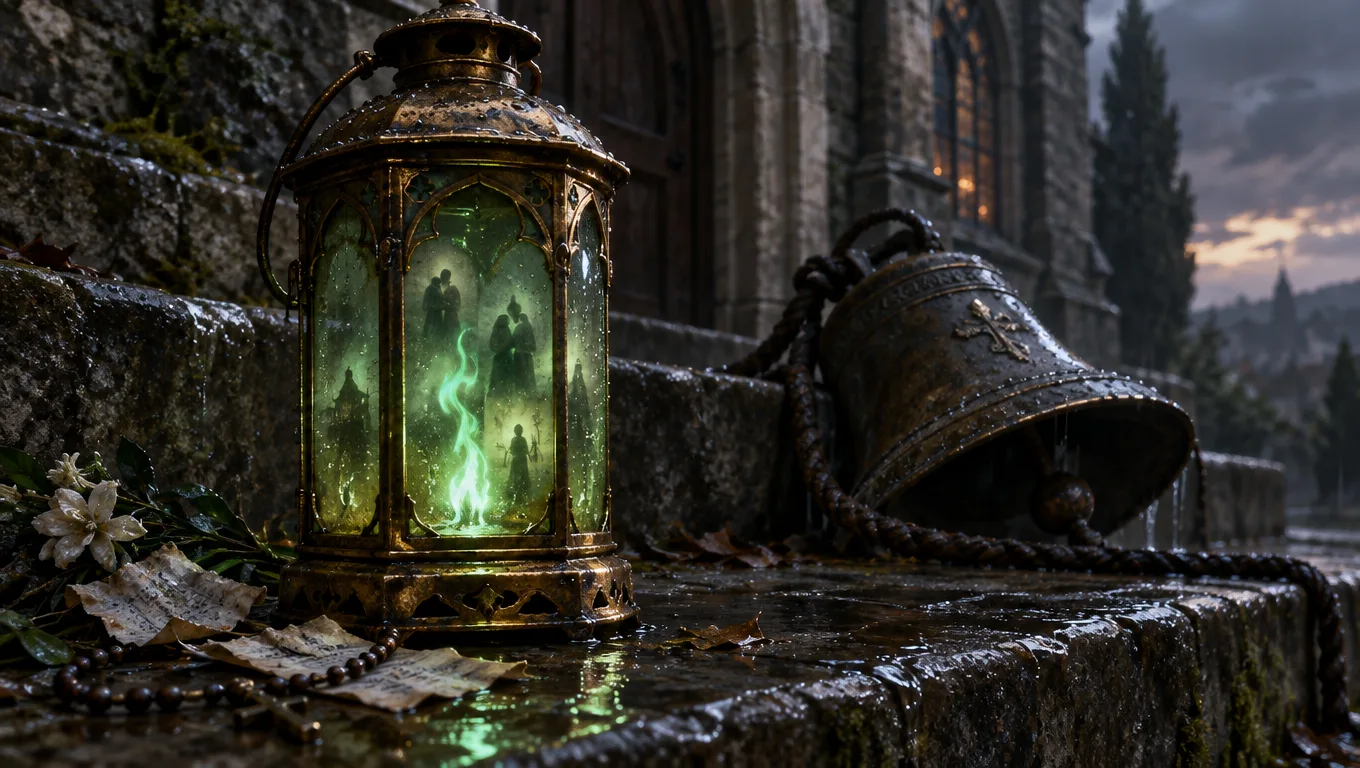
Treat that result as a starting point. Check its range, action cost, duration, and the number of times it can be used. Keep the story hook if it works. Rewrite any effect that is hard to track or stronger than the item should be.
My magic item workflow for DMs
I use a four-pass workflow. It is quick, but it keeps the item from becoming either boring or broken.
| Pass | What I do | Example |
|---|---|---|
| pitch | write the item in one sentence | A silver nail that pins a ghost to one room for ten minutes. |
| rules | set rarity, attunement, charges, and action cost | uncommon, no attunement, 3 charges, action to use |
| story | attach maker, owner, place, or faction | made by the undertakers of Bellmire |
| player text | rewrite the final card for clarity | short description, effect, recharge, warning clue |
For CharGen, I start in Quick Prompt, then choose the system and rough power. I do not start with legendary items unless the campaign is already in that tier. A weak common item can still be fantastic if it creates decisions.
Three examples:
| Campaign need | Prompt seed | Why it works |
|---|---|---|
| low-level haunted manor | common silver hand mirror that briefly shows the last person who lied in this room | useful clue tool, not a combat nuke |
| mid-level swamp horror | rare cursed spear made from drowned cypress, deals extra damage to undead but makes the bearer hear funeral bells | clear benefit, clear mood, manageable curse |
| high-level faction reward | very rare sentient mask of the Moon Court, grants courtly influence and illusion magic, wants its wearer to restore an exiled archfey | power, personality, political hook |
After generation, I edit in this order.
| Edit | What I cut or fix |
|---|---|
| duplicate effects | if two properties do the same job, one goes |
| vague timing | add action, bonus action, reaction, short rest, long rest, dawn, or charge language |
| unclear targets | specify creature, object, wearer, wielder, area, range, and save DC |
| free repeatable control | limit stun, charm, banish, flight, invisibility, and teleportation effects |
| curse fairness | add foreshadowing and a path to break, soothe, or bargain with the curse |
This is where AI helps most. It gives me ten possible bones, and I keep the best two. I rarely accept the first draft unchanged.
How to balance AI-generated magic items
The fastest way to break a campaign is to stack several small bonuses and pretend each one is harmless. A weapon that gives +1 to hit, extra fire damage, advantage in darkness, a bonus reaction, and free Misty Step is not a rare sword with flavour. It is a class feature wearing a handle.
I use these tests.
| Test | What I look for |
|---|---|
| spotlight test | Does this item make one player solve every scene? |
| boss test | Does this trivialise legendary resistance, flight, stealth, or concentration? |
| repeat test | Can it be used every round with no cost? |
| stack test | Does it combine too well with a class feature, feat, or spell? |
| memory test | Will the player remember it without rereading five paragraphs? |
The memory test sounds soft, but it is important. Players remember items with one strong identity. The drowned lantern reveals ghosts but burns memories is sticky. Lantern of spectral perception with conditional divination bonus and aura interaction is homework.
I also write a player-facing version and a DM-only version for cursed items.
| Version | Contents |
|---|---|
| player-facing | name, appearance, identified benefit, attunement, charges, obvious warnings |
| DM-only | hidden curse, reveal condition, escalation, removal path, NPC or faction consequences |
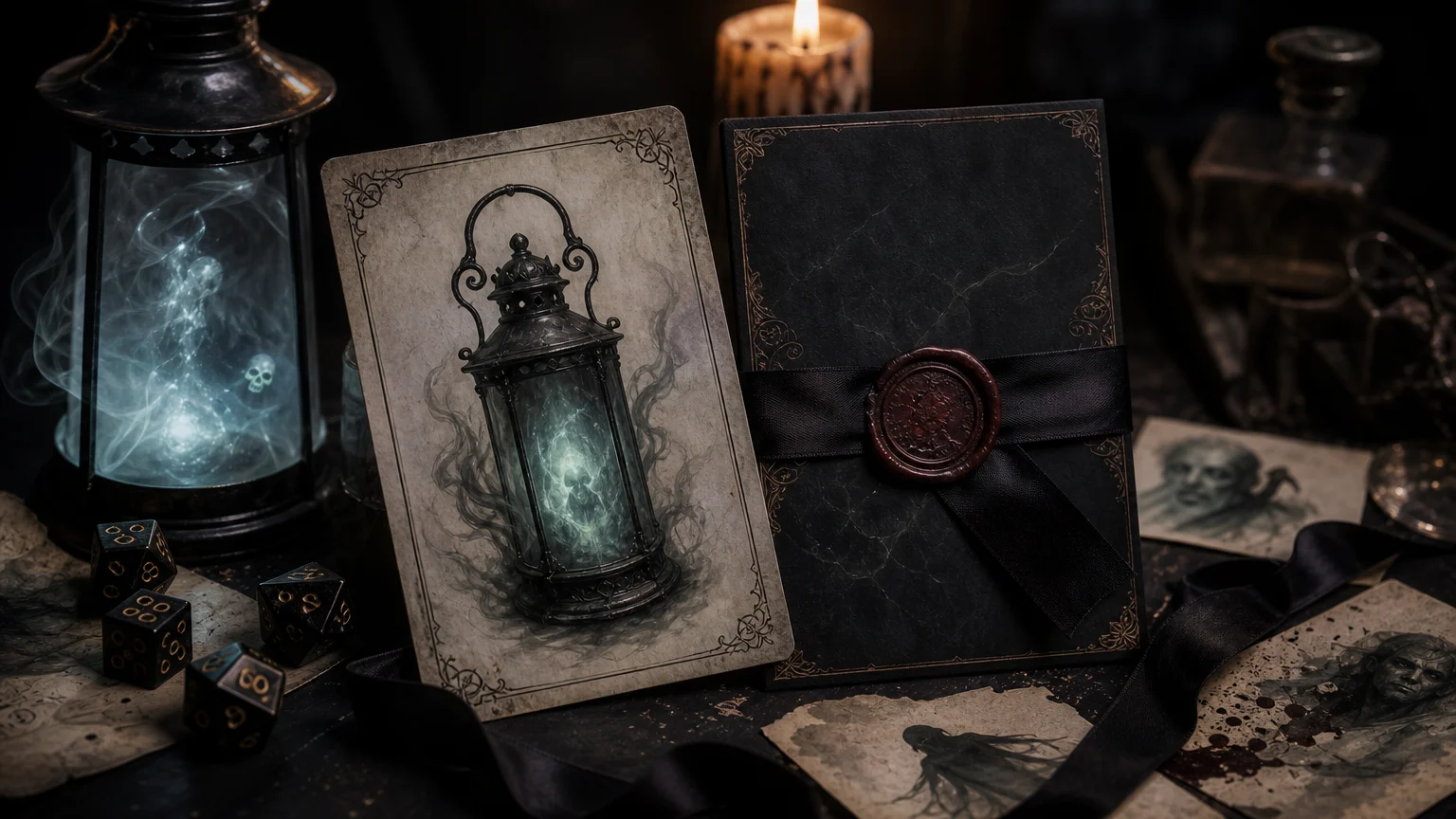
Here is a concrete cursed item I would run.
| Field | Table note |
|---|---|
| name | Lantern of the Last Door |
| rarity | rare |
| attunement | yes |
| benefit | While lit, the lantern reveals invisible undead and spirit traces within 30 feet. Once per long rest, the bearer can ask one spirit a question it can answer with a memory. |
| visible warning | The flame smells of wet paper, and the glass is etched with names that vanish when read aloud. |
| hidden curse | Each dawn after using the question effect, the bearer loses one pleasant sensory memory until the curse is lifted. |
| removal path | Return a stolen funeral bell to the drowned chapel or receive Remove Curse from someone who knows the bearer by their true name. |
That item has a job. It helps in horror investigation, gives the player a tempting button, and creates a consequence that points towards a quest instead of simply making the character miserable.
Using magic items with loot, shops, dungeons, and NPCs
The best items usually arrive with context. If a magic item comes from a dragon's hoard, a dead knight, or a forbidden shop, the source should affect the item.
CharGen helps because the Magic Item Generator is not isolated. I can use the Loot Generator to create a treasure hoard, then promote the interesting item into a full magic item. I can use the Shop Generator to stock a magic dealer, then give one item a suspicious history. I can use the Dungeon Generator to place an artefact in a locked shrine, then use the Monster Generator to create the thing guarding it.
For a Ravenloft-style session, I might build it like this:
| Prep step | CharGen tool | Output |
|---|---|---|
| build the place | Dungeon Generator | drowned chapel beneath a collapsing bridge |
| create the guardian | Monster Generator | bell-wrapped revenant with silence aura |
| create the reward | Magic Item Generator | Lantern of the Last Door |
| add the local witness | NPC Generator | grave digger who knows the old priest's name |
| preserve the outcome | RPG Session Notes | recap notes showing who attuned, what memory vanished, and where the bell is |
That last step is easy to overlook. Magic items change campaigns. If a player attunes to a cursed lantern, sells it to a shopkeeper, or gives it to an NPC, the recap should remember that. CharGen's RPG Session Notes is useful here because it can preserve item state, ownership changes, and consequences after play.
Prompt recipes for better magic items
A good magic item prompt is not long. It is specific. I try to include six parts.
| Prompt part | Example |
|---|---|
| system | D&D 5E, Pathfinder 2E, OSR, system-neutral fantasy |
| rarity or tier | common, uncommon, rare, very rare, legendary |
| item category | weapon, armour, ring, potion, wand, wondrous item, focus |
| campaign role | clue tool, reward, temptation, shop stock, villain relic |
| limit | charges, attunement, once per rest, drawback, cost |
| story source | creator, faction, location, monster, previous owner |
Use that shape and the generator has fewer chances to wander off.
Here are prompt recipes I would keep in a DM notes file.
| Need | Prompt |
|---|---|
| player backstory reward | D&D 5E uncommon ring for a tiefling paladin, tied to a broken oath, grants one protective reaction per long rest, no damage boost, warm silver and cracked ruby design. |
| cursed horror prop | D&D 5E rare cursed doll from a Ravenloft manor, helps locate missing children, reveals its curse through dreams, suitable for level 5 characters. |
| shop stock | System-neutral common magical trinket sold in a dockside magic shop, useful but not combat-focused, priceable, odd smell of salt and candle wax. |
| boss trophy | D&D 5E very rare axe made from a frost giant's funeral stone, grants cold resistance and one thunder strike, requires attunement by a martial character. |
| puzzle reward | Pathfinder 2E moderate relic key from a clockwork shrine, opens one sealed door per day, grows warm near false walls, no direct damage effect. |
I avoid prompts like make it balanced. That is too vague. Say what balance means: no repeatable stun, no permanent flight, no bonus above the tier, one charge per dawn, useful outside combat, or no direct damage.
Common mistakes with AI magic items
I see the same problems again and again.
| Mistake | Better move |
|---|---|
| too many powers | keep one main effect and one small quirk |
| no action cost | state how the item is activated |
| curse as punishment only | make the curse create choices, clues, or a quest |
| lore too long | keep the origin to one useful paragraph |
| no owner history | name a maker, previous owner, faction, or place |
| no table wording | rewrite the final text so a player can use it during a turn |
The easiest fix is to ask, "What does the player do with this on their next turn or next scene?" If you cannot answer, the item is probably decoration. Decoration is fine for a handout, but do not spend attunement on it.
I also keep market value loose unless the campaign is about trade. The 2024 rules give values by rarity, but actual magic item economies vary wildly by table. A cursed ring in Barovia is not the same market object as a clean ring in Waterdeep. Sometimes the price is coin. Sometimes it is a favour, a confession, or returning the item to a grave.
August 2026 update: make the item readable twice
The most useful change I have made to my magic-item prep is treating the item card and the table record as two different things. One is for the player who has just found a strange blade and wants to know what it does before their next turn. The other is for me, because I need to remember the charge count, the curse trigger, the previous owner, and what changes when it moves to a new character sheet.
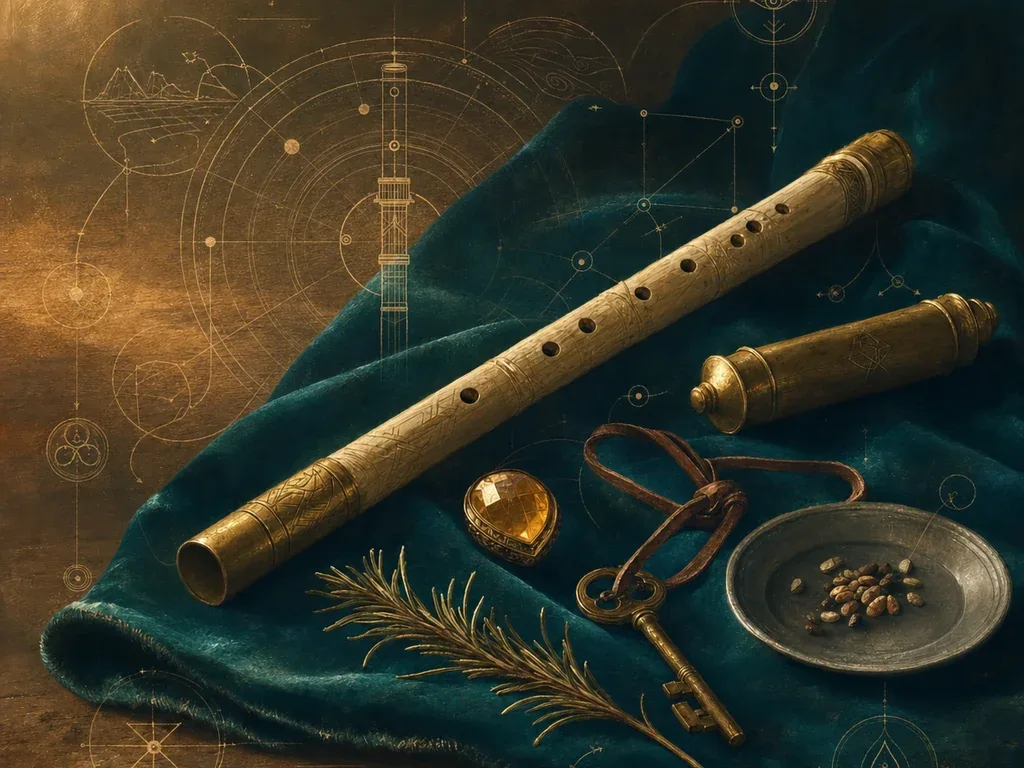
I now make a player handout with only the name, visible appearance, identified effect, action or activation wording, and one warning clue. For the Lantern of the Last Door, that means the party sees wet-paper smoke, can read that it reveals undead, and notices names disappearing from the glass. They do not see the memory loss, the removal route, or my note about the drowned chapel. That separation keeps a handout evocative without turning it into a spoiler document.
The second record is plain DM bookkeeping. In CharGen, I keep the item linked to its source and record the owner and current state in the item entry. If your table uses Foundry, create or update an Item in its Items Directory, then give it to an actor when the character takes possession. Foundry treats that as an owned copy, so a later edit to the library version will not silently change the player’s one. The official Foundry item guide explains the distinction and the directory workflow.
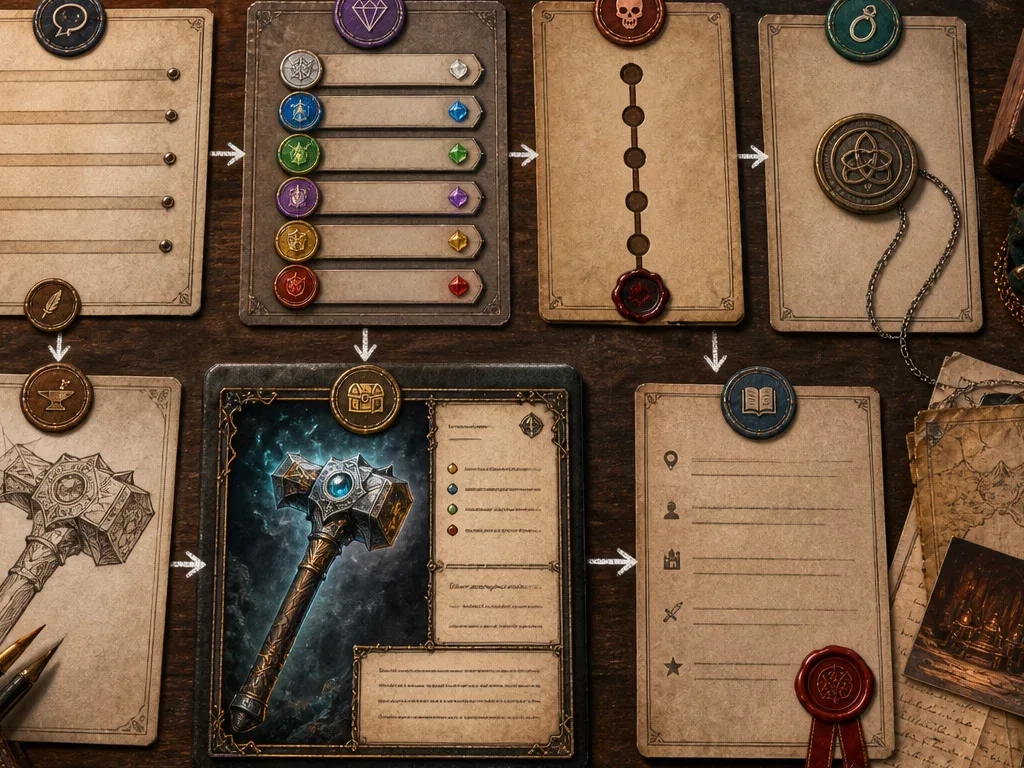
For a visual handoff, I use the magic-item artwork as the item-sheet image or a journal illustration. If I want a few extra angles or variants of the same object, such as a weapon, armour, potion, or artefact, without regenerating the whole item, CharGen's Item Art Generator covers that on its own, transparent-background and token-ready. I only make a token when the object itself needs a position on the map, such as a trapped idol, a dropped staff, or a relic the party must carry across a flooded room. CharGen's Token Maker is handy for that edge case because it exports a transparent 1024px PNG without an account. Roll20 accepts PNGs with transparency and lets you place them on the Objects and Tokens layer, then size them against the grid. Its current image-import guide is worth checking before a large batch upload.
Here is the small checklist I now use before a session:
| Check | Player handout | DM or VTT record |
|---|---|---|
| Identity | name and visible description | maker, former owner, source location |
| Rules | identified effect and activation | charges, recharge, save DC, hidden conditions |
| Risk | a fair warning clue | curse trigger, escalation, removal route |
| Visual | item art or a simple card | item-sheet image, journal entry, or map token if needed |
| Ownership | who has it now | date gained, attunement, sale or transfer note |
It is a modest extra minute of prep, but it prevents the classic post-session message: “Who has the lantern, and did it take a memory this morning?” More importantly, it means the magic item remains a piece of the campaign rather than a paragraph buried in last month’s notes.
FAQ
What is the best ai magic item generator for D&D?
For a full D&D prep workflow, I would start with CharGen because it creates item rules, lore, curses, artwork, and campaign links in one place. D&D Beyond is better when the item must live directly on an official character sheet.
Can AI make balanced D&D magic items?
AI can draft useful items, but the DM should still review rarity, attunement, action cost, charges, save DCs, repeatable control effects, and class combinations. Treat the first draft as a strong starting point, not table law.
How do I make cursed items fair?
Give the players warning signs before attunement, hide the exact curse until it matters, and provide a route to break or manage it. A curse should create play, not train players to ignore all treasure.
What should a D&D magic item include?
At minimum, include name, category, rarity, attunement, description, mechanical effect, activation timing, charges or recharge if needed, lore, and any curse or drawback. For campaign use, add creator, previous owner, location, and item art.
Should I use a random table or a magic item generator?
Use a random rarity table to fill routine treasure quickly. Use a generator when the item's history, curse, or campaign link matters. Review every homebrew effect before play.
Can a 5e magic item generator handle rarity and attunement?
CharGen can draft rarity and attunement details. The 2024 rules describe rarity as a rough measure of power and value, so review the full effect, activation, and limits before play.
Is CharGen's Magic Item Generator free?
CharGen's Magic Item Generator is free to start. Free users can generate and view text items without Gold. Image generation costs Gold, with the exact price shown before you create. A paid plan adds editing, and the current generator page lists PDF export and richer item options.
Generate a Magic Item FreeMy final recommendation
Use a magic item generator for speed, then use your DM judgment for restraint. CharGen is the best fit when the item needs to be more than a paragraph: rules text, curse, lore, artwork, source, export, and a place in the campaign. D&D Beyond is the safer home for official sheet integration. Quick random tools are great for sparks.
Before you hand the item over, read it once as the player who wants to squeeze every possible advantage from it. Then read it once as the DM who has to run the next six sessions with it in play. If it still sounds fun, give it a name worth remembering and put it on the table.
Image credits
Images in this post were generated with WaveSpeed GPT Image 2 at medium quality, then cropped, resized, and converted to WebP for web use.