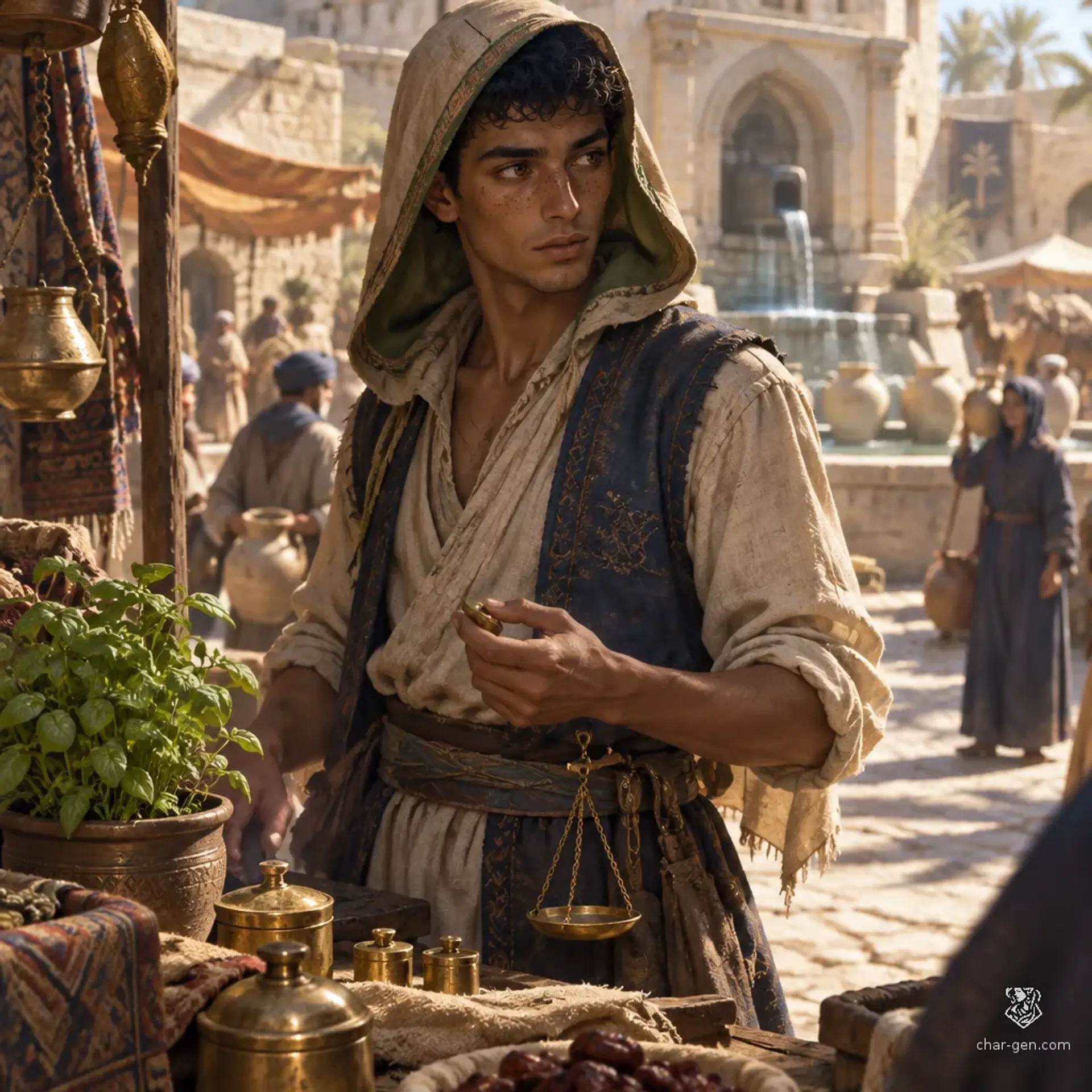
Salo
Salo
At the table
“That is possible”
Voice
Dry and rasped by decades of calling over saws and rushing water, with a firm, unvarnished cadence. He projects when giving safety instructions, but uses a soft, amused chuckle when a child shows him a broken toy.
His voice has a dry, grainy edge, like a plane scraping across old wood. Years of shouting instructions over saws and floodwater left him with a practical, carrying delivery. He speaks in compact clauses, pauses to choose exact nouns, and sounds most animated when describing how something might be repaired.
Speech patterns
How to play them
Treat him as a useful but fallible civilian expert. He responds best to specific questions, visible evidence, and people who admit uncertainty. If pressed for approval, he asks what could go wrong and who bears the cost. He will help even with people he dislikes, but does not pretend to trust them.
Goal
Persuade the council to delay opening the new floodgates until workers can reach and clear their mechanisms safely.
Motivation
To make it ordinary, not heroic, for people to plan around mistakes and maintain the things they build.
Appearance
Salo is a compact, stooped old man with a weathered face, deep creases around a watchful mouth, and a crown of wiry white hair that sticks up as if surprised by every room he enters. His skin is the warm brown of old walnut, stippled with age spots. His hands are broad and blunt, their nails permanently darkened by graphite and machine grease. He walks with a measured hitch, testing each floorboard with his stick before trusting it. A battered brass caliper hangs from his neck on cord; one jaw is polished nearly smooth from years of his thumb worrying it. He smells distinctly of lamp oil, peppermints, and damp wool, a combination he insists is just the smell of honest work. People tend to remember that he looks less like a sage than a carpenter who has outlived three workshops and is expecting the fourth to collapse.
Clothing
A patched brown wool coat with deep tool pockets, a mustard scarf, a leather apron rolled and tied at the waist, thick trousers, and boots repaired with mismatched soles. He wears no ornament except his caliper and a small wooden toy cart on a cord beneath his shirt.
Body language
He leans toward whoever is speaking, as if listening for the hidden rattle in their words. Before sitting, he taps the chair with his stick. When he is pleased, he rubs the worn jaw of his caliper; when he is angry, he plants both hands on the table and starts naming practical consequences.
- Height
- 5 feet 4 inches
- Build
- Short, stooped, and sturdy through the shoulders, with the compact strength of a lifelong handworker.
- Eyes
- Dark hazel
- Hair
- Wiry white
- Skin
- Warm walnut brown, weathered and stippled with age spots
- Age
- Eighty-one
- Gender
- Male
- Size
- Medium
Distinguishing features
Personality
12 traits and drivesSalo distrusts grand assurances but is deeply moved by people who try to do difficult things well. He can be dry and stubborn in a council chamber, then warm and playful with children at his workbench. He dislikes being called wise, yet quietly enjoys being asked for advice. His practical care often comes out as criticism, and he knows this but struggles to change it.
- Alignment
- Neutral good
Quirks
Habits
Traits · 3
Flaws · 3
Fears · 3
Wants and needs · 3
Combat
AC 12 · HP 22 · 25 ft.Salo avoids a fair fight. He warns allies about visible hazards, retreats toward cover, and uses his stick only to buy time. He will not knowingly endanger bystanders to gain an advantage. His statistics represent an exceptionally experienced civilian, not a level 20 warrior.
Salo
Actions
Reactions
Services they sell
Rewards they can give
Equipment
- Walking stick (melee weapon)Stout, plain, and capped with a brass ferrule; doubles as a walking aid and a last-resort weapon.
- Contingency satchel (tools)A leather satchel of chalk, string, wedges, wax, a folding ruler, and small repair tools.
- Brass caliper (personal object)A scratched brass instrument with one jaw polished almost smooth by years of handling.
- Toy cart (keepsake)A little wooden cart carried beneath his shirt, made by his brother before the flood.
Possessions
Background
Salo was born to a family of bridgewrights and learned early that a good design is only as sound as the least careful person who builds it. As a young inspector, he was precise, proud, and convinced that enough rules could make catastrophe impossible. Then, during the spring flood at the old Kelm Ford, he signed off on a sluice gate after testing it in dry weather. A worker's child had wedged a toy cart into its channel; the gate jammed, the river burst through, and Salo's younger brother Tamas died helping evacuate the lower street. Salo spent the next year rebuilding the gate and listening to the survivors describe the little things everyone had dismissed. He changed from a man who sought perfect plans into one who sought honest plans with room for failure. In his later years he became an adviser to masons, caravan masters, and city officials, famous for the phrase, “If it can go wrong, it will, unless we make it hard to.” The shortened saying, Murphy's Law, appeared in a popular soldiers' pamphlet and stuck, though Salo never claimed it as a law of nature. He still sends money to his sister's grandson, Jori, who runs a repair shop and resents being treated like a child. Salo is currently trying to stop the council from opening a floodgate system built with beautiful plans and no maintenance access.
Role in the story
A memorable civilian adviser whose famous principle is often mistaken for cynicism. He can expose overlooked risks in a quest, offer a grounded perspective on plans, or force characters to confront the human cost of their shortcuts.
“As a young inspector, he was precise, proud, and convinced that enough rules could make catastrophe impossible.”
- Faction
- Independent adviser to the Kelm Ford town council; no formal membership.
Known connections
Media
0 imagesNo images yet.
Turn Salo into a sheet
A high-res, share-ready sheet you can post or print.