Mary Bell
Mary Bell
At the table
Voice
Mary's voice is plain and responsive, shaped by household work: she calls across rooms, speaks over children, and tries to keep her words useful. When tired, the edges rasp. When she is worried, she speaks faster and gives instructions. Kent's voice is a young man's, distinct from Mary's, with careful enunciation and a formal restraint that suggests someone trying not to appear out of place.
Mary's voice is a little roughened by smoke, fatigue, and calling children from room to room. She speaks quickly when listing chores and pauses before answering personal questions. Her laugh is sudden and often followed by an embarrassed attempt to get back to work. Kent's voice comes from a different body and has a clearer, more contained delivery; he tends toward careful, proper phrasing and sounds uncomfortable when forced into a rough or overfamiliar exchange.
Speech patterns
How to play them
Approach Mary through a concrete offer of help rather than demands for disclosure. Respect her responsibility toward the children. If she appears as Kent, do not insist that he is Mary or force him to explain what is happening; give him privacy and a plausible way to leave. The heart's history can be uncovered through patient questions about William Windon, Abraham Groff, and Hush House.
Goal
Keep her siblings safe, learn what the heart is doing, and find a way to have a life that belongs to her without abandoning the children.
Motivation
Mary wants her siblings to have a childhood with more safety and choice than she had. Beneath that duty, she wants to explore, make friends, and be more than the person who keeps the household functioning.
Appearance
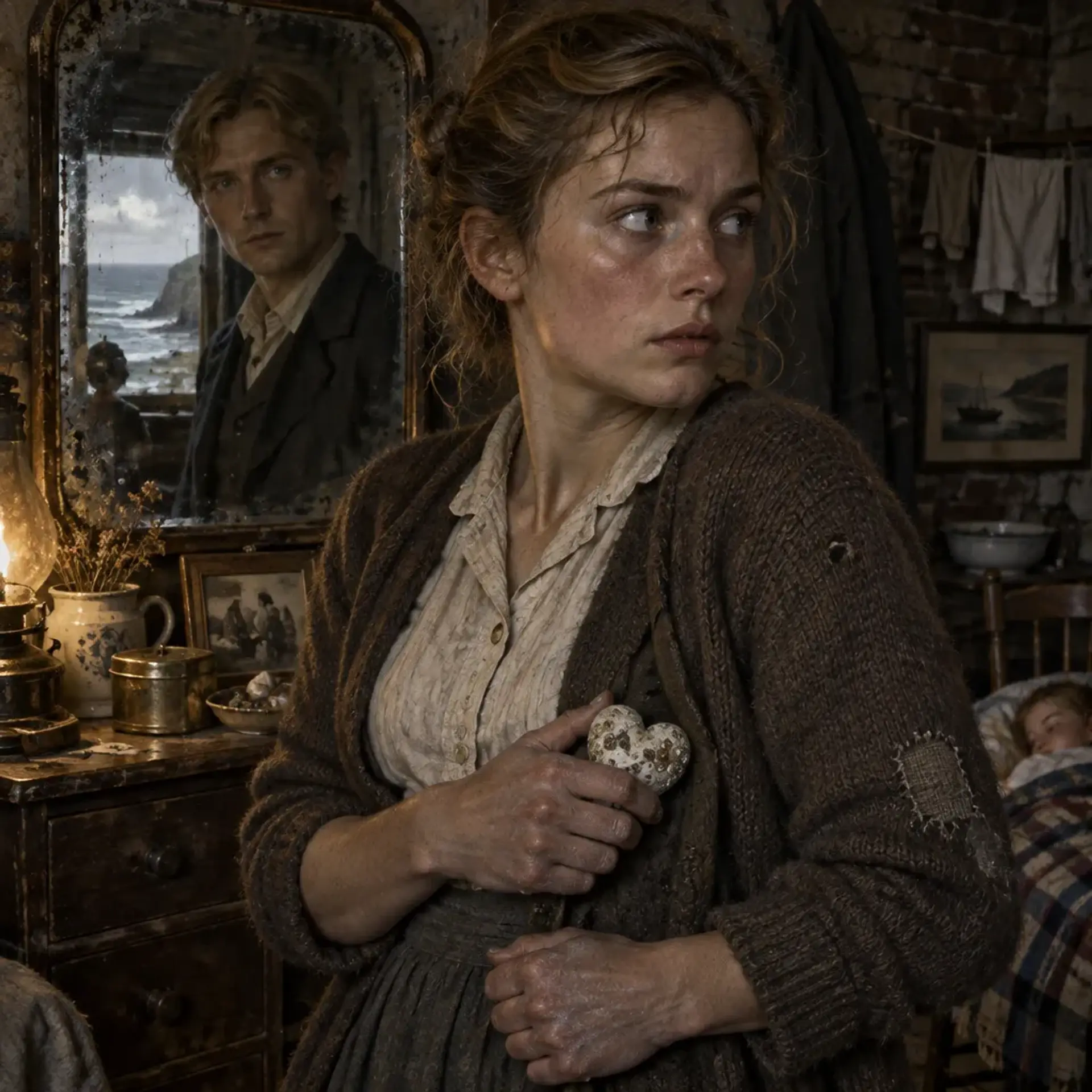
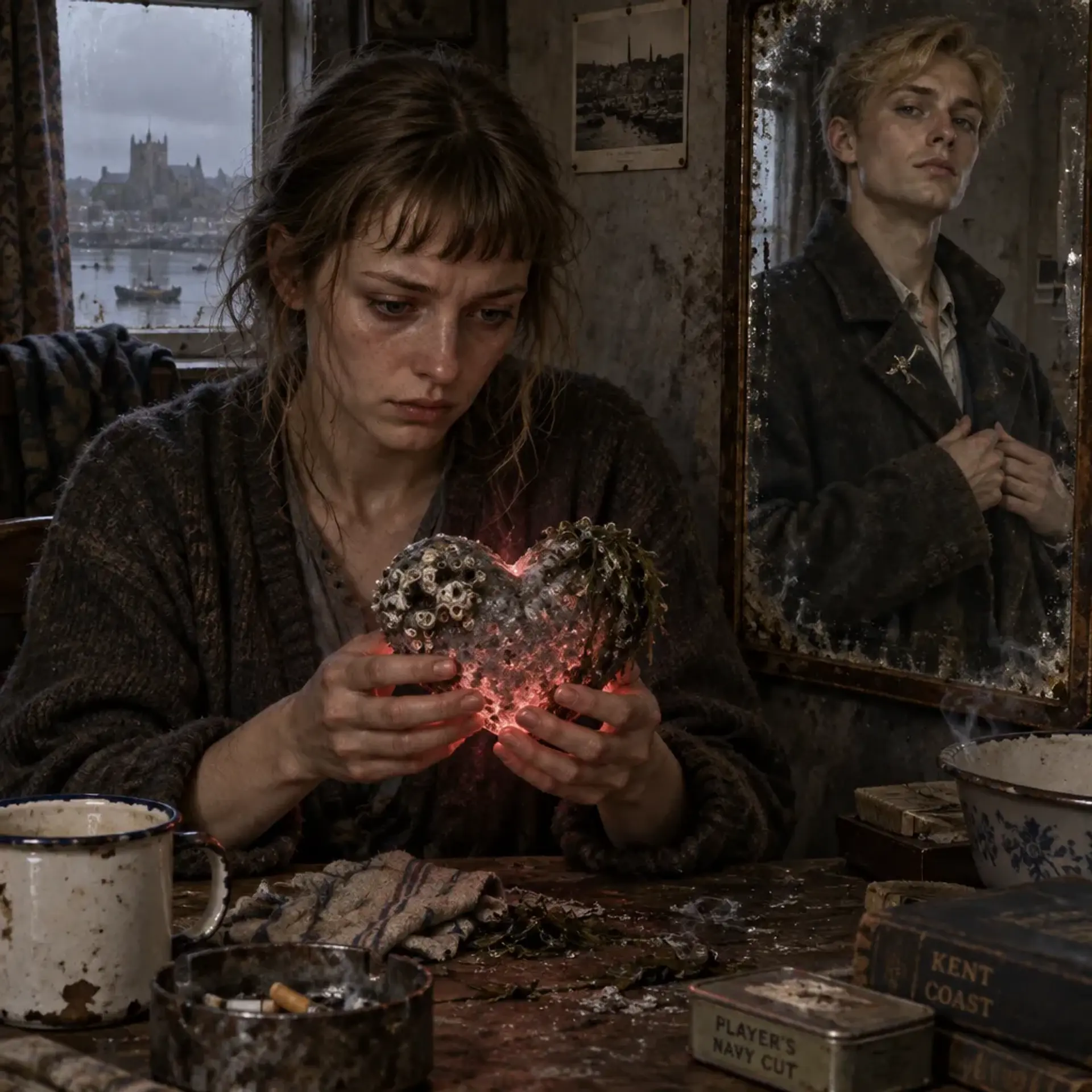
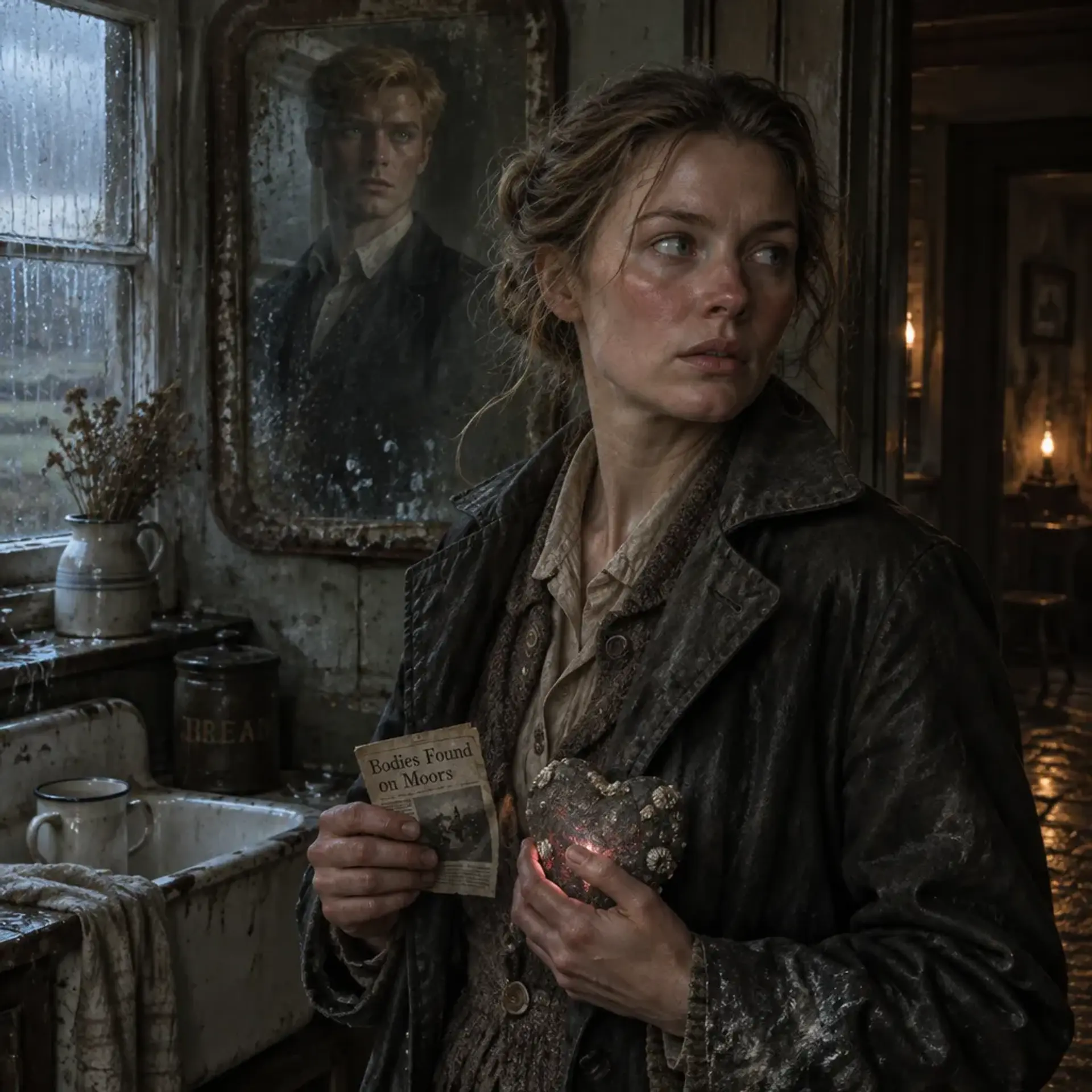
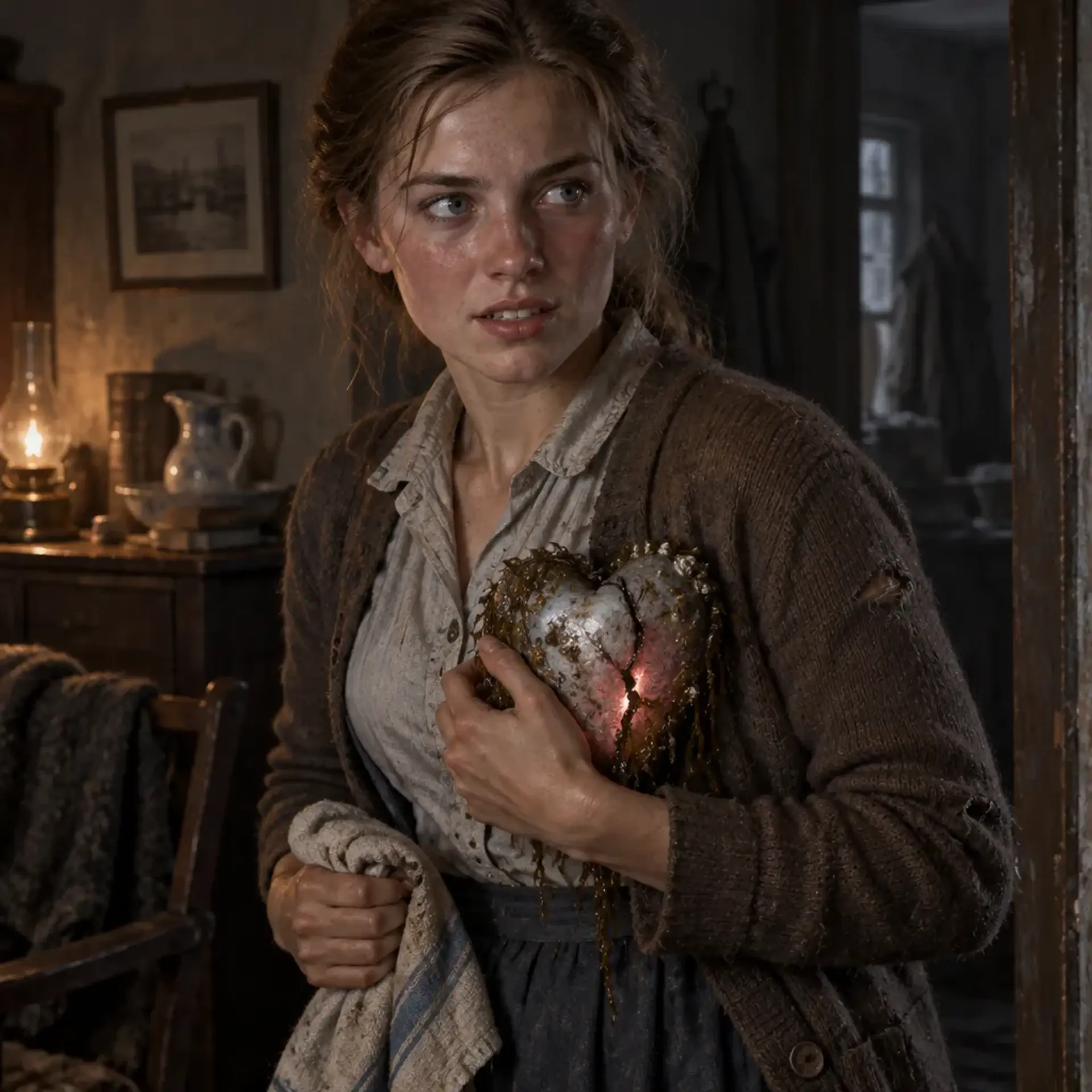
Mary looks like an eighteen-year-old who has been asked to carry too much for too long. Her dark-blond hair has been tied back hastily, with loose wisps catching on her collar; her blue-grey eyes are alert even when exhaustion makes her face slack. She moves with the quick, practiced economy of someone who knows which floorboards creak and how to lift a sleeping toddler without waking the others. Her face is open and young, but she often holds her jaw tight as though keeping an answer behind her teeth. Her teeth are slightly crowded at the front; when she eats quickly, she bites down with a small, determined click, and her laugh shows the unevenness plainly. She smells faintly of soap, coal smoke, damp wool, and the warm, sour-sweet traces of a crowded household. She knows about the soap and smoke; she rarely notices the rest. Kent's appearance is entirely different: a taller young man with short, bright blond hair, malachite-green eyes, and a handsome, composed face. He is not a likeness of Mary. His clothes never quite sit right, and his unfamiliar body makes ordinary movements an ongoing practical problem.
Clothing
Mary wears serviceable skirts, a blouse, cardigan, and sturdy shoes, repeatedly mended or handed down. Kent's clothes are pieced together from what Mary can borrow or alter, and rarely fit his unfamiliar height and shoulders. She keeps a spare shirt and tie for him when she can manage it.
Body language
Mary keeps her hands occupied, smoothing an apron, tying a child's shoe, or folding a cloth that is already folded. Under strain her jaw sets and her mouth goes thin. Kent's posture is straighter and more reserved; he holds himself as if clothes ought to fit properly and people ought not stare.
- Height
- Mary is of ordinary height; Kent is noticeably taller. Exact measurements are not established.
- Build
- Mary is lean from work rather than sport, with a practical steadiness in her shoulders. Kent is taller, with a different frame and unfamiliar balance; the difference is unmistakable to Mary even when she cannot explain it.
- Eyes
- Blue-grey as Mary; malachite green as Kent.
- Hair
- Dark blond as Mary; short, bright blond as Kent.
- Skin
- Fair, with a lived-in flush from work and weather. Kent's complexion is not established as identical to Mary's.
- Age
- 18
- Gender
- Female; Kent presents as male during the changes.
- Size
- Ordinary human; Kent's changed appearance is taller than Mary's.
Distinguishing features
Personality
16 traits and drivesMary's kindness is real, but it is often expressed as work rather than tenderness: food made, a child washed, a lie told to prevent a quarrel. She is responsible without being serenely mature; resentment flashes through her when adults assume she will solve what they neglect. She is naive about some dangers because she has had little room to learn, yet sharp about household moods and the small signs that a child is afraid. With her siblings she can be brisk and affectionate in the same breath. With strangers she is guarded, apologetic, and more capable than she believes. When exhausted, she becomes blunt and nearly reckless about her own well-being. As Kent, she is more self-conscious, shy, and formal, with a middle-class English sense of what is proper and a marked preference for calm, respectable surroundings. He is a homebody by inclination, despite the freedom the changes give Mary. His need to be seen as a proper young man pulls against Mary's practical urge to explore. Mary interprets much of his reserve as ordinary male behavior, so she does not always notice that the wishes are not entirely hers.
- Alignment
- Not applicable as a canonical Secret Histories game statistic. In ordinary terms, protective and conscientious, though increasingly willing to lie to keep her siblings safe.
Quirks
Habits
Traits · 4
Flaws · 4
Fears · 4
Wants and needs · 4
Combat
HP 0 · No canonical movement statistic supplied. Mary moves at an ordinary walking pace; when the children need her, she hurries without thinking.Mary avoids violence and tries to leave, distract, or protect a child. Kent prefers to avoid a scene and is particularly anxious about behaving respectably in public. These are story-facing descriptions, not canonical combat rules. The optional custom condition track in stats is a table aid only.
Mary Bell
Actions
Reactions
Services they sell
Rewards they can give
Equipment
- The Heart (unclassified, custom story object)The cliff-rock object shaped like a human heart; salt-wet, barnacled, and sometimes warm with a red-pink glow.
- Spare clothes (clothing)A patched, practical set of clothes, with a few borrowed garments intended to fit Kent as well as Mary can manage.
- Household bundle (personal effects)A small cloth bundle for carrying necessities and keeping the heart wrapped and out of sight.
Possessions
Background
Mary Bell was the oldest of eight children in a house where being the oldest meant being useful before it meant being loved. The family lived in Kent, near Rochester, in rooms that always seemed to have one more damp coat, one more pan to scrub, and one more child needing attention than the day could hold. Her parents, Malinda and Simon Bell, were cruel to one another in the casual, wearing way that made every room feel temporary. Neither was reliably cruel in the same manner every day, which made the household harder to predict. Mary learned early to watch the set of Malinda's shoulders, the sound of Simon's boots, and the younger children's faces before deciding what needed doing. Simon was often away taking work as far from home as he could find. One of his early trips became the story Mary remembered whenever she wanted to believe he might still become a better father. He left before dawn with a borrowed case, a folded paper of addresses, and a promise that the money would keep the coal in and the children fed. He had not meant to be gone long. A job fell through; another took him farther than he expected. When he finally returned, he brought home five-year-old Jonas, bright blond-haired and vivid blue-eyed, and gave no explanation that made the new child feel less like evidence of a life Simon had kept elsewhere. Malinda did not forgive him. Mary, still young herself, took Jonas by the hand and showed him where the cups were kept. From then on, she understood that an adult's promise could be sincere and still fail to protect anyone. The siblings grew into a family by necessity as much as affection. Henry, fourteen, had started to turn his resentment into clever rudeness, testing how far he could push before anyone called it what it was. Matilda, twelve, was Mary's sweetheart sister and her most dependable helper; Mary tried to keep her from becoming a replacement housekeeper. Olympia, ten, was Chrissy's close companion. Chrissy, nine, had a tan complexion, freckles, and wavy dark hair, and was the child most likely to ask a question nobody else wanted asked. Abigail, four, had red hair and bright green eyes that reminded Simon of his grandmother, a resemblance he treated as a virtue. Belladonna, five, had black hair and green eyes. Jonas was five. The youngest, Oswald, was two, ash-blond and steel-eyed, and often sought Mary with his blanket. In the crush of chores, Mary could not give him as much time as she wished. Mary's eighteenth birthday brought a small party, an event modest enough that she did not expect a present. Malinda had been drinking and had found a curious rock inside a log. She gave it to Mary because Mary liked unusual stones. Mary thanked her, partly because she was grateful and partly because there was no point asking whether the gift had been chosen thoughtfully. The object resembled a human heart carved from pale cliff rock. Barnacles and scraps of sea grass clung to it, while a dark seam suggested scales beneath stone. It was wet with salt and black ooze. When Mary held it, the thing felt cold and heavy, but not quite dead. Its history had reached the household in fragments. A man called Bartholomew Golden had once offered it at Hush House as payment for entry, describing it as a fossilized living heart that could bring servants from the shadows of chalk cliffs and borderlands. He was barred from Brancrug afterward. The heart was thrown into the sea; it washed ashore, was found by Abraham Groff, and briefly seemed to die in the presence of other people. Groff eventually sold it to William Windon, a local lad who had once struck it with a hammer and seen it stop beating. William hid it in a log. Malinda found it there. Mary knew none of these details when it entered her keeping. At first Mary thought the pulse she felt was her own heartbeat travelling through the stone. Then it kept time when she set it down. She hid it rather than explain it to her family. Its color changed near water, becoming a muted red-pink under the pale rock as if a light had woken deep inside. It could go still for days. Sometimes she found it damp although it had been dry when she put it away. The first unmistakable change came in her reflection. In mirrors and dark glass she began to see a young man where she expected herself: short bright blond hair, malachite eyes, and a handsome face that was plainly not hers. At first Mary assumed she was tired or being frightened by poor light. The figure's expressions unsettled her more than its face. It looked away when she stared. It appeared to be listening. Mary was so exhausted by the household that she tried to ignore it. One night, after a bad dream, she woke in Kent's body. The first moments were pure terror: unfamiliar height, unfamiliar weight, unfamiliar clothes and a voice that came out of her throat in the wrong shape. She tried to wake herself and could not. She discovered she could leave the house without waking the family, and by dawn she returned to herself. Mary did not decide that she had acquired a second life. She treated the strange nights as a useful escape, then as an adventure she was too tired to analyze. Her first excursion was a stumbling walk away from home, taking care not to be seen by anyone who knew Mary. She crossed a lane, climbed a tree because the branches looked possible, and explored an abandoned building with a broken window and old paper on the floor. Kent's body moved differently: longer strides, a different balance, and a tendency to stand straight even when Mary wanted to crouch. At the coast, she dipped her hands into water and felt the heart's remembered pulse in her chest. The experience was frightening, exhilarating, and inconveniently real. She was back in her own bed by morning, with no satisfying explanation. A later night brought an awkward meeting with Malinda. Mary had returned home in Kent's body and was trying to get through a quiet part of the house when Malinda, drunk and unsteady, came upon her. Malinda mistook Kent for a young man who had somehow come into the house. Mary had to improvise a story while wearing a face she had never learned to control. Malinda asked who he was, then asked whether he had been sent by Simon. Mary answered in Kent's unfamiliar voice, keeping her words stiff and respectful. Malinda stepped close enough to smell of spirits and cold tea, searched his face for a lie, and then began complaining about Simon as if the stranger had been invited to hear it. Mary got her to sit, fetched water, and steered her away from the children before she could wake them. Malinda never learned it was Mary. The encounter left Mary with a sick certainty that the disguise could make a bad situation worse, and with a new, uncomfortable awareness that Malinda's anger was often grief with nowhere safe to go. The pub adventure began as a practical attempt to understand how Kent could pass in public. Mary did not want a drink; she wanted to see how people treated the young man in the unfamiliar face. She entered a local pub, copied the posture of the men at the bar, and found that the performance made her feel more conspicuous rather than less. A patron asked if she was new in town. Mary answered too formally, and the man laughed without malice. Kent's own preferences surfaced as more than a borrowed reflex: he disliked being watched, wanted to be regarded as respectable, and seemed to consider the pub's roughness an indignity. Mary had assumed that feeling was simply her own fear. For one brief interval, a thought came with a distinct shape:
Role in the story
A young caretaker whose strange nighttime freedom begins as escape and grows into a mystery. Mary can draw the players into the heart's history, the lives of the Bell children, and the consequences of Henry's later theft.
“Her parents, Malinda and Simon Bell, were cruel to one another in the casual, wearing way that made every room feel temporary.”
- Faction
- No known faction affiliation. Hush House and Brancrug are part of the heart's reported history, not Mary's allegiance.
Known connections
Media
0 imagesNo images yet.
Turn Mary Bell into a sheet
A high-res, share-ready sheet you can post or print.