Mary Bell
Mary Bell
At the table
Voice
Mary sounds as if she has spent years speaking over household noise: clear enough to carry, slightly roughened by fatigue, and quick to cut through a quarrel. Kent's apparent voice is more composed and self-conscious, with careful enunciation learned from an instinctive wish to sound respectable. Both speak in ordinary English accents appropriate to their life in Kent; the difference is chiefly posture and choice of words.
Mary's voice has a slightly rasped edge from tired mornings, smoke and calling children in from another room. Her words are quick when practical matters are at stake, and she clips sentences short when she expects an argument. Kent's voice uses the same body's breath but carries itself differently: more measured, careful with consonants, and inclined toward formal phrases. Neither voice becomes unusually soft or theatrical when angry; Mary gets blunt, while Kent grows stiffly precise.
Speech patterns
How to play them
Earn Mary's trust by offering concrete, reliable help rather than grand promises. Do not treat her as a helpless victim or demand that she explain what she does not understand. She responds to practical kindness, especially toward her siblings. Kent responds best to calm courtesy and privacy; ridicule or public scrutiny makes him withdraw. The mechanical values in this entry are custom placeholders for a table that needs quick adjudication, not canonical Secret Histories statistics.
Goal
Keep her siblings safe, understand the heart and the changes it brings, and make a life in which caring for others does not consume every hour she has.
Motivation
Love for her siblings drives Mary, but the freedom and unfamiliar impulses that come with Kent have begun to awaken a desire for a self beyond duty.
Appearance
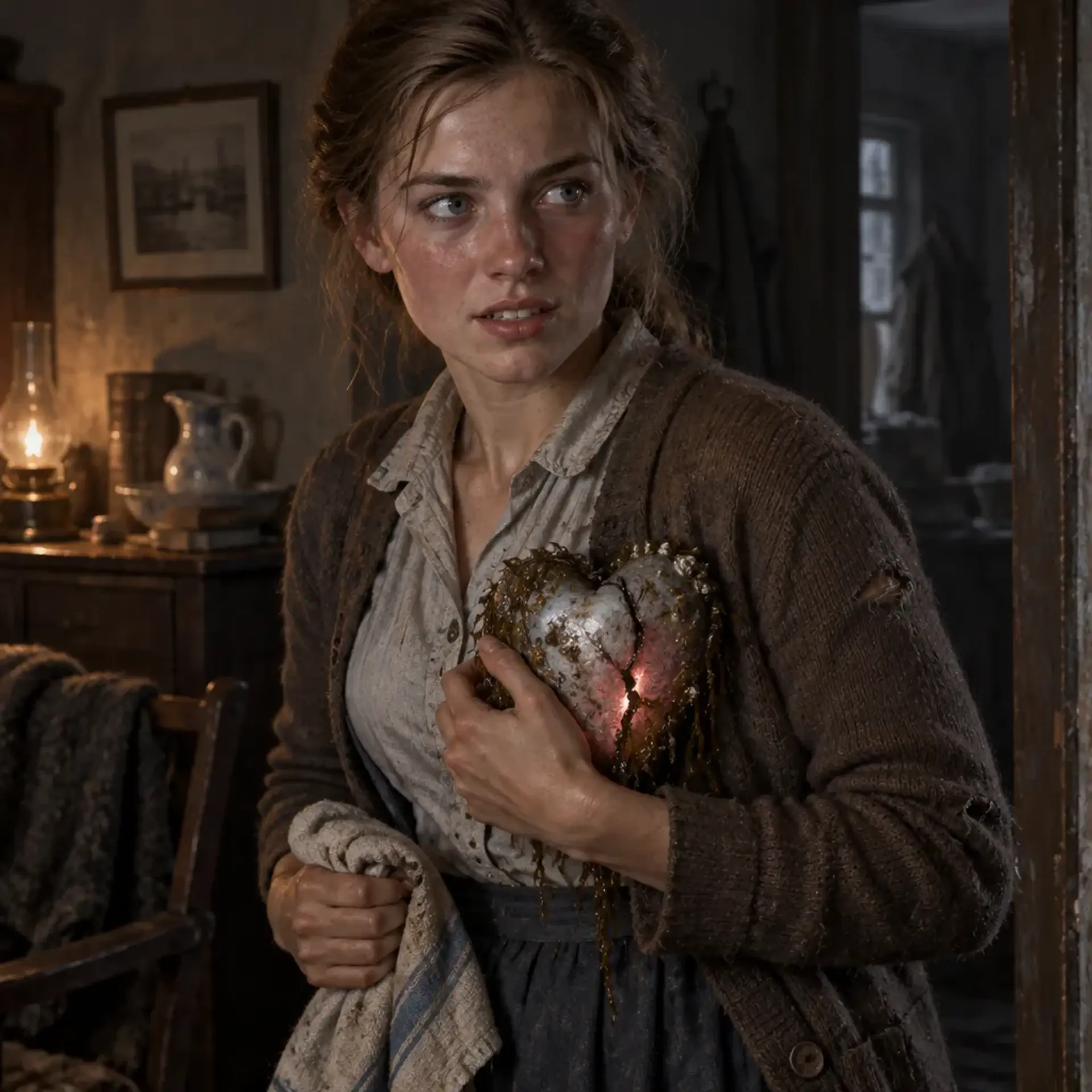
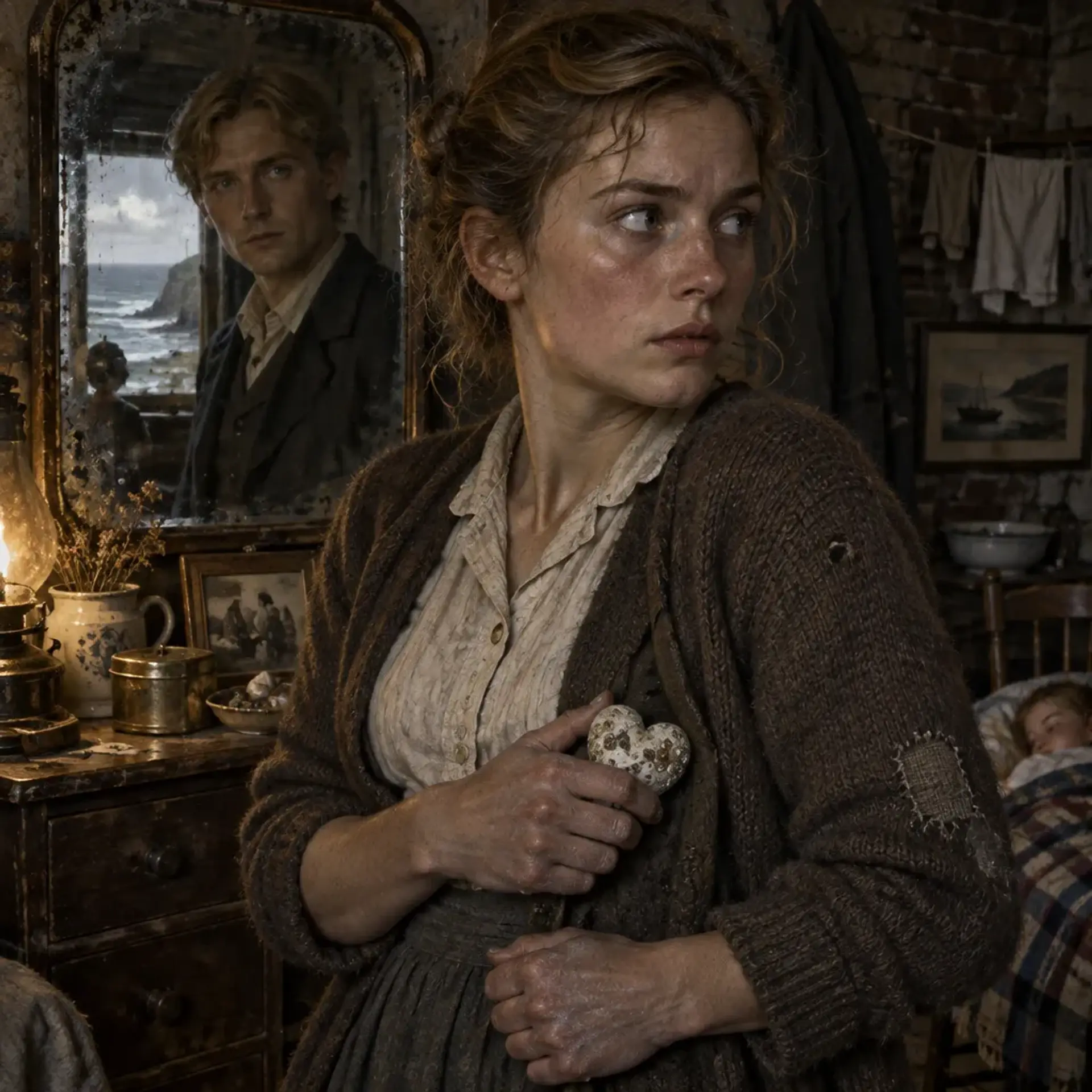
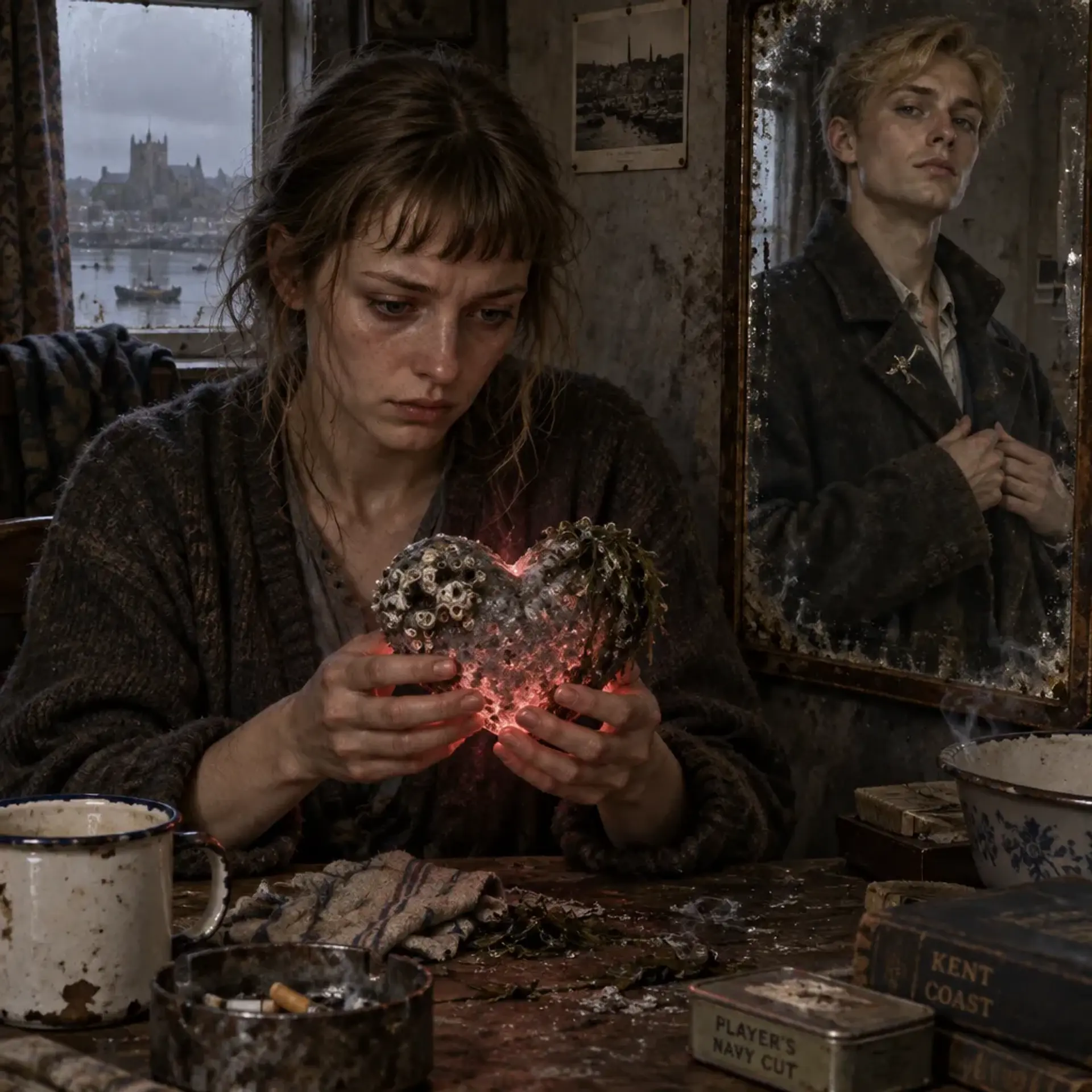
Mary is a young woman with a tired, watchful face and a way of holding herself as if she is listening for a child to wake in another room. Her dark-blond hair is usually pinned back carelessly, with loose strands catching on her coat collar. Her blue-grey eyes look pale in daylight and almost slate-coloured indoors. Her skin has the weathered, dry look of someone who walks to work in cold Kent rain and washes dishes with harsh soap; faint flour and coal dust are often caught at her cuffs. She moves briskly at home, turning corners without looking because she knows every loose board, but outside she slows and studies doors, windows and strangers. When Kent takes her reflection, her face becomes that of a handsome young man with short bright-blond hair, malachite-green eyes and a taller, straighter silhouette. The change is not a theatrical transformation so much as a wrongness that settles into the glass and then into the room. Unexpected detail: Mary keeps a tiny, carefully folded newspaper clipping about a local allotment show in her work apron and can recite the prize-winning vegetable varieties, a harmless interest at odds with her exhausted household life.
Clothing
Mary wears practical, repeatedly mended skirts, a plain blouse, a cardigan, and a weather-dark coat suitable for walking to work. Her shoes are worn at the sides. She hides Kent's spare clothes in a discreet bundle: a man's shirt, trousers, an old jacket and a cap, all borrowed or found rather than well fitted. Kent prefers a clean collar and tries to brush away lint before entering a public place.
Body language
Mary moves with the economical speed of someone used to carrying things and anticipating interruptions. She keeps one shoulder angled toward the room where the children are. Her hands often check her pockets for a key or cloth. As Kent, the same body seems taller and more deliberate: chin lifted, jacket adjusted, stance carefully proper. The posture can collapse into a shy hunch if he is scrutinized.
- Height
- Mary is of ordinary height; Kent's reflected form appears notably taller
- Build
- Mary is slight and wiry from constant work, with more endurance than strength. Kent's apparent build is taller and long-limbed, though the change feels uncanny rather than like a simple alteration of clothing.
- Eyes
- Blue-grey as Mary; malachite green as Kent appears in reflections
- Hair
- Dark blond as Mary; bright blond and short as Kent appears
- Skin
- Fair, often dry and wind-reddened from work and walking outdoors
- Age
- 18
- Gender
- Female; the reflected presence, Kent, appears and behaves as a young man
- Size
- Human-sized
Distinguishing features
Personality
17 traits and drivesMary is responsible without being naturally patient, kind without being endlessly forgiving. She can soothe Oswald through a nightmare and then snap at Henry for making the same problem harder. In a crisis she becomes brisk and commanding; once it is over, she may feel guilty for having sounded like her parents. She is curious about stones, shorelines and abandoned places, but has trained herself to call curiosity a waste of time. Around strangers she is guarded and practical; with Trudy she allows more jokes and admits how tired she is. Her attachment to the children is genuine, yet sometimes tangled with resentment that nobody else seems to notice how much she gives up. Kent's presence complicates her rather than replacing her. He is shy, socially cautious and inclined toward a respectable, middle-class idea of how a young man ought to behave. He prefers home, a clean collar and a quiet conversation to bravado, yet he is the means by which Mary gets out into the world. He wants to be regarded as a person of standing, though he has no clear explanation for that longing. Mary may mistake his reserve and propriety for ordinary male awkwardness. At moments his feelings arrive with startling independence: wounded pride at the pub, an instinct to protect a child, or a preference for returning home. Neither of them can easily tell where one reaction ends and the other begins.
- Alignment
- Protective and pragmatic; she will lie or trespass to keep her siblings safe, but dislikes cruelty and resents being forced to choose who deserves care.
Quirks
Habits
Traits · 5
Flaws · 4
Fears · 4
Wants and needs · 4
Combat
HP 5Mary avoids fights and tries to get between danger and the children, using a doorway, a chair or a shouted warning to create a chance to escape. Kent has no established combat training; his instinct is to avoid public disgrace and retreat to a safe, respectable place. If cornered, either may use an improvised object and run. Mechanics below are explicitly custom placeholders, not Secret Histories rules.
Mary Bell
Actions
Reactions
Services they sell
Rewards they can give
Equipment
- The heart-shaped stone (unexplained object)A rough, chalk-like object carved in the shape of a human heart, furred with old barnacles and sea grass. It leaks salt water and black ooze and sometimes beats. Its properties are uncertain.
- Work clothes and sewing kit (personal)Worn, practical clothes and a small sewing kit; Mary keeps these ready for ordinary work and quick repairs.
- Spare clothes (disguise and practical clothing)An old man's shirt, trousers, jacket and cap kept hidden for episodes when Kent appears.
Possessions
Background
Mary Bell grew up in a crowded, isolated house in Kent, the oldest of eight children and the person most likely to notice when the coal was low, a hem had split, or one of the little ones had gone quiet. Her parents, Malinda and Simon Bell, were alive and present in the technical sense, but their care was inconsistent. Malinda could be affectionate, funny and suddenly absent behind drink; Simon took distant work whenever he could and returned with money, irritation, or news that made the household harder to arrange. Mary tried to keep up with schooling while feeding children, watching them and doing the tasks that adults did not reliably finish. She learned that being useful won approval, and that approval did not mean anyone would take a task off her hands. The family was already complicated before the stone arrived. Henry, fourteen, had become sharp-tongued and cunning, angry at his parents and sometimes at Mary for acting like another authority. Matilda, twelve, was Mary's closest ally among the children; she would quietly take on chores, and Mary repeatedly stopped her from becoming the next unpaid caretaker. Olympia, ten, kept close to Chrissy, nine, who was bright-eyed and tan-skinned, with wavy dark hair and a father whose identity Malinda did not discuss. Four-year-old Abigail, red-haired and green-eyed, was doted on by Simon because she reminded him of his grandmother. Belladonna, five, had black hair and green eyes, and the family quietly assumed Simon's coworker Todd might be her father. Jonas, also five, had bright blond hair and vivid blue eyes; Simon had brought him home as his son, a fact Malinda never forgave him for. Oswald, two, was ashy-blond and steel-eyed, and sought Mary with his blanket whenever the house grew loud. Mary knew each child's different cry and the precise sort of distraction that could bring them back from a tantrum. She also knew how little time she had for any of them. A formative fracture in the family came during one of Simon's early trips. He had gone away for work, promising to be back before the week's end. On the second night, a storm flooded the lane and the household ran short of paraffin. Malinda had been drinking; she and Henry fought over whether there was money for food. Mary took the younger children into the kitchen, used the last of the lamp oil, and stretched a thin meal until everybody had eaten. Simon did not return on the promised day. When he finally came back, he was exhausted and defensive, carrying wages and a story about a delayed train, and spoke as though the household had managed perfectly well without him. Mary had spent the nights believing she was the only thing between the children and hunger. His return did not undo that fear. Afterward, Mary became less likely to ask for help and more likely to quietly make a plan of her own. Her eighteenth birthday was a small, awkward occasion rather than a celebration. Malinda, unusually attentive and already drunk, presented Mary with a strange stone she had found lodged in a log. She had been told it was a curiosity, perhaps something old from the coast. The object was shaped like a human heart, rough and chalk-pale, knuckled with barnacles and strands of dead sea grass. Beneath the crust it had an unhealthy red-pink tint. Mary accepted it because rejecting a rare gift might start a quarrel, and because some part of her was still a girl who liked unusual stones. She put it away and went back to work. The heart had already passed through several hands. Bartholomew Golden, an amateur alchemist, had once presented it at Hush House as payment for entry, calling it the Heart of England and claiming it could bring servants from the shadows of men, born of chalk cliffs and borderlands. He was never permitted near Brancrug again. It was thrown into the sea, returned to shore leaking salt water and black ooze, then found by Abraham Groff, who took it home to Wiltshire. It beat beneath his coat after a train journey. In Groff's care it seemed to die in front of visitors and revive at the shore. He became convinced it disliked guests, and eventually sold it to William Windon, a local lad of seventeen. William hid it in a log after striking it with a hammer, which stopped its beating. Malinda found it there and brought it to Mary. None of these histories came to Mary with the gift. At first the stone was only an odd possession. Then it beat in time with Mary's heart. She assumed it was a trick of the blood in her ears, until she saw her reflection looking back as a young man with bright short blond hair, malachite-coloured eyes and a handsome face. She stared, blinked, and saw herself again. The image returned on other days, sometimes looking away when she looked directly at it. Mary was frightened, but fatigue had trained her to put frightening things into a queue behind immediate obligations. She wrapped the stone and hid it. The first night she became Kent began after a bad dream. Mary woke in the dark with the sensation of having fallen down a stair, though she was in bed. In the mirror she was the young man. Her hands looked like his; her shoulders sat differently; her voice, when she tested it, was not hers. Panic made her reach for the stone, then a child stirred in the next room and she forced herself to be quiet. She found one of Simon's old jackets and a pair of trousers that would pass in the dark, then slipped out before anyone asked questions. The freedom was not grand. It was the astonishment of being able to walk without carrying a baby, a basket or a list of jobs. Her first adventure as Kent took her through lanes and into an abandoned outbuilding, where she climbed a tree simply because nobody had told her not to. A dog barked at her and she nearly fell out of the branches. She heard two men arguing nearby and hid until they passed, learning that Kent's body seemed to know how to stand like a young man who belonged outdoors, while Mary's mind remained sharply aware of how easily they could call the police. Before dawn she returned home, changed back, and tried to convince herself that the night had been a dream. The memory did not fade. She had discovered a way out of the house, but not a way to explain it. The episodes became a secret routine, though never a reliable one. Mary learned to keep a spare shirt and a pair of trousers hidden where she could reach them. Kent was much more shy than Mary expected, and had a strong instinct to be regarded as respectable and well-bred. He preferred a clean collar, a proper greeting and a quiet room to a swagger or a dare. His tastes seemed middle-class in a distinctly English way: privacy, orderly manners, a decent cup of tea, and the belief that a person ought not make a spectacle of himself. He also seemed more of a homebody than Mary, despite being the shape that let her leave home. These preferences arose as feelings and impulses, not as a clear second voice. Mary often mistook them for odd but ordinary male behaviour. A particularly difficult evening came when Simon returned earlier than expected. Mary was outside as Kent and heard the front door before she could get back in. She tried to enter by the rear, but Matilda, awake and upset, caught sight of her. Matilda was half frightened and half fascinated, and Mary could not explain why this strange young man knew the children's names or how to find the loose kitchen latch. She got inside, hid in the coal shed, and waited until Simon went to bed. Matilda did not tell. The next day she asked Mary, carefully, whether the man had been kind. Mary said yes, and Matilda did not ask again. Another night, Malinda came home drunk while Mary was Kent. She had been crying and angry, and mistook Kent for a young man who had come to speak with Mary. Her mood shifted between suspicion and a strange, drunken tenderness. She demanded to know whether he was going to take Mary away, then told him that Mary had always been the one who stayed. Kent's body wanted to offer her a chair and put the kettle on; Mary, inside the same moment, wanted to get away before Malinda's attention turned into accusation. Malinda reached out, touched his sleeve, and called him a decent boy. Mary never told her. The moment remained disturbing because Malinda had treated Kent as a person and Mary as a responsibility, even though both were there. Mary's friend Trudy, a short, wiry young woman with dirty-blond hair and hazel eyes, called herself a rebel and dressed accordingly for the early Cold War years. She noticed Mary's exhaustion and helped with the children without demanding thanks. One afternoon, during a rare daytime episode, Mary was at a shop when the change came over her reflection and then her face. Trudy saw the change happen in a window and followed her into an alley. She did not scream. She asked whether Mary was ill, then whether she was still Mary. Mary could not answer in any useful way. Trudy kept watch while Mary found a way to get home without drawing a crowd. Afterward, she offered a practical bargain: if Mary needed an hour away, Trudy could watch the children, but Mary must stop pretending she was never near breaking. Mary accepted the help with embarrassment and gratitude. Kent's first pub visit was meant to be an experiment in ordinary freedom. Mary had heard talk of the pub for years, but as herself she would have drawn questions and disapproval. As Kent she entered, ordered cautiously, and sat near the wall. He wanted to look as though he belonged and found himself overthinking his posture, his change, and whether he should remove his cap. A local man struck up a conversation about work and the weather. Kent answered with stiff courtesy, then surprised Mary by asking about the man's daughter, who had recently been ill. He remembered the detail without knowing where the knowledge came from. The man softened. For a few minutes the pub was warm and ordinary: tobacco, wet wool, a glass on a wooden counter, a radio murmuring behind conversation. Then the man joked that Kent looked like a fellow who had never had to scrub a floor. The remark touched something in Kent. Mary expected him to laugh it off, but instead she felt an unfamiliar, restrained anger and a desire to be taken seriously. Kent replied, very formally, that a person could do honest work without advertising it. The table went quiet. He did not pick a fight; he finished his drink, left money on the counter and departed with dignity that felt both absurd and real. Outside, Mary realized she had not been the only one reacting. Kent had wanted something for himself: to be treated as a gentleman, not as a disguise or a curiosity. Mary did not know what to do with that thought. Her life as Kent has included tree climbing, beaches, abandoned buildings, awkward encounters with Henry, and the constant problem of clothes that fit. She has learned to carry a few coins and a handkerchief, but not how to handle every bodily inconvenience. Once, an episode began during the day, and she had to invent a quick excuse to avoid a neighbour while trying to get home. Henry saw Kent on one of these outings and treated him with wary bravado. He tried to provoke him, perhaps testing whether this stranger was a threat to Mary or an adult who might finally hear him. Kent did not threaten him. He asked whether Henry wanted to be angry at the right person for once. Henry left without answering. Mary later worried that she had said something too sharp, but the question had been Kent's as much as hers. The younger children have each encountered Kent in different ways. Oswald follows the unfamiliar figure if Mary is nearby, clutching his blanket and asking for her. Abigail once offered him a toy cup and expected him to drink from it. Belladonna stared at his face and asked why Mary's eyes had moved. Chrissy tried to make a game of the situation, while Olympia quietly redirected the others so they would not bother him. Matilda knows enough to keep watch and enough to be afraid. Mary tries to spend time with all of them, but the household keeps taking that time back. She has not told them that Kent is part of her, partly because she does not know how to say it and partly because she fears they would be made to carry the secret too. Now the stone is warmer and more active. It beats beneath its crust, weeps brackish water and leaves a faint dark residue on cloth. The house has begun to answer it with sounds: footsteps in the hall, a door shifting when no one is near, a voice-like murmur under the stairs. Mary has no theory she trusts. She wants to keep her siblings safe, keep her job, keep Trudy close, and understand why Kent feels so much like a person without ever speaking plainly. She is also beginning to suspect that simply ignoring the heart will not keep it quiet.
Role in the story
A young caretaker whose need for freedom has become entangled with an uncanny reflection and a living-looking stone. Mary can be a sympathetic ally, a source of domestic mysteries, or the center of a slow-burn investigation into Hush House and the heart's passage through England.
“Her parents, Malinda and Simon Bell, were alive and present in the technical sense, but their care was inconsistent.”
- Faction
- No formal affiliation. Her household loyalties are to her siblings and Trudy. The heart's previous association with Hush House and Brancrug is unknown to Mary.
Known connections
Media
0 imagesNo images yet.
Turn Mary Bell into a sheet
A high-res, share-ready sheet you can post or print.