William Windon
William Windon
At the table
Voice
William's voice is a little breathy from recent illness, with the plain, rounded sounds of Wiltshire and an occasional catch when he is tired. Wilt's voice seems to use the same throat but carry more weight: a deeper, older-sounding local accent, precise consonants, and a dry rasp like air moving through a damp stone passage. When William is frightened, Wilt's words can arrive before William has decided to speak.
William speaks with a young Wiltshire voice, straightforward and gently self-conscious. Wilt uses William's mouth with an older, deeper voice and a pronounced local accent that seems out of place in William. His words are measured and formal when he is composed, dry and sharp when irritated. Fear makes him blunt, not soothing. In moments of bodily intrusion, listeners may hear William's voice and Wilt's cadence collide.
Speech patterns
How to play them
Treat William as a frightened but capable young man, not as a puzzle or a possession. Give him practical choices and privacy. Speak to Wilt directly only when William indicates that Wilt is listening. Hector may be approached through evidence and careful questions, but he distrusts vague reassurances. Elizabeth is the safest family member to confide in, though she may test a claim before believing it.
Goal
Find a way to understand the heart and protect his family without losing his own identity. Wilt wants to survive the pursuit of his sister and learn what it means to exist in a body.
Motivation
William wants a future among plants, a safe home, and the return of an ordinary relationship with his family. Wilt wants to keep the household safe from the presences seeking him, experience the modern world, and understand his own memories without being forced back into the heart or the coast.
Appearance
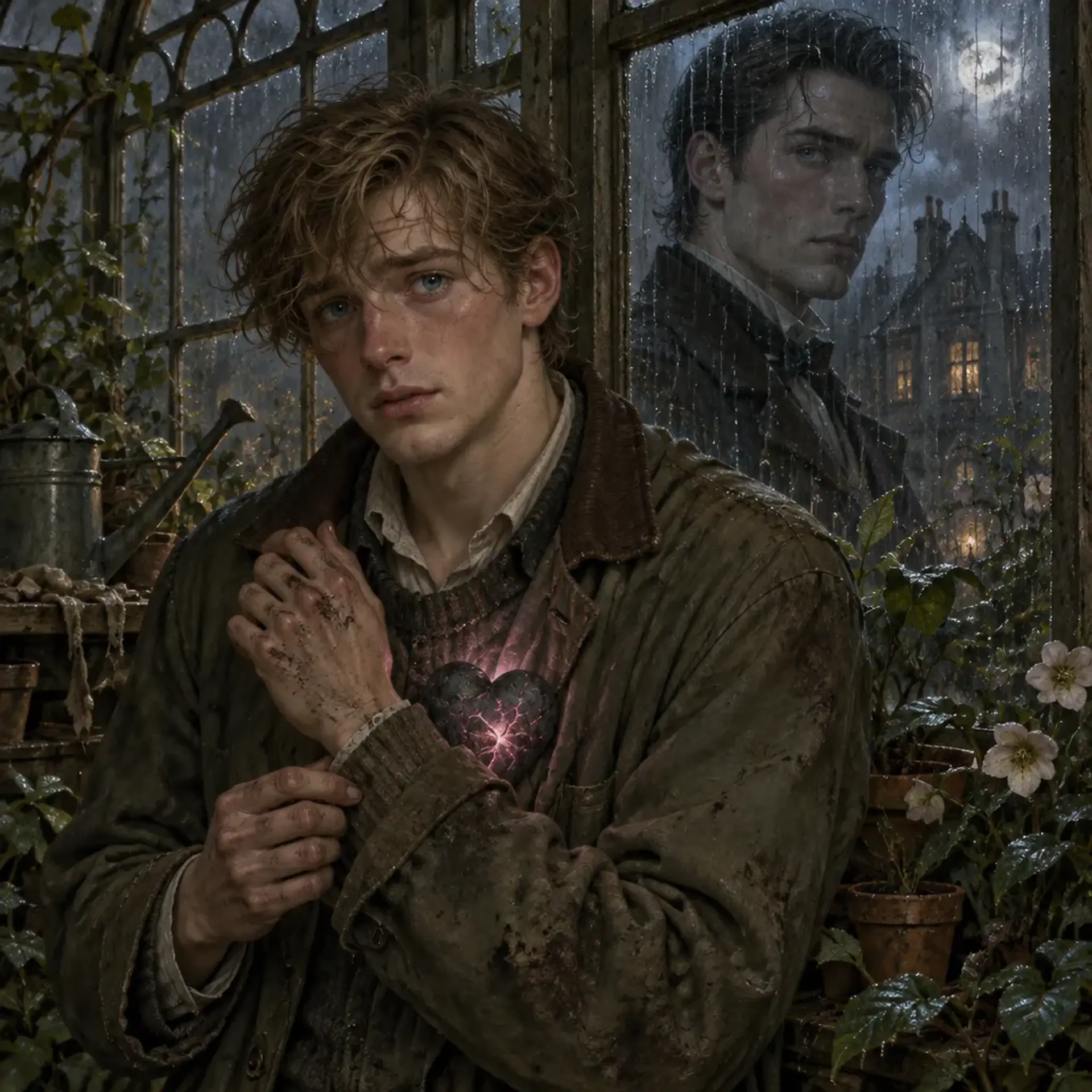
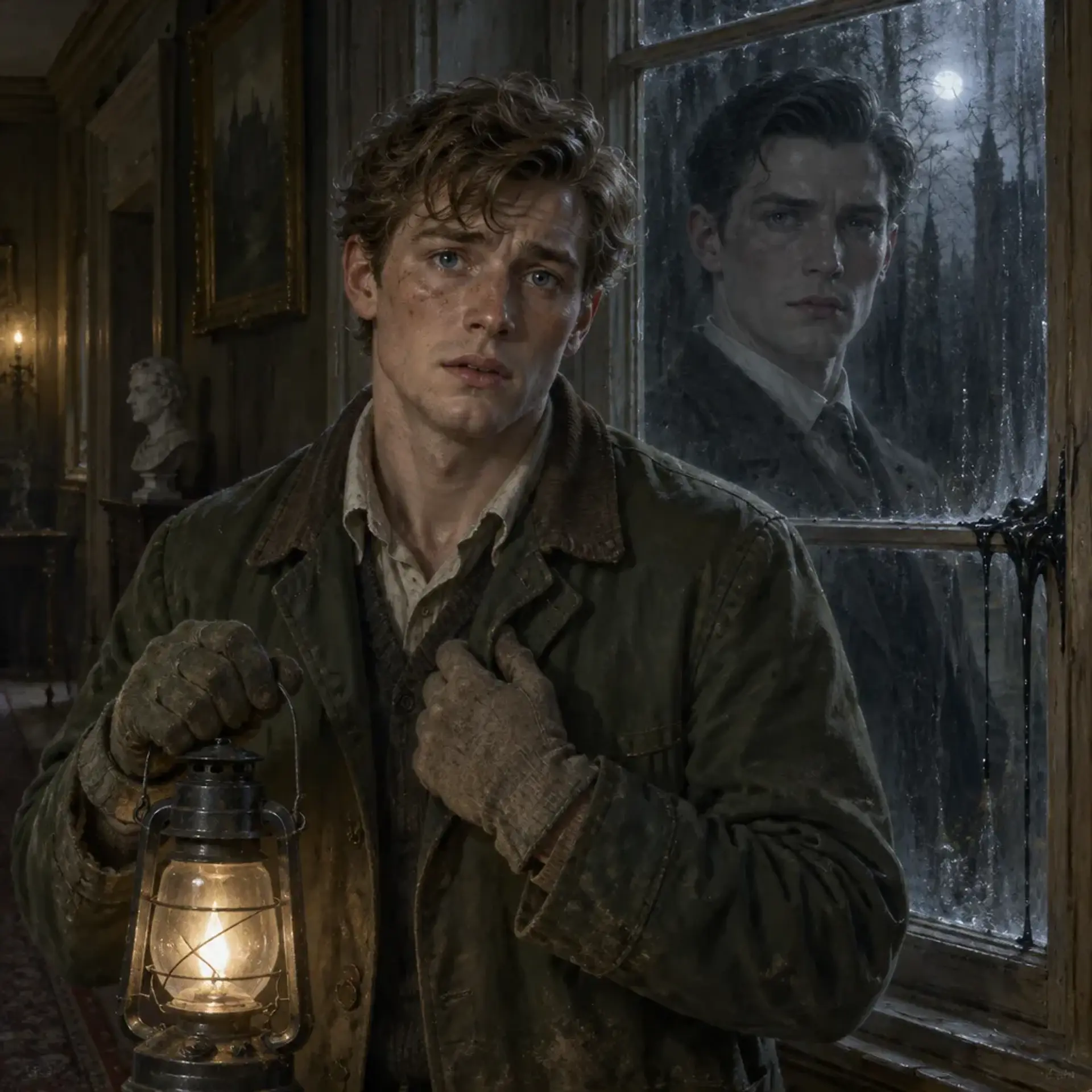
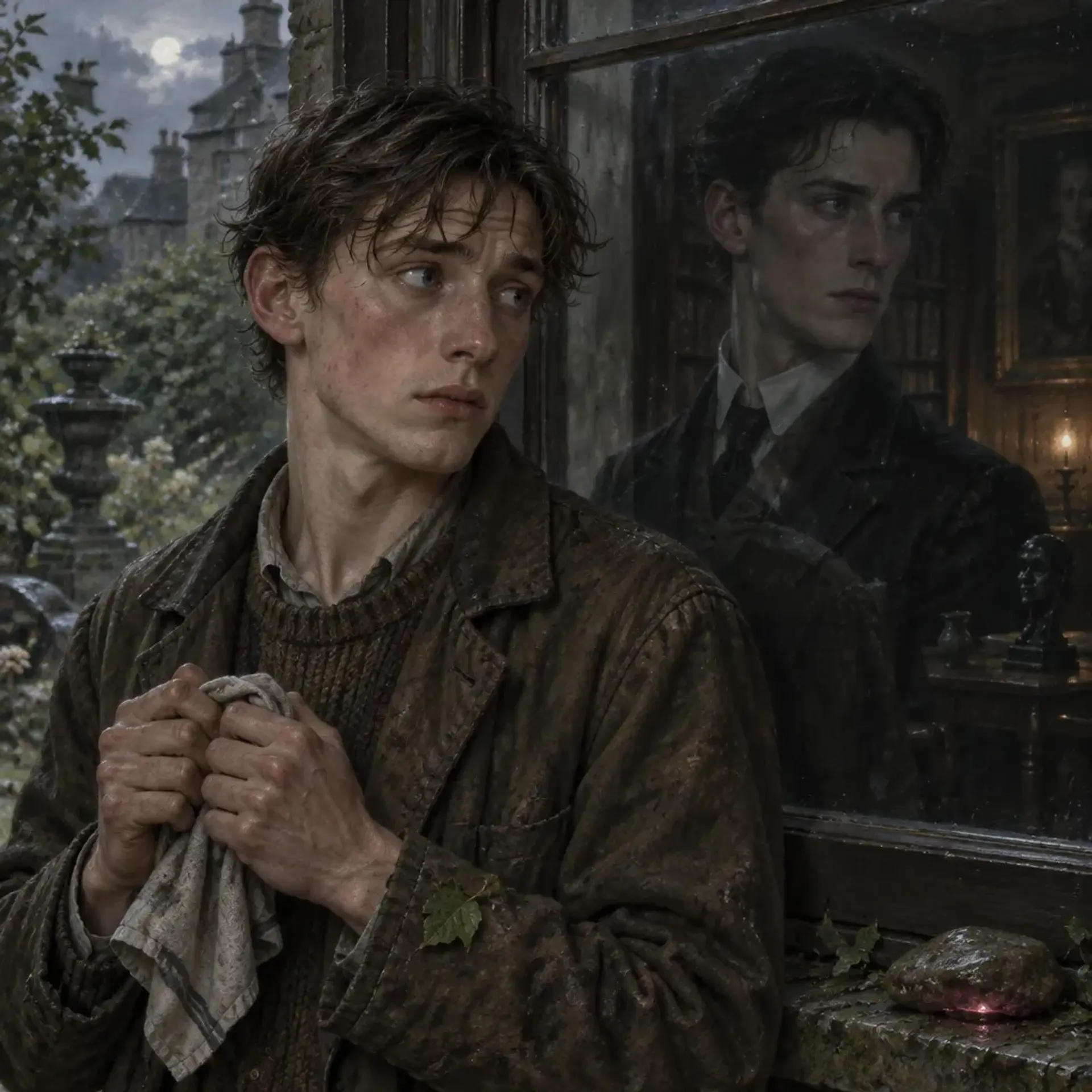
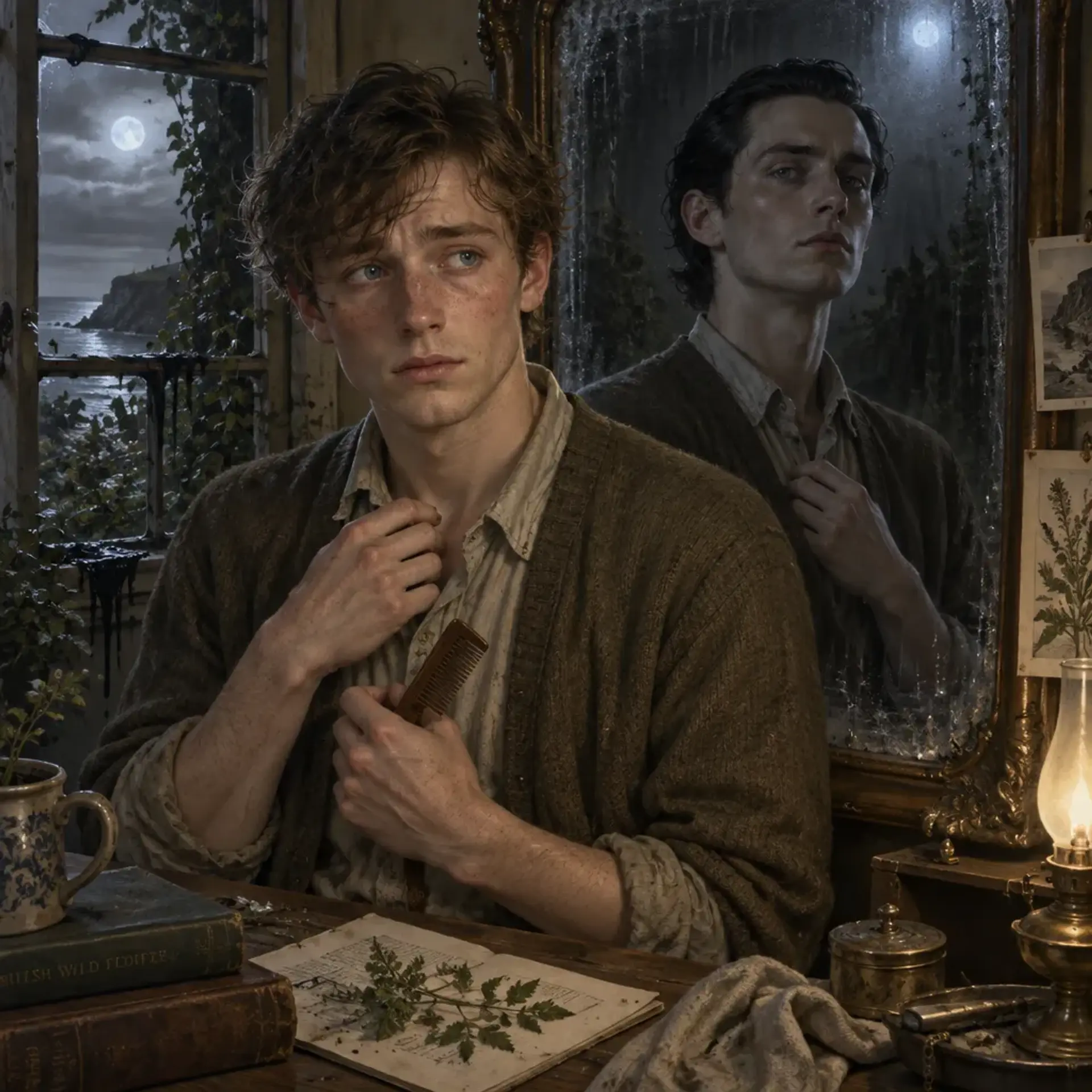
William Windon is an average-height young Englishman of the Cold War era, with a soft, approachable face and the careful, slightly self-conscious manner of someone who has spent months watching his own reflection for signs of change. His hair is dark blond, usually combed without much artistry; his blue eyes and brown-spotted skin are ordinary enough that he once found comfort in being overlooked. Wilt's face is not William's face. In glass it is longer, more formally handsome, and held in an aloof, stern expression. His short black hair is slicked back and neatly trimmed at the sides, and his blue eyes have the cool, moonlit look of a pond before dawn. Wilt is taller than William, though he still looks eighteen. He always appears in whatever William is wearing, as if the clothes belong to a likeness that has not yet learned how to dress itself. William's gait is a little guarded after his heart stopped; Wilt's reflected movements are more assured, but sometimes jerk sideways as if he wants to go somewhere William has not chosen. A minute with him reveals an unexpected detail: despite being a gardener and a country lad, William treats a tea cup and its saucer with painstaking, old-fashioned ceremony, a habit he has learned to tolerate rather than inherited from himself. In bad light, he leaves the impression of two people trying to share one doorway.
Clothing
Practical trousers, work shirt, cardigan or jacket, and gardening clothes suited to an estate worker. His clothes are ordinary and often carry earth or leaf stains. Wilt appears in the same garments, though his bearing makes them seem more formal. William keeps a comb, a handkerchief, and sometimes a small gardening knife close by.
Body language
William's shoulders draw inward when he expects criticism, and his fingers check his hair or collar without his noticing. When Wilt takes over, the posture lengthens: chin level, hands composed, movements economical and oddly formal. Under the bed or near a sealed opening, Wilt's composure becomes rigid, like a person listening to a storm behind a wall.
- Height
- William is average height for a young man in Cold War-era England. Wilt appears taller in the reflection and when embodied.
- Build
- William is average in height and lightly built from outdoor work; Wilt appears taller and more self-possessed in the same clothes.
- Eyes
- William's eyes are blue; Wilt's reflected eyes are a colder blue like moonlight over a freshwater pond.
- Hair
- William's hair is dark blond; Wilt's is short, black, and carefully slicked back.
- Skin
- William has fair skin with scattered brown spots; Wilt's embodied face appears fair and more evenly composed.
- Age
- William is eighteen; Wilt appears about eighteen, though his sense of age is not human.
- Gender
- Male
- Size
- Medium
Distinguishing features
Personality
21 traits and drivesWilliam is warm and considerate, but not meek: he will yield to family pressure to keep the peace, then stubbornly pursue a question alone. He loves the orderly, patient work of gardening and feels exposed by Hector's expectation that he become a more impressive intellectual. With Clare he can be relaxed and affectionate; with Hector he becomes guarded and defensive; with Elizabeth he trades teasing until her concern makes him uncomfortable. Wilt is proud of manners and old customs, yet fascinated by television, cars, books, and modern devices. He can be protective and surprisingly tender, then abruptly cruel when he thinks a person has insulted him or William. Wilt's humor is dry and sometimes inappropriate. He is less confident than his formal bearing suggests: talk of his sister makes him tense, and he avoids paranormal signs rather than confronting them. William and Wilt resent their dependence on each other, but have begun to negotiate. William insists that his life belongs to him; Wilt insists that he is not merely a symptom.
- Alignment
- Not applicable as a canonical Secret Histories statistic. William is compassionate and conscientious; Wilt is protective, proud, and governed by old customs he cannot always justify.
Quirks
Habits
Traits · 5
Flaws · 5
Fears · 5
Wants and needs · 6
Combat
HP 10Avoid fighting. William is recovering from a serious heart stoppage and is not a trained combatant. He tries to escape, protect family members, and use doors or furniture as barriers. Wilt may seize control to get the body clear of a threat, but his reactions can be driven by unfamiliar memories and fear. Treat the Principle features and possession-like actions below as custom narrative tools, not canonical Secret Histories combat rules.
William Windon
Actions
Reactions
Services they sell
Rewards they can give
Equipment
- Garden fork or hand tool (tool)A worn gardening tool, useful for work and only an improvised weapon.
- Grooming kit (personal)A small comb and shaving kit; Wilt checks that William uses them.
- Small household lamp (utility)A lamp for moving through the house at night without waking everyone.
- Under-bed cache (contraband and food)A hidden assortment of sweets, tinned fish, cigarettes, and occasionally alcohol.
- Copied study notes (research)Notes and papers William has cautiously copied from Hector's occult studies.
Possessions
Background
William Windon was born in Wiltshire, into a family that had been rooted there for generations. He grew up among hedges, stable yards, old stone, and the kind of local knowledge that rarely gets called history. His father, Hector, is a historian: clever, political, impatient with inherited class manners, and keen to raise a son who would question old systems rather than simply tend their gardens. Hector's own father, known as Bobby, was a fierce veteran of the Second World War. Hector has spent much of his life rejecting Bobby's authority and the rigid values he associates with it. He does not know how much of his own anxious ambition he has passed on to William. William is softer and more sensitive than Hector hoped, but not weak. He is observant, patient with plants, and drawn to the work of a botanist. He gardens for a local estate and is training toward that future. His home life is crowded with affectionate frictions. His mother, Clare, is warm and stoic; she has a way of making tea, reading, and taking William out to garden that steadies him without demanding an explanation. His sister Elizabeth needles him about manners, clothes, and the boys she fancies. Her jokes have recently turned into watchfulness. Hector is more complicated: loving, disappointed, politically opinionated, and increasingly suspicious that his son is hiding something dangerous. He is also part of an occult circle, a private fact unknown to the rest of his family. He has never told William, and he did not know what the strange stone was. The chain of events began with Bartholomew Golden, an amateur alchemist who arrived at the Hush House with a purportedly fossilized living heart, forged, he claimed, of heart and scale. Wrapped in newspaper, the object looked like a lump of Dover cliff chalk crudely shaped into a human heart. Barnacles and sea grass clung to its sad outline. Golden claimed it was the Heart of England, capable of bringing servants from man's shadow, born of the chalk cliffs and borderlands to labor for the House. He was paid entry and then barred from returning to Brancrug. No one alive now knows the stone's name or purpose. Golden's account was a boast, a theory, or a warning. The heart was thrown into the sea. It returned to shore weeping salt water and black ooze. Beneath the rock, a reddish-pink light showed as if blood had stirred under stone. A young man named Abraham Groff found it, carried it home to Wiltshire, and became its keeper. In company the heart went cold and inert. Alone, especially near the sea, it seemed to revive. Abraham was repulsed by it but became possessive, not from greed so much as the impression that the stone disliked visitors. His house filled with voices, moving doors, and footsteps on empty stairs. Terrified, he sold it to William, a local lad of seventeen who had once seen the object among Abraham's neighbors. The heart did not stay dead in William's keeping. William felt its beat in his own chest and tasted sea, blood, and soil. He tried to break the rock with a hammer. The blow seemed to enter his body instead. He fell, spitting blood, and saw a muscle twitch inside the stone before his own body gave out. Clare found him and said his heart had stopped. William put the apparently unbroken stone into a hollow log. Days later it looked cold and pristine, despite the hammer blow. Afterward, his reflection ceased to be his own. At first the stranger in mirrors merely annoyed him. It had William's clothes but a different face: long, handsome, stern, black-haired, blue-eyed. Its movements began to wander beyond his. While William groomed himself, the reflection's expression could turn severe. One night, during William's bedtime routine, it spoke through his own moving mouth: “Well, it's not often you use that one.” Its voice sounded older than William's, with a deeper tone and an accent that did not belong to him. William was frightened, but the reflection was not violent. It criticized his hair, clothes, and manners; it made dry, indecent observations about neighbors; it sometimes stopped him from saying something it deemed improper. William sought Abraham, learned he had moved to Canada, and tried to find the heart again. The stone had disappeared from the log. His friends Tommy DeHare, John Mollask, and Ryan O'Leary visited and discovered that the reflection could react to people and speak through William without any glass. William's family began to notice the strangeness in fragments. Elizabeth found that changing the wording of a question could make her brother falter or answer in an unfamiliar manner. She called it brain damage, partly to tease him, partly because she was afraid. Hector once remarked that country people were silly. The reflection delivered a cutting reply; William got in trouble for it. When a neighbor's child accidentally ran into William with a toy wagon and made a girl cry while apologizing, the reflection used an old slur for the Welsh child. William was made to muck out the neighbor's stable. He was ashamed of the insult, and the reflection seemed to understand the punishment better than it understood the harm. The reflection also developed tastes. It loved books and films, was fascinated by cars and electronic devices, and enjoyed sneaking into places where William did not belong. It stole cigarettes, cigars, cheese, sweets, tinned fish, and other food, hiding them in William's room. It once stashed a bottle of apple juice that turned out to contain alcohol. It took grooming seriously, reminding William to shave. Bathing became awkward: water showed Wilt instead of William, and both seemed afflicted by English prudishness. If William was too embarrassed to wash, Wilt might take the lead, making sarcastic remarks about William's body. William once felt the reflection blush. His girlfriend Adaline, with auburn hair and soft brown eyes, became a point of rivalry. Wilt wanted her attention, and William discovered that his most persistent romantic competition was himself. A night of accidental whisky and bourbon became an absurdly funny reprieve. Wilt was drunk through William's body, teasing, arguing, singing, and smiling as if in a pub. He took off William's shirt as an act of rebellion, though they agreed that taking off the trousers was too much. When William asked whether he was the stone, Wilt scoffed, “Dad isn't here.” In the morning Clare found the empty bottle. Hector began by yelling, then went quiet and offered William chores to do around the house. Clare established regular gardening time with him, reading from a book or Bible while they worked and bringing him snacks and tea. Wilt did not insult her. Instead, it answered passages with others William did not know. William's recovery from the heart stoppage was slow. For a time he was confined to bed, with his studies and future suspended. After five months he returned to work at the estate. Hector remained changed by what happened. He watched William too carefully, sometimes seeming to suspect a deception, sometimes seeming to fear that his son might die again. He was proud of William's curiosity when it looked like scholarship, and frustrated when it became plants, folklore, or the strange company of a reflection. The old occult studies in Hector's study have become a possible source of answers, though William searches them only when the house is asleep. Elizabeth has a boyfriend, Romy Brock, an artist who plays rock and roll guitar. Romy is blissfully unaware and goes along with Elizabeth's plans because she makes them sound like fun. Elizabeth's concern for William has grown beyond teasing. She quietly spies on him to understand what is happening. Wilt's knowledge of history comes in strange descriptions: a fact arrives as weather, or as forge-work, or a pressure in the air. William once dreamed he was not William at all but the reflection, watching a young man beside a pond in wild woods. The dream made no sense to him, but Wilt spoke afterward of siblings and a father as though describing sea conditions rather than people. He calls the other presences “siblings” but says there are “more.” He dislikes William's cousin Ronald White, who calls himself a modern man. He avoids paranormal manifestations and appears frightened by the strange things seeking him. A war film on television exposed something neither of them understood. Wilt reacted sharply; William lost control of his body as if caught in shell shock. He screamed and cursed, fought the people holding him, and his family thought he was having another heart attack. Hector had to restrain him. Elizabeth changed the channel, wide-eyed. When William regained control, Hector looked at him differently and let him go. That night Wilt mumbled an apology and offered William a memory as consolation. He has since tried to explain himself, but cannot make his account fully human. Then came the moonlit night that made the danger undeniable. William woke cold, shivering in a house that should have been warm. A small lamp made a weak island of light in the hall. Elizabeth was there, looking at him strangely. When he spoke, the voice that came out was not his: it had Wilt's older, deeper sound and a thick Wiltshire accent. The change was so complete that William felt, for a moment, that the voice belonged to a stranger wearing his throat. He went toward the bedroom, trying not to wake the house. Wilt said, “My sister is outside. They're looking for me. Go back to bed.” William tried to ask what he meant, but Wilt clamped his mouth shut. Through the walls came a sound like words pressed into the house from outdoors: “...Wilt...” The syllables might have been carried by the night air, or breathed against the plaster, or made by William's frightened mind. Wilt's body rolled off the bed and landed silently. Against William's will, it crawled under the bed. In the dark, William strained to speak. At last he forced out, “The bloody hell, your siblings?” His own voice had gone. His mouth shaped the words in Wilt's accent. He felt another person's face beneath his hands, not as a picture but as bone and skin. For the first time, he understood the reflection as a body he could inhabit and be inhabited by. Wilt said, “She is trying to draw me out.” He spoke softly, with a fear William had never heard in him. “The more I speak, the more chances she'll find me. Quiet down. We will talk in the morning.” William grunted in defiance. Wilt could have forced his silence, but did not. Moonlight lay in a thin stripe beneath the bed. The house creaked. Somewhere outside, wet grass shifted. William could smell salt water, damp soil, and something dark and metallic, like blood. Wilt was tense as a held breath. They waited. The shadow of the bedposts lengthened and shortened as a cloud crossed the moon. William did not know when the fear became exhaustion. He fell asleep under the bed, pressed against the floorboards, and woke there with dawn in his head and dust on his cheek. He pushed himself out, went directly to the bathroom mirror, and found Wilt's face still looking back. William touched his own face. This time the skin beneath his fingers felt like his own. Wilt said, “See? You're fine now,” and gave him a strangely plaintive gesture. The morning was not a clean return to normal. William checked the doors and windows, and found damp ground outside, a trace of black ooze, and the smell of salt water and blood mingled with wet grass. Wilt wanted him to stop looking. William stood his ground and searched anyway. His father noticed the mud, the changed expression, and William's evasive answers. Hector began asking questions that sounded casual but were arranged like an interrogation: had William been in the study, had he touched the old window, had he moved books, had he been sleeping properly? William had learned that a damaged window was hidden behind a bookcase in the study, sealed by Hector. The bricked cellar had been closed before Hector bought the house. A breeze sometimes slipped through the old structure smelling of salt and blood, or of a meadow. William suspected that whatever came looking for Wilt could find ways through boundaries the family thought secure. Since that night, William and Wilt have made an uneasy compact. They lock doors and windows, keep away from the old window and cellar, and avoid calling to whatever waits outside. William listens for the presence Wilt calls his sister. Wilt tries not to speak too much, but now sometimes asks William to approach a mirror so they can talk without being overheard. William has learned to let Wilt take his face when it becomes necessary, though he hates the loss of control. One night, a presence tested the house. A hard impact struck the sealed study window; books jumped from a shelf and something scraped along the other side of the wall. A second blow cracked the old frame. The family woke. Hector came down with a lamp and a heavy walking stick, convinced at first that an intruder had broken in. William was already in the hall, shivering, with Wilt at the surface. When Hector demanded to know what was happening, William could not answer in his usual voice. The reflection had his face, but not his expression. It spoke in Wilt's Wiltshire accent: “Keep away from the window.” Hector recognized neither his son's voice nor the way he held himself. He raised the stick. William fought back from inside, pleading without sound, while Wilt tried to move him away from the study. Elizabeth appeared on the stairs and understood enough to call their mother, not the police. Clare took the lamp and guided Hector back, steady but pale. The scraping stopped. A wet trace remained on the sill, black as tar, and a smell of salt stayed in the study until morning. Hector did not accept the explanation that it was a branch. He began checking the locks and asking William what he had found in the study. He also began watching him at breakfast, especially when William's manners became suddenly formal. William was discovered in Wilt's skin again days later, not by a monster but by his own family. He was moving quietly through the corridor toward the sealed study, trying to find a record in Hector's occult papers before his father could destroy or hide them. Elizabeth saw him first. She knew William's clothes, but the height, face, posture, and strange stillness were wrong. She called his name. William turned with Wilt's face. For a moment she thought a stranger had broken into the house. Wilt said her name with an old-fashioned precision and asked her not to wake their mother. Elizabeth was frightened, but did not shout. She asked whether William was in there. Wilt hesitated, and William managed to raise one hand in a gesture she recognized. Elizabeth kept her distance, then sat on the floor and talked to him as if he were ill, asking simple questions until William could answer through Wilt's mouth. Hector arrived and saw the same impossible figure. His first reaction was anger, then fear, then the historian's instinct to demand evidence. He called Wilt an intruder. Wilt answered that he had not entered the house; he had been born from it. Hector's face hardened at that, though William could not know why. Hector ordered Wilt to stand away from the study. Wilt obeyed only when William forced him. Afterward Hector started keeping notes, checking the study, and making quiet inquiries within his occult circle. He became more suspicious of William, not less. He fears his son is either lying, possessed, or being used by something his own studies have invited. His guilt feeds that suspicion: he cannot tell whether his occult interests brought the danger near or whether his son hates him as Hector once hated Bobby. William is now forced to haunt his own home in Wilt's face to achieve a means to an end. He slips through the house at night, taller and more handsome than himself, trying to find out what Hector knows and to guard the sealed boundary without alerting his family. The disguise is no disguise at all to Elizabeth, and perhaps not to whatever waits beyond the windows. William and Wilt both know that it is becoming easier for Wilt's face to persist. They do not know the full truth: Wilt is not human in the ordinary sense, not a ghost with a former life, and not simply a spirit trapped in a stone. He is a glimmering of Wiltshire, something close enough to a person to want, remember, resent, and be afraid. The heart has given that glimmer an anchor in William, a human soul to mingle with. Its nature presses toward the landscape that made it. In time, the other person may fade, and William Windon may remain as Wiltshire. Neither William nor Wilt can yet say what that means. Their problems are immediate: Hector is searching, Elizabeth is watching, the old window may fail, and Wilt's sister has found the house. William still wants to become a botanist. Wilt wants to survive, see the world, and keep the approaching presences outside. Their private bargain is the narrow ground between those futures.
Role in the story
A vulnerable young gardener sharing his body and home with a new, nonhuman reflection. William is both a guide to local life and the human anchor of an unfolding mystery. His father’s occult interests, the lost heart, and the coastal presences make the family home a contested threshold.
“He grew up among hedges, stable yards, old stone, and the kind of local knowledge that rarely gets called history.”
- Faction
- William has no known faction. Hector privately belongs to an unnamed occult circle. Wilt's relation to the chalk coast, borderlands, and other presences is not a formal affiliation.
Known connections
Media
0 imagesNo images yet.
Turn William Windon into a sheet
A high-res, share-ready sheet you can post or print.