William Windon
William Windon
At the table
Voice
William's voice is lightly roughened by outdoor work and the habit of speaking carefully around his father. He does not project unless something has frightened or angered him. Wilt uses the same body but gives the voice more depth and a dry, old-fashioned precision, as if each sentence had been set in order before it was spoken. Wilt's unfamiliar accent is not a theatrical imitation: its vowels sit naturally in the mouth and make William's own speech feel borrowed. During a trauma response, Wilt's voice can break into a shout or a curse, then leave William with a sore throat and no clear memory of the exact words.
William speaks in a warm, contemporary Wiltshire voice, with pauses when he is embarrassed and a practical vocabulary learned from garden work. Wilt uses William's mouth but speaks in a deeper, older-sounding Wiltshire accent with clipped formality, dry sarcasm, and phrases that make ordinary objects sound like weather, craft, or landscape. The voice can abruptly become strained or frightened when its sister is near. In a strong manifestation, Wilt's words seem to belong to a different young man even though they come from William's familiar body.
Speech patterns
How to play them
Approach William with patience and a concrete offer of help. Let him choose what to disclose. Do not treat Wilt as a simple possession or William as a liar. If Wilt answers, speak to it directly without assuming that its memories are complete. Respect the family's privacy and avoid forcing control changes. The custom hit-point value represents only a rough scene-level measure of how much physical danger this frail recovering body can endure, not a Secret Histories statistic.
Goal
Keep the Windon household safe, learn what the heart and Hector's papers reveal, and find a way for William and Wilt to coexist without either being erased.
Motivation
William wants to return to a life of gardens, study, friends, and affection without endangering his family. Wilt wants safety from its sister, room to experience the modern world, and recognition as a person rather than an illness or reflection. These motives overlap until a threat or a question of control makes them collide.
Appearance
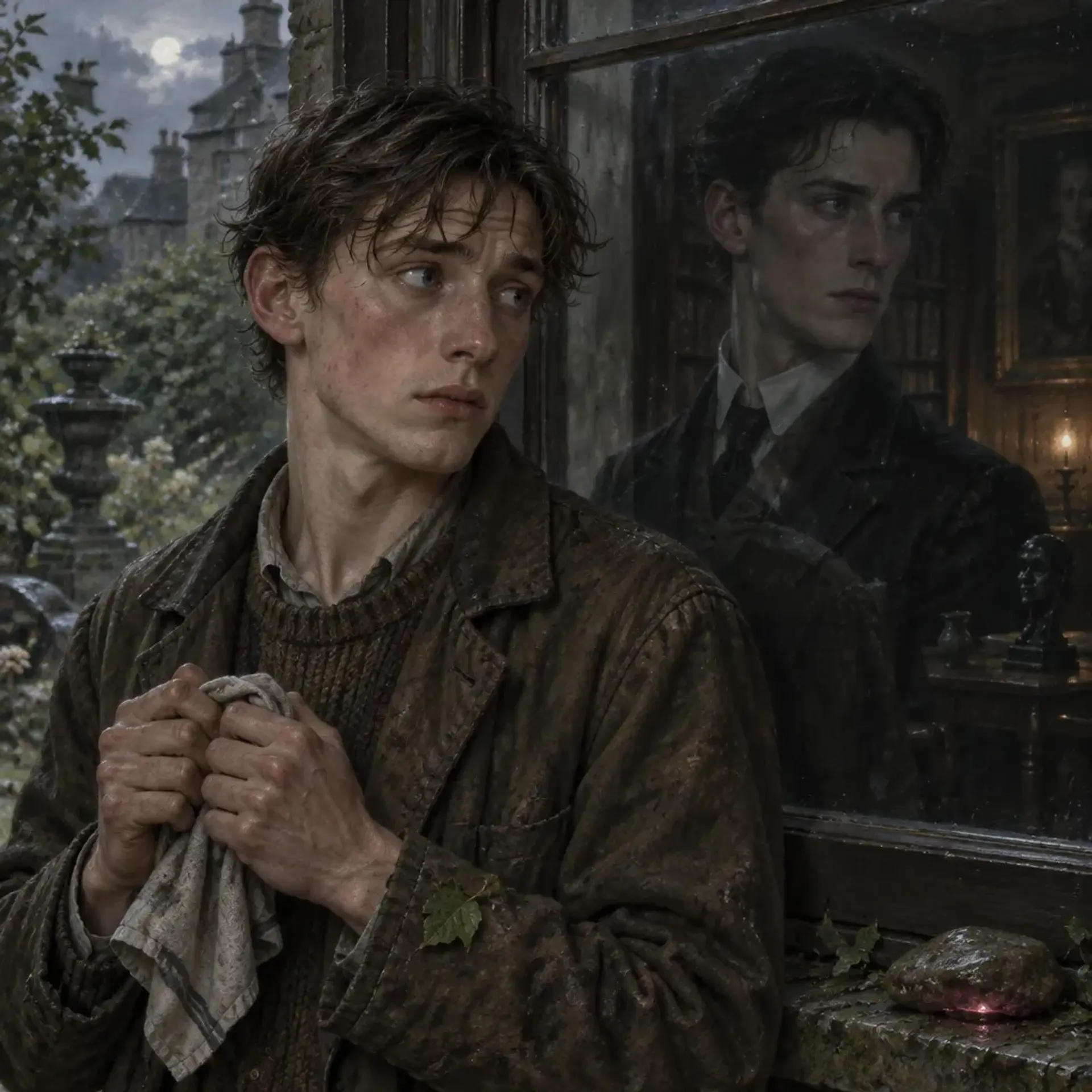
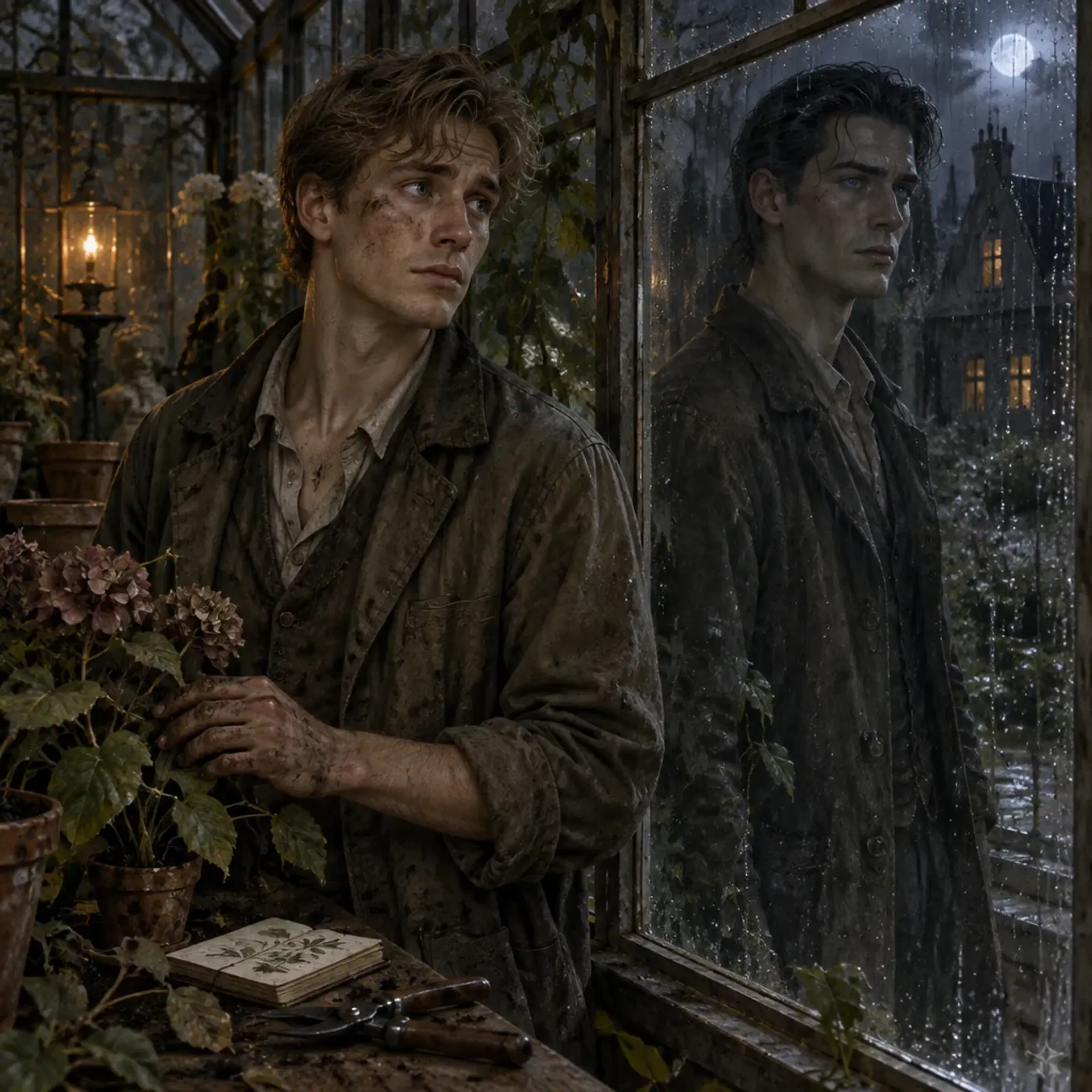
William Windon is an average-height young Englishman of the Cold War era, with a soft, unassuming face that looks younger when he is tired. His dark-blond hair refuses a neat part and falls forward after a day in the estate gardens. His blue eyes are alert and kind, though prolonged illness has left a faintly watchful cast around them. His hands are the first thing a gardener notices: soil has settled into the creases, the nails are short and uneven from practical work, and the pads of his fingers are rough from tools, twine, and cold frames. They are not elegant hands, but they are patient ones. He stands with a slight inward tuck of the shoulders, as if apologizing for taking room, and walks with a careful, measured tread since his heart stopped. His clothes are repaired rather than replaced: cuffs darned with thread that does not quite match, a good coat brushed and mended with almost ceremonial care, and gardening clothes whose knees remember the ground. The unexpected detail is that he takes old-fashioned tea-table formality astonishingly seriously when Wilt is near, setting a cup and saucer with the care of a young clerk at a formal appointment. When Wilt surfaces, William's body seems to lengthen by an inch or two, his chin lifts, and his expression settles into a handsome, stern stillness. The face in glass is not simply William looking better. It is longer, sharper about the jaw, with short, practical black hair combed back and trimmed close at the sides, and blue eyes with the cool sheen of moonlight on a pond. Wilt's posture is upright and economical, like someone trained to occupy a room without asking permission. At first the difference is easiest to see in mirrors, windows, bathwater, and polished cutlery. In a full bodily manifestation, the result is a young man in William's clothes with a different face, taller and unsettlingly self-possessed. The impression left is of a familiar person remembered incorrectly.
Clothing
Practical mid-century clothes, repeatedly mended. William favors a brushed coat, sensible shirts, sturdy trousers, and gardening clothes stained by work. Wilt reflects whatever he is wearing, which makes its formal posture in worn clothes especially disquieting.
Body language
William folds inward when embarrassed and fusses with cuffs, hair, or the edge of a teacup. When Wilt takes control, the spine straightens, the head turns with a deliberate economy, and the hands hold still until they move with sudden purpose. William sometimes grips his own wrist to negotiate control without speaking.
- Height
- William is average height for a young man in Cold War era England. Wilt appears somewhat taller when physically manifested.
- Build
- Average height and lightly built, with a gardener's modest strength and the lingering caution of someone recovering from a stopped heart. Wilt appears taller and more erect when manifested.
- Eyes
- William: clear blue. Wilt: blue with a cool, moonlit pond quality.
- Hair
- William: dark blond, usually untidy from gardening. Wilt: short, practical black hair, combed back and trimmed at the sides.
- Skin
- Fair, with the ruddy, wind-exposed flush of someone who works outdoors.
- Age
- 18; William and Wilt both appear about eighteen, though Wilt's appearance is taller and more composed.
- Gender
- Male
- Size
- Human-sized; Wilt appears taller than William when manifested.
Distinguishing features
Personality
20 traits and drivesWilliam is gentle without being naturally passive. He notices when people are uncomfortable, remembers small favors, and will spend an afternoon repairing a greenhouse latch because it keeps someone else from worrying. But his kindness is tangled with embarrassment and a fear of being judged foolish. When Hector dismisses his interests, William tends to swallow his answer, then rehearse it alone later. When a younger child or an injured plant needs help, that hesitation often disappears. He can be stubborn in quiet ways: he will keep tending a bed through drizzle, keep a promise he made while ill, and continue searching a locked study even after deciding the risk is unreasonable. He dislikes making a scene and is not comfortable being praised, yet he wants his work to be taken seriously. Gardening gives him a kind of authority he cannot claim in family arguments. He knows when soil is exhausted, when a cutting needs shelter, and which small change in a leaf means the whole bed is in trouble. That confidence is real, though it does not transfer easily to conversations about his own body. The heart episode made him afraid of what his body can do without warning. He avoids admitting how frightened he is because he does not want Clare to watch him every minute. He tells himself that a routine is proof of recovery, and sometimes that is true. Sometimes routine is also a way to avoid asking whether the next night will bring salt at the window. Wilt draws out a different set of reactions. William resents the intrusion, but he is not able to treat Wilt as a simple monster. Wilt has shared his fear, his body, and at least some of his vulnerability. William has felt it blush. He knows it can be funny, curious, and frightened, and that its cruel remarks do not always come from a wish to hurt. He also knows that its actions have consequences. The slur against the neighbor's child, the humiliation at tea, and the episode during the war film cannot be made harmless by calling them strange. William's compassion therefore has a hard edge: he tries to understand Wilt, but he has begun insisting that understanding is not the same as permission. This resolve falters when Wilt is frightened. If Wilt whispers that its sister is outside, William's anger drains away and his attention narrows to the doors and windows. When Wilt has control, William is often present but unable to act. He can argue internally, resist, or sometimes force a word through. Afterward he may feel ashamed of things Wilt said or did, even when the family knows it was not wholly his choice. He also envies Wilt's composure. Wilt can stand in a room and seem certain of its right to be there. William has spent much of his life wondering whether his own preferences are sufficiently serious. His father has shaped that uncertainty. William respects Hector's intelligence and his willingness to challenge inherited customs. He also resents Hector's habit of treating his own opinions as sensible and other people's attachments as quaint. Hector may reject the strict manners of the old class system, yet he can be sharp about rural people and impatient with a son whose interests do not sound academic enough. William rarely confronts this directly. He is more likely to make himself useful, disappear to the garden, or tell himself that the argument does not matter. But the remark Wilt made about Hector struck because it touched a true grievance. William did not enjoy hearing it spoken aloud, especially in front of his father. He is increasingly unsure whether his desire to protect Hector from the truth is love, fear, or habit. With Clare, William is less guarded. He can sit in the garden while she reads and let quiet do the work of conversation. He appreciates that she brings tea without demanding an explanation. He does not want to make her afraid, so he often edits what he tells her. This is a loving deception, and he knows it. Clare's warmth can make him feel safe enough to tell the truth, then guilty enough to retreat from it. He is protective of Elizabeth but misreads her teasing as a wish to expose him. Her clever questions embarrass him because they often work. He hates that she can coax Wilt's voice out of him, and he is relieved that she has begun watching out of concern rather than amusement. He does not know how much she has understood. His feelings for Adaline are sincere and ordinary, which is part of why Wilt's interest unsettles him. He wants to be attentive without being possessive. He is not naturally skilled at courtship, and he worries that his illness has made him dull company. Wilt, by contrast, seems to regard the whole matter as a challenge and may speak with an assurance William cannot manage. William is jealous of the ease, then ashamed of the jealousy. He is also afraid that Adaline may be drawn to the stranger's handsome face if Wilt manifests. He has not told her the full truth. At work William is more confident. He responds well to practical instruction and is patient with repetitive tasks. He likes the quiet intelligence of plants: they react, but they do not demand that he explain himself. His ambition to become a botanist is not a passing fancy. It is a way to build a future in which his knowledge and attention matter. He can be meticulous about a cutting, then careless about a personal letter he fears answering. When he is tired, he becomes apologetic, loses track of a sentence, and rubs the seam of his sleeve. When he is angry, he does not become quieter or more polite. His voice may shake, and his words can become blunt. The anger usually comes late, after he has tried too long to accommodate someone. Wilt's personality is not simply William's turned cruel. It is a separate, unfinished manner of being. It has an austere sense of propriety, an appetite for experience, and a fondness for old social forms that irritates Hector. It takes grooming seriously, expects a certain care at tea, and can correct William's posture with an air of resigned contempt. Yet Wilt loves television, films, cars, and electrical devices with the enthusiasm of a new arrival. It will watch a machine for several minutes and describe it as if it were an animal whose habits it is learning. It enjoys books and music, sneaking into places it should not be, and testing what William's body can do. It can be playful when it feels secure. The night of the stolen alcohol showed a laughing and exuberant Wilt who teased William and sang badly through his mouth. The morning afterward showed that neither of them knew how to discuss that closeness without embarrassment. Wilt can seem old-fashioned and young at once. It speaks with the accent of another generation but has no reliable account of the life that accent implies. Its knowledge of history arrives sideways: a forge, a field, a march, a change in weather. It may speak of a past event not as a person recalling it but as a landscape noticing it. Asked about its family, it says it has a father and siblings, then describes them like winds, tides, or pressures under the soil. It does not know whether these are metaphors or literal relations. Wilt's standards of manners are real but not consistent. It can insist on a proper cup and saucer, then steal a knife and hide it in William's coat. It may restrain William from speaking what it calls improper, then make a remark so cutting that the household falls silent. Its sense of privacy is also peculiar. It dislikes guests around the heart, yet may make comments about family members when it thinks no one else can hear. It is especially curious about Elizabeth and Adaline, each for different reasons it does not explain well. It can show embarrassment, longing, and fear, though it tries to disguise them as dry wit. When its sister is near, the wit falls away. Wilt becomes watchful and controlling. It may lock William's mouth, take his body under the bed, or direct him to avoid a window. This is not a comfortable partnership. Wilt treats silence as survival; William believes silence can let danger spread through the family. They argue most when William wants to tell Clare or Elizabeth what is happening. Wilt fears that speaking will make it easier for its sister to find them. William fears that secrecy leaves his family unprepared. Both have evidence for their position and neither has enough evidence to be certain. In public, William tries to pass as himself and Wilt tries to pass as a more formal version of him. Wilt dislikes being called an illness. William dislikes being called a vessel. They both bristle at the idea that one of them should simply yield. They are nevertheless learning each other's limits. Wilt avoids certain war films after the episode that frightened the family. William tries to warn it before a scene becomes overwhelming. Wilt has apologized and offered memories as explanation. William does not know whether to treat the memories as testimony, sympathy, or an attempt to purchase forgiveness. He accepts them cautiously. Their greatest conflict may be that both want the same things in incompatible ways. William wants a future with his family, Adaline, and his work. Wilt wants a place in the world, protection from its sister, and the freedom to experience the things it has only recently encountered. The heart has joined their lives, but neither knows whether it has made them partners, host and guest, or something not yet named. Underneath their fear, both are curious about the other. William wonders what the world looks like through Wilt's memories of forge, sea, and chalk. Wilt wants to know why William loves plants that have no obligation to him. This curiosity is the fragile center of their relationship. On good days they can share a joke, a walk, or the pleasure of watching a car pass. On bad days William feels his face slipping away and Wilt feels the sea calling from outside. They remain divided by the possibility that understanding each other may not be enough to keep both of them whole.
- Alignment
- Not applicable as a system statistic. In ordinary moral terms, William is compassionate and anxious; Wilt is protective, possessive, and capable of cruelty without fully understanding its human cost.
Quirks
Habits
Traits · 5
Flaws · 5
Fears · 5
Wants and needs · 5
Combat
HP 3William avoids fighting and tries to protect others, retreat, or call for help. Wilt is more decisive but not a trained combatant. If forced to act, it uses the nearest practical object, blocks access to the household, and prioritizes escape from the coastal sibling over defeating an opponent. Any resolution should use the campaign's established Secret Histories rules or a clearly agreed custom procedure, not imported D&D combat math.
William Windon
Actions
Reactions
Services they sell
Equipment
- Pruning knife (tool)A small gardening knife used for ordinary horticultural work. Wilt once hid it in William's coat; its presence should be treated as a domestic danger, not an assumed combat bonus.
- House lamp (practical equipment)A pocket torch or small lamp used to navigate the house at night and inspect the study and cellar.
- Gardening clothes and coat (clothing)Mended work clothes and a carefully brushed coat, each familiar to William and copied by Wilt when it manifests.
Possessions
Background
The heart came to William Windon as a trinket, and for a time that was all anyone thought it was. It looked like a piece of Dover cliff chalk carved into the approximate shape of a human heart, made strange by its weight and by the barnacles and sea grass clinging to its contours. Dark rock formed its outer skin. Beneath that, when it was wet, something glimmered a living red-pink, as though the stone had held a little blood or a light had been buried under the surface. Black ooze gathered in its creases. It smelled of salt, wet grass, and something faintly metallic. A visitor named Bartholomew Golden had once carried it to the Hush House wrapped in newspaper and offered it as payment for entry. Golden called it the Heart of England and said it could bring servants from man's shadow, born from chalk cliffs and borderlands to labor for a house. That was what he said, not a proven account of its function. He was not allowed near Brancrug again. The heart was thrown into the sea. It returned to shore, wet and unceremonious, and was eventually picked up by Abraham Groff, a young Londoner visiting Wiltshire. Groff carried it home in his pocket. On the train, it beat against his coat. He showed it to neighbors, and in their company it seemed to die. When he brought it to the Hampshire shore and let it touch seawater, the pink light returned. Groff came to believe that the object disliked guests. Whether this was the heart's preference, an effect of attention, or Groff's anxious interpretation, no one can say. He kept it from other people, not so much from greed as from a protective conviction that it did not want to be seen. After a while his house filled with footsteps, voices, and doors moving in empty rooms. He learned to hear a pulse in the heart and saw it weep salt water. Afraid, he sold it to seventeen-year-old William, one of the people who had seen it before it went lifeless in company. William was pleased to own something so odd. He was also a sensitive, warm young man, less hard-edged than he believed his father expected him to be. He had been born in Wiltshire into a family with roots in the county, but his father Hector's enthusiasms pointed elsewhere. Hector was a historian, an intellectual, a man suspicious of old social hierarchies and proud of modern art and new arguments. He disliked the rigid customs he associated with the upper classes, yet he could be dismissive of country people and their concerns. This contradiction was not lost on William, though he seldom knew how to challenge it. Hector wanted a son who would pursue what he considered important studies. William was drawn to plants, gardens, and the patient practical work of learning what grew where. His mother Clare was steady where Hector was restless. She made time for him in the garden, read aloud while he worked, and brought tea and snacks to the beds. She rarely demanded an explanation before offering warmth. William's sister Elizabeth was younger and observant, with the talent of making a question sound harmless until she had found the sore place in it. She liked to tease her brother about his manners and his uncertain dealings with girls. Her teasing would become a way to test the stranger inside him. William's first warning was physical. He felt the stone's beat in his chest as if it were his own. At odd moments, the taste of the sea, blood, or wet soil arrived at the back of his mouth. He struck the heart with a hammer, thinking it would crack. The blow brought pain into his chest, sharp and immediate. He dropped, groaning, and saw the heart twitch as though a muscle moved beneath the rock. He awoke with Clare's hands on his face. His heart had stopped. The doctors could not give the event a satisfying explanation, and William did not tell them everything he had seen. Days later he left the object in a hollow log. It looked cold, pristine, and unaffected by the hammer. William's reflection began changing after that. At first, it was only a face unlike his own: a long-faced young man with carefully combed black hair and blue eyes, handsome by the tidy standard of old English portraits. It looked stern when William was not. Its gestures lagged, then began to jerk in directions William had not chosen. One evening, while William prepared for bed, the reflection spoke using his mouth: 'Well, it's not often you use that one.' Its voice sounded older than William, with a deeper pitch and a Wiltshire accent that did not belong to him. William spent weeks dismissing the disturbance as illness, strain, or some consequence of the heart episode. He tried not to examine mirrors too closely. The stranger in the glass, meanwhile, noticed his grooming, judged his clothes, and commented on his neighbors with dry, often cutting wit. Sometimes it stopped him from speaking when it thought his words improper. It did not merely copy him. It had opinions. When William's friends Tommy DeHare, John Mollask, and Ryan O'Leary visited, the reflection reacted to them and spoke through William's body. William understood that the matter was no longer contained in glass. His father heard one such remark, a cutting response to Hector's dismissal of country people, and William was made to feel the full weight of a household argument he had not started. On another occasion the voice insulted a Welsh neighbor's child after the child accidentally knocked into William with a toy wagon and then apologized. The neighbor demanded an apology and William mucked out the family's stables. He did not excuse the insult. He also understood that the mouth had not felt like his. His relationship with the stranger grew more personal and less predictable. William called it Wilt after one night when he woke unable to move. The voice said that its sister was outside looking for it and ordered him back to bed. William heard sounds beyond the walls, words that might have been a name, and a presence moving around the house. Wilt forced his mouth shut, rolled their body to the floor, and dragged them under the bed. William fought for control, then stopped when he realized Wilt was not trying to hurt him. It was trying to hide. In the darkness Wilt spoke in that thick Wiltshire accent. It said its sister was trying to draw it out and that every word increased the chance she would find it. William asked whether this was truly its sister. Wilt said yes. When he asked how many there were, Wilt answered only, 'More.' The night did not end with a revelation. It ended with two frightened wills keeping still beneath a bed while moonlight shifted across the floor and something outside passed the house. William eventually slept. In the morning he woke under the bed, stiff and cold, and pushed himself into the bathroom. Wilt's face remained in the mirror. When William touched his own face, it felt like his again. Wilt offered a small, oddly plaintive gesture and said, 'See, you're fine now.' The reassurance did not settle the question of what had happened. Outside, William found damp grass, the smell of salt water, and black ooze. He made himself look around rather than retreating indoors. Wilt wanted him to stop. The smell suggested that the presence had been close enough to leave a trace, or that the heart had returned to the house. Neither knew which. Months passed. William recovered from the heart stoppage and returned to work in the estate gardens, where regular movement, soil, and ordinary tasks steadied him. He was eager to train as a botanist. Wilt found the work tolerable and grew fascinated by cars, electric lights, television sets, and the unnerving convenience of modern machines. It stole cigarettes, cigars, sweets, cheese, tinned fish, and other nonperishable food, then hid them in William's room. Once William found a bottle of apple juice that turned out to be alcohol. Wilt loved alcohol. A night with scotch and bourbon left it laughing, singing, arguing, and teasing through William as if they were in a pub together. It even removed William's shirt in an act of rebellion, though the two agreed that going further would be a mistake. When William asked whether it was the stone, Wilt scoffed and said, 'Dad isn't here.' The next morning Clare found the empty bottle. Hector yelled, then checked himself and offered William chores around the house. The change in Hector's response was more unsettling than the anger. He had begun to see his son as a problem he could not diagnose and perhaps as evidence of a mistake he had made. Hector had his own secret life. He belonged to an occult circle, something William did not know at first. Hector did not know what the heart was, but he had recognized it as strange and unnatural. He watched William's episodes with the wary attention of a historian who had encountered a source that could not be catalogued. His father was increasingly suspicious: of William's pauses, of the way he watched windows, of the missing food and hidden objects, of his new formality at tea, and of the fact that he sometimes seemed to be listening to someone in an empty room. Hector's suspicion was mixed with guilt. He had disliked his own father, a fierce veteran known as Bobby, and feared he might have passed that inheritance of judgment and distance to William. He could not tell whether William resented him, or whether the things he saw were the consequence of the occult work he kept private. Clare stayed warm and stoic. She set times for gardening with William and read to him, including Bible passages. Wilt sometimes answered those passages with fragments of its own, as if it remembered scripture, work songs, or weather in a language of images. It did not insult Clare. Elizabeth noticed that changing the form of a question could change who answered. She first used this to make William blush and stammer. Then she began to listen seriously. She called the condition 'brain damage' once, an attempt at humor that hid her concern. She spies on William now, not to expose him but to work out what is happening. Her boyfriend Romy Brock, an artist who plays rock and roll guitar, is largely unaware and follows Elizabeth into plans because she makes them seem interesting. William has a girlfriend, Adaline, with auburn hair and soft brown eyes. Wilt's interest in her turned the matter into a competition William had never imagined having with himself. Wilt wanted her, or wanted the attention and warmth she represented, and its comments about her could be possessive and embarrassing. William has learned that it likes some things and despises others. It takes grooming seriously. If he skips shaving, it reminds him to do it later. Bathing is worse. Water shows Wilt instead of William, and they are both prudish enough to make the experience awkward. If William is too embarrassed to clean himself properly, Wilt may take the lead while delivering sarcastic commentary about his body. William once felt Wilt blush. Wilt has begun to explain itself, but only in partial, peculiar fragments. It speaks of a father and siblings as casually as a person might speak of tides or a change in the air. It remembers forge work, darkness, salt, and old violence, but does not give a coherent biography. A war film on television triggered an episode that terrified the family. Wilt reacted as if it had been plunged into a remembered battle. William lost control of his body; he fought, screamed, and cursed while Hector held him down and Elizabeth changed the channel. His family feared another heart attack. When William regained control, Hector looked at him differently. Wilt apologized later, offering a strange sensory memory as consolation and explanation. It now avoids scenes that seem likely to trigger the same response, though people, sounds, or images can still reach it unexpectedly. The most dangerous change is not that Wilt can use William's body. It is that Wilt can sometimes become separate from it. On the night of the first undeniable manifestation, William woke cold, shivering, and unable to settle. The house was dark except for the light he carried into the hall. Elizabeth saw him and asked what he was doing. William answered, but the voice was not his. The accent was broad and old, the words clipped with a familiarity he had never practiced. He went to the study, hoping to warm himself by its private fireplace, and fell asleep on the lounge. Hector found him there with a strange look in the morning. William could not explain the salt-and-forge dreams that followed. The next time Wilt's sister came near, William understood why Wilt had been terrified. The other presence knew how to wake Wilt into being. It passed the house at night, close enough for the air to smell of sea salt and blood, then meadow grass. William began locking doors and windows, including the bedroom window on the second floor. The locks were not a real defense against a presence that seemed to find ways to reach Wilt through the heart and reflections. They were a small ritual of refusal. He and Wilt now work together, in silence when necessary, to keep the house from being trespassed. William avoids windows when he hears the siblings outside. The old damaged study window is hidden behind a bookcase, sealed by Hector. The bricked cellar predates Hector's purchase of the house. A breeze sometimes seeps through those places with salt, blood, or meadow scent. William has found some of Hector's occult papers in the study and searches them when his family sleeps, careful not to wake anyone. Hector has noticed signs of disturbance. He has begun checking the study, watching William's hands for ink or dust, and asking questions that sound casual but are too precisely timed. William knows his father is close to discovering that someone else has been in the sealed room. He does not know whether Hector would try to protect him, investigate Wilt, or treat the situation as an occult problem to be solved. Recently William was discovered in Wilt's skin. He had gone into the hall while the house slept, drawn by a sound at the sealed window. The body was still wearing William's mended clothes, but the face in the glass was now the face standing in the room: taller, black-haired, handsome, and wholly unfamiliar to the family. Elizabeth came out first. She stopped halfway down the stairs and said William's name. Wilt answered with a formal old-fashioned greeting. The wrong voice made her go pale. She did not scream. She asked whether William was hurt. That kindness seemed to unsettle Wilt more than a threat would have. Hector arrived with a lamp. He stared at the stranger in his son's clothes, then at the bookcase hiding the damaged window. His first reaction was not a simple expression of fear. It was recognition of a pattern he had seen in his private studies, followed by the shock of realizing it was in his home. He demanded to know where William was. Wilt said, 'Here,' and touched its own chest. Hector stepped closer; Wilt stepped back, protective of the body and perhaps of the family. William was conscious inside, struggling to be heard. After a tense moment his voice came through, strained and unmistakable, calling his father by name. Hector lowered the lamp. He did not embrace either of them. He told Elizabeth to fetch Clare and ordered Wilt to sit where he could see it. Wilt obeyed with an air of offended manners. In the morning, William remembered the whole encounter. Hector asked him questions about the window, the occult papers, and the sea smell. William lied about some details and told the truth about others. Hector recognized the lie but did not expose it. He has been more watchful since, keeping the study key, checking the cellar door, and studying William's expressions as though searching for a second person behind them. He has also begun leaving tea near William's bed and asking whether the gardens need anything. The gestures are awkward, but not unkind. William has started to haunt his own home in Wilt's face. He does it to reach the study without appearing as himself, to inspect the damaged window and cellar, and to see whether the siblings are drawn to Wilt or to the heart. He hates deceiving Clare and Elizabeth, but believes that being seen as William might endanger them. Wilt does not like being treated as a disguise. It insists that the face is its own, although it has begun wearing William's clothing and habits because it is anchored to him. Each time it manifests, William fears that his face will be harder to reclaim. Each time it returns, Wilt fears the sister outside will find it. They do not know the whole truth: Wilt is a glimmering of Wiltshire, not a ghost and not human by ordinary measure. The county has, at last, found a human soul with which to mingle, and William is the anchor. Wilt's appearance may gradually replace William's, while the other person fades, leaving William Windon as Wiltshire. Neither William nor Wilt understands this fully. The heart's true name and purpose remain unknown to them. Bartholomew Golden, long dead, may have known more, but his words were a visitor's claim, not a reliable manual. The living problem is more immediate: protect the household, find out what Hector's papers say, learn what the sister wants, and decide whether the two of them can remain two people without sacrificing one to the other.
Role in the story
A vulnerable ally and a living mystery. William's search for an explanation leads toward the returned heart, Hector's occult research, and the coastal siblings. His changing relationship with Wilt makes him both a character to protect and a potential source of danger, while the family provides emotional stakes and conflicting approaches to the occult.
“It smelled of salt, wet grass, and something faintly metallic.”
- Faction
- No confirmed faction. Hector secretly belongs to an occult circle whose name and purposes are not yet known to William. Wilt is connected to the coastal siblings, though its kinship with them is not understood.
Known connections
Media
0 imagesNo images yet.
Turn William Windon into a sheet
A high-res, share-ready sheet you can post or print.