William Windon
William Windon
At the table
Voice
William's speech is conversational and locally inflected, with a gentle pace that becomes quick and concrete when he is nervous. His gardening work shows in the way he reaches for specific names and practical descriptions. Wilt speaks through the same mouth with a deeper, older-sounding Wiltshire accent, careful consonants, and a dry, formal precision that makes even a casual insult sound deliberately chosen. The difference comes from the body and history behind the voice, not from a singing-range label. When William is frightened, the two accents can slip across one another mid-sentence. Wilt may speak as though a memory were weather moving over land, or a feeling were something hammered in a forge.
Speech patterns
How to play them
Begin with William, not Wilt: he is cautious but fundamentally warm, and responds best to practical questions about gardening, his recovery, or the house. Do not make him immediately confess everything. He tests whether visitors can keep a confidence and whether they respect his family's safety. Wilt may answer through a reflection or take William's voice, often first with an observation about manners or clothing. Show the conflict as two distinct wills sharing a body, not as a routine possession effect. Hector's suspicion, Elizabeth's concern, and the night visitors provide separate ways into the story. The hit point field is set to 0 as a storage placeholder only: no Secret Histories combat statistic is asserted here.
Goal
Protect the Windon household, learn what the heart and Wilt's searching sibling are, and find a way for William and Wilt to coexist without William disappearing.
Motivation
William is motivated by care for his family and a need to remain himself. Wilt is motivated by fear of being found by his siblings, curiosity about human life, and an emerging attachment to the body and people he shares with William.
Appearance
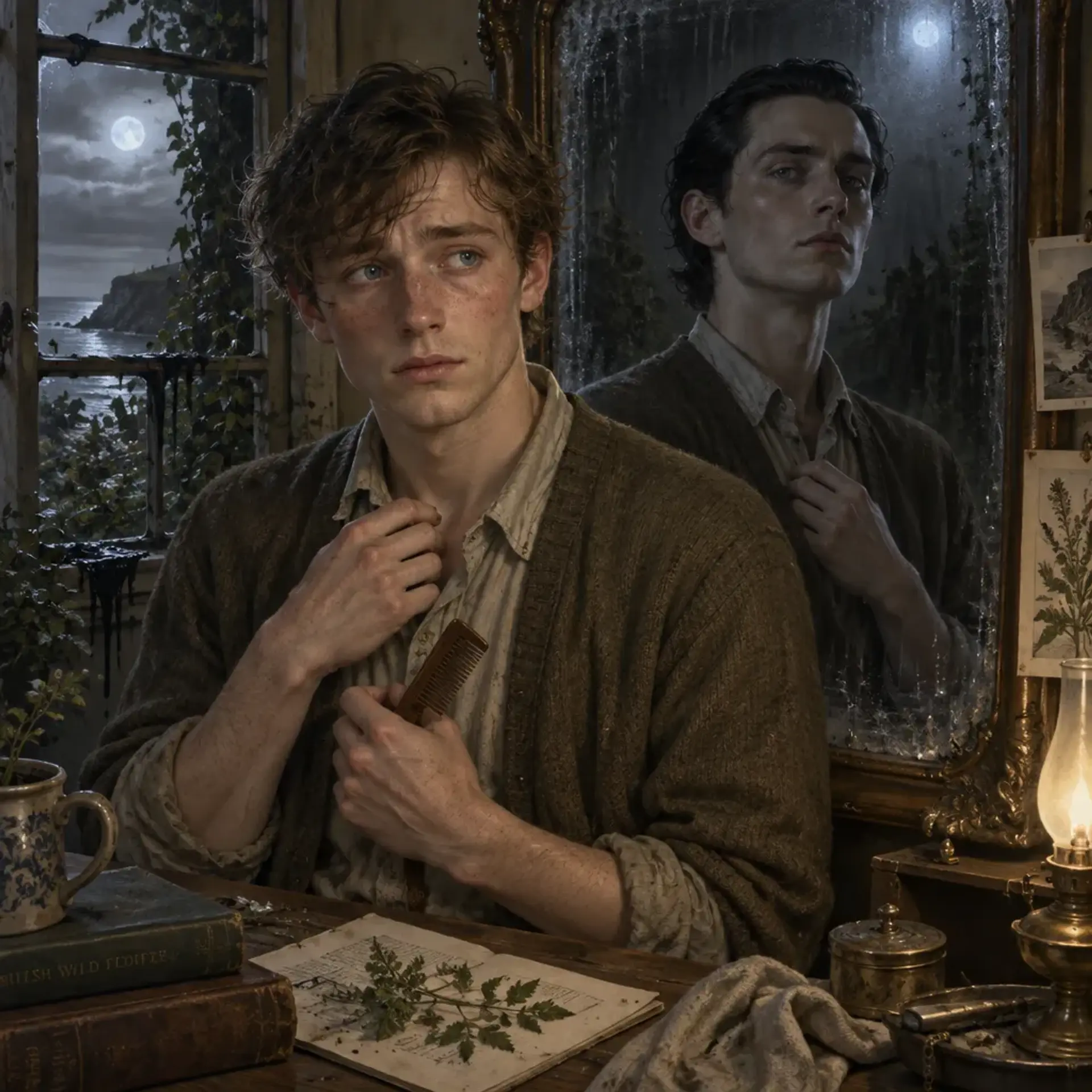
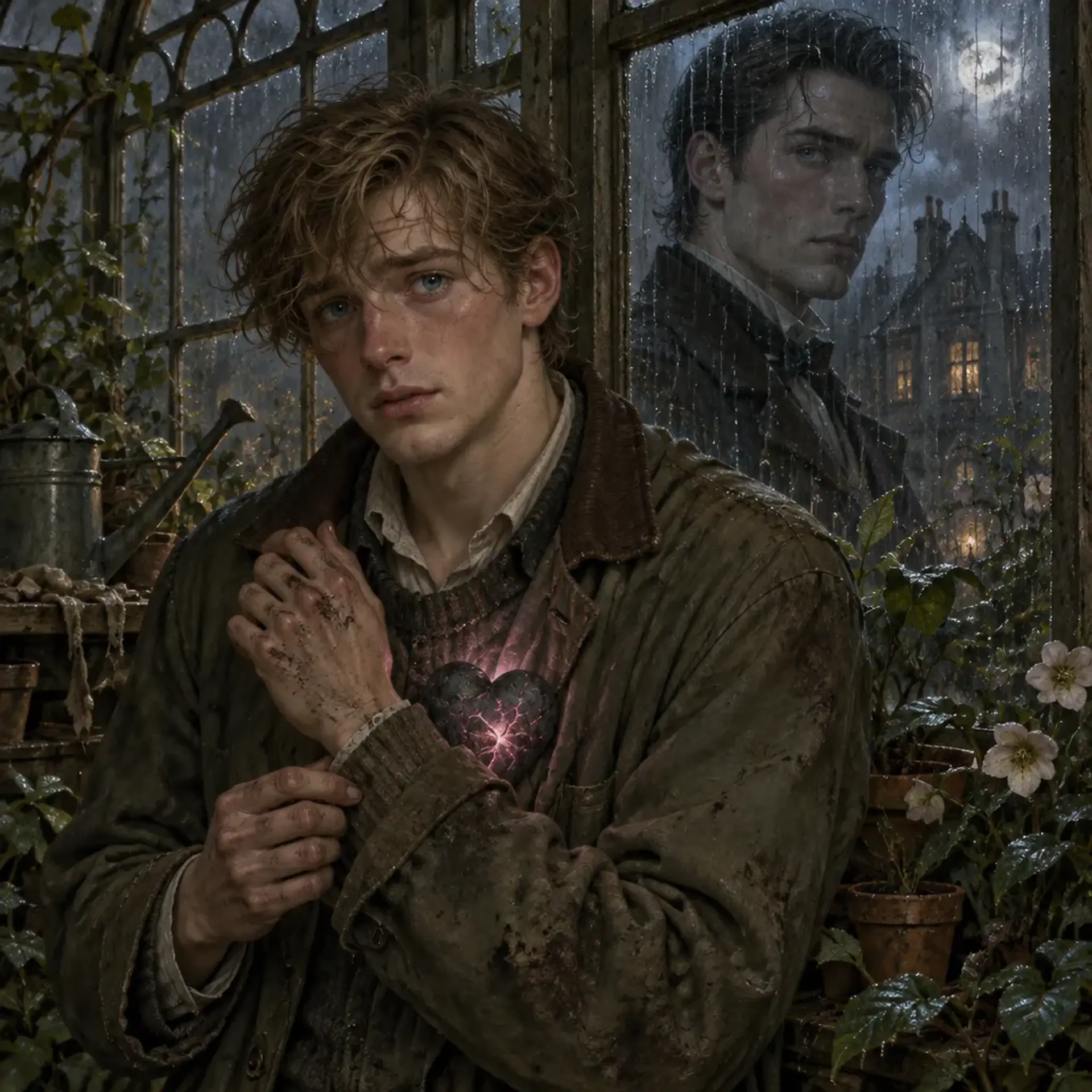
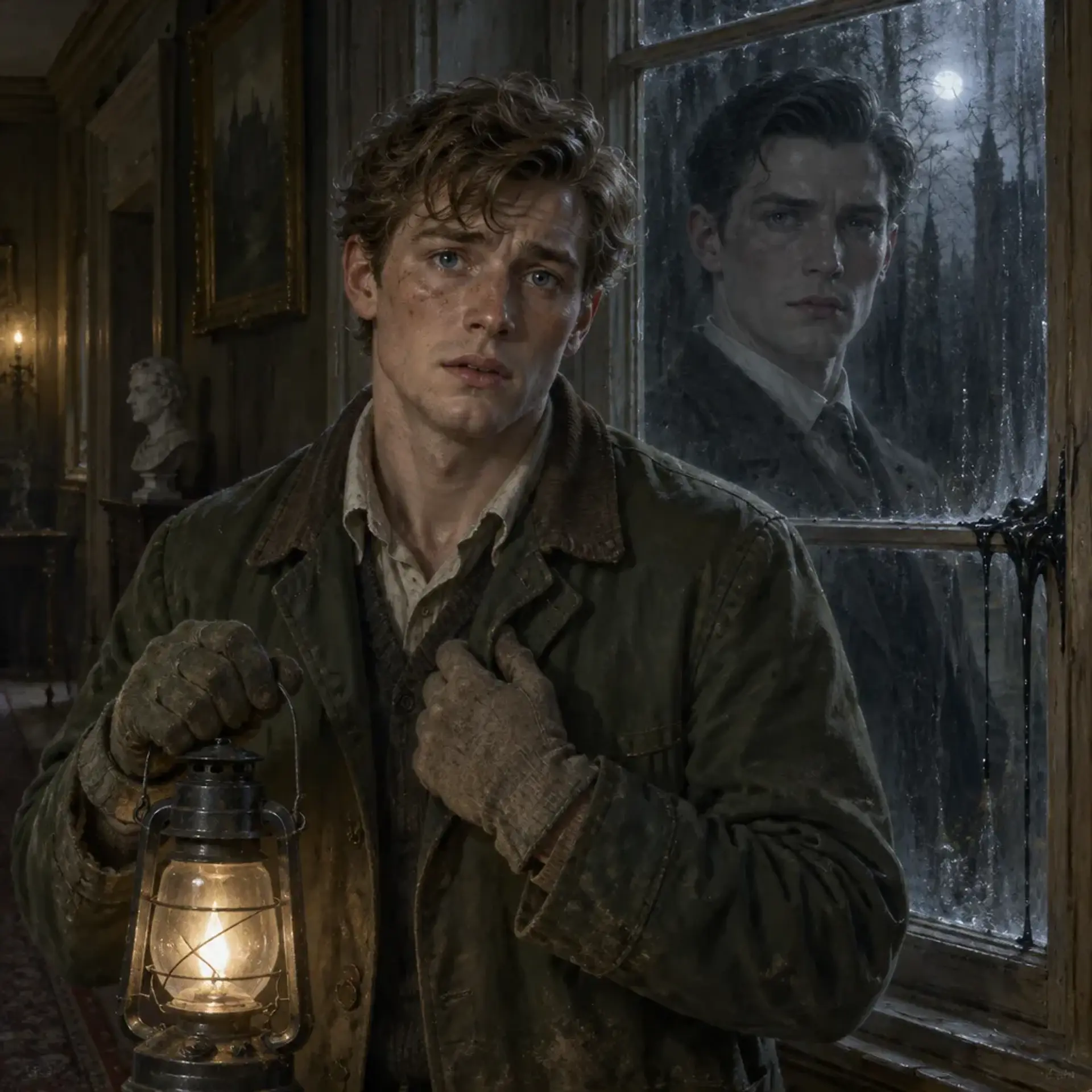
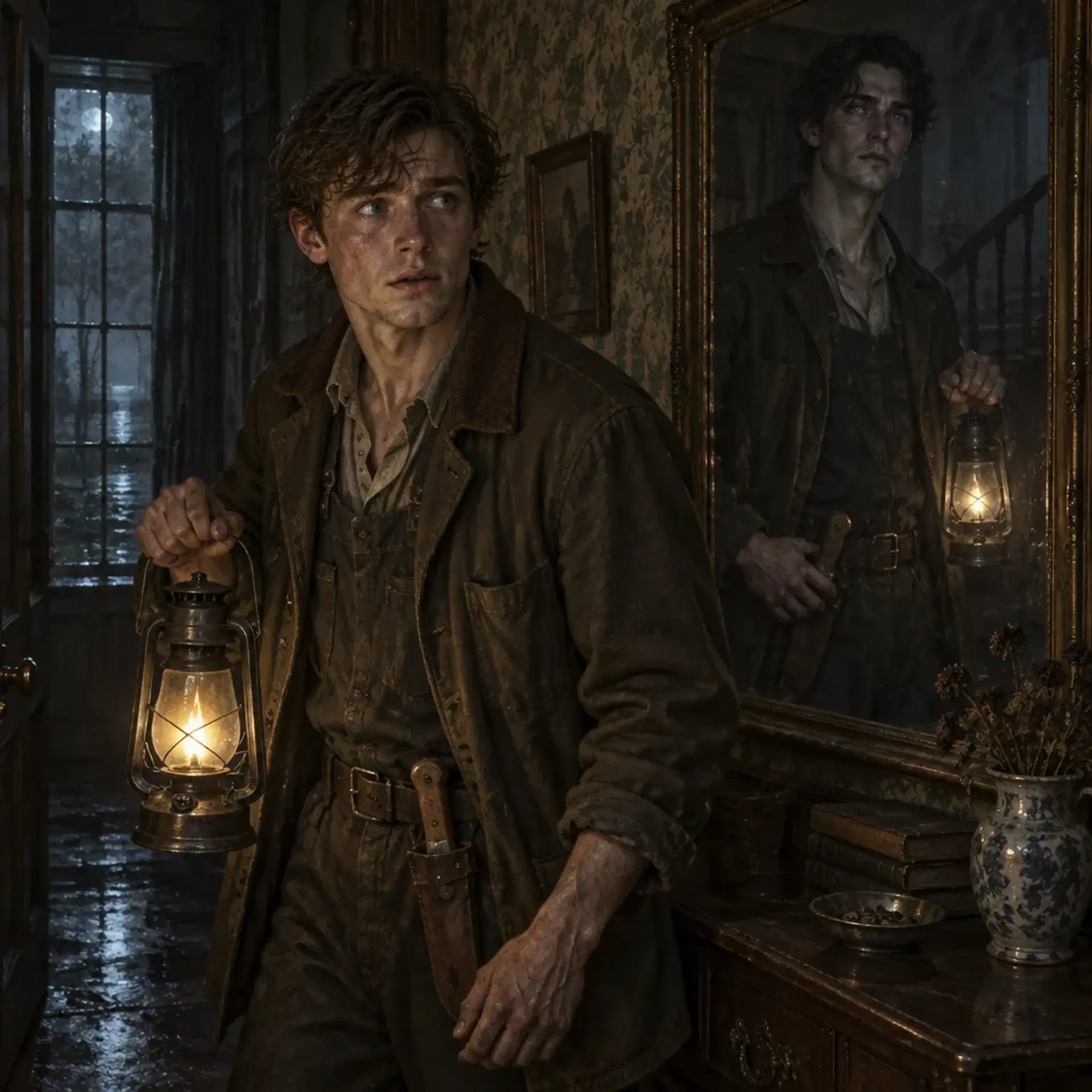
William Windon is an average-height young man by the standards of his Cold War-era English village, with a soft, work-worn presence that looks more at home beside a greenhouse bench than in a fight. His skin is fair, brown-spotted, and often marked by soil that survives washing in the creases of his knuckles. Dark blond hair falls untidily over a broad brow; he tries to keep it in order, partly from habit and partly because the reflection has opinions. His blue eyes are gentle until he is frightened, when he watches doors and windows instead of faces. He stands with his weight slightly forward, as though ready to kneel among plants or get out of someone's way. A battered garden knife sheath, polished smooth at one precise corner from his thumb worrying it, is the conspicuous object he carries even when he has no reason to use it. He is not delicate: his hands are blunt-fingered, soil-roughened, and nicked by ordinary gardening work. Wilt's face is not William's face. In a mirror or borrowed body it is that of a handsome, long-faced youth with black hair, clear blue eyes like moonlight on a freshwater pond, and a stern, composed expression. Wilt seems eighteen, but stands taller than William and carries himself as if formal manners were a kind of armor. His features have an unsettling, old-fashioned English symmetry, and his gaze makes a room feel briefly arranged around him. He always reflects William's clothes, though the person inside them is unmistakably different. When Wilt manifests, the air may smell of salt, wet grass, blood, and a faint smear of black ooze. The impression he leaves is of a familiar house remembering a stranger.
Clothing
Work clothes suitable for an English estate garden: practical trousers, shirts, sturdy boots, and a jacket with pockets that tend to acquire soil, folded paper, or something Wilt has stolen. William's clothes remain William's when Wilt appears, making the unfamiliar face all the more disturbing. Wilt is particular about neatness, grooming, and old-fashioned standards of dress.
Body language
William waits with his weight forward and his hands occupied, often rubbing one smooth corner of the garden knife sheath or touching soil under a fingernail. Under pressure he looks toward doors and windows, then makes himself look back at the person speaking. Wilt holds himself upright and still, chin slightly raised, as if every room were a formal drawing room. When the change takes him, William's posture lengthens and settles into Wilt's composed bearing; the difference is visible even before the face changes.
- Height
- Average height for a young adult man of Cold War-era England; Wilt appears noticeably taller.
- Build
- Average, lean, and slightly soft from recent illness; practical strength from gardening rather than fighting. Wilt appears taller, with a more elegant, upright carriage.
- Eyes
- Blue; Wilt's eyes are a clearer, more striking blue, like moonlight over a freshwater pond.
- Hair
- Dark blond for William; black for Wilt.
- Skin
- Fair, with scattered brown spots and soil commonly caught in the creases of his hands.
- Age
- Eighteen in appearance; a young adult by ordinary reckoning. William has been unwell and recovering for months.
- Gender
- Male
- Size
- Medium; ordinary human scale. Wilt appears taller but remains a young man's size.
Distinguishing features
Personality
24 traits and drivesWilliam is warm without being naïve. He tries to be considerate because he knows what it feels like to frighten people, yet the heart-stopping episode has made him guarded about his own body and wary of being examined. Among plants, his attention becomes patient and confident; with his mother, he can still relax into familiar routines. Around Hector he becomes careful, anticipating criticism and hiding anything that might sound impossible. With his friends he tries to perform ordinary youth, but the effort is tiring. Wilt pulls against William in nearly every social situation. He is severe about manners and grooming, but fascinated by television, books, cars, and electronic devices. He can be dryly funny and unexpectedly playful, particularly when drunk, yet his wit can turn cruel because he treats social pain as an interesting effect rather than a reason to stop. He sometimes restrains William from saying something improper and then says something worse himself. Wilt is curious about people but dislikes being watched, and he longs for company while hiding from his own siblings. William is ashamed of the body's strange episodes and protective of Wilt even when angry with him. Wilt is possessive of the body and increasingly willing to explain himself, but he can still take control without permission. Each may be tender in private and combative when the other takes a choice away. Their personalities shift with circumstance: William is gentler when gardening or with Clare, brittle when Hector interrogates him, and frightened but stubborn at night; Wilt is composed in company, provocative in private, lively around entertainment, and abruptly defensive when war imagery or his siblings intrude.
- Alignment
- Not applicable as a Secret Histories rules label. William is kind-hearted but increasingly guarded; Wilt is exacting, curious, and capable of cruelty without understanding its full weight.
Quirks
Habits
Traits · 7
Flaws · 5
Fears · 6
Wants and needs · 6
Combat
HP 0William avoids violence and looks for a way to get people behind a locked door or out of a dangerous room. Wilt prefers concealment and control of the body's movement over a direct fight, and avoids paranormal confrontation. They are not combat specialists. Resolve any conflict using the table's Secret Histories rules; the listed actions are clearly custom narrative prompts, not claims about canonical mechanics.
William Windon
Actions
Reactions
Services they sell
Equipment
- Garden knife sheath (personal object)A worn sheath carried from gardening work; William worries its polished corner with his thumb. It is not presented as a special weapon.
- Gardening tools (tools)Ordinary working tools from estate gardening. Their exact contents vary with the day's work.
- Hidden stores (personal supplies)Small caches of sweets, cheese, tinned fish, cigarettes, cigars, and other non-perishable items, hidden by Wilt in William's room.
- Hand lamp (utility)A small light William uses when moving through the house at night.
Possessions
Background
William Windon was born in Wiltshire, into a family whose roots in the county run back through generations. He grew up with a warm, careful temperament: more sensitive than his father thought useful, more studious than his schoolmates thought exciting, and happiest when there was something living to tend. His mother, Clare, made room for that nature. She reads while he gardens, brings him tea and snacks, and has a knack for turning a day of work into a quiet refuge. William's father, Hector, is a historian, an intellectual, and a man trying to live unlike his own father. Hector is a liberal in his tastes and politics, scornful of rigid social structures and old-fashioned deference. His father, known as Bobby, was a fierce veteran of the Second World War. Hector resents the assumptions Bobby carried home from the war, and he is dismissive of the national actions and inherited certainties that Bobby treated as unquestionable. Yet Hector's rebellion has its own rigidity: he can be contemptuous of country people, impatient with ordinary interests, and disappointed that William's attention has gone to gardening rather than the more intellectually ambitious studies Hector imagined for him. Hector has an unspoken life beyond his public scholarship. He belongs to an occult circle, though no one in his family knows this. He does not know what the heart-stone truly is, but he recognizes it as strange and unnatural. His concealed studies make his growing suspicion of William particularly tangled: he fears the inexplicable, seeks explanations for it, and knows that asking the wrong question may expose his own secrets. William's sister Elizabeth is clever, observant, and fond of provoking her brother. She has learned that a shift in how she phrases a question can make him answer in a different manner, and at first she found this entertaining. She calls the change “brain damage,” partly to tease him and partly because she has not yet found a better explanation. Her amusement has given way to concern as she has seen how frightened he is. She watches him quietly now, trying to understand the other presence without making him feel examined. Elizabeth has a boyfriend, Romy Brock, an artist who plays rock and roll guitar. Romy is easy-going and still blissfully unaware of the scale of the trouble in the Windon home. William's school friends are Tommy DeHare, John Mollask, and Ryan O'Leary. Adaline, a young woman with auburn hair and soft brown eyes, is William's girlfriend. Wilt's interest in her has made William discover the peculiar agony of competing with a version of himself that can borrow his voice and face. William's turn toward the heart began with a young man named Abraham Groff. Abraham, a Londoner, had acquired a queer object from Bartholomew Golden, an amateur alchemist who presented it as a supposedly fossilized living heart forged of heart and scale. Golden had called it “The Heart of England” and claimed it could bring nonhuman laborers out of man's shadow, from chalk cliffs and borderlands, to serve a house. He had left it at Hush House as payment for entry, wrapped in newspaper. He was never allowed near Brancrug again. The object looked like a piece of Dover cliff chalk carved into a human heart: barnacles and sea grass clung to it as though the shore had purchased a home on its sad shape. It was thrown out to sea and returned ingloriously to the beach, wet with salt, water, and black ooze. Beneath its stone skin it had become red-pink, as if light or blood had returned. Abraham took it home. The first time he carried it by train, it beat beneath his coat. He showed it to neighbors, whereupon it seemed to “die,” and it revived after he brought it to a shore in Hampshire and put it in water. Abraham decided the object was special and his. He did not show it to others because he sensed it disliked visitors too. In time his house filled with hauntings: voices, moving doors, footsteps on stairs, and a beating heart that wept salt water. Repulsed and drawn in equal measure, Abraham sold it to William, a seventeen-year-old local who had been among those to whom the heart had once appeared dead. William was proud of his strange prize until he felt its pulse keeping time with his own. After tasting the sea, blood, and soil in the air, he believed the stone was making him ill. He struck it with a hammer. The pain arrived in his chest as though the blow had landed on his own heart. He fell, groaning and coughing blood, and glimpsed a muscle twitching beneath the rock's surface before his own body gave out. He woke to his mother's hands on his face. His heart had stopped. The stone survived the hammer intact. He left it in a hollow log, cold and pristine, and tried to go on. The consequences did not stop. His reflection changed. At first it was a young man of William's age with black hair, a long face, blue eyes, and an expression much sterner than William's. It did not move in step with him. It would arrange its face while William groomed, or jerk as if trying to go somewhere else. One morning it spoke through William's own moving mouth: “Well, it's not often you use that one.” Its voice had an older Wiltshire accent and a deeper, measured quality. It commented on William's clothes, hair, neighbors, and family, sometimes with dry wit and sometimes with an impropriety that earned William trouble. It stopped him from saying things it judged unsuitable, then made unsuitable remarks itself when it thought it alone. When William's friends visited, it proved it could react to people and speak through his body even without a mirror. Mirrors and still water became uneasy company. The stranger enjoyed books and television, moved William's body with sudden excitement, and explored places it should not have entered. It had an unexpectedly intense interest in cars and electronics, and spoke of older knowledge as if describing weather, water, or forge work. It hid food, cigarettes, cigars, and weapons in William's room. William once found a bottle of apple juice that was, in fact, alcohol beneath his bed. Tea became a battleground of etiquette: Wilt held strict rules about old customs that irritated Hector. Baths were awkward because water showed the stranger's face. Wilt sometimes took the lead in grooming, insisting William shave, and made sardonic remarks about his body. Once, to William's astonishment, he felt Wilt blush. A bottle of scotch and bourbon left for William's health led to their strangest truce. Wilt became drunk, teased and argued, sang and yelled as if the two of them were in a pub, and nearly took off William's shirt in an act of rebellion. They agreed that taking off the trousers would be too far. When William asked whether he was the stone, Wilt scoffed: “Dad isn't here.” In the morning Clare found the empty bottle. Hector yelled, then caught himself and offered William work around the house instead. Clare set regular times for William to go out and garden with her. She read from a book or the Bible, and Wilt sometimes answered passages with others William did not know. His answers were not always kind, but he did not insult Clare. The heart's presence, its return, and its precise nature remain mysteries to everyone alive. Only the long-dead Bartholomew Golden knew the name and claimed purpose of the stone, and even Golden's claim may not have been the whole truth. William does not know whether the heart created Wilt, called him, or gave a local presence an anchor. Wilt has said he has a father and siblings, but his descriptions make them sound less like people and more like weather, sea, or a sensation moving through land. The name William has heard, Wilt, is the only name he has been willing to use. William had a dream of being the reflection, watching a young man from a pond in wild woods. He has gradually come to suspect that Wilt is not a human soul, ghost, or ordinary haunting. Wilt seems to be something like a glimmer of Wiltshire, a local presence given a human relationship for the first time, though neither William nor Wilt understands that fully. The heart's principles and aspects are associated with Scale and Nectar, with Forge as Solar or Major and Moon as Lunar or Minor. Scale and Nectar are subverted into one another. These are the known terms of the problem, not a neat answer to it. The heart and Wilt's effects also carry the scent of sea and chalk, soil and blood, as though the borders between county, body, and landscape have become permeable. A war film on television brought the first violent rupture. Wilt reacted sharply to it, and William lost control of his body as if seized by shell shock. He screamed, cursed, and fought while his family believed his heart had failed again. Hector held him down; Elizabeth changed the channel, wide-eyed with concern. When William regained control, Hector did not look at him the same way. Wilt later mumbled an apology and offered a strange memory as consolation and explanation. Since then, Wilt avoids some films and people that seem to provoke that reaction, though neither William nor Wilt can reliably predict the triggers. Five months passed. William recovered enough to return to his estate gardening work, where he is training to become a botanist. The stable work, familiar routines, and walks through town and woods have mellowed Wilt somewhat. William's father, however, has grown more suspicious. Hector now notices gaps in William's memory, unfamiliar turns of phrase, locked doors, altered routines, and the difference between his son's usual softness and the rigid formality that sometimes comes over him. He has started watching William instead of trusting the easy explanations he once accepted. Hector's concern is genuine, but it is mixed with guilt, pride, and the fear that he may have caused or invited something through his own occult investigations. He wonders whether William hates him as Hector once hated Bobby, though William has never said so. The cold night when Wilt's sister came looking changed their household from a place of oddities into a place that had to be guarded. William woke unable to move. The room was cold enough that the air seemed to press through the blankets. He heard movement outside and smelled salt water, damp grass, and the oily trace of black ooze. Wilt spoke softly through him: “My sister is outside. They're looking for me. Go back to bed.” William tried to answer, but Wilt clamped his mouth shut. Then a voice bled through the walls, broken by distance and the house itself: “—Wilt—”. William felt his body roll off the bed and hit the floor without a sound. It crawled beneath the bed, his own breath caught in a chest he could not command. He forced a few words through the locked mouth: “The bloody hell, your siblings?” He stopped at the thick Wiltshire accent that came out of him, unlike his own. Wilt explained that his sister was trying to draw him out. The more he answered, the more likely she was to find him. “Quiet down. We will talk in the morning.” William fought him, furious and terrified. He could feel the body tense and hold still beneath the bed, but after a time Wilt stopped fighting him. The moonlight made a narrow bar under the bed and silvered the dust. Shadows swelled and shrank across the bedroom wall as the branches outside shifted. Somewhere in the house a board creaked, then the hall went silent. William could not see the window from where he lay, but he could feel the night beyond it: cold grass, a salt-heavy breeze, and a presence moving around the house without making ordinary footsteps. Wilt kept William's mouth shut, but William could feel him listening. The silence seemed to stretch until it no longer belonged to the clock or the room. William's anger drained into exhaustion. He did not remember falling asleep. When he woke, he was still under the bed. He crawled out, scraped his shoulder on the frame, and went straight to the bathroom mirror. The stranger was there, stern and handsome, wearing William's clothes. William checked his own face with his hands. It felt normal. Wilt gave him an oddly plaintive gesture and said, “See, you're fine now.” William did not believe that being fine meant being safe. He went outside to inspect the ground. There was the smell of salt water, damp grass, and black ooze. Wilt wanted him to retreat; William made himself look around. The traces suggested that something had passed close to the house, though no ordinary tracks explained it. He asked Wilt calmly if his name was Wilt. After a long pause, Wilt said yes. William has since heard the presence outside again at night. He locks doors and windows, including the bedroom window on the second floor, and avoids the windows when he can. The visitors seem to know ways to wake Wilt into a tangible existence. When they pass, William sometimes loses his face and becomes Wilt in the physical world. Wilt does not want to meet the paranormal; he would rather hide from his siblings than confront them. William, who is frightened of them too, knows the house cannot be protected by wishing them away. He has begun searching Hector's study for answers, moving quietly so as not to wake his family. There he has found traces of his father's secret occult life. A damaged old window is hidden behind a bookcase; Hector has sealed it shut, but William does not know how well. A cellar passage was bricked up before Hector bought the house. Breezes sometimes seep through with the smell of salt and blood, or, more strangely, meadow grass. William and Wilt now work in uneasy silence to keep the household from being trespassed upon. The most terrible necessity came after that. One of the night visitors woke Wilt again, and William found that the change could be used as well as feared. When Wilt's face and height came over him, the house's other occupants treated him as an intruder, a figure appearing where no one should be. William used the stranger's appearance to move through his own home without drawing the visitor outside toward the rest of the family. In Wilt's skin, he checked the hall, listened at the doors, and watched the dark window without allowing himself to open it. The house creaked around him. He passed his own bedroom and saw his own clothes laid out there as if their owner had simply vanished. He had to become the thing his family feared in order to keep the thing outside from finding them. This is William's new haunting: he walks the halls of his own home wearing a face that is not his, keeping doors shut and guiding danger away from sleeping people. The first time he was discovered in Wilt's skin, Elizabeth saw him in the passage. She did not scream. She gripped the banister, stared at the taller, black-haired young man in William's clothes, and whispered, “William?” He could not answer in his own voice. The silence made it worse. Elizabeth backed away, then called for their father. Hector came with a lamp and stopped short. His historian's eye searched the face, clothes, posture, and room, trying to turn a frightening impossibility into evidence. He demanded to know who was there. William tried to say his name. Wilt's deeper voice came instead, the old local accent making the answer sound like a stranger's claim. Hector's suspicion hardened into fear. He raised the lamp as if light might reveal a trick, then told Elizabeth to stay behind him. William took a step back, hands visible, and fought the impulse to bolt. For one sharp moment he looked at his father and saw not an enemy but a man trying to protect his daughter from what he could not explain. That made the next moment worse. William forced Wilt's body to point toward the study's sealed window, then toward the back door, attempting to show Hector that the danger was outside. Wilt resisted being displayed. The exchange became a painful, halting conversation between William's intent and Wilt's voice. Hector understood enough to keep Elizabeth from opening the door. He did not understand enough to trust the face in front of him. When the outside presence moved away, leaving the smell of salt and wet ground behind, William returned to his own face. Hector stared at him in silence. Elizabeth looked frightened, then furious at their father for treating her brother as a threat. Hector did not apologize. He asked William to explain everything, and William could not give him the answer he wanted. Since then Hector has watched him more openly. He asks about the study, the locked window, the bricked cellar, and the times William wakes at night. He has begun checking whether William's descriptions of events agree with what he saw. He is not yet cruel, but his distrust has made their home feel like a place William must patrol and a place where he is himself under suspicion. Elizabeth is the only family member who has started to treat the discovery as a shared problem rather than a diagnosis or an intrusion. Romy follows her lead and remains unaware of the real danger. William's present life is divided between gardening, recovery, family routines, and the night watch. His immediate goal is to find a way to protect his family and understand the heart without surrendering himself to Wilt. Wilt wants the night visitors to stop searching for him, wants to experience the modern world on his own terms, and is increasingly unwilling to be treated as a mere reflection. Both are changing. The unsettling possibility is that Wilt's face may gradually replace William's, while the person who is William becomes something incorporated into Wiltshire itself. Neither of them knows this in full. The house, the county, the heart, and the two young men are becoming difficult to distinguish, and whatever the final shape of that change, it will not be solved by a hammer.
Role in the story
A vulnerable, divided young gardener whose private haunting has become a danger to his family and a doorway into the mysteries of the heart, Wiltshire, and the visitors from the coast. He can be a witness, ally, source of occult clues, or the center of a tense household mystery.
“She reads while he gardens, brings him tea and snacks, and has a knack for turning a day of work into a quiet refuge.”
- Faction
- No confirmed faction affiliation for William or Wilt. Hector secretly belongs to an unnamed occult circle, unknown to the rest of his family.
Known connections
Media
0 imagesNo images yet.
Turn William Windon into a sheet
A high-res, share-ready sheet you can post or print.