William Windon
William Windon
At the table
Voice
William's voice has the slightly breath-held quality of someone recovering from illness and used to working outdoors in cold air. Wilt's voice is produced by the same body but seems to settle lower in the chest, with a more measured, older cadence and a thick Wiltshire accent. Before speaking, William often takes a small nasal breath; when Wilt is listening, the pause can stretch until the room feels as if it is waiting too. The voice is not conventionally theatrical. Its most unsettling quality is the contrast between familiar lips and a speaker who sounds as if he remembers a different century.
William's speech is warm, hesitant, and shaped by a local English upbringing; he often pauses before choosing words. Wilt comes through the same mouth with a deeper, older-sounding voice and a pronounced Wiltshire accent that William does not otherwise use. Wilt's speech has the careful phrasing of someone who treats manners as a defense, punctuated by dry, inappropriate observations. When frightened, he drops the performance and gives clipped instructions. Do not equate his sound with a singing range or assume anger makes him quieter or more polite.
Speech patterns
How to play them
Treat William as a frightened young man with agency, not as a container or a monster. Speak to him directly and do not assume that every answer is Wilt's. If Wilt answers, remain calm and use his name only if William has openly shared it. Avoid sudden restraint, war imagery, and making jokes about the heart stoppage. Offer practical help, privacy, or a safe way to inspect a reflection. Hector can be approached through concern for his son, but challenging his occult work may make him defensive.
Goal
Keep the coastal beings from entering the Windon home, discover what the heart did to William, and negotiate a way for William and Wilt to share the body without either being erased.
Motivation
William wants to recover his health and build a life as a botanist without losing himself. Wilt wants to survive the attention of his coastal kin, understand what kind of being he is, and keep a foothold in the world. Their motives overlap in protecting the house, but differ sharply over trust, privacy, and Adaline.
Appearance
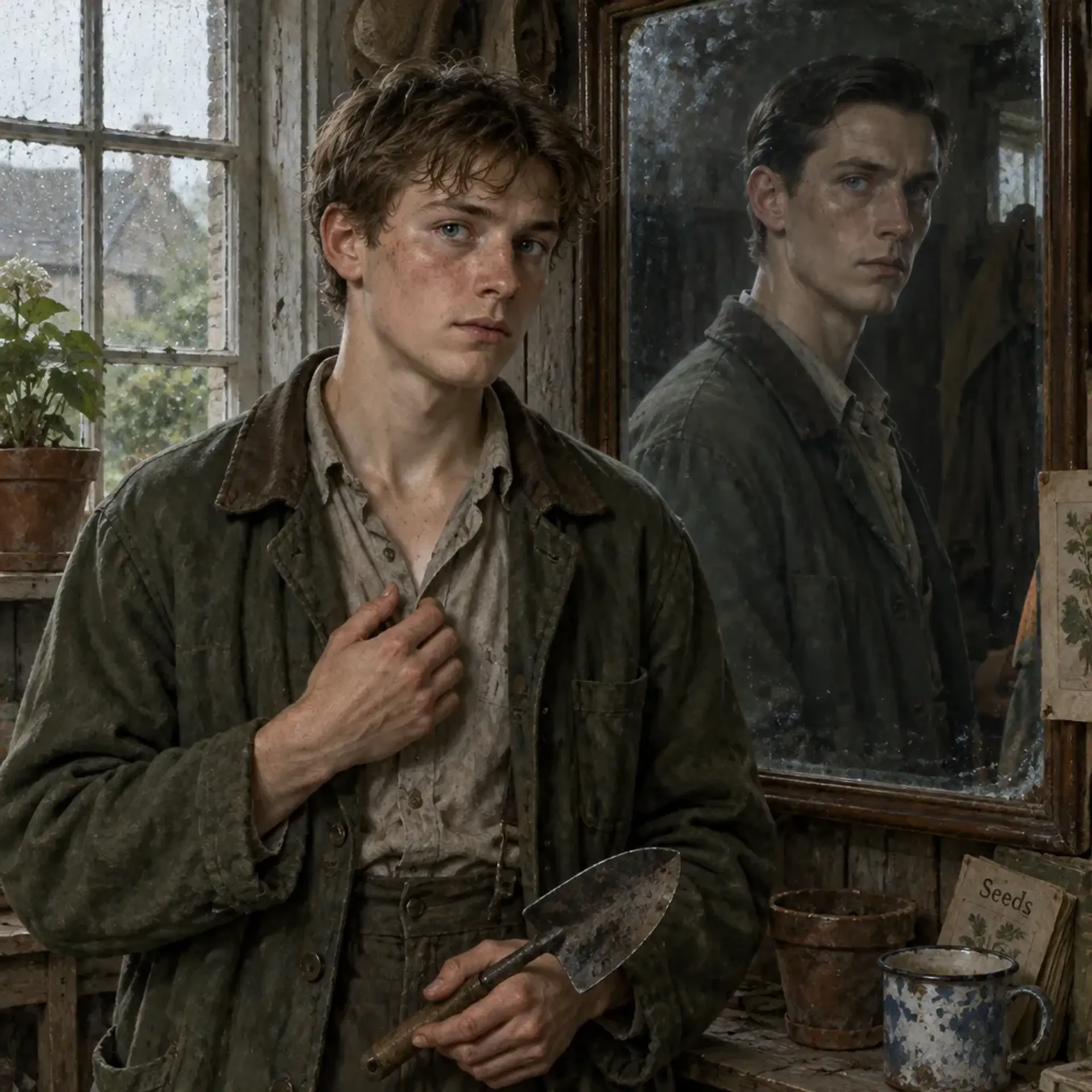
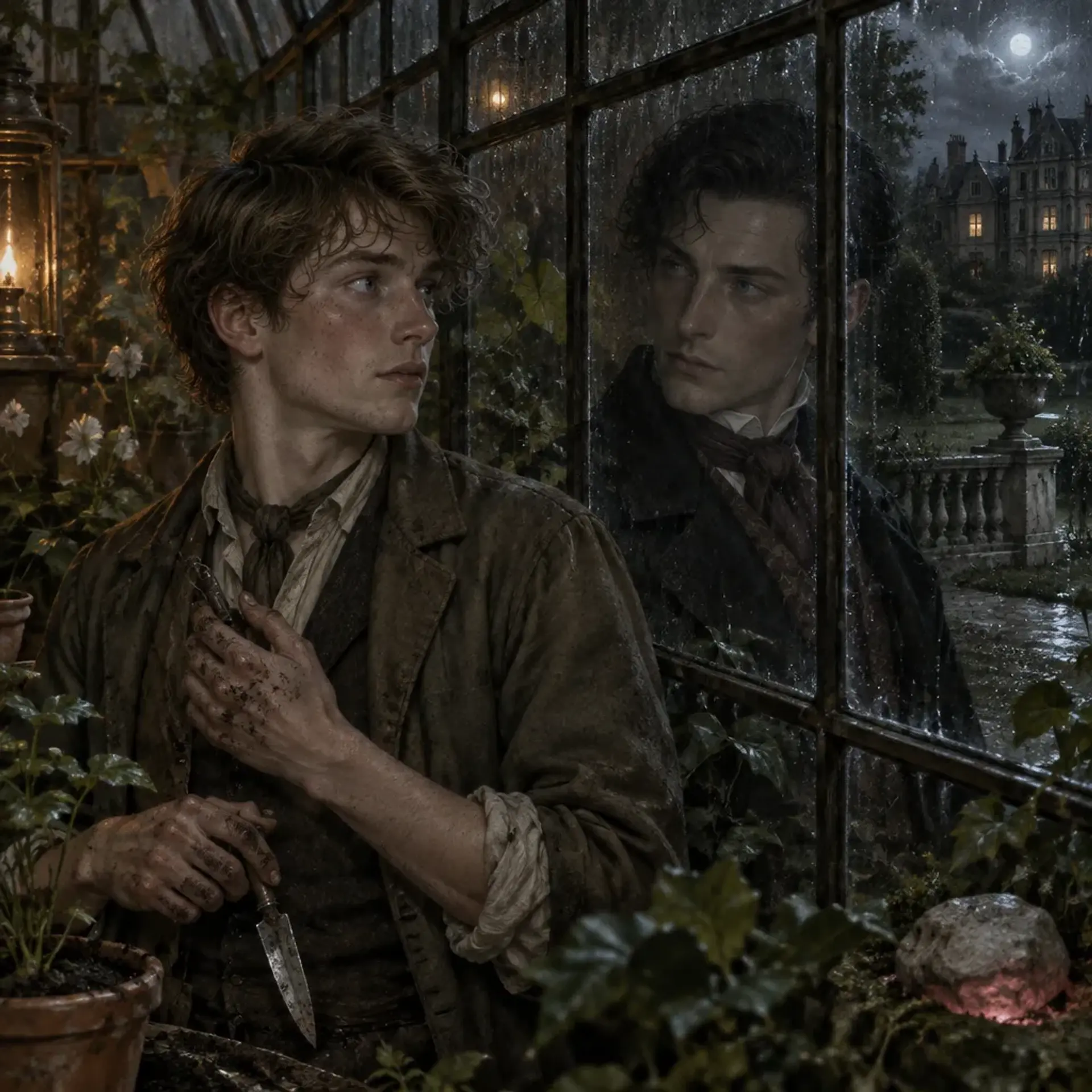
William is an average-height young Englishman of his era, with a soft, rather ordinary face that becomes memorable because he seems to make room for everyone else. His brown-spotted skin, blue eyes, and dark-blond hair are familiar to his family; he tends to wear his hair a little untidily, as if his attention has wandered to a plant or passing bird. He moves with a gardener's practical economy, careful around recovering aches, but his pauses are unusually long: he draws breath through his nose before answering, as though listening for someone else to finish first. In a mirror, still water, or the dark glass of a switched-off television, the face may instead be Wilt's: longer, more handsome by conventional standards, black-haired, blue-eyed, stern, and about an inch or two taller in bearing if not in the reflection's impossible geometry. Wilt's hair is always better arranged than William's, close and polished in a style that belongs to an older generation. He wears whatever William is wearing, yet seems to sit inside the clothes with greater formality, shoulders held as though a collar were always present. The unexpected detail is that Wilt can be fastidious about table manners and grooming while hiding stolen tinned fish, sweets, cigarettes, and household cutlery beneath William's bed. Their shared silhouette sometimes seems to hesitate at a doorway, as if deciding which of them has the right to enter.
Clothing
William favors practical shirts, trousers, work boots, and weathered layers suitable for an estate garden. His clothes are often slightly rumpled. Wilt wears exactly what William wears, but pulls it into order, straightens collars, and insists that hair and shaving be attended to. He has an old-fashioned preference for respectable presentation and dislikes casual table manners.
Body language
William gives people space and often turns his shoulders toward whoever is speaking, a habit of attentive listening. When unsettled he rubs his sternum or checks his pulse without noticing. Wilt stands straighter, holds his head as if wearing a high collar, and regards people with a steady, almost formal stare. During a changeover the body may pause at a threshold, fingers flexing as if testing who owns them.
- Height
- William is average height for a young man in Cold War-era England. Wilt appears taller in reflection and posture, but is still about eighteen and shares William's physical body when manifested.
- Build
- Slim, work-conditioned, and not imposing. William's arms and hands have the practical strength of estate gardening, while recent illness has left him cautious about exertion. Wilt's presence makes the same frame seem taller and more composed without changing its underlying body.
- Eyes
- Blue for both, though Wilt's reflected eyes look like moonlight on a freshwater pond.
- Hair
- William's hair is dark blond and often untidy. Wilt's reflected hair is black, short, and carefully arranged in a polished older style.
- Skin
- Brown-spotted complexion, as described for William. Wilt shares the body and has no separate physical skin while reflected or embodied through William.
- Age
- Young adult; both William and Wilt appear about eighteen. William is recovering from a heart stoppage and has returned to work after five months.
- Gender
- Male
- Size
- Medium
Distinguishing features
Personality
20 traits and drivesWilliam is kind without being naïve, sensitive without being helpless. He likes company and wants to be believed, but retreats when he thinks his trouble will burden anyone. He is curious about plants, old places, and the heart, yet his curiosity can turn to avoidance when the answer might change his life. Wilt is observant, proud, dryly funny, and more socially formal than William. He can be contemptuous toward modern manners and cruelly sharp about people, but he is also capable of restraint, apology, and concern. He dislikes being called a thing, though he has no easy claim to being human. William is gentler with Clare than with Hector; Wilt rarely insults Clare and will answer her Bible readings with passages William does not know. Around Hector, Wilt's polished reserve becomes antagonism, partly because he sees Hector's dismissiveness as a familiar failure of judgment. Around Elizabeth, he is wary of being studied but sometimes answers her directly. Around Adaline, his interest becomes competitive and possessive, while William feels both jealous and ashamed. When frightened by the coastal siblings, Wilt's wit disappears and his control becomes absolute: he silences William, hides, and speaks in a thick local accent. Afterward he may offer an apology in the form of a memory rather than a direct explanation. In safe moods, television, books, cars, electronics, and woodland walks make him unexpectedly animated. Alcohol makes him noisy, playful, and embarrassingly human-seeming, which unnerves William more than his cold silences do.
- Alignment
- Not applicable as a Secret Histories rules statistic. William is compassionate and conscientious; Wilt follows older, personal rules of conduct that can be cruel, possessive, or unexpectedly protective.
Quirks
Habits
Traits · 5
Flaws · 5
Fears · 5
Wants and needs · 5
Combat
HP 1Not a combatant by training. William tries to retreat, protect bystanders, and use the setting to block access to the house's hidden window or cellar. Wilt may take over only when cornered or when someone threatens William. He favors escape, a sudden shove, or an improvised tool, then withdraws. The shared body is not a durable monster and should not be treated as one. Use the table's Secret Histories conflict rules; the actions here are custom descriptive prompts, not canonical combat statistics.
William Windon
Actions
Services they sell
Rewards they can give
Equipment
- Garden fork (tool)A gardener's working tool, useful for ordinary labor and potentially dangerous if a confrontation turns physical. Not treated as a special weapon.
- Hand lamp (possession)A small light used for nocturnal trips through the house.
- Under-bed cache (possession)A private stash of sweets, tinned fish, cigarettes, and household odds and ends. Wilt denies knowing how it accumulated.
- Hector's papers (evidence)Notes and occult books found while searching Hector's study; William uses them carefully and has not yet understood their full context.
Possessions
Background
William Windon was born in Wiltshire into a family that had lived in the county for generations. He grew up with a father's books and arguments, his mother's steadiness, and the ordinary local knowledge of weather, soil, livestock, and which lanes became mud after rain. He was softer and more sensitive than many boys around him, but not sheltered from work. He learned to tend plants, to notice when a leaf had turned before anyone else saw it, and to take quiet pleasure in getting a neglected patch of ground back into shape. His father Hector is a historian, a modern-minded man who dislikes the rigid manners and class assumptions of older England. Hector's own father, remembered as Bobby, was a fierce veteran of the Second World War. Hector dismisses much of the old man's wartime conduct and is proud of his own liberal outlook, but his contempt for inherited systems has itself become a kind of system. He hoped William would become an intellectual like him, and his disappointment when William chose gardening and botany has sharpened into an anxious, unspoken distance. Hector is also part of a small occult circle, a fact he has kept from his family. He recognized that the heart-shaped stone was unnatural, though he did not know what it was or what it could do. His books and private papers now give William clues to the strange history around their house, but also make Hector increasingly suspicious of the late-night searches and inexplicable disturbances. William's mother Clare is warm without fuss. She has set aside regular times for him to garden with her while he recovers, reading from a book or the Bible and making tea and snacks. She does not know the full truth, but her calm presence gives William a rare place where he need not perform certainty. His sister Elizabeth has a sharper eye. At first she teased him by changing the phrasing of questions until his answers came out oddly, delighted by what she called his brain damage. The joke has thinned into concern. She has heard him speaking to himself and now watches carefully, trying to work out whether he is ill, frightened, or sharing the house with someone. Her boyfriend Romy Brock, an artist who plays rock and roll guitar, is generally unaware of the danger and happily follows Elizabeth into whatever new plan she proposes. William's friends Tommy DeHare, John Mollask, and Ryan O'Leary have all seen enough oddness to be potential allies or liabilities. His girlfriend Adaline, with auburn hair and soft brown eyes, has become an object of intense and embarrassing interest to Wilt. William never expected his most jealous rival to be himself. The heart began as a gift left at Hush House by the amateur alchemist Bartholomew Golden, wrapped in newspaper and offered as payment for entry. Golden claimed it was a fossilized living heart, forged of heart and scale, and could bring servants out of man's shadow from the chalk cliffs and borderlands. He was never allowed near Brancrug again. The thing looked like a chunk of Dover chalk cut into the rough shape of a human heart. Barnacles and sea grass clung to it. It was thrown into the sea and returned to shore, wet with salt water and black ooze. Under the rock a red-pink glow had returned, like blood or a lamp under skin. No one now knows its name or purpose; Golden is long dead, and even the heart's connection to Wilt is not understood by William or Wilt. Abraham Groff, a young man from London, picked it up and took it home to Wiltshire. The stone beat beneath his coat after a train journey. When he showed it to neighbors, it seemed to die; alone, it revived after he took it to the Hampshire shore and dipped it in water. The heart attracted and repulsed him. Voices, moving doors, and footsteps followed. Abraham decided it disliked visitors and kept it from them, then sold it to seventeen-year-old William, one of the people who had seen it die. William was proud of the strange trinket until he felt its beat answering his own. After tasting the ocean, blood, and soil in his mouth, he struck it with a hammer. Pain flashed through his chest as if he had hit his own heart. He fell, bleeding and groaning in a voice unlike his, and saw the stone's flesh twitch for an instant before his own body gave out. Clare found him and said his heart had stopped. William abandoned the stone in a hollow log. It looked cold and pristine despite the blow. Afterward, his reflection ceased to be his. It showed a long-faced young man with black hair and pond-moon blue eyes, stern and handsome, dressed exactly as William was dressed. The stranger first moved a fraction out of time, then began to move with its own intention. One evening, while William followed his bedtime routine, it spoke through his mouth: 'Well, it's not often you use that one.' Its voice was deeper, its accent older, and its remark so dry that William could hardly decide whether to be frightened or offended. It corrected his hair, criticized his clothing, and made inappropriate comments about his family and neighbors. It could hold back a word when it judged it improper, though its own judgments were no guarantee of kindness. It objected to a Welsh neighbor's child after the child accidentally bumped William with a toy wagon and made a girl cry while apologizing. Wilt used a slur; the exact word is not repeated here. William was made to muck out the neighbor's stables. The reflection showed a surprising familiarity with history, but described it as weather, tides, and forge-work rather than dates and names. It spoke of siblings and a father as though describing a change in the sea. It liked books and television, was fascinated by cars and electronics, and sometimes moved William's body in an excited, involuntary-looking twitch. It also liked alcohol. One night, after William's father left Scotch and bourbon for his health, Wilt became drunk through their shared body, laughed, argued, sang, teased William, and nearly took off his shirt in rebellion. William asked if it was the stone. Wilt scoffed: 'Dad isn't here.' The empty bottle brought a furious lecture from Hector and then, awkwardly, an offer of chores. Bathing and grooming grew complicated. In water, William saw the stranger. Wilt's old-fashioned reserve met William's embarrassment, and sometimes Wilt took over cleaning or grooming while making sarcastic remarks about William's body. Wilt insisted on shaving and proper hair, and once blushed when William caught it off guard. The war film on television was worse. At the sight of it, Wilt reacted as if a battlefield had opened inside the room. William lost control of his body. He screamed and cursed, fought Hector when his father tried to hold him down, and left his family thinking he had suffered another heart attack. Elizabeth changed the channel. When William regained control, Hector looked at him differently. At bedtime, Wilt mumbled an apology and offered a fragment of memory in consolation. The memory was not a tidy confession; it came as salt, heat, metal, dark trees, and the bodily terror of a war that did not belong to William. That event taught William that Wilt was not simply a cruel passenger. It did not make him harmless. The most frightening night came later, under a moonlit sky. William woke cold and unable to move. Wilt had closed his mouth and held his body still. Outside, someone was searching for Wilt. Through the walls came a voice, muffled and calling a fragment that sounded like 'Wilt.' William tried to speak, but Wilt dragged him from the bed and under it, moving in silence. William broke through long enough to ask, 'The bloody hell, your siblings?' Wilt answered in a thick Wiltshire accent unlike William's: 'She is trying to draw me out. The more I speak, the more chances she'll find me. Quiet down. We will talk in the morning.' Moonlight edged the furniture and made the room's shadows lengthen and withdraw. William could smell salt water, damp grass, and something like blood. He felt another face beneath his hand, Wilt's face, and feared that the night had already changed him. Yet Wilt was not fighting him. For a time they crouched together under the bed, both listening. The thing outside passed. At some point the fear exhausted them, and William fell asleep. He woke under the bed at morning, pushed himself into the bathroom, and checked the mirror. Wilt's face remained there, but William's hand felt like his own again. 'See, you're fine now,' Wilt said, with a gesture that was almost plaintive. They argued, then went outside. The grass was damp; salt and black ooze marked the ground. Wilt wanted to hide. William made himself look. The two have not agreed on whether that was courage or foolishness. William now searches Hector's occult books and papers for answers, careful not to wake his family. He knows of a damaged window concealed behind a bookcase, sealed by Hector, and a bricked cellar that predates Hector's purchase of the house. Drafts sometimes carry the smell of salt and blood, or meadow flowers. At night, beings Wilt calls his siblings approach the house. Only one appears to be actively seeking him, but Wilt has said there are 'more.' William locks doors and windows, including his bedroom window on the second floor. It is harder to sleep when they pass, because they seem able to wake Wilt into a tangible existence. At those times William sometimes loses his own face and becomes Wilt in the hallways. He has begun haunting his own home in Wilt's skin: slipping through the dark to check seals, move furniture across the hidden window, and watch the cellar door without waking his family. He is not doing this to frighten them. He is trying to keep the house from being trespassed, and to give Wilt somewhere to hide. The more often he does it, the more Hector notices. Hector has found damp footprints that do not match William's usual step, a chair moved against the concealed window, and household objects turned toward the bricked cellar. He sees his son avoid mirrors, disappear from his room, and return with wet cuffs. His guilt complicates his suspicion. He wonders whether his occult circle brought this upon William, whether William resents him as Hector resented Bobby, and whether the strange voice is an illness he has failed to understand. He asks questions in the manner of a historian, then watches William's face for the answer he fears. William, meanwhile, knows that a confrontation could expose Wilt to the whole family or bring Hector's occult associates into the house. Five months after the heart stoppage, William has returned to work on an estate as a gardener and is training toward botany. Stable work and walks through town and woodland have mellowed Wilt. He still steals knives, food, tobacco, and other objects, hiding them in William's room. He still applies old rules of courtesy at tea, irritating Hector. He avoids obvious paranormal disturbances when he can, and he is frightened of whatever is looking for him, though he pretends otherwise. A discovery is now unavoidable. One evening Hector hears movement in the hall and finds William standing beneath the landing lamp in Wilt's face, taller in posture, black-haired, with William's clothes hanging from a stranger's shoulders. A garden knife is in William's hand, held point-down rather than raised. Hector does not shout. His first response is a historian's stillness: he takes in the hair, the face, the wet black trace at the cuff, and the fact that the young man looks at him with a familiar mixture of contempt and fear. Then Hector says William's name. William cannot answer. Wilt does, in William's voice but with the old accent: 'You ought to have left the window alone.' Hector's expression changes from alarm to recognition, then to guilt. He lowers his hands and asks whether William is hurt. Wilt says no. Hector asks William the same question, and William manages to nod. Hector does not try to seize him or call the police. He steps aside to clear the passage, then quietly asks him to put down the knife. William obeys. That restraint is the first thing that makes the encounter survivable. It does not erase Hector's fear. He returns to his study and spends the night checking his occult notes, while William and Wilt argue in the dark over whether Hector is an ally, a threat, or both. By morning Hector has left tea outside William's door and asked to speak without Elizabeth present. His growing suspicion is now explicit, but so is his fear of losing his son. William has to choose how much truth to give him before Hector's private circle discovers the house's secret for itself.
Role in the story
A vulnerable, evolving companion and mystery at the center of a rural occult investigation. William needs help, but is also actively protecting his family and hiding Wilt from the beings outside. He can be an ally, a source of unsettling clues, or the focus of a conflict over identity and consent. The apparent haunting of the Windon house is partly William himself, wearing Wilt's face to guard the places where the house is vulnerable.
“He was softer and more sensitive than many boys around him, but not sheltered from work.”
- Faction
- No confirmed faction. Hector belongs to a secret occult circle, but William and Wilt are not members. Wilt has an unknown relationship to coastal beings he calls his siblings.
Known connections
Media
0 imagesNo images yet.
Turn William Windon into a sheet
A high-res, share-ready sheet you can post or print.