William Windon
William Windon
At the table
Voice
William sounds like a young man accustomed to speaking plainly outdoors, with a breath that can hitch when his chest or nerves are strained. The reflection's voice comes through the same body but carries an older English accent and a deeper, steadier placement. When the reflection is frightened, William's breathing may falter before its words do; when amused, the mouth may smile before William has decided to.
William's voice is a straightforward country voice, shaped by practical work and the breath-conscious habits of someone recovering from a heart stoppage. When frightened, the first sound may catch before he can finish a sentence. The reflection uses William's mouth but speaks with an older generation's English accent, a deeper, more settled sound, and formal phrasing that makes its sarcasm feel deliberate. The name William is spoken normally; the stranger's distinctive sound belongs to the voice, not to the name.
Speech patterns
How to play them
Approach William as a recovering young man rather than as an occult curiosity. Give him space to answer for himself, avoid surprising him with reflective surfaces, and ask before involving his family. The reflection responds to direct address with dry wit and suspicion. If it speaks through William, distinguish the two by noticing the older accent, formal phrasing, and attention to people William is trying not to watch. Custom track: 3 narrative endurance marks represent William's present fragile condition; this is a table-use aid, not a canonical Secret Histories statistic.
Goal
Find Abraham Gorff, learn where the heart has gone, and discover a way to live with or separate from the reflection without endangering his family.
Motivation
William wants health, privacy, and a future among plants. The reflection wants conversation, sensation, exploration, and some kind of recognition as a person rather than an affliction.
Appearance
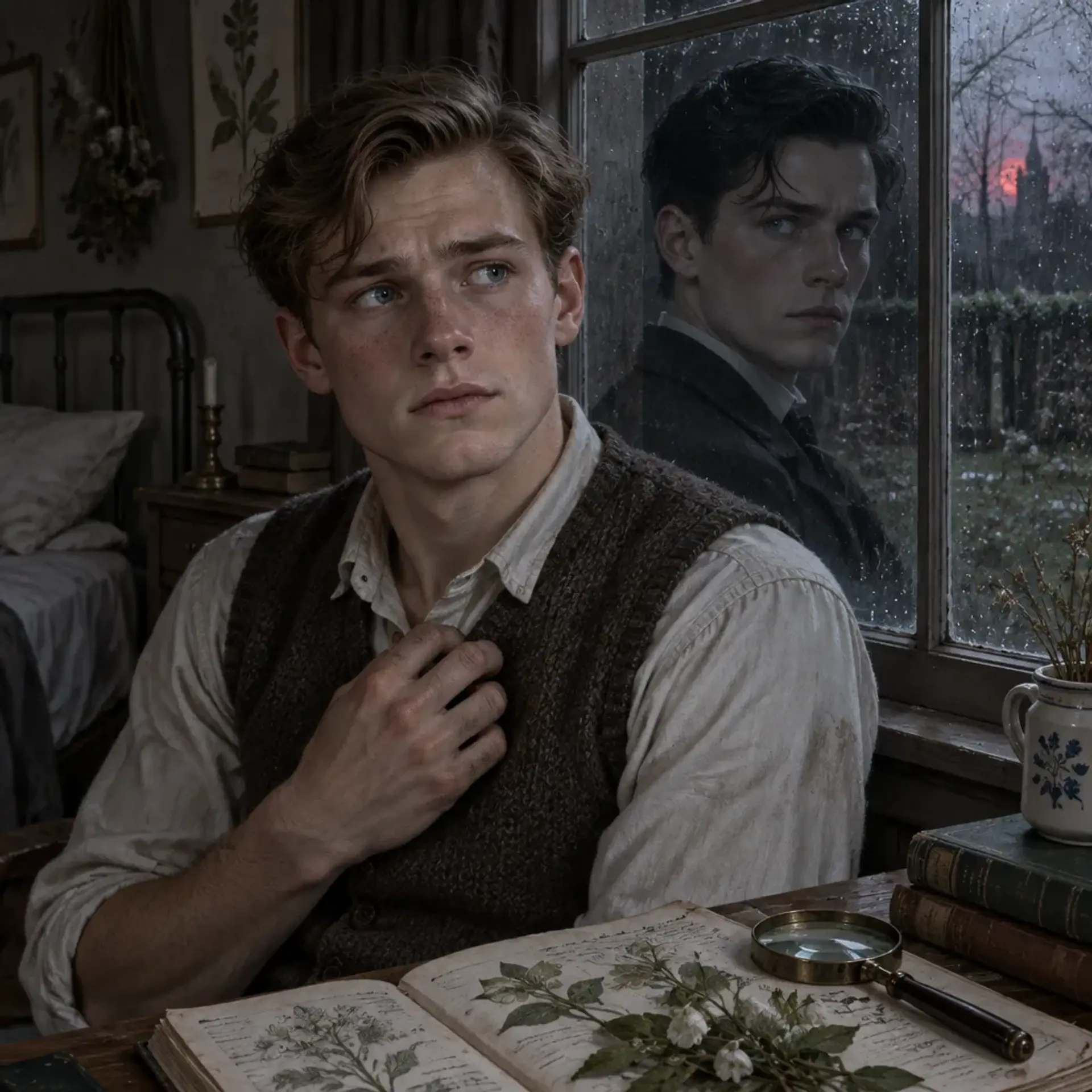
William is a young Wiltshire gardener with dark blond hair, blue eyes, and brown freckles scattered across his face. His skin is weathered from outdoor work, with a faint green tinge sometimes left beneath his nails from crushed stems. He is recovering from a heart stoppage and moves carefully, as if each stair must be negotiated with his body rather than assumed. When startled, his breath catches high in his chest and comes back in shallow, measured pulls. His gaze goes first to windows, polished cutlery, and dark panes, checking them for the other young man's face. His reflection is not a likeness: it has a long face, neatly combed black hair trimmed at the sides, moonlit blue eyes, and an expression of formal disapproval. William dresses practically, but the stranger's grooming makes him look as if a second, stricter person has been preparing him for inspection. The impression he leaves is of a country lad trying to seem ordinary while listening for a heartbeat no one else can hear.
Clothing
Practical gardener's clothes, usually a work shirt, sturdy trousers, and boots. At home he wears plain, comfortable things, though the reflection objects if they are untidy or poorly matched.
Body language
William tries to hold his shoulders square and his hands occupied, often arranging a cup or smoothing a cuff to keep from touching his chest. His eyes keep returning to reflective surfaces. The stranger's posture is more upright and composed; in glass it may keep watching a person after William has turned away. When William is rattled, his breathing catches and the difference between his intent and his body's movement becomes visible.
- Height
- Not specified
- Build
- Lean, work-hardened, and presently weakened by recovery from a heart stoppage.
- Eyes
- Blue
- Hair
- Dark blond
- Skin
- Fair, weathered by outdoor work and marked with brown freckles
- Age
- Young adult
- Gender
- Male
- Size
- Human
Distinguishing features
Personality
19 traits and drivesWilliam is earnest but not meek. He likes being competent and useful, yet bristles when people treat him as a child or a patient. He can be warm with friends and quietly attentive to plants, then prickly when pity or curiosity turns him into a story. He wants to believe that careful observation will make the reflection understandable, but sometimes refuses to look at the evidence because he fears what it means. The reflection is composed where William is uncertain, curious where he is ashamed, and funny in a way that can turn cruel without warning. It takes propriety seriously while breaking into William's privacy, and can show genuine embarrassment or concern even as it claims not to care. In company it studies people and tests what they will tolerate. Alone with William, especially at bedtime, it is more conversational and may offer fragments of its past. Their moods do not always match: William can be laughing while the reflection looks stern, or calm while the stranger's eyes show alarm. Neither has learned how to ask the other for help without making it sound like a demand.
Quirks
Habits
Traits · 5
Flaws · 4
Fears · 5
Wants and needs · 5
Combat
HP 3William avoids a fight and is physically unwell. He seeks an exit, help, or a barrier rather than trading blows. The reflection may seize a brief opening to pull him away, interrupt a threat with a cutting remark, or make an involuntary movement. These are custom narrative possibilities, not a claim about Secret Histories combat rules.
William Windon
Possessions
Background
William Windon was born in Wiltshire, into a family that had put down roots there for generations. He grew up among hedges, stable yards, and the small social rules of a rural community, learning the names of plants before he could imagine studying them formally. His father, Hector, works as a historian and likes to explain the past with the confidence of a man who believes a well-ordered account can settle any argument. His mother, Clare, is attentive without being sentimental. His sister Elizabeth has a practical gift for noticing what people want and an appetite for discussing the boy she likes, attractive things, and William's many failures of manners. William works as a gardener on an estate and hopes to train as a botanist. He is proud of being useful, but restless at the thought that usefulness might be the largest life available to him. The stone that changed his life began its journey at Hush House. An amateur arcanist, Bartholomew Golden, presented a supposed fossilized living heart as payment for entry, calling it, with newspaper-wrapped solemnity, the Heart of England. It looked like a human heart cut from Dover cliff rock. Barnacles clung to it; sea grass had rooted in its creases. Hush House rejected both gift and giver: the heart was thrown into the sea, then came back ashore, slick with salt water and black ooze. Beneath its crust it had turned a faint red-pink, as if blood or a lamp had begun to show through stone. A young man named Abraham Gorff found it and carried it home to Wiltshire. Abraham had come from London. At first the heart seemed inert, but it beat beneath his coat after a train journey. It repulsed him and fascinated him in equal measure. When he showed it to neighbors, it appeared to die in their presence. Alone, and especially near a Hampshire shore, it grew warm and pink again. Abraham decided it was his, not simply because he wanted to own it, but because it seemed to dislike visitors as much as he did. Soon his house answered the heart's presence: voices where no one stood, doors moving, footsteps climbing empty stairs. Unable to bear the hauntings, Abraham sold it to a seventeen-year-old local boy, William, one of the people who had seen it apparently die. William was proud of the strange possession until he felt its pulse in his own chest. After tasting impressions of ocean, blood, and soil, he tried to break it with a hammer. The blow did not crack the stone. Instead pain struck through his chest. He fell, groaning, and heard a voice that did not sound like his own. For an instant he saw muscle twitch violently beneath the rock; then his own body seemed to fail in sympathy. He woke with Clare's hands on his face. She told him his heart had stopped. Afterward William left the stone in a hollow log. Days later it looked cold, clean, and untouched, despite the hammer blow. Then it vanished. William does not know whether it was taken, moved, or simply ceased to be where he had left it. The disappearance has become a wound in his understanding: the heart is no longer a thing he can watch, fear, or put somewhere safe. The first clear warning came while he was grooming. The face in the glass was a stranger: a handsome, long-faced young man with short, carefully combed black hair, trimmed sides, blue eyes, and a stern expression. The stranger held himself according to an older English ideal of propriety. William looked away and back, hoping for a trick of light. The face remained. At first it only behaved oddly, jerking its movements as if it wanted to go elsewhere. It would look stern while William felt amused, or inspect his hair while he thought about the garden. William tried to ignore it, until one evening, during his bedtime routine, the mouth in the mirror moved with his own and said, in William's voice but an older accent, "Well, it's not often you use that one." The reflection paused, apparently surprised that it had spoken aloud. Its comments became an unwelcome household routine. It criticizes William's combing and clothes, reminds him to shave, and sometimes intercepts a remark it considers improper. It can be dryly funny, but its idea of a harmless observation is frequently a cutting comment about a neighbor or relative. It once insulted Hector after he dismissed country people as silly. Hector heard William say it and reprimanded him. On another occasion, a neighbor's child accidentally collided with William's legs with a toy wagon, making a girl cry as she apologized. The reflection directed a slur at the Welsh neighbor's child. William was made to muck out the neighbor's stables as penance. The reflection has not apologized in terms William accepts; it insists that the child was careless and that its own wording was merely accurate. William's friends Tommy DeHare, John Mollask, and Ryan O'Leary visited while he was recovering. William wanted the visit to feel normal, and was embarrassed by the cushions, the careful way Clare monitored his color, and the fact that his friends had brought conversation as if it were medicine. The reflection made that difficult. It appeared in the window behind them, looking more alert than William felt, and tracked each visitor with its own attention. It spoke through William's mouth while he was trying to answer Tommy, then turned its attention to John's coat and Ryan's jokes. The boys saw William's lips move while his expression did not match what he was saying. When the reflection made an especially personal observation, William tried to deny having said it. The room went still. They did not run, but they stopped treating the strange interruptions as ordinary teasing. William was grateful they stayed and furious that the reflection had made him look like a spectacle. After they left, it said they had been less dull than expected. William asked whether it had meant to frighten them. It answered that it had meant to see what they would do. The reflection's physical differences are increasingly hard to dismiss. It does not just copy William: its gaze can remain on a person while William looks away, and its posture can suggest a separate intention. With his mates present, William learned that it could react to people and speak through his body even when he was not choosing to speak. Windows and mirrors are the clearest places to see it, but the boundary is not dependable. William sometimes passes glass and sees the stranger where his own face should be. Once he woke in the night, cold and shivering, and went into the hall with a small light. When he spoke to Elizabeth, the voice and accent were not his. He has since been careful about what he says in front of her, though the reflection considers this caution theatrical. The stranger has begun to volunteer fragments of its own past. It says it has siblings and a father, but describes them as if they were conditions of weather, sea, or work at a forge rather than living people. It has an oddly sure grasp of history, which it expresses through comparisons rather than dates: a ruler is described as a pressure front; a battle as a forge that never cooled. William once dreamed he was the reflection, watching a young man beside a pond in wild woods. He cannot tell whether this was a memory, a warning, or his mind trying to give a shape to the thing in the glass. The reflection's tastes are a source of constant domestic trouble. It enjoys movies and books; when a story catches its interest, William's body may make excited movements before he is aware of them. It likes exploring and sneaking into places it should not be. Food, cigarettes, and cigars disappear from the household and turn up hidden in William's room: cheese, sweets, tins of fish, and other things that keep. Once he found a bottle of apple juice under his bed that was actually alcohol. He suspects the reflection is building a private larder, though it calls the collection prudent. Tea time has become a battlefield of etiquette. The stranger cites its father or siblings as authorities on how a person should sit, serve, speak, or refuse another cup. William finds the rules both absurd and strangely compelling. Bathing is worse. A tub's surface shows the stranger's face, and both William and the reflection share enough English prudishness to make the moment humiliating. If William is too embarrassed to wash properly, the reflection may take control of a hand and do it for him, commenting sarcastically on his body or his lack of nerve. It treats grooming as serious work and will remind him to shave later if he has skipped it. William once felt it blush through him, an involuntary warmth that made him wonder whether the stranger was as embarrassed as he was. The reflection's interest in Adaline, William's girlfriend, has turned private unease into intimate rivalry. Adaline has auburn hair and soft brown eyes. The stranger noticed her immediately and began to make pointed remarks about her appearance, her attention, and William's awkwardness around her. It calls her interesting with a tone William cannot interpret as innocent. It wants to see her again, to speak to her, and to find out what she notices when she looks at William. William is afraid that the stranger wants her affection, but is equally afraid that it may simply want the experience of being wanted. He tries to keep his conversations with Adaline away from mirrors. The reflection has made that difficult by commenting on her after she has left, remembering details William did not think it had attended to, and offering advice that might be useful if it were not so obviously self-serving. William's hardest competition, he has realized, may be the person wearing his face from the inside. The reflection strongly dislikes William's cousin Ronald White, who calls himself a modern man. It appears to recognize in Ronald a kind of smugness that irritates it beyond reason. William has not been told exactly why. Nor does the reflection like the supernatural in general. For all its impossible nature, it fears ghosts and fae. It reacts to the idea of them with genuine aversion, as if the world beyond the glass contains dangers it cannot manage. William has no intention of testing whether that fear is justified. The most frightening episode came when the household watched a war movie on television. At the sounds and images of war, William abruptly lost control of his body. The reflection reacted as if subjected to a memory of its own: William's breath seized, his muscles fought against themselves, and he struggled in a panic that his family first mistook for another heart attack. Elizabeth changed the channel, watching with wide-eyed concern. When William regained himself, the reflection did not offer its usual sarcasm. At bedtime it mumbled an apology and offered a strange memory as consolation, an explanation conveyed in impressions of salt, a forge, and dark woods rather than a clear account. It has since tried, awkwardly, to explain more about itself. A later night brought a quieter but stranger scene. William woke cold, went to the study, and fell asleep on a lounge beside the private fireplace. Hector found him there and looked at him as if he had heard something William could not remember saying. William had dreamed of salt, forges, and dark woods. His body felt better the next morning, but the cold stayed with him. Then came the night of the family's abandoned whisky. Hector had left scotch and bourbon for William's health, not expecting him to drink much. The reflection found the bottles, and the evening became an uproar of teasing, arguing, grinning, and loud singing through William's body. When William asked if it was the stone, the reflection scoffed: "Dad isn't here." William's own uncertainty overtook him; he could no longer tell what was happening or where his sense of self ended. Elizabeth, drawn by the noise from her room, slipped in and witnessed the stranger's manner and voice firsthand. What happened next shocked them both. William remembers only fragments, including Elizabeth's alarm and the reflection's abrupt silence. Neither has been able to discuss the whole episode without William feeling cold. William is now on bed rest after the heart stoppage, trying to find useful work he can do without exhausting himself. He wants to locate Abraham Gorff, but has learned that Abraham moved to Canada. He wants the heart back, though he cannot say whether he hopes to destroy it, understand it, or ask it to stop choosing him. He is also trying to keep his family from treating him as either a patient or a haunted object. The reflection, meanwhile, wants more conversation and more access to the world. It is bound to William, but does not accept that this makes William its owner. Both are afraid of what may happen if the other gets what he wants.
Role in the story
A sympathetic, unstable point of contact with the Heart of England and its unexplained history. William can lead characters toward Abraham Gorff, the missing stone, or an investigation of the reflection's memories. He is also a domestic mystery whose danger comes from compromised identity and trust rather than a conventional monster fight.
“His mother, Clare, is attentive without being sentimental.”
Known connections
Media
0 imagesNo images yet.
Turn William Windon into a sheet
A high-res, share-ready sheet you can post or print.