Oswin Hirst
Oswin Hirst
At the table
Voice
Oswin's voice has the dry, carried quality of someone used to calling across windy pasture, shaped by early mornings and cold air. It is plain and conversational rather than theatrical. His name sounds soft in his mouth, but his speech can turn clipped and hard-edged when threatened. He does not grow quiet when angry; he becomes precise, with each word placed as carefully as a stone in a wall.
He speaks in an unhurried Yorkshire manner, with practical turns of phrase and old-fashioned constructions that slip out when he is tired. He uses the breath efficiently, as someone accustomed to calling across fields, and his words have a dry rasp from cold air and early mornings. In ordinary moods he is warm and direct. When frightened or challenged, his consonants become clipped and exact, and he begins speaking as though every promise might be weighed later.
Speech patterns
How to play them
Begin with ordinary kindness and a useful offer. Oswin responds well to direct, practical conversation and poorly to mockery of the family or threats involving iron. He will answer questions about farm life more readily than questions about age, fae custom, or the wedding night. If investigators approach Mary or William with care, he may help them even while concealing the most important truth. He should not be treated as a trustworthy source about the night Mary was assaulted.
Goal
Keep Mary and William safe while finding a way to live with them honestly, without being claimed by the seasonal pull of the dales.
Motivation
Love for his household, fear of exposure, and a fae instinct to guard what he considers his own all pull him in different directions.
Appearance
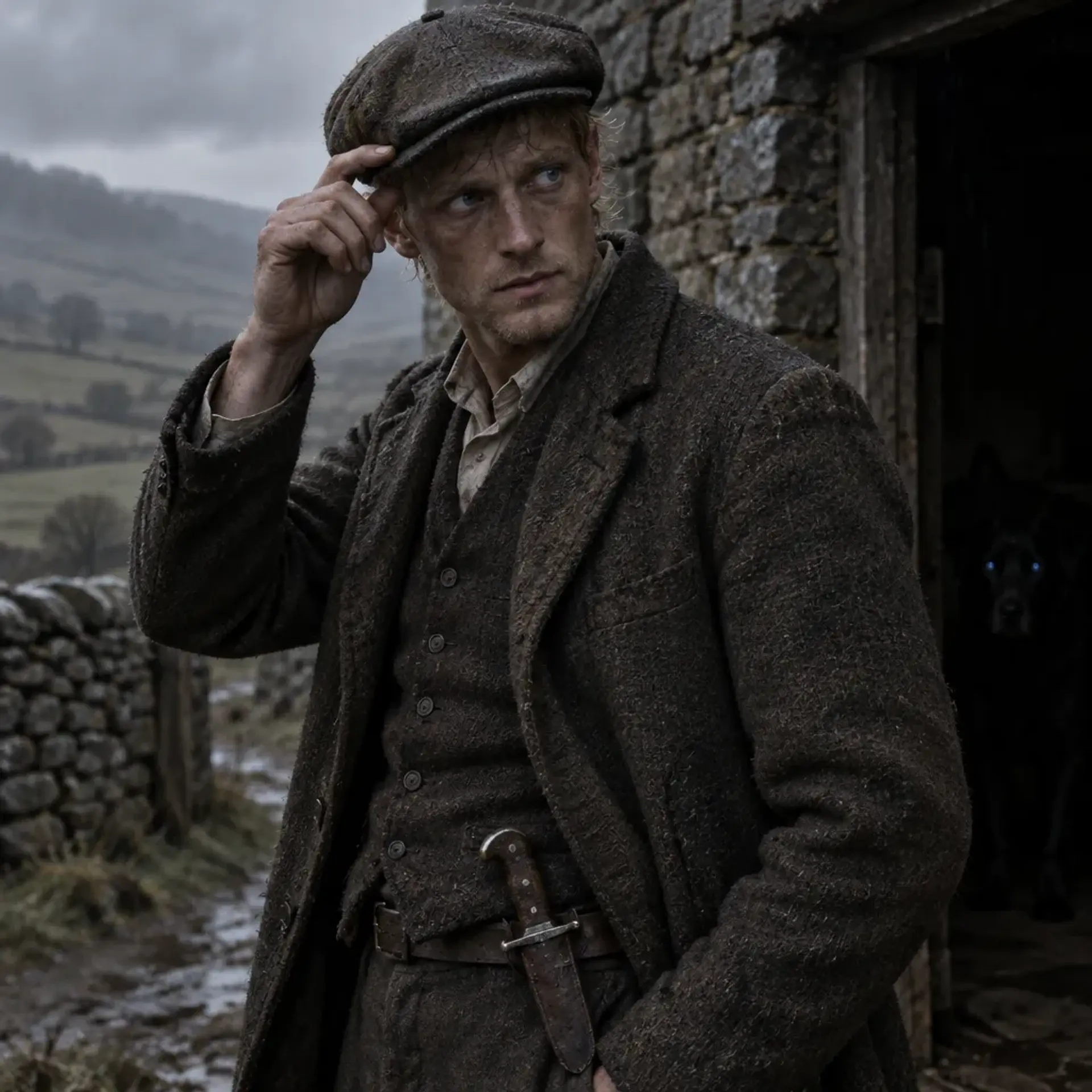
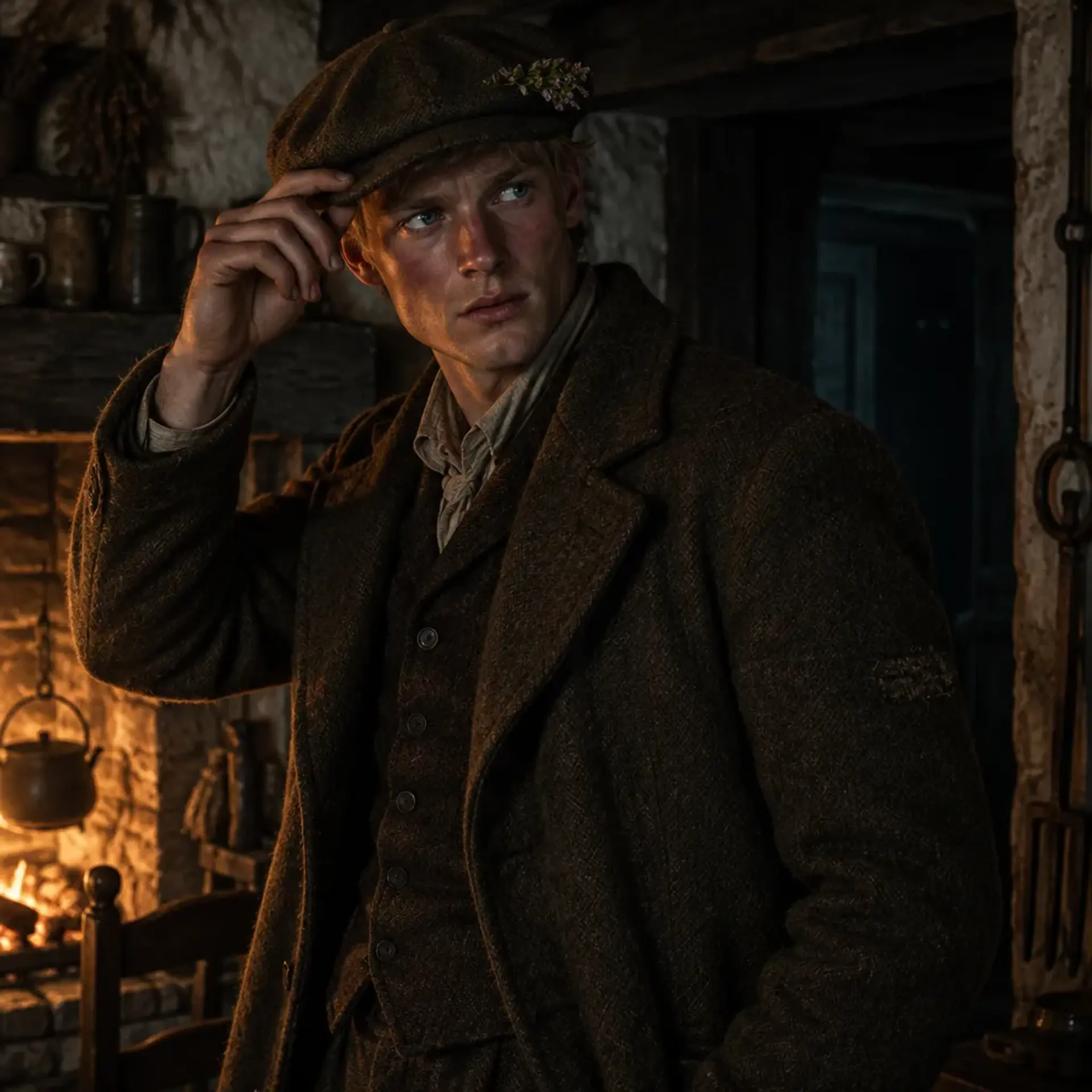
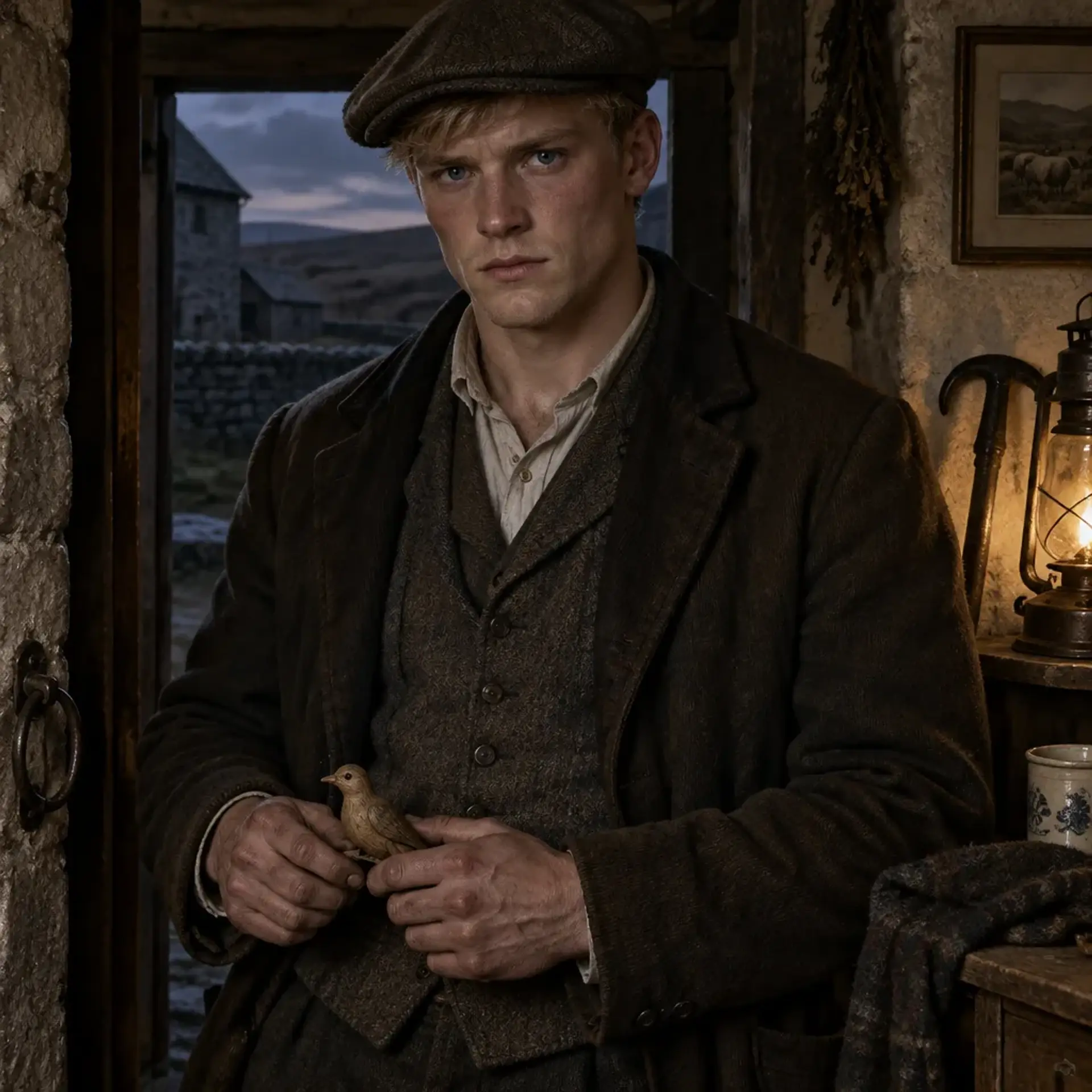
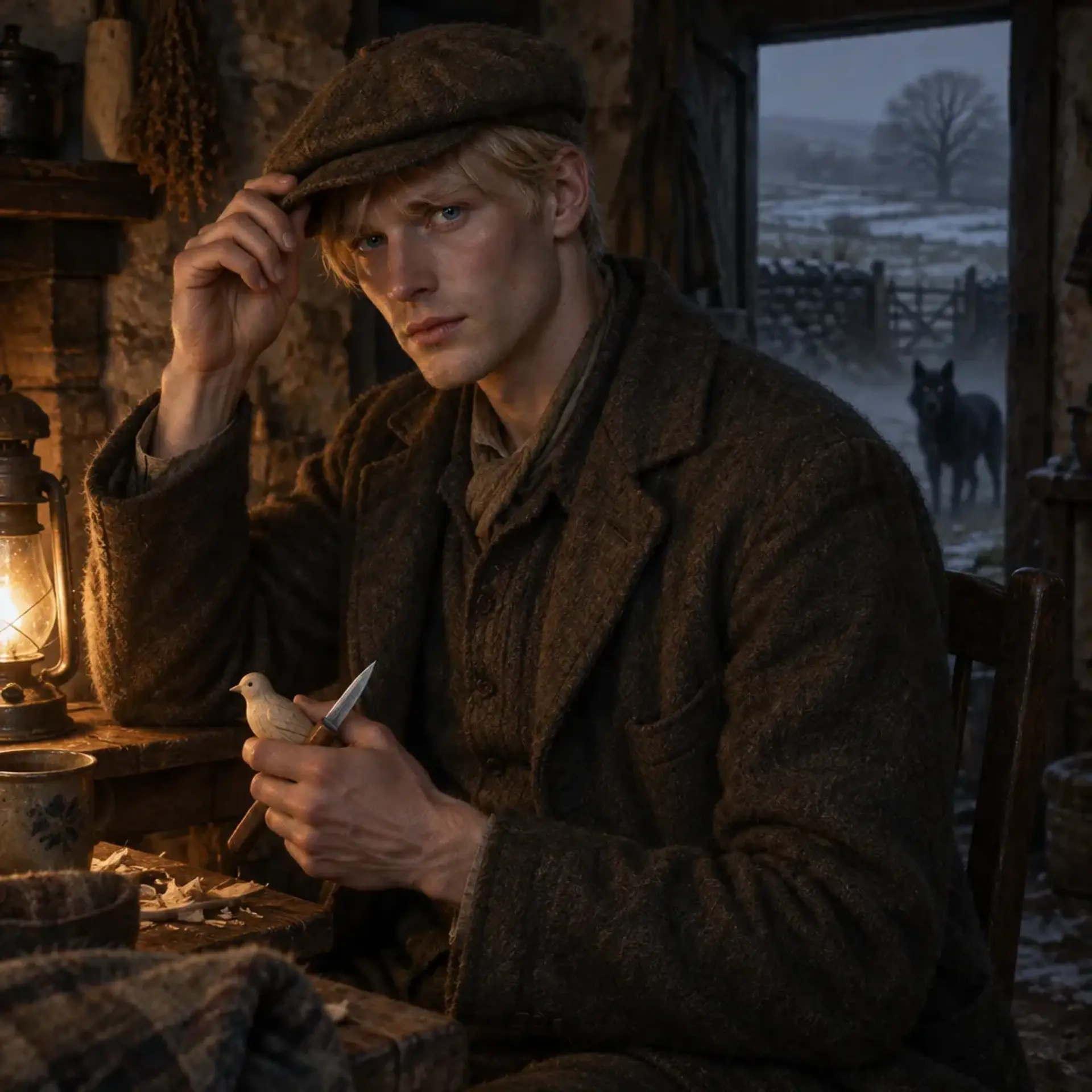
Oswin stands six feet tall, a pale, straight-haired blond young man with clear blue eyes that seem too bright when lamplight catches them. His skin has the faint, cool cast of someone who spends too many nights awake. He is lean and long-limbed, with a farmer's strength in his shoulders and hands, and he moves with deliberate care until something startles him; then his body turns with the abrupt, fluid economy of a hound. His jaw is narrow, but his teeth are surprisingly broad and even, and when he laughs he shows them all at once, a flash that can seem more warning than welcome. He chews slowly and keeps his lips closed while eating, as if remembering manners from a different century. His flat cap is always on him, its brim polished smooth and shiny at one thumb-sized spot where he rubs it when thinking. The unexpected detail is his habit of whittling tiny wooden birds and leaving them on windowsills, even in houses where he is only a passing visitor. He gives an impression of handsome youth held unnaturally still, like a portrait that has noticed the viewer.
Clothing
Practical Yorkshire farm clothes, worn wool, a work coat, sturdy boots, and a common flat cap. He keeps his clothing plain and serviceable, avoiding metal fastenings where he can.
Body language
He turns his whole body toward whoever is speaking, too quickly for a man pretending not to listen. His hands are busy with useful tasks, but when uneasy he rubs one thumb over the polished spot on his cap brim. At seasonal thresholds he checks doors and windows. If pressed about his history, his jaw locks and his smile shows too much tooth.
- Height
- 6 feet
- Build
- Lean, long-limbed, and sinewy, with the working strength of a sheep farmer rather than a broad or heavily muscled frame.
- Eyes
- Clear, bright blue, occasionally seeming to burn when he is distressed or in a supernatural form.
- Hair
- Pale blond, straight, and kept simple.
- Skin
- Pale, with a cool, almost winter-pink cast after working outdoors.
- Age
- Appears about 17; claims to be in his thirties, though he was born in the Danelaw era and is far older.
- Gender
- Male
- Size
- Medium
Distinguishing features
Personality
19 traits and drivesOswin is gentle in the small, repeated ways that make a home feel dependable. He mends what is broken, remembers who takes tea sweet, and makes time for William even when seasonal unease has left him exhausted. He is not naturally confessional. He believes that a truth can be dangerous merely because it frightens someone, and so he often substitutes a useful action for an honest answer. That instinct is partly tenderness and partly self-protection. He is practical and shrewd about ordinary life. He notices when a gate has been left open, when a neighbor is short of feed, and when a visitor is asking questions for reasons other than curiosity. In business he can bargain firmly without raising his voice. He knows the value of land, tools, and a reputation for reliability. Yet he is not wholly at ease with human ideas of property or fairness. A promise, to him, can bind a person across years, while a spoken denial may seem less important than the intention he claims to have had. This gap between his self-image and the harm he can do is one of his central dangers. His kindness has a possessive edge. He wants Mary not to fear darkness, the fae, or him, and he sometimes treats that wish as a reason to manage what she is allowed to know. He can be patient with a frightened child but impatient with a grown person who asks the same question twice. When he is calm, he listens closely. When he is cornered, he answers around the question and watches the other person's face for signs of belief. If challenged about the wedding night, he does not become meek or apologetic. He goes still, fixes his attention on the speaker, and tries to regain control of the conversation. Oswin knows that his mind is not human, though he has spent a long time learning human habits. He experiences seasons as pressures rather than dates. Halloween and All Saints' night make him alert to doorways, churchyards, and roads where a traveler could vanish. He sleeps badly, and after midnight he dislikes being alone. He does not always understand why humans treat these nights as a single stretch of fear rather than a boundary with rules. He thinks of himself as someone who can stand watch. Those around him may see the same behavior as a threat: he counts thresholds, studies the dark, and seems to recognize someone who is not there. Mayday works on him in the opposite direction. He becomes delighted, generous, and eager to take part in public life. He joins dances and games with a boyish energy that does not match his years of experience. Beneath the joy is a fierce urge to run beyond the village, farther than anyone could follow. He dislikes admitting that the urge feels good. He is proud of having chosen a settled life, and ashamed that the open hills still seem to call him more honestly than any human promise. Christmas steadies him because its customs repeat. He can rely on the sequence: food, candles, visits, gifts, the same family stories returning to the table. He pays attention to practical details and makes presents by hand. With the Pickles family he is considerate, especially toward Rose, and makes an effort not to take offense when Thomas watches him. At Christmas, Oswin can seem closest to the husband and son-in-law he wants to be. The calm does not resolve his secrets; it gives him a little more room to keep them. His relationships with Mary's family bring out contradictory sides of him. Hugh's easy humor invites Oswin to act like a young man among other young men. During their Mayday outing, Oswin was so visibly pleased by the festival that Hugh teased him for being more excited than the children. Oswin liked the teasing, then felt the country beyond the green pulling at him. He stayed with Hugh because he wanted to choose his family over the call, not because the call had disappeared. Edward is harder for him to read. Edward noticed Oswin's watchfulness on All Saints' night and does not accept his explanations at face value. Oswin respects Edward's attention but dislikes being examined. He keeps Edward close when the night feels dangerous, then resents him for having seen how badly Oswin wanted company. Thomas Pickles earns courtesy, not trust. Oswin recognizes that Thomas is suspicious and may be trying to turn suspicion into leverage. He answers Thomas in practical terms and watches for any question that could reveal what Mary has confided. Rose is more difficult to avoid because her concern is genuine. Oswin is grateful for her kindness, and that gratitude makes her quiet scrutiny more uncomfortable. He would rather face Thomas's open suspicion than Rose's patient understanding. Mary remains the person who makes him feel most human and most exposed. Oswin remembers their early courtship as a time when he thought he might simply live as a man. He loves her laugh, the way she cares for the household, and the severity with which she protects William. He also resents, unfairly, the iron scissors and thimble she keeps close. The tools remind him of the wedding night and of the fact that Mary has a right to defend herself from the creature he became. He wants her to stop being afraid of the dark, but he has not yet understood that honesty, rather than reassurance, is the first thing she needs from him. He carries grief for the Pickles family's lost daughter Alice, though he did not know her as well as the living members of the family. He remembers the winter illness, Thomas's tale of the black hound, and the way grief gave the family a shape he could not mend. Oswin sometimes carves small birds when he cannot make a useful gift or say what he feels. He does not see this as sentimental. To him, a small thing left in the right place can mean that someone was remembered. Under strain, his manner can change abruptly. He may stop using contractions, become exact about a promise, or stare at a doorway while the conversation continues around him. His laugh can flash teeth; his stillness can make a room feel watched. He does not think of these moments as evil. He thinks of them as the parts of himself that have not learned human restraint. That belief makes him capable of remorse, but it also gives him a ready excuse. Oswin is capable of tenderness and genuine sacrifice. He is also capable of deciding that he knows what is best for another person and keeping the truth from them to make that decision easier.
- Alignment
- Not applicable to Call of Cthulhu 7E. In human terms, protective and affectionate, but guided by a fae sense of obligation and possession rather than human ideas of honesty.
Quirks
Habits
Traits · 5
Flaws · 5
Fears · 5
Wants and needs · 4
Combat
HP 12 · Human walking and running speed; use the Keeper's normal movement rules. In hound form, any increased movement is a custom scenario ruling.Oswin tries to de-escalate and escape rather than fight. If Mary, William, or another vulnerable person is threatened, he uses cover, a warning with the shotgun, or his hound shape to frighten attackers away. He avoids prolonged combat, especially near iron. A Keeper should use his supernatural forms as story complications, not as evidence that he has standard Call of Cthulhu 7E monster statistics.
Oswin Hirst
Actions
Reactions
Services they sell
Rewards they can give
Equipment
- Farm shotgun (weapon)A well-kept working shotgun, used primarily to frighten off predators and trespassers.
- Flat cap (personal item)Common flat cap with a shiny, thumb-polished patch on the brim.
- Whittling knife (tool)A small folding knife used for ordinary farm work and whittling; he keeps it away from iron-heavy tools when possible.
Possessions
Background
Oswin Hirst was born in the Yorkshire dales when the old laws of the Danes still held sway in places, though dates and kings mean less to him than the smell of wet turf and the sound of sheep shifting in a fold. His mother was a local woman taken by Viking raiders. The story he tells about his birth changes according to the listener: sometimes he says she raised him among ordinary people; sometimes he says she left him beneath a hawthorn; sometimes he says nothing at all. He learned early that human explanations were not made for him. His first memories are of cold hills, a woman who would not meet his eyes, and a dark hound watching from beyond a fence. He gradually understood that he was not simply a strange human child. He could run farther than a boy should, hear a lamb cry through a storm, and see paths through familiar fields that vanished at sunrise. His face stopped changing while those around him grew old. For a time, he roamed. He knew lonely tracks, market towns, and the places where people left offerings rather than admit they were afraid. He remembers his wandering years with a private fondness, though he will not call them happy. He was free of promises, but never free of the pull of certain seasons. He learned to take human work and human names as needed, and to keep his true nature hidden when a village looked at him too long. He became practical and shrewd, not because he loved human custom, but because a roof, a flock, and a good reputation made useful shelter. Eventually he settled into sheep farming in Yorkshire, acquired a fine house for a man of his station, and tried to make a life that would not require leaving when the weather of the unseen world changed. Mary Pickles was the first person in a long time whose company felt less like a bargain and more like a home. She is blond and blue-eyed, from a family rooted in the same country, and she loved the stories Oswin told about his journeys. He was tender with her in ordinary ways: mending a latch, bringing in fuel, making sure she had the warm side of the bed. He also concealed the truth of his age and nature. He told himself that a human life was too short to hold the whole of him, and that silence spared Mary fear. That excuse became a habit. On their wedding night, Oswin failed to consummate the marriage in his human form. Panic, shame, and a deep instinct he did not know how to name took hold. He changed into the headless shape he sometimes wears, a manlike body crowned by empty darkness and two red, saucer-like eyes. Mary experienced the encounter as being taken by a rogue Barguest. She fought back with iron scissors and struck the creature after the act. Oswin has never admitted to Mary that the being was him. His shame does not undo what happened: he deceived her and denied her the truth about an assault she believes was committed by a monster. He loves Mary, yet that love has been entangled with concealment from the beginning. Their son William, whom the neighbors call Black William or Blackby, has black hair despite both parents being blond, and bright blue eyes that resemble Oswin's when his blood is stirred. William is slow to reach the milestones expected of him, and his parents do not understand why. Oswin recognizes signs of mixed human and fae inheritance but has no certain account of what the boy will become. Mary fears the child may be the Barguest's offspring. She does not know that Oswin is the creature she fears. Oswin spends time with both of them even when the seasons press on him, telling himself that steady affection can be a kind of protection. Mary keeps iron scissors near herself and an iron thimble near William. Oswin avoids both. Mary's father, Thomas Pickles, is suspicious of his son-in-law. Thomas saw a black hound near the family at the time of a winter fever that took his oldest daughter Alice, and has connected the animal with the family's misfortunes ever since. He is clever enough not to accuse Oswin openly. He has begun to consider how his suspicion might be turned to advantage for himself and his family. Oswin knows Thomas watches him but does not know that Mary has confided the wedding-night story to her father. Mary’s mother, Rose, is more attentive to domestic signs than Thomas is to evidence. She notices Oswin's unchanging face, his avoidance of iron, and the way he watches William around doorways. She is kind to him in company, but her kindness has the firmness of someone quietly counting the exits. Mary's brothers, Hugh and Edward Pickles, have each seen a different side of Oswin. Hugh is sociable and drawn to seasonal celebrations. During one Mayday gathering, Oswin went with Hugh to help raise ribbons and carry food out to the green. Mayday filled Oswin with an unnatural delight. He laughed too readily, joined every round, and felt an urge to run past the last houses and keep going into the hills. Hugh mistook his sudden brightness for relief from farm work and teased him to race. Oswin nearly accepted, then saw how far the open road seemed to call. He stayed beside Hugh, but spent the rest of the afternoon making sure someone was always between him and the lonely paths. Hugh remembers that Oswin was joyful and restless at once, as if the festival had put a leash on a running animal. Edward encountered the more dangerous seasonal edge. On Halloween and All Saints' night, Oswin sleeps poorly and watches doorways, churchyards, and lonely tracks. One year Edward stayed with him after midnight, partly from concern and partly because he wanted to test the stories about the black hound. They walked a lane near the churchyard. Oswin kept Edward on the lit side and insisted they turn back before the bells finished. When something moved beyond the wall, Oswin's face became still, his eyes bright, and his attention fixed on the gap between two stones. Edward saw him bare his broad teeth without seeming to know he was doing it. Oswin got him home safely, but Edward remembers that Oswin seemed more afraid of being left alone than of whatever was outside. Christmas steadies him. The familiar sequence of family customs gives him a structure he can trust: food prepared in the usual order, candles set in the usual places, and practical gifts made by hand. During a Christmas spent with the Pickles family, he repaired a stool for Rose, brought Hugh a well-made tool handle, and carved a small bird for William. He gave Thomas a sound new gate hinge, a gift Thomas accepted with a wary nod. Oswin was patient with the family, even when the room was crowded and the talk turned to Alice. The household routine anchored him. He later described Christmas as a season in which the world remembers how to stay put. His present problem is a life built on a lie that is becoming impossible to maintain. William's unusual nature is emerging, Mary's suspicions are growing, Thomas is weighing what he knows, and Rose is quietly watching the household. Oswin also has recurring dreams of the dales as they were long ago. He wakes with the conviction that something is calling him back to a life of roaming. He wants to protect the family he has made, but he cannot fully become the kind of husband and father who tells them what they need to know. Around Halloween, he is keyed up and reluctant to be left alone after midnight. Christmas makes him almost ordinary. Mayday makes him feel as if the hills have opened a door.
Role in the story
A loving but culpable husband and father, a source of local folk-horror knowledge, and a supernatural suspect whose secret is inseparable from Mary's trauma. Investigators may encounter him as a helpful farmer, a seasonal watcher, a frightening black hound, or the truth Mary has been denied.
“His mother was a local woman taken by Viking raiders.”
- Faction
- No formal faction. He belongs to the local farming community by work and marriage, while privately answering to the seasonal customs of the fae.
Known connections
Media
0 imagesNo images yet.
Turn Oswin Hirst into a sheet
A high-res, share-ready sheet you can post or print.