William Windon
William Windon
At the table
Voice
William's voice has the slight rasp and breath-consciousness left by a heart that stopped, with the warm, hesitant rhythm of someone used to listening before he answers. Wilt's version is deeper and more measured, as if the same throat had been trained by older habits and longer silences. The local Wiltshire accent becomes unmistakable when he is afraid. In a good mood Wilt can be boisterous, tease William, and even sing or argue over a drink; in anger he is not soothing or polite, but clipped and cutting.
William's speech carries a local Wiltshire sound softened by a young man's uncertainty; after his illness he sometimes struggles for breath when frightened. Wilt speaks through the same body but shapes words more deliberately, with older turns of phrase and a deeper, steadier resonance. When the siblings are near, his accent thickens into a pronounced Wiltshire cadence. He does not become quieter when angry: his jaw sets, consonants sharpen, and he speaks with blunt force. His voice can sound like William's mouth has learned an older man's timing.
Speech patterns
How to play them
Approach William with patience and concrete questions. Do not crowd him or make his face a spectacle. Clare's presence helps. Wilt responds better to directness than coy reassurance, but will punish condescension with cutting wit. If he seems to change, address both of them without insisting that one must be false. Avoid war films, sudden restraint, and asking him to demonstrate the supernatural. Offering tea, a gardening task, or a practical problem can restore a sense of ordinary life.
Goal
Keep the Windon house safe from the coastal siblings, understand what the heart-stone has done, and find a way to see Adaline and his friends without pretending that his face and memories are unchanged.
Motivation
William wants to remain kind, useful, and recognizably himself. Wilt wants safety, freedom to explore, and a chance to speak with his siblings on his own terms. Their motives are no longer cleanly separate.
Appearance
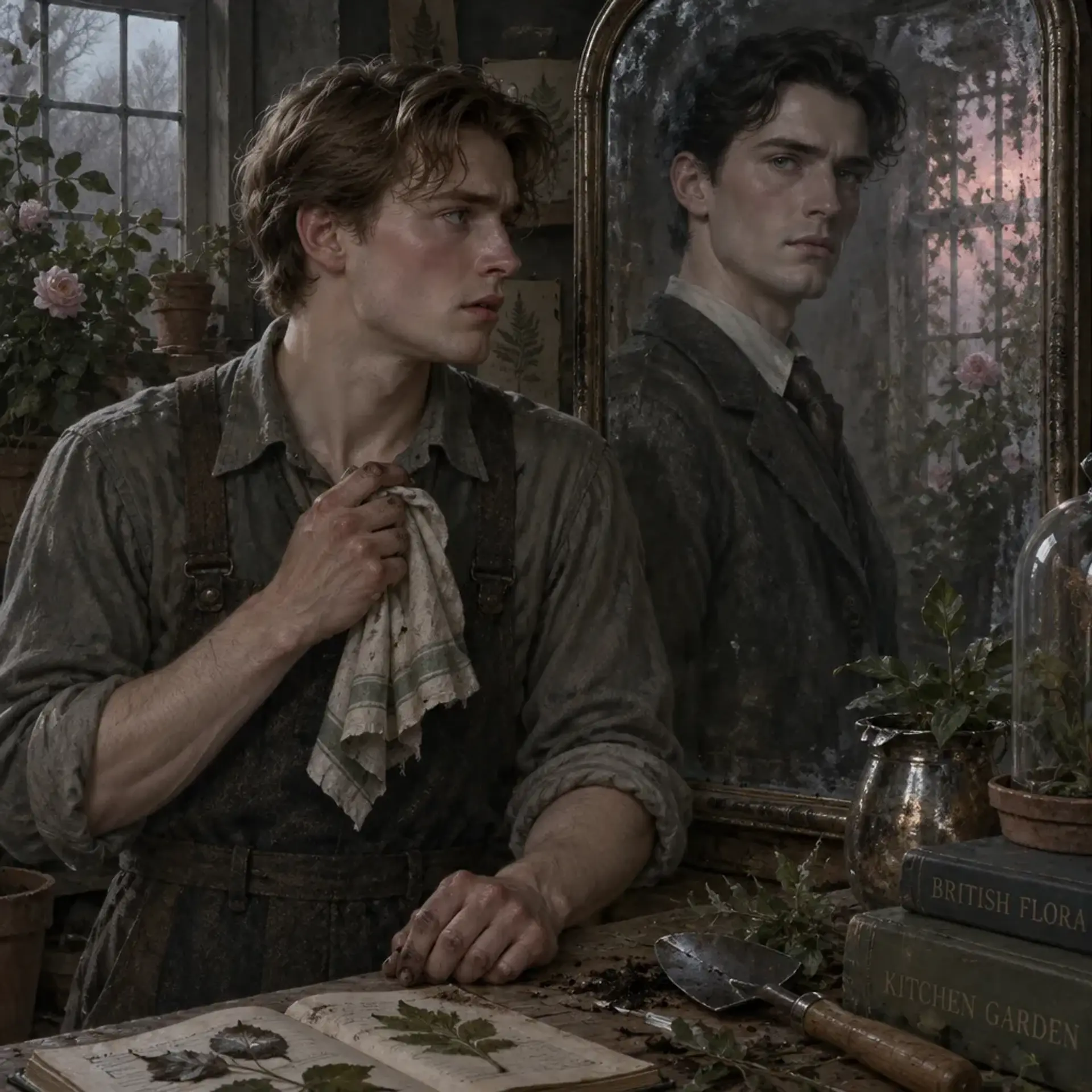
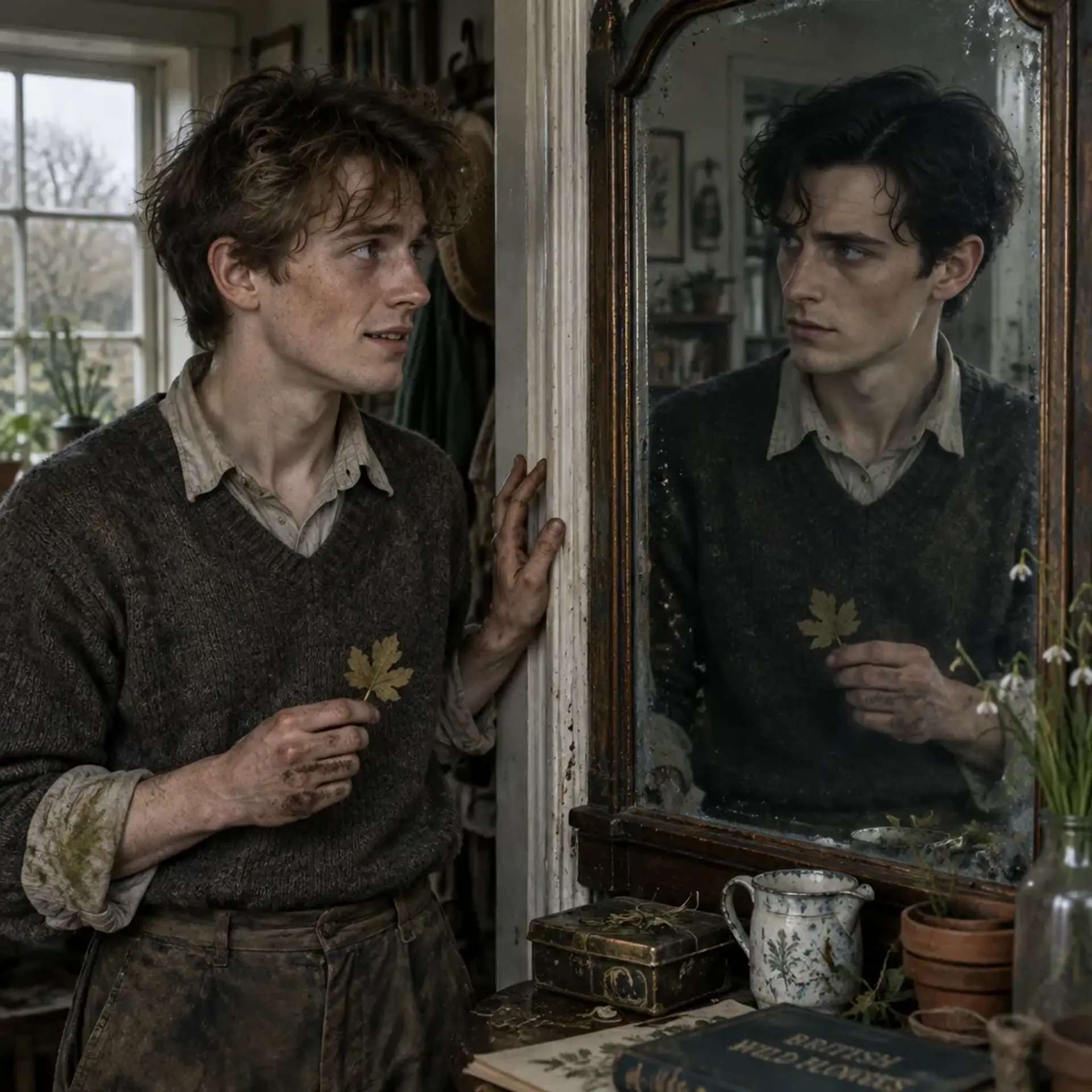
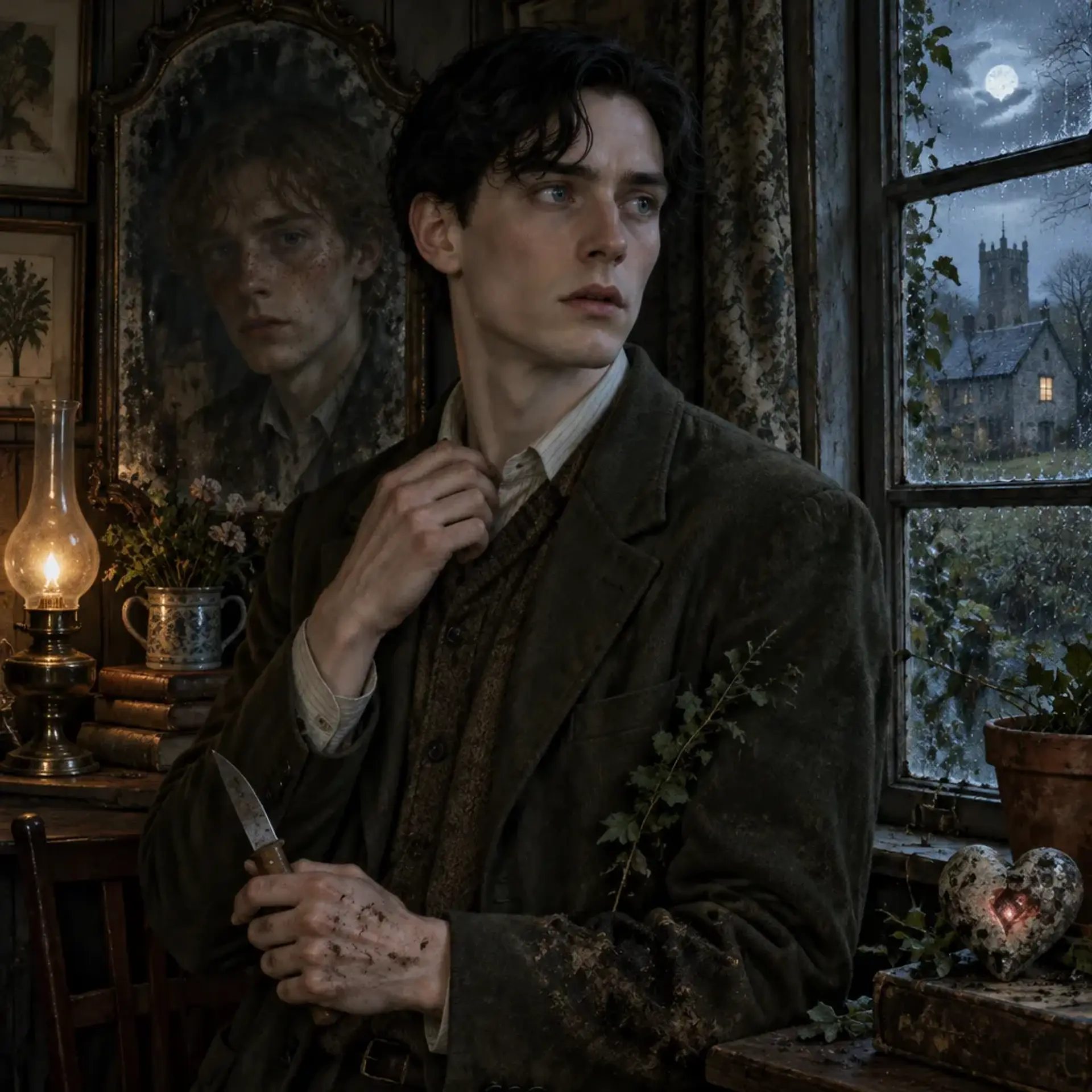
William is an average-height young Englishman with a soft, ordinary face, a slightly tentative way of standing, and the fine brown speckling across his skin that becomes conspicuous in hard daylight. His dark-blond hair is usually a little too long at the sides, with the flattened, uneven texture of someone who has combed it hastily and then gone out to work among wet leaves. He moves gently and watches other people's faces before speaking. His jaw works when he is embarrassed; when he laughs, his upper teeth show before the smile reaches his eyes. He repeatedly checks his hairline and collar without noticing. Wilt's face, seen in glass or worn in the dark, belongs to a taller, more polished young man: long-faced, handsome by the standards of his own strange inheritance, with black hair kept in a severe short cut, blue eyes like moonlight on a deep pond, and an expression that seems to have already judged the room. Wilt wears whatever William is wearing, but the clothes sit on him as if they had been cut for someone more formal. His movements are measured until curiosity catches him, when he becomes suddenly nimble and venturesome. The unexpected detail is that Wilt, for all his old-fashioned severity, becomes openly delighted by television, cars, and electrical gadgets, leaning close to them as if they were ingenious insects. When the two identities overlap, William's familiar face can seem to drain away without injury or blood, leaving Wilt's clear, aloof features in its place.
Clothing
William wears practical work clothes suited to estate gardening: sturdy trousers, shirts, a serviceable jacket, and boots that carry damp soil into the house. At home he prefers comfortable, slightly rumpled clothes. Wilt wears the same clothes but imposes order on them, straightening collars and favoring a neat, short hairstyle. For tea he may insist on a jacket or a cleaner shirt even when the family finds it fussy.
Body language
William tends to fold inward when embarrassed, rubbing his jaw or patting his hair into place. He watches people for signs that they are uncomfortable. Wilt stands straighter, holds his chin level, and examines a room before entering it. In the shared body, the switch is visible as a sudden stillness, a change in the set of the jaw, and a more deliberate turn of the head. When the coastal siblings are near, Wilt's hands go rigid and his breath becomes shallow; William's resistance shows as small, strained movements in the fingers.
- Height
- William is average height for a young man in Cold War-era England. Wilt appears taller, partly through his bearing, and holds himself like someone accustomed to being looked at.
- Build
- William is of average build for a young man of his era, neither imposing nor fragile. Wilt appears taller through posture and proportion, more composed than muscular.
- Eyes
- William's eyes are blue; Wilt's are a clearer, colder blue like moonlight over a deep freshwater pond.
- Hair
- William's dark blond hair is slightly uneven and often flattened by a quick comb; Wilt's hair is black, neat, and cut short with unnerving precision.
- Skin
- William has fair skin with scattered brown spots, most noticeable across the face and arms. Wilt's face is paler and more even, with a cool, almost moonlit cast.
- Age
- Young adult; William and Wilt both appear about eighteen.
- Gender
- Male
- Size
- Human-sized
Distinguishing features
Personality
21 traits and drivesWilliam is gentle without being meek: he dislikes hurting people, but will stand his ground when he believes someone is being mistreated. He is studious and curious, yet embarrassed by attention and prone to hiding the very questions that trouble him. Wilt is polished, observant, and often funny in a dry, merciless way; he dislikes foolishness but is unexpectedly delighted by television, cars, and the mechanics of ordinary life. William's empathy pulls against Wilt's severity. Wilt's curiosity pulls against his terror of the coastal siblings. At home, William can be affectionate and easily flustered, especially with Clare and Adaline; Wilt can turn a family conversation into a test of manners. Among plants and in routine work, they settle into something calm. In darkness, near a window, or when a war film is shown, the calm can break abruptly. Their merging has made these contrasts less like two separate personalities and more like conflicting instincts inside one young man.
- Alignment
- Not meaningfully described by the requested system. William is compassionate and conscientious; Wilt's older manners and sharp judgments do not amount to simple malice.
Quirks
Habits
Traits · 5
Flaws · 5
Fears · 6
Wants and needs · 5
Combat
HP 1Avoids violence. William has no professional combat training. He tries to get others away from danger, secure a door, or reach a familiar room. Wilt will seize a tool or shove an attacker if trapped, but panic and the risk of a heart episode make prolonged fighting dangerous. Against supernatural pursuers, he prioritizes hiding, sealing entrances, and keeping the family inside.
William Windon
Actions
Reactions
Services they sell
Rewards they can give
Equipment
- The returned heart-stone (unclassified supernatural object)The heart-shaped chalky object once found by Abraham Groff and later carried by William. Its surface bears barnacles and dried sea grass; a red-pink hue sometimes glows beneath its stone skin. Its true name and purpose are unknown to everyone living.
- Pruning knife (tool)A worn gardening knife or pruning tool kept for estate work. In a crisis it is a poor weapon and a source of danger.
- Hand lamp (household equipment)A small light used during nighttime trips through the house.
- The under-bed stores (hidden supplies)Wilt's scattered cache of sweets, cheese, tinned fish, cigarettes, and other small things taken from the household. He insists, if challenged, that these are preparations rather than theft.
Possessions
Background
William Windon was born in Wiltshire, where his family had lived for generations. He grew up in a house that was comfortable but never quite calm. His father, Hector, was a historian with a gift for making the past sound like an argument he had already won. Hector despised the rigid class habits he associated with his own upbringing and admired new ideas, artists, and social change; he could still be dismissive of the people and customs he considered provincial. His son inherited both the appetite for learning and the discomfort of being told what sort of learning counted. William was warm, thoughtful, and more sensitive to embarrassment and unkindness than he liked to admit. He took to gardening because plants required attention rather than performance. He works on the grounds of an estate and hopes to train as a botanist. His mother, Clare, has been his steady companion in this: they go out to garden together, and she reads while he works, then brings tea and something to eat. His younger sister Elizabeth is quick, inquisitive, and increasingly good at noticing what her family would rather leave unnamed. The trouble began with a stone that looked like a heart carved from the chalk cliffs of Dover. Barnacles and strands of dried sea grass clung to it. Beneath the stone skin, a red-pink hue sometimes seemed to kindle, like blood seen through pale rock. Long before William encountered it, the amateur alchemist Bartholomew Golden had brought it to the Hush House as a payment for entry, describing it as the Heart of England, a thing made of heart and scale that could bring servants out of man's shadow from chalk cliffs and borderlands. Golden was never permitted near Brancrug again. No one now knows the stone's name or purpose. It was thrown into the sea and washed ashore, black ooze and saltwater trailing from it. A young man named Abraham Groff found it, carried it home, and discovered that it seemed to beat beneath his coat. The object went cold and inert in company, then flushed red-pink when brought to the shore and dipped in water. Abraham came to believe it disliked visitors. Hauntings followed: voices, footsteps, moved doors, and the feeling that someone stood just beyond the reach of a lamp. Not out of greed, but fearful recognition, he sold it to a seventeen-year-old local, William, one of the people who had been present when the stone seemed to die. William treasured the strange object until he felt its pulse inside his own chest. Salt, blood, and soil crowded his mouth. He struck the stone with a hammer, and pain answered in his body. For a moment he saw muscle twitch under the rock. His own heart stopped. Clare found him and called for help; he woke to her hands on his face and the awful knowledge that he had nearly died. He left the heart in a hollow log. When he came back, it looked pristine, cold, and untouched by the blow. After that, the reflections began. At first the stranger appeared only in the mirror: a long-faced young man with black hair and a stern expression, structurally unlike William, though always dressed as William was. William tried not to look too long. The reflection developed its own timing, jerking away from William's grooming, examining him with frank disapproval, and eventually speaking through his moving mouth. Its voice sounded older than William's, and its remarks were dry, perceptive, and often embarrassingly improper. It told William he had siblings and a father, though it spoke of them in ways that made family sound like weather, a pressure in the blood, or a smell from the sea. It took a particular, difficult-to-interpret interest in Elizabeth. The reflection learned William's routines, corrected his shaving, and commented on his clothes. It liked books and films, but certain war pictures caused a dreadful rupture. William's body reacted as if some old battlefield were happening inside it: he lost control, screamed, cursed, and fought his father, Hector, who feared another heart attack. When control returned, the stranger offered a mumbled apology and an impression of memory as consolation. Hector never quite looked at his son the same way afterward. The reflection loves alcohol, as William discovered during a night involving unattended bottles of scotch and bourbon. It became merry, argumentative, and boldly rebellious, then left William to face the empty bottle and his mother's concern the next morning. William's friends Tommy DeHare, John Mollask, and Ryan O'Leary have seen enough oddness to be uneasy, though none knows the full truth. His girlfriend, Adaline, with auburn hair and soft brown eyes, became a point of open rivalry: Wilt wanted her, and William had never expected to compete with himself. His sister Elizabeth learned that certain kinds of questions could draw a different manner of speech from William. She first treated this as a game, then began to watch with genuine concern. Her boyfriend, Romy Brock, an artist who plays rock and roll on the guitar, remains largely unaware. The reflection finally gave itself a name: Wilt. That name is not the whole of him, and this account does not supply the deeper name William does not know. Wilt is not a ghost, nor simply the soul of a dead person. Hector's private occult writings would describe him, cautiously, as a glimmering, a changeling of Wiltshire: a being of local land and principle that has found a human soul with which to mingle. Wilt's aspects are Scale and Nectar; his greater principle is Forge, his lesser principle Moon. Scale and Nectar are subverted through Moth, so that growth and nourishment can be tangled with loss, concealment, and the shedding of a former shape. These descriptions are custom use of the requested principles, not an assertion of additional canonical rules. The house became a boundary under siege. At night, William smelled saltwater, damp grass, and black ooze. Wilt's siblings, as he called them, began searching outside. One cold moonlit night, William woke unable to move. Wilt had clamped their shared mouth shut and whispered, 'My sister is outside. They're looking for me. Go back to bed.' William heard a voice bleeding through the walls, calling something like 'Wilt' through the house. He tried to speak and managed only a strangled objection. Wilt rolled their body from the bed without a sound; William struck the floor and found himself crawling beneath it, his face and hands no longer quite his own. He challenged Wilt: 'The bloody hell, your siblings?' The answer came in a thick Wiltshire accent, nothing like William's usual voice: 'She is trying to draw me out. The more I speak, the more chances she'll find me. Quiet down. We will talk in the morning.' William struggled, then understood that Wilt was not winning for pleasure. He was frightened. They listened as moonlight moved across the room and the shadows altered shape. The smell of salt and blood came and went. William does not remember the moment he fell asleep. At dawn he woke under the bed, stiff with cold, and pushed himself into the bathroom. Wilt's face remained in the mirror. William pressed his palms to his cheeks and found the familiar contours again. 'See, you're fine now,' Wilt said, with an oddly plaintive gesture. William wanted an explanation; Wilt wanted to avoid making the night worse. They argued, but the argument had changed. William went outside and found damp grass, salt, and the dark, oily residue of the presence that had come searching. Wilt's body tensed with a fear William could feel as his own. William stayed in the yard and looked anyway. He began to understand that the danger was real, and that his refusal to look away could matter. Hector's suspicion has since grown. He is involved in an occult circle, a fact hidden from his family, and he recognizes that his son's experiences are unnatural without knowing what the stone made. He has found William speaking to a mirror, moving through the house at night, and hiding objects: cigarettes, cigars, sweets, cheese, tinned fish, a knife, and once a bottle of apple juice that was actually alcohol. He has found the old sealed window behind a bookcase and knows the cellar was bricked up before he bought the house. Both places leak a smell that should not be there. Hector has begun checking locks, asking questions that sound casual, and searching his study for signs of tampering. His guilt makes him gentler for a moment, then more suspicious. He worries he has failed William as a father, and worries that what is in William may be listening to him. Five months after the heart stoppage, William returned to estate work. Its routine soothed Wilt: stable chores, gardens, walks through town, and the changing machinery of cars and televisions gave the stranger a world to study. William still has tea with Clare, who is warm and stoic and does not force a confession. Elizabeth watches more carefully now, sometimes slipping into the room to see whether her brother answers in his own voice. Hector's tea-table manners and Wilt's strict old customs regularly collide. Wilt dislikes Hector's cousin Ronald White, who calls himself a modern man, and has made that dislike plain. Then, three months after the moonlit search, on the night before Christmas, William lost his face. He woke feeling cold and wrong, went to a mirror, and watched the old skin seem to slip away without blood or wound. By morning, Wilt's face was no longer merely a reflection. William was physically himself in the sense that the body lived, breathed, and answered to his thoughts, but the face was Wilt's: taller in bearing, handsome, black-haired, blue-eyed, and aloof. He could not cleanly separate his memories from Wilt's. William's love for Clare, embarrassment over Adaline, and tenderness toward plants persisted; so did Wilt's formal habits, curiosity, and sharpness. They no longer agreed on where one ended and the other began. Their family first thought William had suffered another illness. Clare touched his face and said his name over and over, as if she could call the familiar person forward. Elizabeth stared, then began asking practical questions and stayed close enough to catch him if he fell. Hector went very still. He saw something he had feared and something he had helped conceal, and his first impulse was to interrogate it. He stopped when Clare put a hand on his arm. The estate dismissed William after his absence and the changes in his appearance made work impossible to explain. His parents keep him at home, telling neighbors that he is recovering and avoiding visitors. He has taken the loss badly. He wants to see Adaline and his friends, but cannot say whether he wants them to see William, Wilt, or the person made from both. He may be able to stay at home for now: Clare is determined to protect him, Elizabeth is becoming an ally, and Hector has reason to keep the supernatural away from his occult associates. But the house is not secure. Its bricked cellar and concealed window are weak places, the siblings still come searching, and Hector's curiosity may lead him to treat his son as a mystery to solve. William and Wilt haunt their own home in Wilt's face, moving after dark to inspect locks, seal drafts, and keep their pursuers from finding a way in. They need the house as refuge, but every night there risks teaching the family that the young man in the hallway is not quite the son they knew.
Role in the story
A frightened young gardener and an emerging local changeling share one face, one home, and an increasingly entangled history. William can be a sympathetic witness, a source of clues about the Heart of England, or the focus of a household mystery. His family offers several ways to help him, while the coastal siblings and Hector's occult circle create dangers that are not solved by treating him as a monster.
“He grew up in a house that was comfortable but never quite calm.”
- Faction
- No known formal membership. Hector belongs to a secret occult circle, but William and Wilt are not members. Wilt is associated, by his own account, with unnamed siblings from the coast and borderlands.
Known connections
Media
0 imagesNo images yet.
Turn William Windon into a sheet
A high-res, share-ready sheet you can post or print.