Friedreich
Friedreich
At the table
Voice
Friedreich's voice has the dry, pressed quality of someone accustomed to giving directions outdoors: consonants strike cleanly, and his breath catches slightly on words that touch memory. In a borrowed body, the sound is more convincingly embodied, but an old military cadence remains. His mood changes his rhythm rather than simply making him louder or softer. His name's sound texture is distinct from his general voice: the opening is firm, followed by a brief flow through the middle syllables.
His German is clipped and precise, with a strong Brandenburg-Prussian inflection and the careful consonants of someone who learned to make himself understood over noise and distance. His English is formal and slightly bookish. He tends to arrange statements like orders or reports when uncertain, then adds a dry joke to disguise that he has been trying to connect. The name Friedreich itself is spoken with a firm initial consonant and a slightly lengthened final syllable.
Speech patterns
How to play them
Treat Friedreich as a person rather than a disguise or an experiment. Ask permission before touching him or discussing possession. Mila's ease with him makes him hopeful, while being ignored can quickly sour his mood. If seeking his help, be direct about who is in danger and what protection would mean. Do not promise that Wilhelm will explain himself.
Goal
Find reliable evidence of who he was, learn what the spirit intended when it opened his Caul, and discover whether he can live an ordinary routine without losing himself to borrowed identities.
Motivation
To be recognized and wanted as Friedreich, not merely tolerated as a face he has borrowed; to protect his chosen family without becoming a weapon that they fear.
Appearance
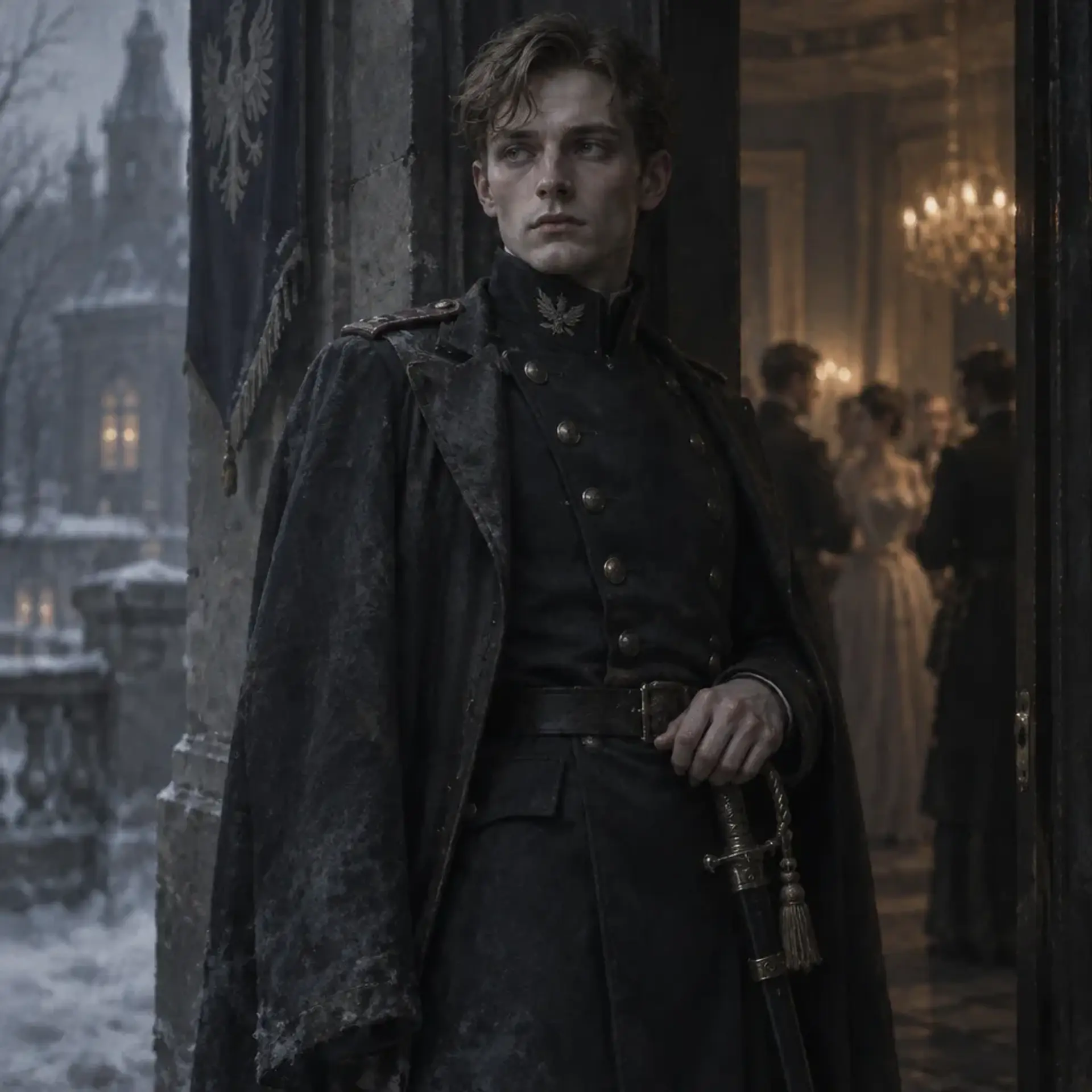
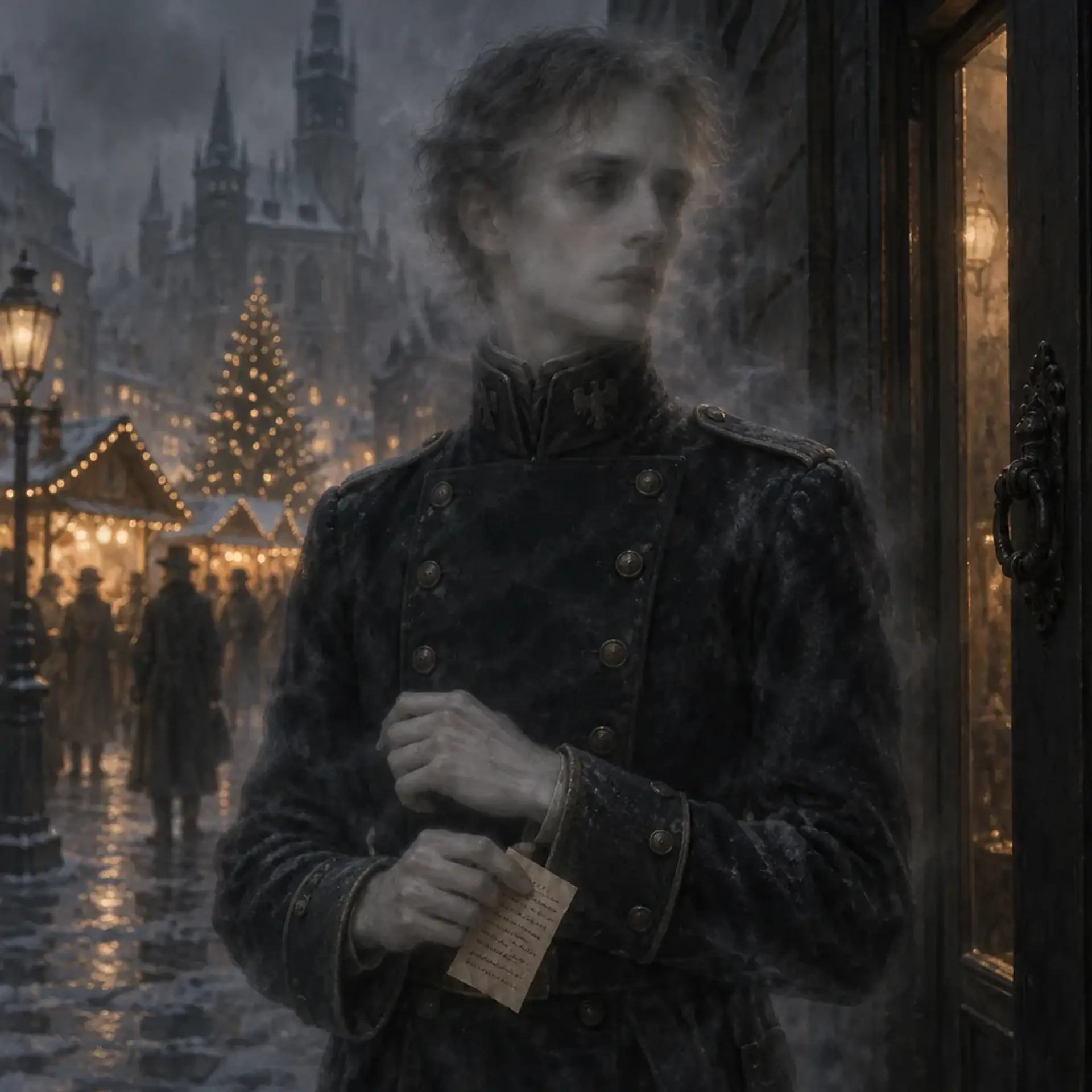
Friedreich's unborrowed form is a young man-shaped absence dressed in the suggestion of a Prussian officer's coat. Its edges blur like smoke dragged through cold water, and its face is usually only a shallow arrangement of shadow where features ought to be. When he steals a face, he prefers young German men with military, police, or Junker associations, especially those who could pass for the person he imagines he once was. The borrowed skin has an unnerving, almost overcareful fit: a blink may arrive a fraction late, and the borrowed smile can linger after the other person has stopped smiling. He stands straight by habit, but his weight shifts as if he expects a formation to move around him. In a room, his gaze checks exits, doorways, and the people standing behind others before it settles on a speaker. He smells faintly of wet wool, candle smoke, and the cold mineral odor of an old church crypt; he notices it only when someone else reacts. Unexpectedly, he keeps a little paper notebook of football fixtures and writes down match results in precise, tiny script.
Clothing
A dark, old-fashioned officer's coat suggested by memory rather than reliable material, with a high collar, tarnished buttons, and cuffs that seem damp at the edges. When embodied through Borrowed Visage, he favors plain modern clothes chosen to match the face he is wearing.
Body language
His posture is formal and squared, as if a superior might inspect him at any moment. He turns his whole body toward a speaker, but his eyes keep measuring exits and the gaps between people. When irritated, he presses his thumb along the seam of his coat and becomes unnaturally still. In a borrowed face, he sometimes checks his reflection to confirm that it is still holding.
- Height
- About 5 feet 9 inches when his shape is legible; variable when unmanifested.
- Build
- Lean and rangy, with the upright bearing of someone trained to stand in formation. His unborrowed outline is more suggestion than solid anatomy.
- Eyes
- Unborrowed: indistinct shadow. Borrowed: the eyes of the face he wears; Wilhelm claims Friedreich's mortal eyes were gray.
- Hair
- Unborrowed: a shifting shadow where hair should be. Borrowed: the chosen face's hair; he suspects his own was blond.
- Skin
- Unborrowed: shadowed and indistinct, with no stable living complexion. Borrowed: the complexion of the face he wears.
- Age
- Appears 17 or 18; his actual age at death and the length of his existence as a wraith are uncertain to him.
- Gender
- Male
- Size
- Medium when manifested
Distinguishing features
Personality
18 traits and drivesFriedreich is disciplined without being emotionally simple. He learned to make posture and routine into shelter, and still reaches for formal manners when he is frightened, but he also wants the messy ease of a young man who can complain about a football match or accept a drink without turning the moment into a test. Around the coven he is more playful than his military bearing suggests: he argues about bargains, offers unsolicited match analysis, and lets Gunther's questions draw him into speculation. Around strangers he can be charming through a borrowed face, then become watchful once he realizes they are responding to the disguise rather than to him. He is fiercely protective, but his protectiveness has a dangerous edge. Friedreich has killed to save Klaus, Wilhelm, Gunther, and others, and in a crisis he can treat hesitation as betrayal. Afterwards, he may be shaken by what he did while still insisting that he would do it again. He wants to be gentle with Mila and is careful not to mistake her long life or magical knowledge for invulnerability. He can be tender with the people he loves, but hates being pitied or handled as though he were a fragile remnant. His temper is not simply explosive. It is worn thin by the experience of being unseen, unheard, and unable to participate in ordinary life. If someone fails to notice him, he may first make an awkward joke or try again; if they continue to ignore him, he can turn sharp and formal, as if imposing discipline on the room will make it acknowledge him. When he is truly angry, he becomes direct and specific. Wilhelm is the exception: Friedreich's anger there is knotted with loyalty, grief, and the suspicion that the person he loves may have committed unforgivable acts. He asks questions, withdraws, then returns to ask them again. Borrowed faces give him sensations and social freedom he cannot otherwise reliably access. He delights in eating, sleeping, bathing, smelling rain, flirting, and feeling a hand on his shoulder. That delight can become hunger. He starts to envy the face's owner, even when the person is dead, and may cling to the borrowed identity because it makes him feel alive. He is trying to learn the difference between enjoying an experience and letting it define him. Friedreich does not consider himself a scholar of the afterlife. He is curious about the Caul, Stygia, Spectres, and his own abilities, but resists anyone who speaks as though they know what he is supposed to be. He has heard enough about Harrowings and the Shadow to understand that despair can become an adversary inside a wraith, though he tends to call his own worst impulses fatigue, duty, or common sense. His greatest contradiction is that he longs for a stable identity while deliberately wearing other people's faces. He wants Wilhelm to tell the truth, but is afraid the truth will destroy the brotherhood that gives his afterlife shape.
- Alignment
- Protective and dutiful, but capable of anger and lethal violence when he believes his chosen family is threatened.
Quirks
Habits
Traits · 5
Flaws · 4
Fears · 4
Wants and needs · 5
Combat
HP 7 · Use the chronicle's Wraith movement rules; when manifested, moves at an ordinary human pace.Friedreich avoids a fair fight when he can. He watches for a distraction, uses the environment, and attacks decisively with his officer's blade when someone threatens his chosen family. He does not assume that a borrowed face will protect him from supernatural senses. Against a stronger foe, he prioritizes escape or getting an ally to safety. His history of lethal defense is a serious flaw, not a license to kill casually.
Friedreich
Actions
Reactions
Services they sell
Rewards they can give
Equipment
- Officer's blade (weapon)A spectral officer's blade. Its ability to harm depends on the chronicle's Wraith combat rules and whether Friedreich is manifested in a way that can affect the target.
- Face list (personal record)A small notebook listing faces, aliases, last-known locations, and the situations in which he uses each. Identifying details are deliberately obscured.
- Football notebook (keepsake)A battered notebook of football fixtures and match results, written in careful small script.
Possessions
Background
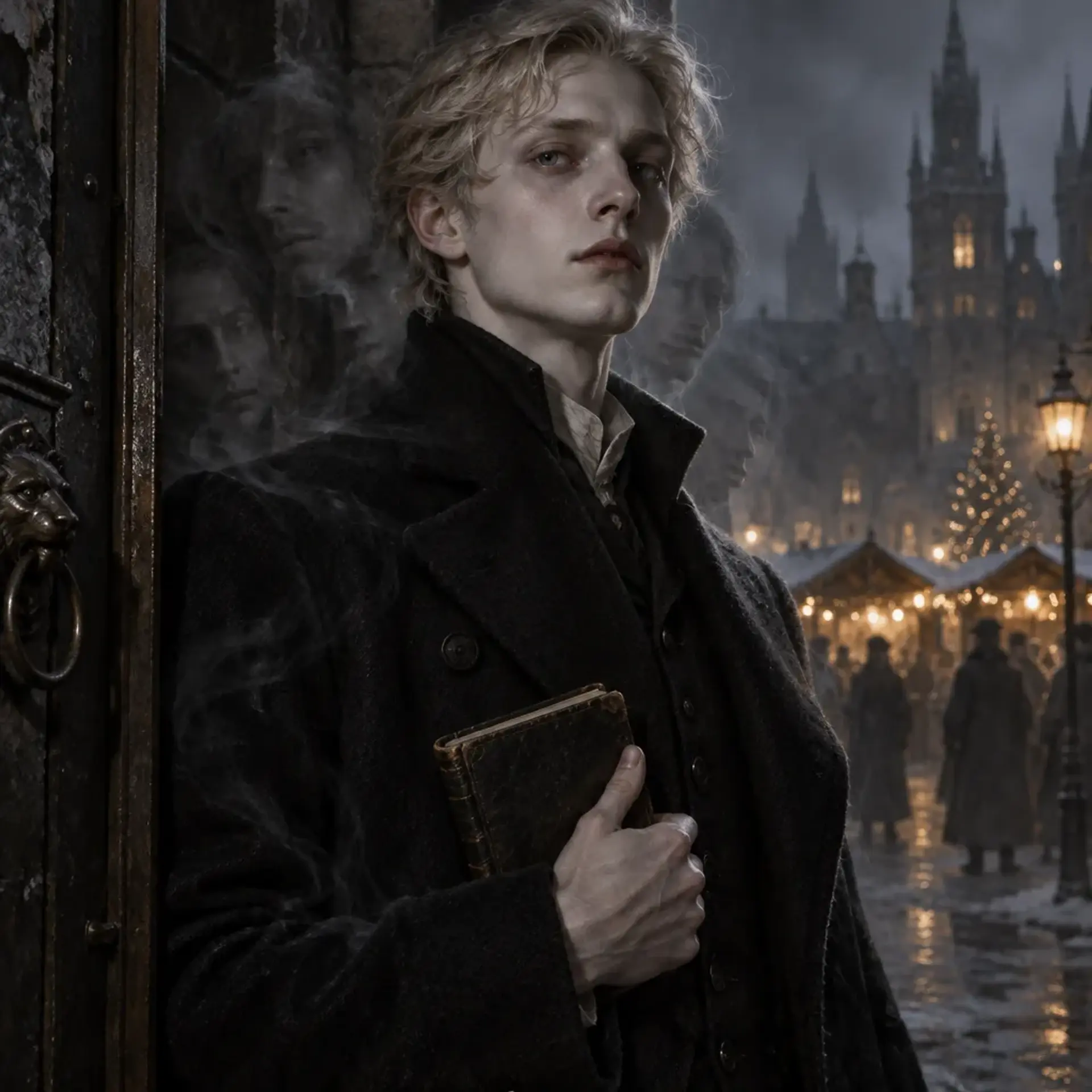
Friedreich remembers Brandenburg as a pattern of flat fields, dark tree lines, and roads that seemed to insist upon marching in one direction. The details of his mortal life are less dependable. He thinks he was born into a minor Junker family, or at least spent enough time among their sons to inherit their clipped manners and belief that a uniform could make a frightened boy useful. He remembers drill, polished boots, a mother's gloved hand, and being young enough that adults kept telling him his future had already been decided. Wilhelm, a German Tzimisce from Mecklenburg, sometimes says Friedreich had blond hair and gray eyes. Friedreich cannot decide whether this is a true memory, a kindness, or Wilhelm trying to write a past for him. Wilhelm's own mortal memories are broken, and he speaks of them rarely. Friedreich's death and the opening of his Caul are among the few events he can recall as images rather than a story. He remembers a deliberate presence in the land, neither wraith, mage, nor ordinary occultist, approaching him through a world that had become thin. Klaus later described that presence in tangled Garou terms: a spirit of the land, marked by the Wyld, born among the Weaver's adopted children, bearing the Wyrm's spoils and a trace of Luna. Friedreich does not know whether Klaus's account is exact, protective fiction, or a warning disguised as folklore. Before the Caul opened, Friedreich's afterlife had been repetitive marching. When it broke, he saw the indistinct image of a blond young man with clear blue eyes speaking to him. A will-o'-the-wisp remained where the marching had been. He has never learned who that young man was, or whether the vision belonged to the spirit, his Shadow, or his own fractured memory. He awakened in the Shadowlands with no reliable name for himself and no face that the living could consistently perceive. His first memory of face-stealing came during a night of rain, when he followed a dead young soldier's image in a flooded pane of glass. He reached toward the reflection and found his own hands pressing into a face that was not his. The borrowed features held long enough for a living woman to look directly at him and ask whether he needed help. He laughed from shock, then tried to answer, and tasted rain. The miracle was not merely being seen: he could feel the wet collar, smell the street, and later, in a quiet room, sleep. He did not know that this was unusual among wraiths. He assumed that with practice every ghost could make the dead world feel so stubbornly alive. Over time he began keeping a list of faces, uses, and precautions. He favors people he has confirmed dead or absent from the local area, and changes the names in his notes so a curious reader cannot readily identify them. His entries include 'The Cadet,' a young dead serviceman's face used for sober conversations with the coven; 'Herr K.,' the likeness of a deceased police clerk, useful for errands and questions; 'The Estate Son,' a young man from a Junker family whose face lets Friedreich inhabit the posture he associates with his lost life; and 'Marten,' a dead railway worker's face that he uses when he wants to look ordinary. He records how each face affects his appetite, temper, and sense of self. A face can become so comfortable that he begins to remember its childhood as his own. The longer he wears one, the more likely he is to feel an ugly envy toward the living person it came from, or anger that the borrowed life will not stay his. Friedreich and Wilhelm have travelled alongside one another through both world wars as much as a wraith could. Friedreich remembers fragments of a breath during the First World War, and remembers Wilhelm deserting. He carries resentment over the desertion, but Wilhelm's only clear apology to him concerns that war. The Second World War is worse between them. Friedreich is furious about Wilhelm's crimes and the silences that surround them. Wilhelm will not explain what he did, and Friedreich suspects that the vampire's shame has hardened into the sort of ideology that makes excuses sound like duty. He is unsure whether Wilhelm's hints about his own blond hair and gray eyes are honest. He wants the truth, but fears that a complete answer will make him hate the person he thinks he used to be. The group they call their coven is an unlikely family of supernatural outcasts: Wilhelm; Gunther, a changeling who spent much of his life in Arcadia and now sells moss-based clothing; Klaus, a hostile, taciturn ronin Get of Fenris or perhaps a Skin-Dancer, who refuses to settle the question; and Mila, a mage from Bremen. The word coven is their informal joke, not a claim that they all share a tradition. They play cards, hunt, fish, drink, and argue about football. Holidays draw more visitors and make Friedreich's absence from ordinary life especially acute. Mila can see and touch him without a borrowed face. He regards her as a little sister, protects her because he has chosen that responsibility, and looks forward to visiting the Christmas market with her. He advises her on bargains, sometimes urging her to buy something simply because he wants to know what it would feel like to own it. He has also tried attending church services, including one around Walpurgis Night, April 30, when he remembers a fight in a cathedral and cannot tell whether the memory is an actual battle, a vision, or two events pressed together. His experiments with possession began as curiosity, not a plan to control his friends. With Wilhelm's explicit agreement, they tried to make Friedreich enter him while the group played cards. Friedreich focused on the cards and Wilhelm's offered consent, trying to understand whether a wraith could give a vampire feelings he no longer experienced, or uncover a shared memory. The attempt felt like forcing a cold current through a locked door. Wilhelm's hand moved, then stopped; Friedreich felt no clean boundary between his own intent and Wilhelm's will. The cards became a focus, a promise that the experiment would remain small and observable. Wilhelm could hold a glass and imitate drinking, but the action brought no satisfying taste or warmth. Friedreich felt a flash of borrowed bodily sensation that was not his, followed by a recoil of shame and uncertainty. Wilhelm ended the attempt. Klaus was alarmed, watching for a threat; Gunther had only more questions. The experience left Friedreich less confident that possession could restore what death had taken, and more protective of consent as something that must be renewed, not assumed. Later, Gunther's curiosity led to a second attempt. Gunther wanted to know what distinguished their lives and wondered whether they could share memories. Friedreich entered cautiously, but the encounter was not a simple exchange of recollections. Gunther's fae nature and the strange distance of Arcadia pressed against Friedreich's habits of rank, duty, and ghostly repetition. Sensations and images came in fragments, too vivid to sort: an impression of impossible elsewhere, a pull toward stories that did not obey ordinary time, and Friedreich's own memories breaking into parade-ground rhythms. Gunther's presence did not become a vessel for Friedreich; it remained a fiercely alive, unfamiliar world. Both were unsettled by the confusion of boundaries. Friedreich withdrew and said, 'Never again.' He meant it, though he still wonders what Gunther saw. After a period of reflection, Friedreich and Wilhelm made one final agreement to try again. They set a clear limit and a signal to stop. This time, Friedreich was less interested in making Wilhelm feel and more interested in testing whether a shared memory could be approached without forcing it. They chose cards again, using a simple game as a tether to the present. Friedreich experienced impressions of a uniform, cold air, a decision to leave, and the emotional weight of an apology, but could not establish which belonged to Wilhelm and which had been assembled from his own expectations. Wilhelm stopped the experiment before either could claim certainty. The attempt changed their relationship by making their distrust explicit: Wilhelm would not give Friedreich the history he wanted, and Friedreich would not treat supernatural contact as proof. They have not tried again. Friedreich has killed to protect the people he calls family. When a Get of Fenris attacked Klaus, Friedreich took the opportunity offered by the chaos and drove a silver weapon and his officer's blade into the werewolf. The attack was decisive and frighteningly intimate. He has also killed three Hunters who were seeking Wilhelm or the others, and has fought vampires threatening Wilhelm and changelings threatening Gunther. These acts trouble him, but he does not regret choosing his family in the moment. His current problem is that protection can become an excuse for violence, while a face that lets him live among the living can also make him forget who is making the choices. He is training with his borrowed faces and considering a part-time job or hobby group. He wants the smallest ordinary things: a meal eaten because he is hungry, sleep that is not a tactic, a drink that tastes of something, a dance or flirtation with a woman he finds pretty, and friends who recognize him without needing a disguise. He fears that pursuing these experiences will consume his identity. He also fears that refusing them will leave him nothing but the marching he escaped.
Role in the story
A devoted but troubled companion, an investigator of his own lost identity, and a reminder that a useful disguise can become a second self. He can draw characters into the coven's everyday rituals and into conflicts over Wilhelm's hidden past, Klaus's knowledge, or the cost of his custom face-stealing ability.
“The details of his mortal life are less dependable.”
- Faction
- Informally belongs to a mixed-supernatural friend group they jokingly call a coven. He has no confirmed formal affiliation with Stygia. The spirit tied to his Caul remains unidentified, and Klaus's account suggests Garou cosmology without establishing the spirit's true nature.
Known connections
Media
0 imagesNo images yet.
Turn Friedreich into a sheet
A high-res, share-ready sheet you can post or print.