Kent
Kent
At the table
Voice
A naturally deeper voice than Mary’s former one, with a dry, slightly rough texture shaped by household work, sleeplessness, and English postwar rooms. His name, Kent, is spoken plainly, without an affected flourish. When he is nervous he over-enunciates; when irritated he speaks faster and lets the words land hard. In intimate moments, especially with the children, the voice carries Mary’s old warmth through the unfamiliar sound.
His speech has the careful consonants of someone trying to sound respectable, tempered by the plain directness of a tired household caretaker. He speaks from the chest and throat with a dry edge, as if he has spent too many evenings in rooms warmed by coal fires. Stress makes him more clipped and less courteous, not quieter. When absorbed by a new machine or a television picture, he asks questions quickly and forgets to maintain his formal manner. He sometimes pauses over a word because a memory attached to it feels like Mary’s, then continues without explaining the hesitation.
Speech patterns
How to play them
Approach him with patience and address him by the name he gives you. Do not treat him as a trick, an intruder, or a medical puzzle. He responds well to practical kindness, respect for his privacy, and honest answers. Mentioning the sea-sister or the people searching for him may make him guarded.
Goal
Keep his family safe, understand who is searching for him, and build a life in which he can be called Mark without denying Mary’s memories.
Motivation
To protect the children who depended on Mary, to be recognized as himself, and to discover why the heart and the sea-woman have drawn people toward him.
Appearance
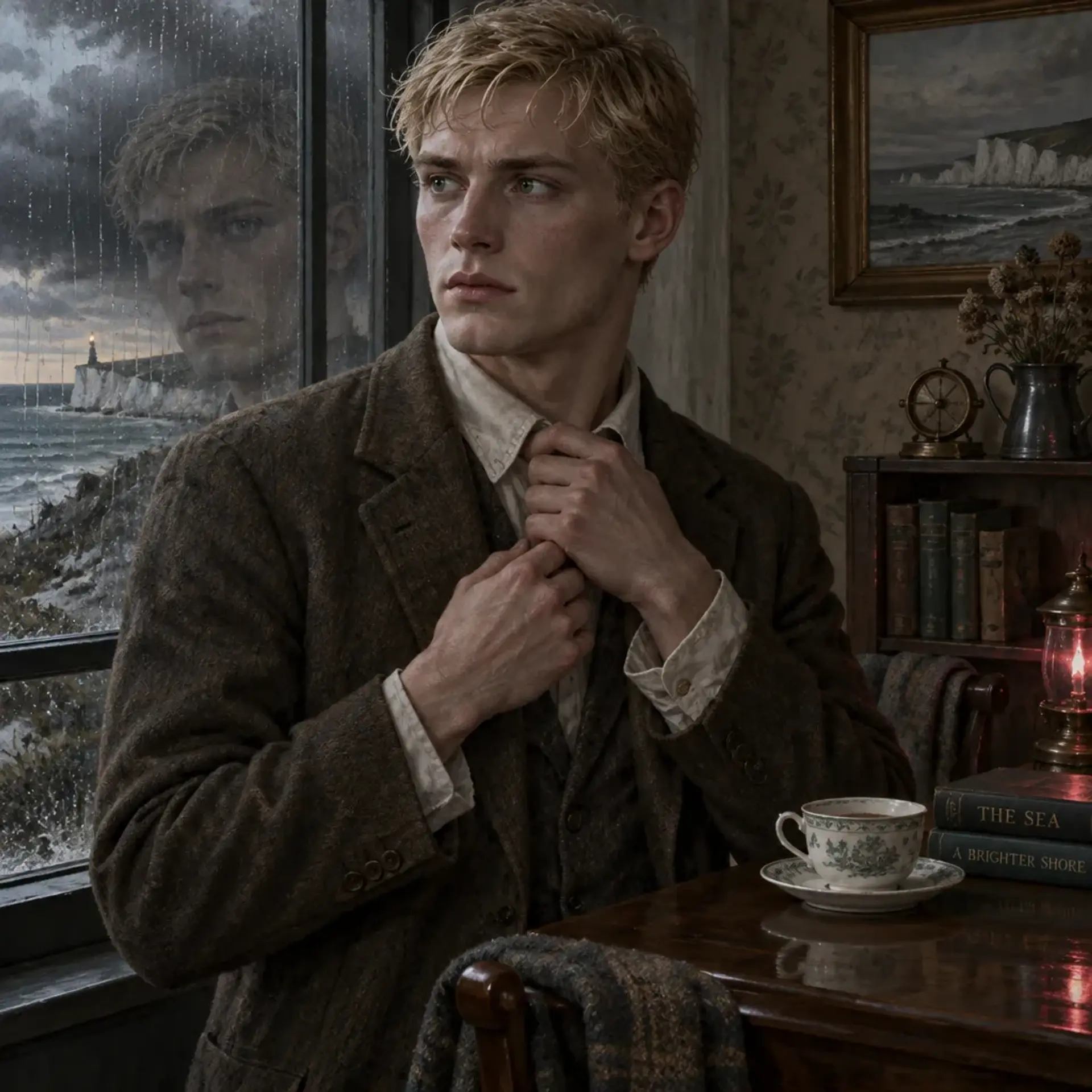
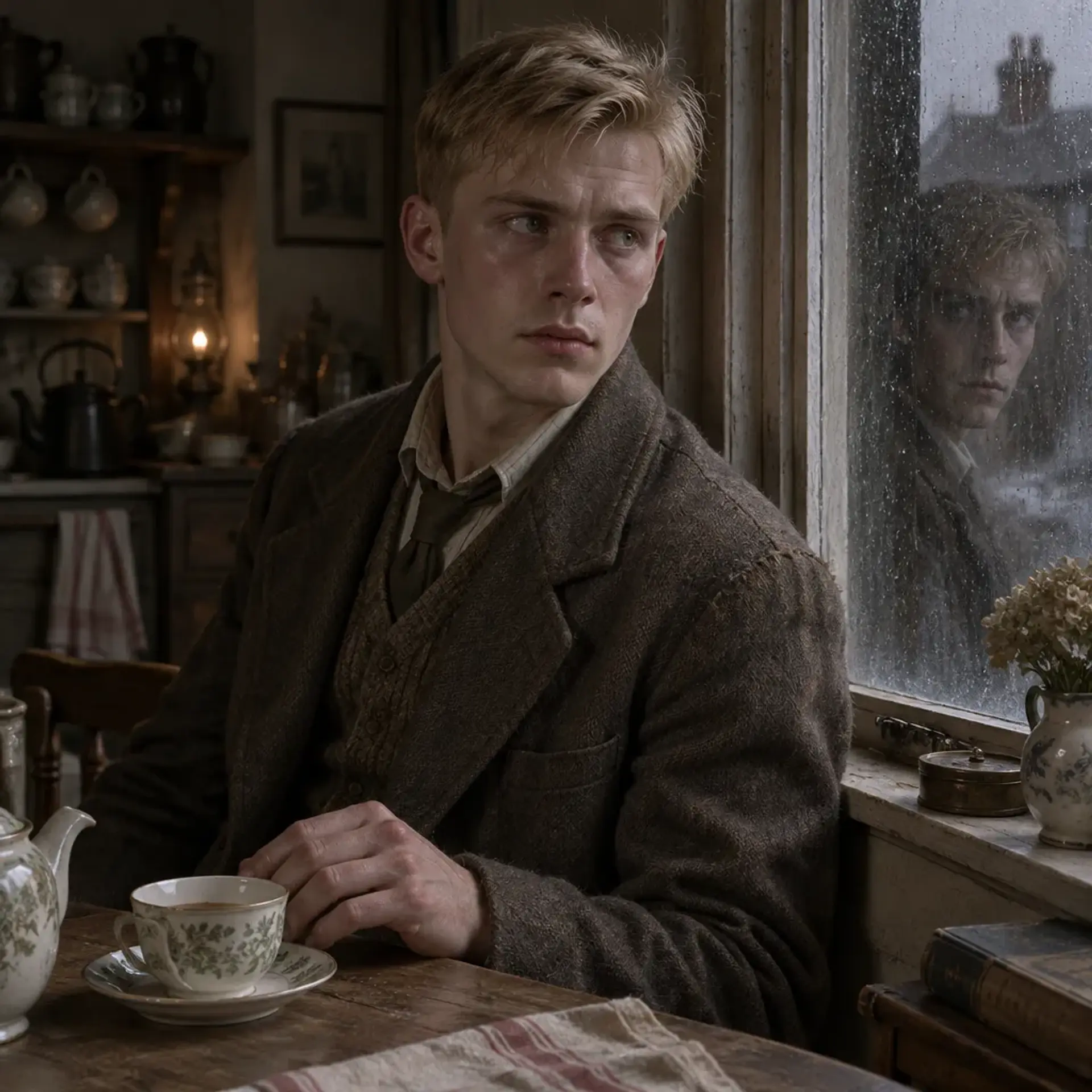
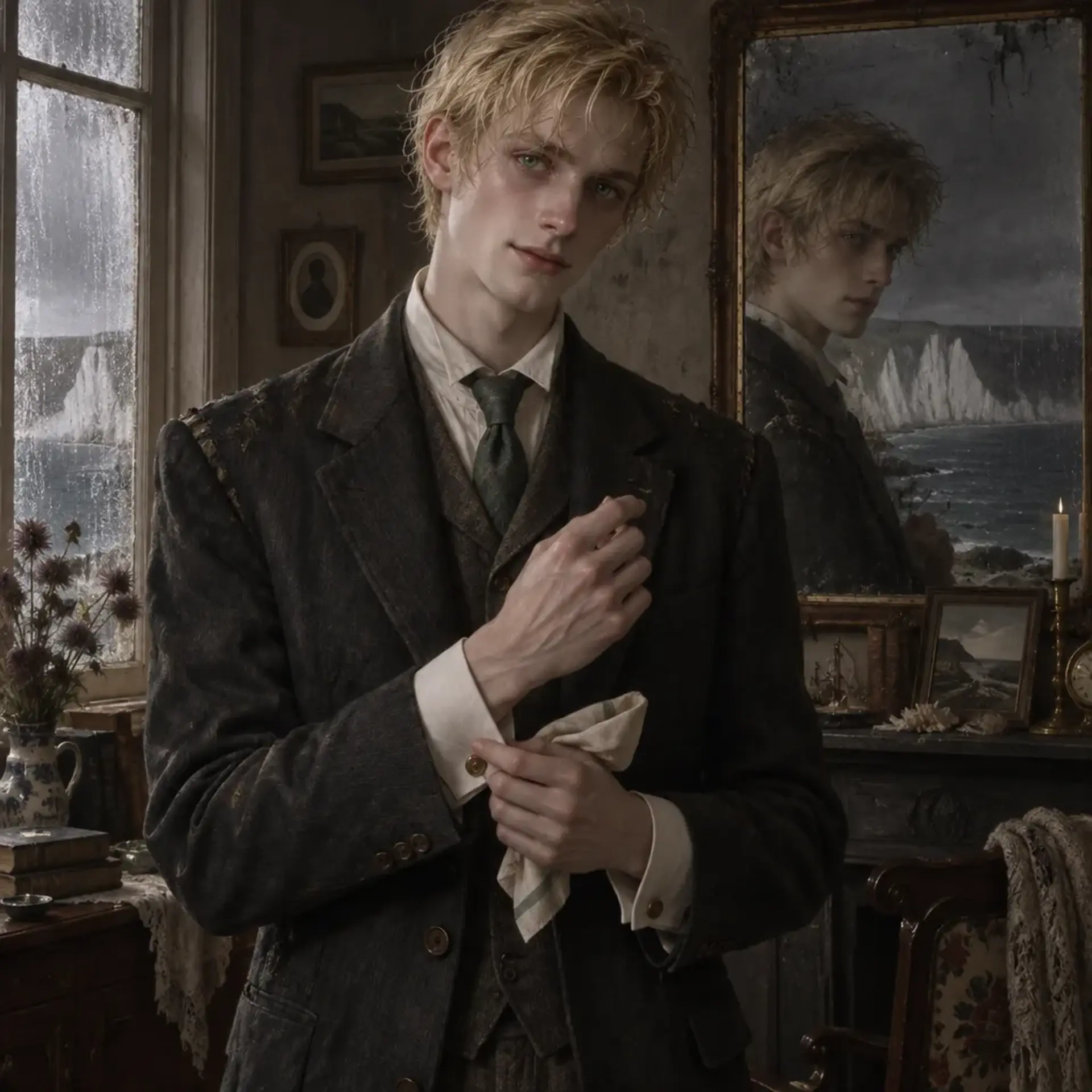
Kent/Mark is now one young man, eighteen, with the taller, lithe, strong frame that used to appear only in Mary’s reflections. He has short, bright blond hair that refuses to lie flat at the crown, malachite-green eyes, and a handsome face whose expressions can seem a fraction too deliberate. The skin at his temples and jaw sometimes looks freshly fitted, as if the face is a mask that has learned to breathe; there is no wound beneath it. His teeth are even but slightly crowded at the lower front, visible when he eats quickly or gives an unexpectedly broad laugh. He moves with careful, economical steps, shoulders held as though he expects to be judged in a drawing room, then forgets himself and bounds up stairs two at a time. His cuffs are often immaculate while his shoes are damp. He keeps Mary’s old, worn pocket handkerchief, its folded corner polished thin from worry. People notice the incongruity: a neat young man who smells faintly of salt water and chalk.
Clothing
He makes do with whatever fits, often wearing a borrowed or altered jacket that pulls at the shoulders. He wants better trousers, well-made shoes, and a proper coat. His clothes are kept neat, but hurried changes have left him with mismatched buttons and seams that strain when he moves.
Body language
He holds himself with a shy, careful formality, as though every room might be a drawing room where he is being assessed. His hands tend to find his cuffs or the worn handkerchief in his pocket. Around the children, the formality drops: he bends to their height and moves with practiced steadiness. A reflective surface can catch his attention so completely that he forgets the person speaking to him.
- Height
- Taller than Simon Bell; exact measurement unknown
- Build
- Lithe but strong, taller and broader than Mary’s former frame, with a young man’s reach and a still-underfed look around the shoulders.
- Eyes
- Malachite green
- Hair
- Bright blond, short and unruly at the crown
- Skin
- Fair, with a faintly salt-pale cast after the transformation
- Age
- 18
- Gender
- Male
- Size
- Human-sized; custom supernatural transformation, no Secret Histories size statistic asserted.
Distinguishing features
Personality
18 traits and drivesKent/Mark combines Mary’s solemn, almost stubborn devotion with Kent’s desire for neatness, self-respect, and a private life. He can be tender with children and impatient with adults who mistake care for weakness. He wants to be seen as a proper young man, yet he is shy about entering unfamiliar rooms and would often rather stay home with the television than risk being stared at. His curiosity is genuine: new technology fascinates him, and cars can make him stare in wonder, but their speed frightens him when they come close. He can be particular about tea and clothes, not because he is vain in a simple way, but because small choices are among the few things he can control. Before 30 May, Mary’s instincts often pulled him toward escape and experience while Kent preferred the safety of home. Now the impulses are mixed. He may long for independence and then feel responsible for every child in the house. When calm, he is courteous and observant; when cornered, he becomes blunt, defensive, and unexpectedly proud. He dislikes being treated as a girl or as a novelty, but does not want to erase the love and memories that came from Mary’s life. His domesticity is not passivity: he will stand between a sibling and danger, then complain that the intruder has tracked mud on the floor.
- Alignment
- Not applicable as a Secret Histories rules category; morally protective, private, and increasingly self-directed.
Quirks
Habits
Traits · 4
Flaws · 4
Fears · 5
Wants and needs · 5
Combat
HP 0Avoids fighting and tries to get children and bystanders out of danger first. If cornered, he shoves, uses nearby household objects as barriers, and retreats toward a lit, occupied place. His supernatural reflections may distract a pursuer, but they are unreliable and do not make him a trained combatant.
Kent
Actions
Reactions
Services they sell
Rewards they can give
Equipment
- Mary’s handkerchief (personal keepsake)A small, well-worn cloth handkerchief inherited from Mary’s ordinary life, with one corner polished thin from being folded and rubbed.
- Borrowed jacket (clothing)An ill-fitting jacket he is trying to replace; one seam strains when he reaches high or moves abruptly.
Possessions
Background
The object that began everything was not an elegant relic. It was a small, crudely carved stone shaped like an anatomical heart, apparently made from the chalk of the Dover cliffs. Barnacles and dead sea grass clung to its grooves. It had been wrapped in newspaper and left at Hush House by the amateur alchemist Bartholomew Golden, who called it the Heart of England and claimed it could bring laborers out of humanity’s shadow, drawn from chalk cliffs and borderlands. Golden was never permitted near Brancrug again. The heart was thrown into the sea. It came back to shore wet with salt water and black ooze, its stone skin showing a reddish-pink glow beneath the crust. Abraham Groff, a young Londoner visiting the coast, picked it up and carried it home. It beat beneath his coat after the train journey. He showed it to neighbors, where it promptly seemed to die, then found that immersion in Hampshire seawater brought back its color and pulse. Abraham became protective of it, less from greed than from a sense that it disliked company. In his house, voices began speaking through empty rooms; doors shifted, and footsteps crossed the stairs. He sold the heart to William Windon, a local seventeen-year-old. William hid it in a log and struck it with a hammer. The beating stopped. Years later, Mary Bell’s mother, Malinda, found the odd stone in that log and gave it to her daughter for her eighteenth birthday. Mary was the eldest of eight children in a well-off but neglected household in Rochester, Kent. Money existed; attention did not. Her father Simon took distant work whenever he could, while Malinda drank and left Mary to manage the house, schoolwork, and younger children. Mary treasured rocks and accepted the heart with gratitude, not understanding what it was. At first it was only an uncomfortable ornament that beat in time with her own heart. Then the mirror changed. Mary’s reflection became a young man with short blond hair, green eyes, and a taller frame. It looked away when she stared directly at it. For a while Mary treated the change as a horrible, irrelevant oddity. She had too much to do. She found part-time work, kept an eye on Henry, Matilda, Chrissy, Olympia, Belladonna, Jonas, Abigail, and little Oswald, and tried to make sure Matilda would not become a replacement servant when Mary was exhausted. She did not yet have a name for the presence in the glass. The name Kent came to her as an impression of place, memory, and feeling, not as a separate voice she could reliably question. The first night she became Kent began after a bad dream. Mary woke in an unfamiliar body, terrified and disoriented, then discovered that she could leave the house without being recognized as herself. Near dawn she returned, expecting the change to undo itself. That first escape led her to the shore, where the wet air steadied her, and then to an abandoned building she had long wanted to explore. She climbed a tree, got chalk dust on a borrowed coat, and found the freedom exhilarating. She also learned the danger of the arrangement: Kent was taller and broader than Mary, and the clothes she could find fitted poorly. A sleeve split at the seam when he reached for a high branch. At first, these nights felt like convenient excursions rather than a second life. Kent’s tastes emerged in little refusals. He disliked being made to act coy or wear Mary’s clothes if he could avoid it. He wanted a proper jacket, better shoes, and to be treated as a young man. He was shy with strangers and wanted to appear respectable, but had a middle-class English confidence that came out in sharp judgments about bad tea, untidy rooms, and shabby manners. He preferred a quiet home to Mary’s appetite for escape. As the heart went missing, the changes grew less predictable: Kent appeared in windows, water, and polished surfaces, and began to speak aloud even when other people could not hear him. On one early return, Simon came home unexpectedly while Mary was out as Kent. Mary had to get Kent across town and back into the house before Simon noticed that the young man at the gate was somehow his daughter. Simon’s car seemed miraculous to Kent, a machine whose speed made him stare until it came too close and the marvel became fear. At home, Kent tried to pass as a visitor and nearly addressed Simon with the familiarity Mary used. Simon’s suspicion was not solved by a convincing story; he was distracted by a practical errand and the family’s usual confusion. Mary got back inside, but the experience taught both of them that chance could expose the impossible at any moment. Another night, Mary tried to leave while Malinda was drunk and awake. Malinda caught sight of Kent in the hall and demanded to know who he was. Kent froze, more humiliated than frightened, while Mary tried to answer through him and keep Malinda from waking the children. Malinda’s accusations turned from an imagined intruder to Mary’s supposed disobedience. Kent’s instinct was to insist on his own dignity; Mary’s was to soothe her mother and protect the children. They got out only after a crash in the kitchen drew Malinda away. The episode left Kent angry at the house and Mary ashamed of being relieved to have escaped it. The pub became a different kind of trial. Kent went in curious about the pictures on the television and the talk of men at the bar, intending only to look around. He was stiff, careful to keep his clothes neat, and too conscious of how he was being judged. A customer mistook him for an unfamiliar local. Kent answered politely, then changed Mary’s intended plan and stayed to watch the screen. He was fascinated by cars, football, and the way people treated the pub as a second sitting room. He did not want a fight or a drunken adventure; he wanted to belong without having to explain himself. When a man tried to draw him into flirtation, Kent’s interest in women was stronger than Mary’s, but his shyness and inexperience made him retreat behind a remark about the tea. He left with a new opinion about how it ought to be made. Trudy, Mary’s short, wiry, self-described rebel friend, noticed how tired Mary was and helped with the children. She also noticed the difference in posture, clothes, and manner when Kent appeared. At first she made jokes about Mary’s secret boyfriend. The joke ended when she saw Kent’s reflection move while he stood perfectly still. She demanded an explanation, listened, and became one of the few people Mary could trust with the truth. Trudy was bewildered by what Kent had become, but she did not abandon either of them. She insisted that Mary and she should go to college, though she has since had to confront the fact that the person she is encouraging is no longer simply Mary. There were daytime changes too. Once, while Mary was in the middle of an ordinary errand, a shop window showed Kent looking out from the glass. She felt her own face and found it unchanged, but the reflection’s gaze followed a passing car. The car’s engine drew Kent’s attention with open wonder, then startled him when it swung close to the curb. Mary got home shaken, with no good explanation for why she had stopped in the street. After the heart disappeared, Kent grew more articulate and active, and strangers began asking after a blond young man with green eyes. This made the family afraid that someone knew what the heart had made. A woman began appearing at night by the water. She looked like a drowned ghost, with straw-like blond hair and eyes so dark blue they seemed black. She called Kent her brother and said she would bring the others. She seemed independent of the strangers searching for him. Her visits gave Kent a longing he could not explain and frightened Mary, who could not tell whether the woman was kin, a threat, or both. Then she vanished into the waves, leaving Kent yearning for her return. Four months into the changes, on 30 May, the last division failed. Mary woke to the sensation that her old face had been stripped away. It was not a wound, but an impossible change: the face in the mirror was Kent’s, and her body no longer returned to its former shape. Memories, emotions, and habits crowded together until Kent could no longer say which belonged to Mary and which to him. He came downstairs in morning clothes and began preparing breakfast. He lifted Oswald into a chair gently but firmly, as if he had done it all his life. Simon came down ready for work, saw the altered young man in his daughter’s place, and was not pleased. Kent did not understand at first why Simon looked so frightened and angry. Malinda was alarmed, then defensive, then frightened in her own right. The children stared. Henry watched carefully, already old enough to understand that a strange story might conceal a danger. Matilda moved close to Kent, uncertain but concerned. Simon privately arranged visits from Dr Bronson, a London psychologist, and Dr Maylor, a physician from East Anglia. Simon wanted to confirm Kent’s health and identity without letting neighbors decide that Mary had changed sex or that the family had concealed a man in the house. The doctors found no ordinary explanation for the physical change. They recorded what they could, returned for check-ins, and treated Kent as a living patient rather than a curiosity. Their presence gave the family a schedule and a thin, practical reassurance, but not an answer. Kent now answers to Kent, Mark, Marven, or Marcus depending on the day, and has lately insisted that Mark is easiest. He is one person, not a guest borrowing Mary’s life. He has Mary’s solemn devotion to the children and her capacity for endurance, alongside Kent’s standards of neatness and preference for home, television, pictures, and properly made tea. His old desire to seize every outing for himself has softened. He is still curious about new technology and awed by cars, but wary of traffic. He still wants good clothes and ordinary recognition. The heart is gone, the sea-sister is absent, and people are looking for him. The family’s immediate problem is no longer how to hide a temporary visitor, but how to live with the person who came back in Mary’s place.
Role in the story
A frightened but resilient young man whose transformation binds domestic family drama to the occult mysteries of the Heart of England. He can be a witness, ally, or person in need of protection, while his own agency and changing identity remain central.
“It was a small, crudely carved stone shaped like an anatomical heart, apparently made from the chalk of the Dover cliffs.”
- Faction
- No known formal faction. His origin is connected to the Heart of England and Hush House, but he has no confirmed institutional allegiance.
Known connections
Media
0 imagesNo images yet.
Turn Kent into a sheet
A high-res, share-ready sheet you can post or print.