
Veyruin
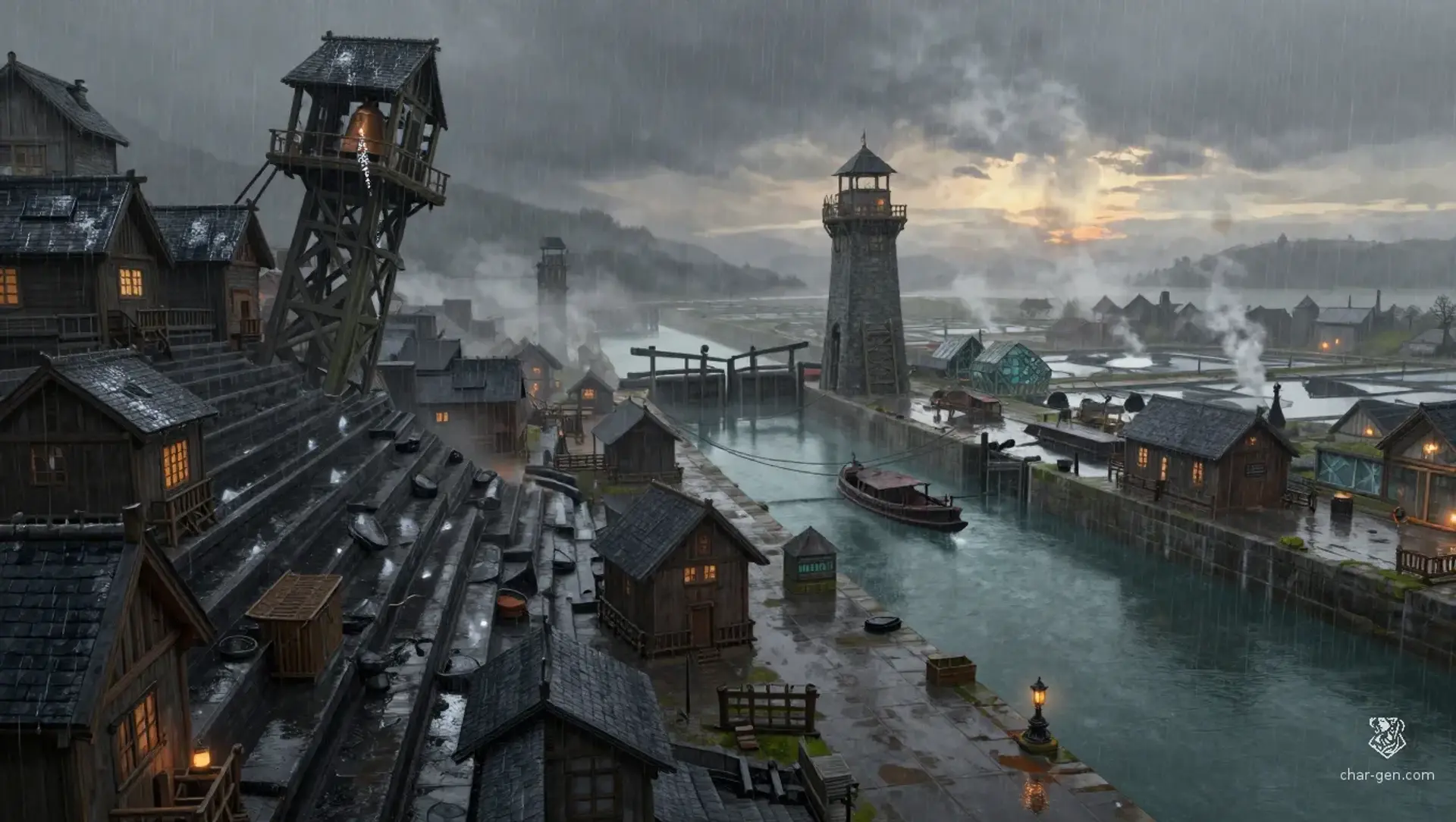
Veyruin stands where the Ashen Road crosses the Brinewater Canal, a place chosen because salt caravans can transfer cargo directly from mule trains to barges. Basalt terraces rise above the water like dark steps, giving the town dry ground during ordinary floods and a commanding view of the road. The founding refuge, Old Harwick Hill, lies beneath newer streets, its sealed chambers still accessible through cellars and drainage tunnels.
Veyruin
- Population
- 2,300
- Rule
- Edrin Pell
- Wealth
- Uneven
- Defence
- The Bell Guard
Overview
Veyruin stands where the Ashen Road crosses the Brinewater Canal, a place chosen because salt caravans can transfer cargo directly from mule trains to barges. Basalt terraces rise above the water like dark steps, giving the town dry ground during ordinary floods and a commanding view of the road. The founding refuge, Old Harwick Hill, lies beneath newer streets, its sealed chambers still accessible through cellars and drainage tunnels.
Atmosphere
Rain beads on every roof, rope, and black stone in Veyruin. The river smells of salt, wet ash, mule dung, and lamp oil. People keep conversations short when the old bell is visible, and many wear knotted cords around one wrist to remind themselves of promises made yesterday. On windless nights, shutters close early, knives stay sheathed, and nobody trusts a sudden act of kindness.
Culture
- The River Saint
- The Ashen Hearth
- Ancestor veneration from the ruined hill-fort
Humans, Dwarves, Halflings, Half-elves
Economy
Salt pans, Colored glassworks, Mule caravans, River toll collection, Canal warehousing
- Refined salt
- Colored glass panes and beads
- Canal freight services
- Mule tack and caravan repairs
Grain, Iron tools, Timber, Lamp oil, Medicinal herbs, Refugee labor contracts
Geography
Ways in and out
Places to see
- Glassmaker's StepsA steep market stair where rainwater carries colored glass dust into the canal. Street vendors gather here because the Council patrols rarely climb it.
- The Dry CellarsA refugee quarter built into old storage vaults beneath the upper terraces. Its residents use chalk marks to identify safe doors and dangerous memories.
- Lowwater ReachA muddy island of salt sheds, ropewalks, and abandoned barges where smugglers meet during canal fog.
- Old Harwick HillThe broken foundations of the original hill-fort settlement, reached through Nessa Harwick's hidden cellar stair.
Power
4 factionsGovernment
Laws
Trouble
- If the truth spreads, caravans may abandon Veyruin and the refugee quarter could riot.The old warning bell rang three times last night without wind, and six residents became violent or forgot several hours. The Council is suppressing the incidents to protect trade.Involves
Edrin Pell, Brother Othric Vale, Mara Venn, Sella Brant
- The next hard rain could flood the lower town and destroy warehouses, homes, and the canal road.A floodgate counterweight has fractured, but the Salt Ledger refuses to release emergency funds unless the dockworkers accept private oversight of the locks.Involves
Edrin Pell, Mara Venn, Tomas Rusk
- Someone is using the bell's effects, or forged records, to seize legal control of the docks.The elected dockworker representative has vanished from the council ledger and cannot remember voting on a new toll schedule.Involves
Mara Venn, Sella Brant, Brother Othric Vale
Factions
- The Salt LedgerMerchant coalitionThe Salt Ledger is a coalition of caravan houses that controls warehouses, mule teams, and most private credit in town.GoalsThe Salt Ledger wants tolls and cargo weights placed under private contract, allowing its members to replace elected oversight with paid clerks. It claims this would end corruption, but the dockworkers know it would make wage disputes impossible to challenge.Allies
House Pell, The Bell Guard
RivalsThe Wharf Brotherhood, The Memory Keepers
- The Wharf BrotherhoodLabor organizationThe Wharf Brotherhood is an exhausted labor association whose members load barges, maintain locks, and serve in the Bell Guard between shifts.GoalsThe Brotherhood wants control of the floodgates and a guaranteed voice over toll schedules. It directly opposes the Salt Ledger's private contracts, and some members are preparing a work stoppage that could leave the town defenseless during the next heavy rain.Allies
Mara Venn, The Memory Keepers
RivalsThe Salt Ledger, The Bell Guard
- The Memory KeepersCivic societyThe Memory Keepers record testimonies, preserve family histories, and investigate gaps in people's recollections after the bell rings.GoalsThe Memory Keepers want the tower sealed and the bell destroyed, even if doing so damages the town's oldest landmark. They conceal the fact that their founder once used the bell's influence to erase evidence of a massacre during the refugee settlement's first winter.Allies
Brother Othric Vale, Old Harwick families
RivalsThe Salt Ledger, The Council of Weighers
- The Bell GuardVolunteer militiaThe Bell Guard protects the streets, floodgates, and tower, though its members disagree about whether order matters more than truth.GoalsThe Bell Guard wants emergency authority over movement, weapons, and nighttime gatherings. This conflicts with the Wharf Brotherhood's demand for open access to the locks and with the Memory Keepers' effort to expose the guard's missing reports.Allies
The Council of Weighers
RivalsThe Wharf Brotherhood, The Memory Keepers
Defences
- Steep basalt terraces overlooking the canal
- Floodgates at the north and south locks
- A half-collapsed watchtower containing the old warning bell
- Three dockside barricade sheds
- Volunteer bell guard with signal horns and hand crossbows
Law and order
People and places
11 entriesElected dockworker representative and barge haulerMara Venn Human Female
A tall, weathered woman with a shaved temple, a green scarf, and a ledger chained to her belt.
Mule caravan masterGarran Harwick Human Male
A scarred human caravan master with a red beard, a broken nose, and three brass charms sewn into his coat.
General outfitterRusk's Tack and Iron Kept by Tomas Rusk
A cluttered dockside shed selling harness, rope, river hooks, patched boots, and tools with more history than shine. Its owner repairs first and argues over payment later.
Market stallMerrin's Measure Kept by Merrin Doss
A narrow stall beneath a patched awning where an elderly halfling sells salt, lamp oil, charms, and glass beads. She remembers who bought what, even when the buyers do not.
TavernThe Millstone Inn Kept by Nessa Harwick
The Millstone Inn stands beside the canal stairs, its common room warmed by a cracked iron stove. Nessa keeps the food plain and the doors open late, but she watches every stranger as carefully as the Bell Guard does. The inn is one of the few places where merchant elders and laborers share a table without immediately arguing over wages.
TavernThe Cooper's Rest Kept by Jorin Bale
The Cooper's Rest occupies a converted warehouse above the western lock. It is quieter than the Millstone and more expensive, with polished tables, dry cloaks for rent, and a private dining room where the Salt Ledger settles disputes. The keeper dislikes the merchant houses but depends on them, making the tavern a useful place for overheard bargains and dangerous compromises.
Tower and landmarkThe Old Warning Tower Run by Brother Othric Vale
A three-story stone tower leaning over the upper market. Its bell chamber is open to the rain, but the bell rings on windless nights and leaves a copper taste in the mouth.
Government hallThe Weighhouse Run by Edrin Pell
The oldest surviving hall in town, built above the spring that supported the first refugee camp. Council sessions occur here beneath painted scales and a cracked founder's tablet.
GlassworksMorrow Glass Run by Sella Brant
A cramped glassworks with red furnaces, blue dust in the windows, and shelves of flawed prayer panes. It employs children, refugees, and exhausted craftsmen under dangerous conditions.
TavernThe Millstone Inn Run by Nessa Harwick
A long, low inn beside the canal stairs. Its common room is warm, loud, and full of damp cloaks, while the upstairs rooms are rented by the week to travelers who want no questions asked.
ShopRusk's Tack and Iron Run by Tomas Rusk
A cluttered dockside shed selling harness, rope, river hooks, patched boots, and tools with more history than shine. Its owner repairs first and argues over payment later.
Events
Lately
- The warning bell rang on a windless night three times, followed by six assaults and a fire in the refugee quarter.The Council blamed drunkenness, but the Memory Keepers found identical gaps in the witnesses' recollections.
- A caravan from the western forts arrived with twelve wounded soldiers and no written account of the battle.The refugees were admitted under emergency law, increasing crowding and giving the Salt Ledger an excuse to demand stricter sponsorship rules.
- Two floodgate workers disappeared during a midnight inspection.The Wharf Brotherhood suspects the Bell Guard, while the guard claims the workers fled after discovering sabotage.
Calendar
- First Flood, 3rd day of RainmootThe Gate WeighingThe Council of Weighers publicly tests the floodgates and declares them safe, though dockworkers say two counterweights are cracked.The twist · GM only
- Rainmoot, 11th dayThe White Road MarketSalt caravans arrive from the southern pans, filling the lower market with mule trains, hired guards, and refugees seeking work.The twist · GM only
- Rainmoot, 19th dayThe Quiet WatchThe volunteer bell guard holds its annual night watch at the half-collapsed tower, inviting townsfolk to witness the old warning bell remain silent.The twist · GM only
History
Veyruin was founded by people who needed a defensible crossing and a place where no single lord could control the canal. Over time, merchant houses turned the weighing system into political power. The town's official history celebrates survival through discipline, but family records preserve a darker possibility: the bell was not built to warn Veyruin of danger. It was built to command the frightened.
- 117 years agoThe Founding of VeyruinSalt caravans and refugees from the ruined hill-fort founded Veyruin around a spring above the canal. The first settlers built the bell tower from stones taken from the fort.
- 96 years agoThe Ashen NightThe official account says raiders destroyed Old Harwick Hill. Surviving family tablets instead describe a night when the warning bell rang until dawn and neighbors attacked one another.
- 61 years agoThe First WeighingMerchant elders created the Council of Weighers after a famine caused by false cargo measures. The reform ended open violence but placed the town's survival in the hands of people who profited from every shipment.
- 23 years agoThe Blackwater FloodA flood destroyed the lower terraces and exposed buried chambers beneath the old hill foundations. The chambers were sealed by the canal-priesthood, though missing stonework suggests someone later reopened them.
Secrets
3 secrets · 6 rumours- Secret 1 · GM only
- Secret 2 · GM only
- Secret 3 · GM only
Rumours
Plot hooks
4- 1The Dagger in the RainThe characters see Sella Brant and Tomas Rusk fighting in the rain outside Rusk's shop. Sella has Tomas pinned against a wall and is about to drive a dagger into his throat, shouting that he sold her memory. The hidden complication is that both remember a different version of the previous night, and the dagger's stone shard is causing their conflicting recollections.
Street encounter and supernatural investigation · Starts with Sella Brant · Reward: Council pardon for the characters, repaired equipment, and access to the sealed tower stair
- 2The Gate That Must FailMara Venn asks the characters to inspect a cracked floodgate before the Council can privatize it. The hidden complication is that the damage is deliberate, but repairing it will trap a refugee barge on the wrong side of the canal and expose its passengers to arrest.
Sabotage and political choice · Starts with Mara Venn · Reward: Dockworker support, safe canal passage, and a share of recovered toll receipts
- 3The Windless BellBrother Othric Vale hires the characters to guard the tower during the Quiet Watch. The hidden complication is that the bell only rings when someone inside remembers the Ashen Night accurately, and one character may become the first living witness able to do so.
Night watch and buried history · Starts with Brother Othric Vale · Reward: A temple favor, protection from the Bell Guard, and a rite that restores one lost memory
- 4The Map Beneath the RoadGarran Harwick offers payment to recover his stolen route map from the refugee quarter. The hidden complication is that the map was not stolen for profit. It identifies a hidden chamber where the founders imprisoned the bell's original maker, who may still be alive in an altered form.
Investigation and exploration · Starts with Garran Harwick · Reward: A mule, a sealed travel permit, and an introduction to a powerful caravan house
Media
0 imagesNo images yet.
Turn Veyruin into a sheet
A high-res, share-ready sheet you can post or print.