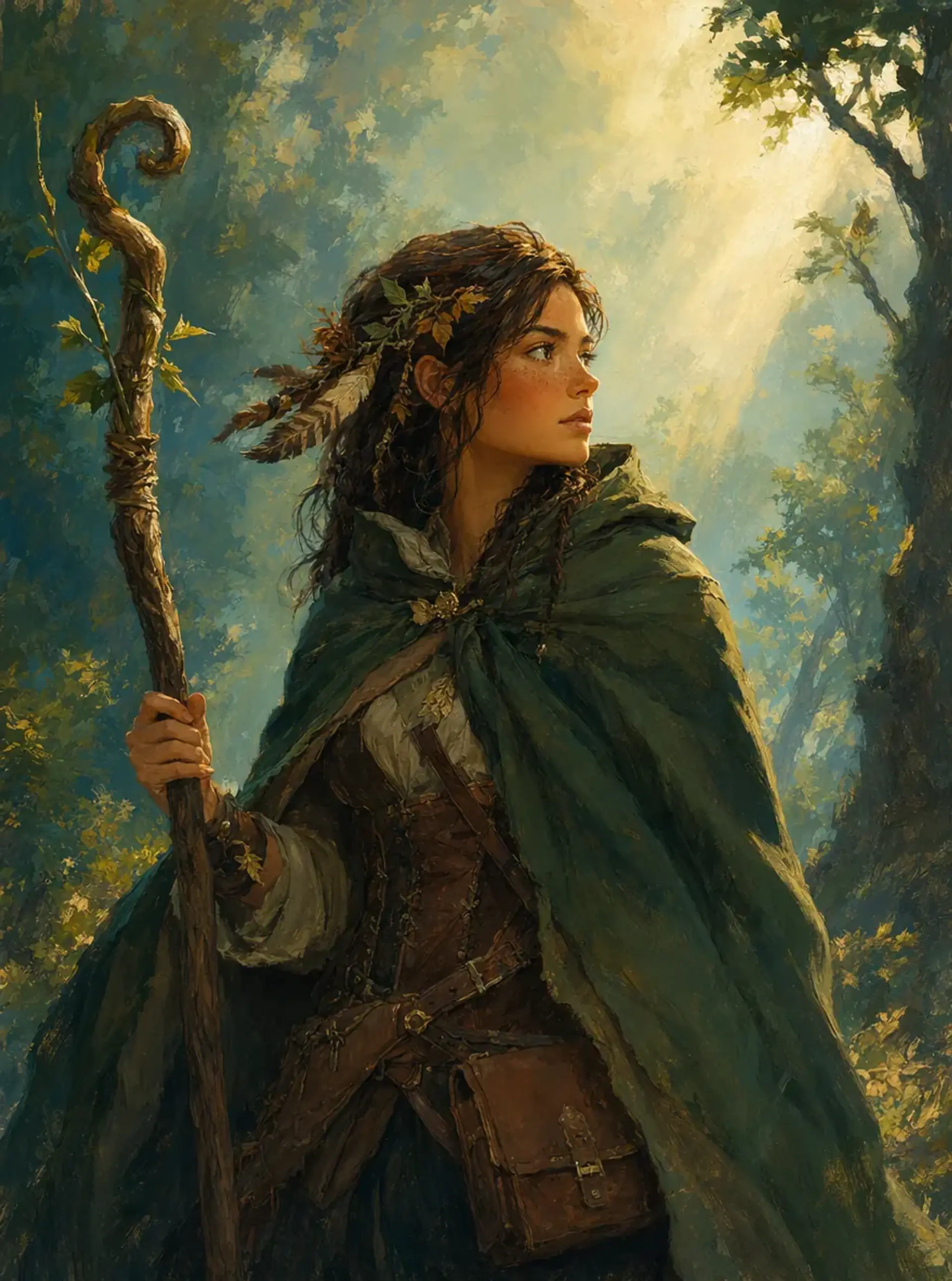
Create homebrew classes and subclasses with roles, level progression, features, and roleplay and worldbuilding content. Built for D&D 5e, Pathfinder 2e, and any tabletop RPG.
What This D&D Class and Subclass Generator Creates
01
Full Classes and Subclasses
Generate a complete base class or a subclass that slots onto an existing one, with the role, hit die, proficiencies, and resources laid out and ready to read.
02
Level-by-Level Progression
Features arrive on a full 1 to 20 progression table for D&D 5e, along with subclass stubs you can expand into full subclasses later.
03
Roleplay and Worldbuilding, Included
Every class comes with personality traits, playstyle tips, and character hooks for the player, plus notable factions, regions where the class is practiced, and famous practitioners for the world it lives in.
How to Use the D&D Class and Subclass Generator
A strong homebrew class begins with a repeatable play pattern. Define what the character does each round before adding progression, subclasses and setting lore.
01Describe the class fantasy and its practical party role.
02Give signature features a clear resource or timing constraint.
03Use subclasses to change decisions, not only increase numbers.
D&D Class and Subclass Generator Questions
What is a class generator?
A class generator builds a playable character class or subclass for a tabletop RPG. It writes the class role, hit die, proficiencies, resources, and a level-by-level feature progression, so you get a homebrew class you can read and hand to a player instead of a blank template.
Does this work for D&D 5e and Pathfinder 2e?
Yes. Pick your system in the Game System field: D&D 5E 2024 rules (the default), 5E 2014 rules, Pathfinder 2e, Pathfinder 1e, or type in any other system. The progression, subclass levels, and terminology follow the system you choose.
Can it generate a subclass for an existing class?
Yes. Choose the subclass option and pick the parent class, including any homebrew class you have already generated. When you pick one of your own classes, the subclass reads its actual progression and lands its features on the levels that class grants them.
What about maneuvers, invocations, and spell lists?
When a feature grants choices from a named list, the generator writes out that list too, with each option statted. Casters also get a curated spell list by tier, and you can spin the class into a full linked Spellbook with one click.
Is the output balanced for real play?
The generator aims for reasonable balance against the balance target you pick, from standard to gritty to cinematic. It does not ship playtest or balance notes, so treat the result as homebrew and test it with your group before you rely on it at the table.
Can I edit the class after it generates?
Generating a class is free for every account. Any account can edit the class by hand after generation to rename features, adjust the progression, and rewrite any of the roleplay or worldbuilding content.
Will it copy official class names like Barbarian or Paladin?
No. The generator produces original class identities and feature names rather than reproducing trademarked classes, so the structure feels familiar while the class stays yours to publish.
How do I make a homebrew D&D class with this class maker?
Pick Full Class, then describe the concept in a sentence or leave the box empty for a random class. You can add a class name and choose a game system: D&D 5E with 2024 rules (the default), 5E with 2014 rules, Pathfinder 2e, Pathfinder 1e, or one you type in. Then pick a role from nine options, such as Martial, Half-Caster, Tank or Summoner, and a balance target of Standard, Gritty low-power or Cinematic high-power. The Additional Details box takes a resource mechanic, a signature feature or the campaign context the class must fit.
Can I use it as a subclass maker for Fighter, Wizard or another standard class?
Yes. Pick Subclass and a Base Class field appears. It lists 13 standard classes, from Artificer and Barbarian to Warlock and Wizard, plus the full classes you have generated, or you can type in another base class. The game system you pick sets the levels where subclass features arrive. If the parent is one of your own classes, the subclass follows that class's actual progression.
The CharGen Class Generator is an AI tool that builds playable classes and subclasses for tabletop RPGs in under 60 seconds. Each generated class includes a name and short tagline, a clear role, the hit die and primary ability, proficiencies and starting resources, a level-by-level feature progression from first level to the level 20 capstone, and subclass stubs you can expand into full subclasses. It also writes roleplay content, personality traits, playstyle tips, and character hooks, along with worldbuilding sections for notable factions, regions where the class is practiced, and famous practitioners. Ask for a subclass instead and it plugs into a parent class at the right levels, and you can pick a balance target (standard, gritty, or cinematic) to steer the generation.
Unlike a blank homebrew template, every class reads like a finished writeup you can hand to a player, and it links into the World Codex so the classes, characters, and NPCs in your campaign stay connected. The prompt writes original class identities rather than copying trademarked names, so the result is yours to publish. Outputs export to PDF and share as public pages. Generating a class is free, and so is editing it by hand afterwards.
Compare alternatives
Compare generation depth, editing controls and how each tool fits into campaign prep. These field reports are based on current public features and hands-on testing.
How CharGen's class generator compares to other tools.