Skip to content
The Wind-Scoured Causeway - AI-generated fantasy Hazard

The Wind-Scoured Causeway

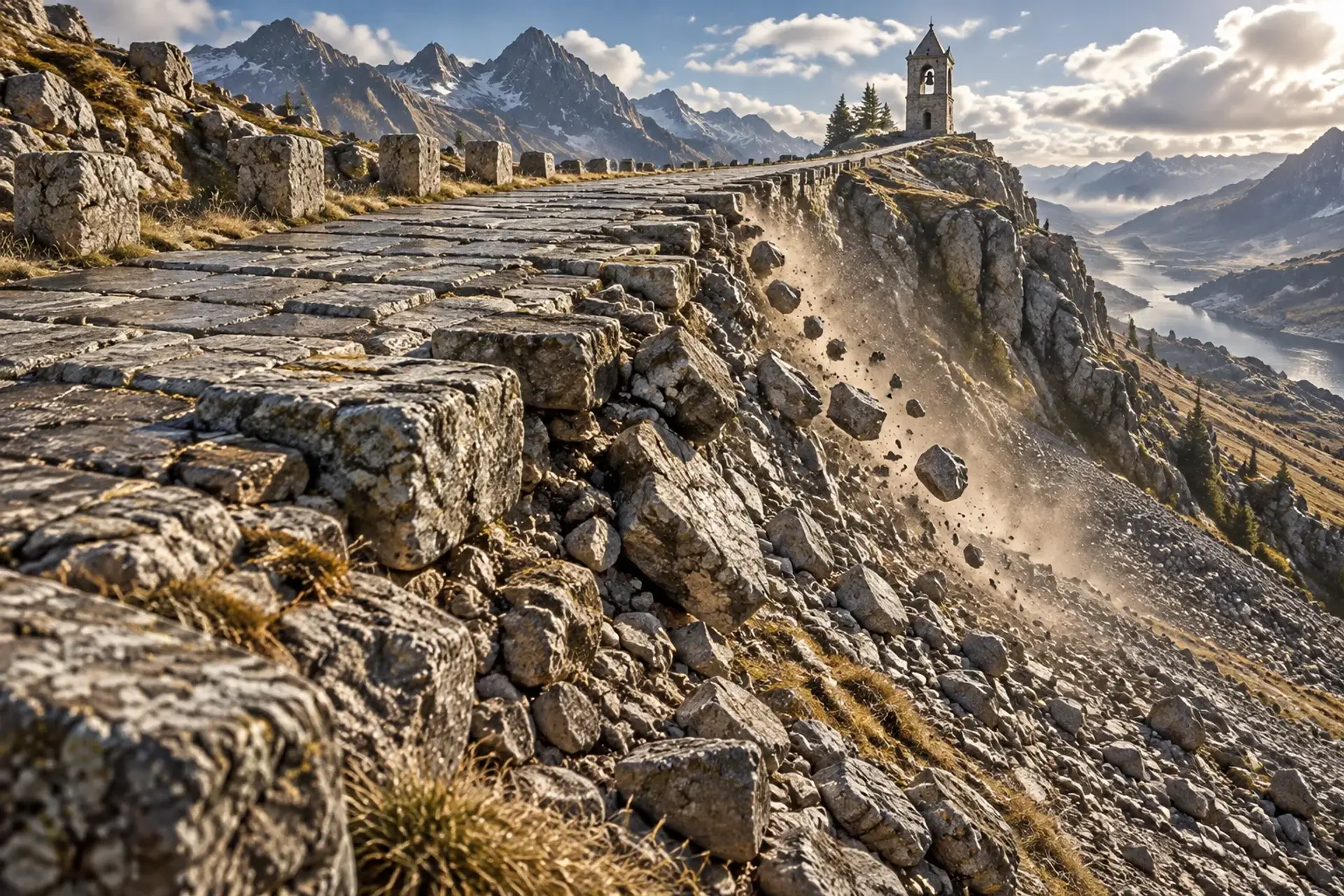
A short exposed approach crosses a 15-foot-wide weathered stone causeway above a 12-foot loose-scree slope. The middle of the causeway is sound. Its outer shoulder has fractured and spilled onto the slope, where stones roll underfoot. This is a practical terrain hazard, not a hidden mechanism: attentive characters can see the route, choose a bypass, and retreat. A fall onto the slope is painful and disruptive, but the slope ends on firm ground rather than a sheer drop.

Simple; optional bypass. · Environmental terrain · Level Suitable for two 6th-level characters; the hazard deals at most 1d6 fall damage per slide and has clear, non-check-based avoidance.

The Wind-Scoured Causeway

A short exposed approach crosses a 15-foot-wide weathered stone causeway above a 12-foot loose-scree slope.
Disable
There is no mechanism to…

At a glance

Level
Suitable for two 6th-level characters; the hazard deals at most 1d6 fall damage per slide and has clear, non-check-based avoidance.
Simple; optional bypass.

Disable There is no mechanism to disable

The hazard

A short exposed approach crosses a 15-foot-wide weathered stone causeway above a 12-foot loose-scree slope. The middle of the causeway is sound. Its outer shoulder has fractured and spilled onto the slope, where stones roll underfoot. This is a practical terrain hazard, not a hidden mechanism: attentive characters can see the route, choose a bypass, and retreat. A fall onto the slope is painful and disruptive, but the slope ends on firm ground rather than a sheer drop.

  • Environmental
  • Terrain
  • Nonmagical
Trigger
A creature deliberately steps onto the loose scree, or steps onto the broken shoulder and moves more than 5 feet there on its turn. Simply approaching, looking over the edge, or crossing the intact central strip does not trigger the hazard.
Disable
There is no mechanism to disable. Characters can mark and navigate the safe central strip without a check. For a lasting mitigation, they can move loose stones away from the route and lay a secured rope or handline; this takes 10 minutes and suitable rope or equivalent gear. It makes crossing the scree safer but does not repair the causeway.
Routine
No ongoing routine. Resolve Scree Slide only when its precise trigger occurs.
Reset
The terrain is continuously present. A slide disturbs stones, but does not make the route more dangerous for others unless they choose to enter the scree. Wind and weather may gradually shift loose stones.

Damage

Immunities
  • Not applicable; this is terrain, not a creature.

Effects

2
  • Scree Slide

    DC 12

    A creature that deliberately steps onto the loose scree, or moves onto the broken shoulder and then moves more than 5 feet there on its turn, must make a Dexterity saving throw. On a success, it stops at the edge of the sliding stones and can move back onto sound stone or continue cautiously without moving farther that turn. On a failure, it slides down the 12-foot slope, takes bludgeoning damage from the fall, and lands prone on the firm ground below. This fall does not continue beyond the slope.

  • Recovery

    DC 10

    A creature that falls to the firm ground can stand normally and return by either end of the slope. Climbing back up the loose scree requires a Strength (Athletics) check; on a failure, it makes no upward progress but does not fall or take damage. A rope or a companion's secured handline removes the need for this check.

Special rules

Safe Route.The trigger does not apply to creatures who remain on the intact central strip, move carefully along it, or retreat before entering the unstable area. A character may cross the causeway without rolling any ability check or saving throw by following the visibly intact route.

Bounded Fall.The 12-foot drop ends on firm ground. A sliding creature takes only the stated bludgeoning damage, lands prone, and is not carried onward into an additional fall. The slope is not a cliff edge beyond its stated height.

Retreat and Choice.The hazard never forces a character to continue forward. A character can stop on sound stone, turn back, or choose the bypass. The Dexterity save is called for only after a character enters the unstable area and meets the trigger.

Spotting it

Discovery

The broken shoulder, rolling stones, and distinct central strip are visible in daylight from the near approach.

Perception

The damaged shoulder and scree slope are plainly visible in daylight.

Stop it

Signs of dangerA broken outer shoulder drops toward a 12-foot slope of loose, visibly unstable stones. · Grit skitters across the exposed edge when gusts pass. · The center of the causeway has larger, settled stones and fewer fresh scrape marks than the shoulder.

Countermeasures

In short

The hazard is avoidable without a check: identify the intact central route, mark it, and keep to it.

Its story

What it looks like

The 15-foot-wide causeway is weathered stone, with a sound central span and a visibly broken outer shoulder.

Why it is here

A natural approach hazard that rewards observation and planning while allowing safe traversal, bypass, mitigation, and retreat.

Who made it

Natural erosion and repeated weathering; no deliberate builder or saboteur is implied.

Lore

Rain, wind, and freeze-thaw weathering have loosened the causeway's outer stones.

Where it is found

Rocky upland in daylight, with loose scree beside a weathered stone causeway.

Variants

After rain, the scree is damp and more cohesive: reduce the Dexterity save DC to 10, but a sliding creature's speed is halved until the end of its next turn.
In strong gusts, loose grit briefly obscures the boundary. Characters who have not marked the route can still choose to move slowly and remain on the broad central strip without a check.

Plot hooks

The party may need to decide whether to spend time marking the safe strip before guiding a burdened traveler or carrying bulky supplies.
Freshly disturbed stones can show that someone recently crossed the slope, without implying who they were or why.

Media

0 images

No images yet.

Visual sheet

Turn The Wind-Scoured Causeway into a sheet

A high-res, share-ready sheet you can post or print.