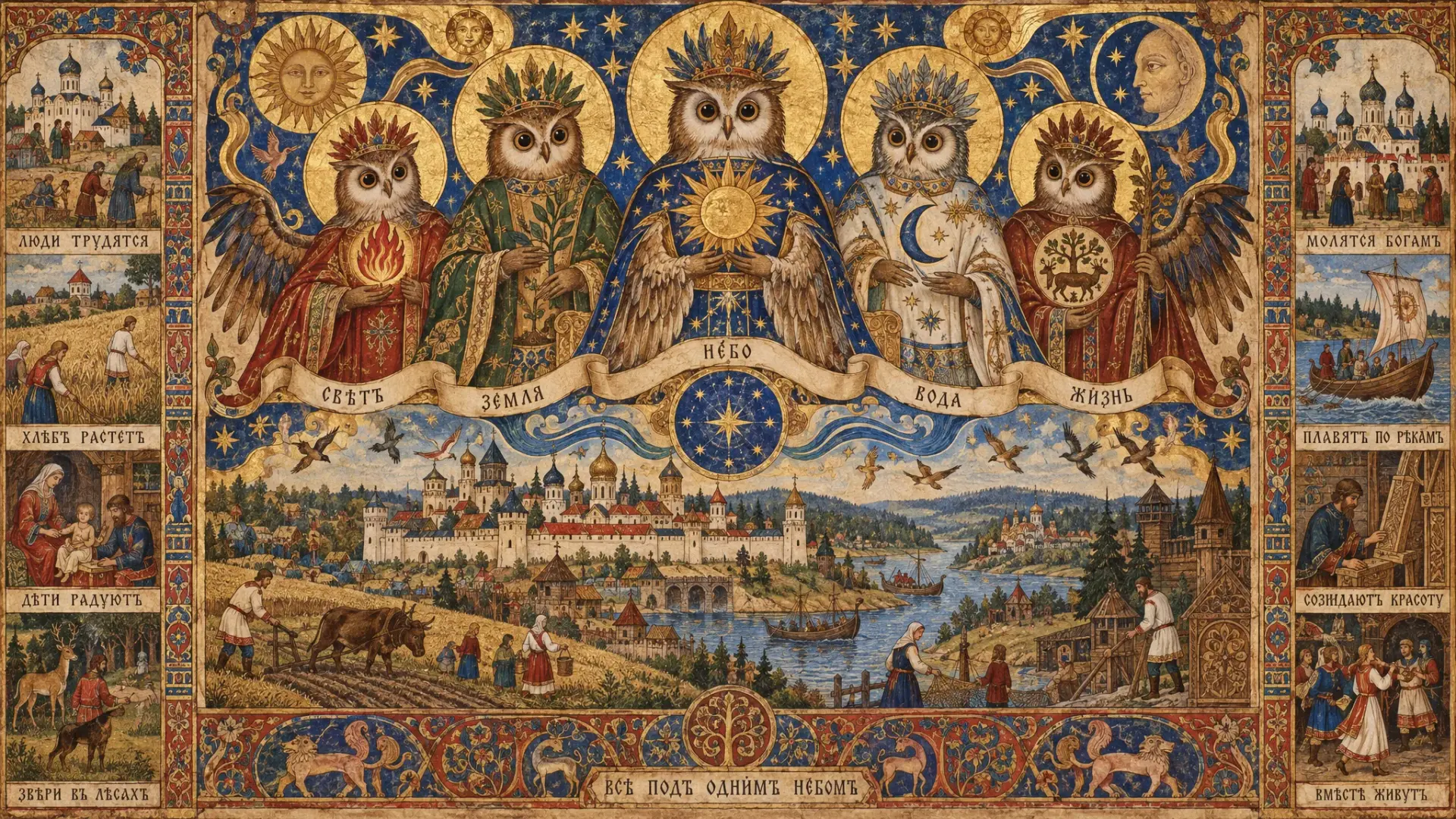
The Nine Divines
The Nine Divines
Invoke a god
Pozhmeni
Keeper of the Turning Hour
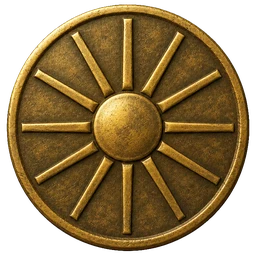
Symbol An hourglass enclosed by a feathered circle
Holy day The Turning Hour
- Use time with care; it is a gift shared by all.
- Remember the past without becoming its prisoner.
- Let the young and old each have their rightful season.
The gods
9Pozhmeni
Keeper of the Turning Hour
Greater Deity · Neutral Good
- Time
- Knowledge
- Order
Patient and attentive, Pozhmeni understands that urgency can save lives but haste can destroy what time would have healed. They counsel Mudptitsa to preserve records and Zhnets to honor each life's proper ending.
Faith
- Use time with care; it is a gift shared by all.
- Remember the past without becoming its prisoner.
- Let the young and old each have their rightful season.
Holy dayThe Turning Hour, observed at the year's midpoint with silent bells and the telling of family histories.
Holy textThe Measure of Returning
RitesMark a new undertaking by naming its intended ending as well as its beginning. · At sunset, turn a small hourglass and speak one thing worth remembering.
Valuespatience · continuity · remembrance
Look
SymbolAn hourglass enclosed by a feathered circle
- indigo
- old gold
Animalsbarn owl · tortoise
AppearanceA tall owlin with a face like a dusk-blue moon, one eye bright with dawn and the other with twilight; a ring of small hourglasses circles their head.
Followers
WhoCalendar-keepers, historians, elders, navigators, and those seeking patience in a crisis.
BeliefsTime is neither enemy nor possession. Followers believe Pozhmeni grants mortals the chance to mend mistakes, provided they learn from them.
The faith
How it began
Owlin tradition says the first community gathered beneath a storm-torn sky, unable to agree on how to endure.
Pozhmeni taught them to measure the hours, Mudptitsa gave them shared words, and Zhnets showed them how to honor those they had lost. The remaining gods joined as mortals made art, tended the land, formed families, defended one another, and exchanged their work. The pantheon is remembered not as a dynasty but as a covenant between divine guides and mortal communities.
The heavens
The world is a living nest woven around the turning Loom of Hours.
Pozhmeni keeps its rhythm, while Vechnotra carries its breath through sky, forest, and sea. Mortal lives are threads within this greater pattern, not toys of the gods. Zhnets tends the threshold where threads end and new ones begin; the other gods guide mortals in shaping the shared fabric through thought, affection, law, art, leadership, and work.
Gods and mortals
The gods are openly involved in owlin life through dreams, answered prayers, omens, healing rites, and occasional incarnate envoys.
They rarely dictate policy: priests, councils, families, and individuals remain responsible for their decisions. Temples commonly share space with schools, gardens, hospices, studios, courts, and market halls, reflecting the assembly's conviction that ordinary life is sacred.
After death
The dead pass through Zhnets's quiet orchard, where each soul's deeds ripen into a final harvest.
Those who are ready follow Pozhmeni's last hourglass toward a peaceful hereafter; others may return by Oktaviya's blessing or linger as honored ancestors. The pantheon teaches that no soul is judged alone: Svetlrytsar' weighs mercy alongside law, while Soobshchestvo's communal rites help the living remember and release their dead.
What people say, what is true
Players may hear
For the GM
Plot hooks
Conflicts
The wars
Gorbik's insistence that decisive rule can prevent catastrophe sometimes clashes with Svetlrytsar''s demand that authority remain answerable to mercy and law.
Mudptitsa challenges both when their claims contradict evidence. Vechnotra resists efforts by Soobshchestvo to tame every wild place for commerce, while Oktaviya and Zhnets remind builders that communities must make room for birth, grief, and rest. Totktonogikh's celebration of desire can unsettle conservative temples, though Pozhmeni teaches that every age has its season.
| Pozhmeni | Zhnets | Totktonogikh | Mudptitsa | Vechnotra | Oktaviya | Svetlrytsar' | Gorbik | Soobshchestvo | |
|---|---|---|---|---|---|---|---|---|---|
| A | A | E | |||||||
| A | A | E | |||||||
| A | A | E | |||||||
| A | A | E | |||||||
| A | E | A | |||||||
| A | A | E | |||||||
| A | AE | ||||||||
| E | A | A | |||||||
| A | AE |
Order of heaven
Structure
Worship is organized through local assemblies rather than a single supreme priesthood.
Each settlement maintains a shared hall with nine alcoves, though its active clergy reflect local needs. A rotating council of temple-keepers coordinates festivals and aid; Svetlrytsar''s advocates may review its decisions, while Mudptitsa's scribes preserve open records. No deity outranks the whole assembly in daily doctrine, and communities are encouraged to consult several temples before declaring a divine mandate.
Theme
A benevolent owlin pantheon joining civilization, nature, and cosmic cycles in service to mortal flourishing.
Tone
Mortal-engaged: divine aid and omens are real and accessible, but gods guide rather than govern.
Mortals retain meaningful agency, and even divine disagreements are opportunities for communities to practice the virtues they worship.
Alignments
All nine deities are Neutral Good: they favor compassion, shared flourishing, and the repair of harm, while allowing customs and laws to adapt to circumstance.
Media
0 imagesNo images yet.
Turn The Nine Divines into a sheet
A high-res, share-ready sheet you can post or print.
