The Far Assembly
The Far Assembly
Invoke a god
Ilyra
The Far-Handed
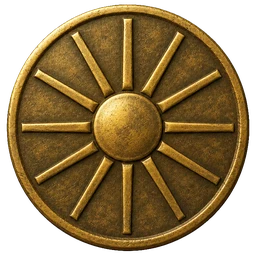
Symbol An open hand holding a small flame without being burned.
Holy day The Open Hand
- Offer aid that preserves another's choice.
- Never mistake power for wisdom.
- Leave a road open for those who must change.
The gods
8Ilyra
The Far-Handed
Greater · Neutral Good
Mercy and healing, which she shares uneasily with Nemi · Chosen change, in opposition to Serev's desire to reverse the First Ascension
Patient and compassionate, but remote in the manner of someone who has watched generations repeat the same suffering. She offers mortals means, rarely solutions, and trusts Nemi's tenderness more than her own.
Faith
- Offer aid that preserves another's choice.
- Never mistake power for wisdom.
- Leave a road open for those who must change.
Holy dayThe Open Hand, observed on the first spring thaw by repairing a stranger's home or giving away a useful possession.
Holy textThe Measure of One Hand, a collection of Ilyra's brief instructions on aid freely given and power carefully lent.
RitesA small cup of clean water is left beside a public road. · Initiates learn a practical skill and teach it freely to someone outside their household.
Valuesmercy · agency · patient change
Look
SymbolAn open hand holding a small flame without being burned.
- ochre
- warm white
Animalsswallow · mule
AppearanceA tall, spare figure in a traveler's mantle, with one hand always extended as if offering a tool. A thin gold seam marks the scar where the First Ascension burned through her palm.
Followers
WhoHealers, midwives, traveling craftworkers, and reformers who want to help without ruling.
BeliefsFollowers believe Ilyra still cares, but that she refuses to make mortals dependent on divine rescue. Her silence is treated as a challenge to act, not a sign of rejection.
The faith
How it began
Eight mortals, each possessed of a different skill and grievance, discovered the First Ascension in the buried remains of a civilization that had tried and failed to command death.
They performed the ritual together, expecting to share its power briefly and save their city. Instead, the rite made them enduring divine beings. Their city vanished in the ensuing catastrophe, leaving each ascendant with a different explanation for what happened—and a different reason to avoid discussing it.
The heavens
Before the gods, the world was a closed circuit of matter, memory, and death.
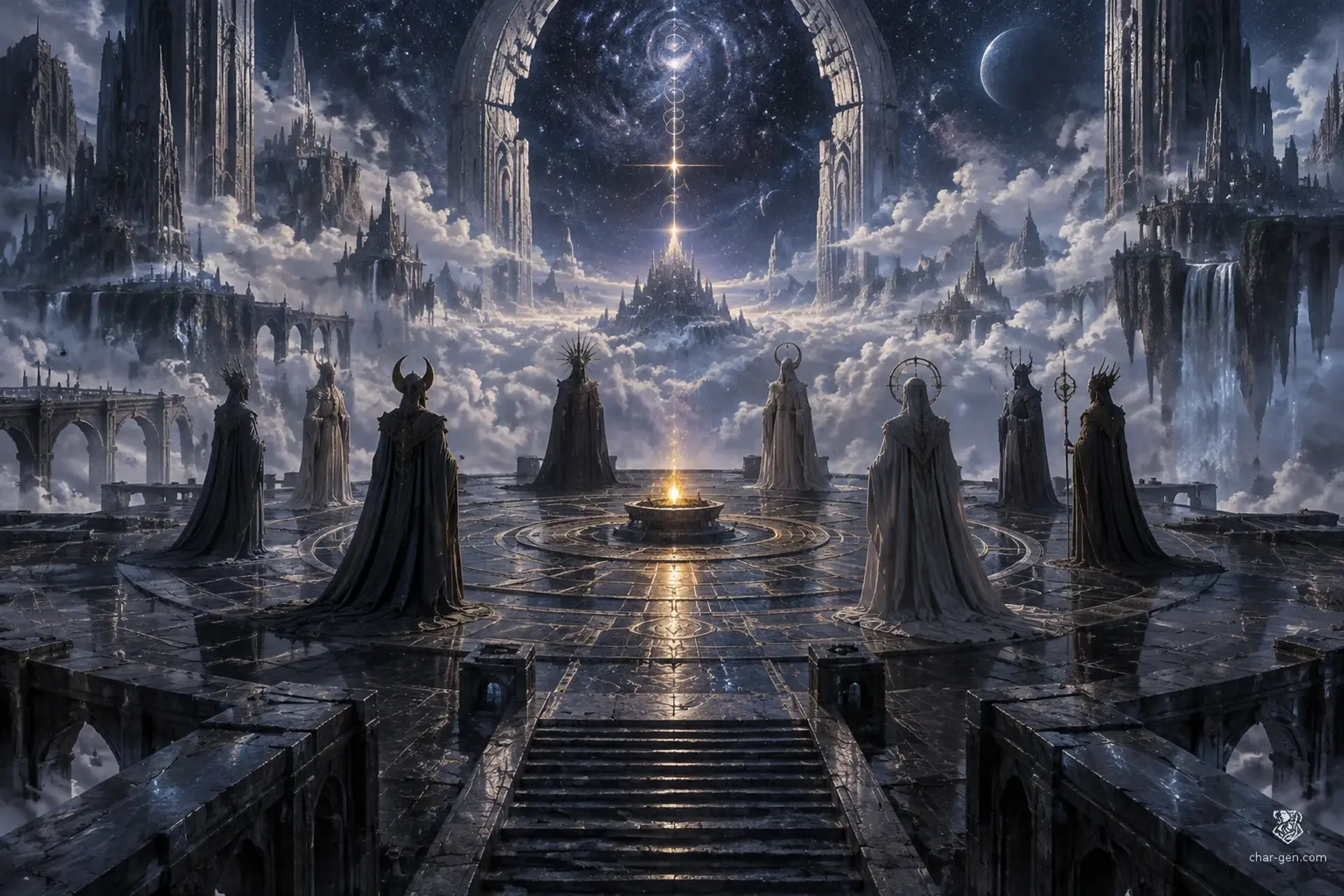
The Eight broke that circuit through the First Ascension, an ancient magical rite that transformed eight mortals into enduring powers. Their act opened the heavens but left a wound called the Unfinished Gate, through which dreams, omens, and stray miracles still pass. The stars are said to be sparks shed by that wound; the gods inhabit the far reaches beyond them, attending more to their own designs than to mortal petitions.
Gods and mortals
The Eight rarely answer prayers directly.
Their clergy interpret signs, maintain shrines, and pursue institutional goals that may not match the gods' private designs. Ilyra's servants offer practical aid, Bawo's build networks of mutual support, and Kethr's establish rules and offices. Vaskel's archivists preserve testimony; Oru's wardens protect graves and thresholds; Nemi's dream-readers offer ambiguous counsel. Drom's devotees trade favors and fortunes, while Serev's followers expose the costs of divine power. Mortals can matter greatly to a deity as agents, witnesses, or pieces in a long design, but few are treated as equals.
After death
The dead pass first through the Still Archive, where the ascended weigh each soul against its own unfinished desires.
Oru keeps its gates, but does not judge; Vaskel records names, while Nemi tends the quiet lamps. Most souls eventually dissolve into the world's deep memory. The faithful hope that worthy souls may instead be invited to serve one of the Eight, though such invitations are rare and often serve a god's private purpose.
What people say, what is true
Players may hear
For the GM
Plot hooks
Conflicts
The wars
Ilyra's insistence that power be lent to mortals repeatedly clashes with Vaskel's belief that the world is a record to preserve, not a problem to solve.
Kethr and Oru feud over who may enter the Still Archive, while Drom's bargains tempt mortals into conflicts that Nemi tries to soothe. Serev seeks to unmake the ascension ritual, drawing the wary attention of Ilyra and the quiet approval of Vaskel.
| Ilyra | Vaskel | Nemi | Oru | Drom | Bawo | Kethr | Serev | |
|---|---|---|---|---|---|---|---|---|
| A | A | E | ||||||
| A | E | A | ||||||
| A | A | E | ||||||
| A | E | A | ||||||
| A | E | A | ||||||
| A | A | E | ||||||
| A | E | A | E | |||||
| E | A | A |
Order of heaven
Structure
The Far Assembly has no single temple hierarchy.
Its worship is organized through local shrines, household rites, guild sanctuaries, and competing colleges of interpreters. The Eight are acknowledged together during the yearly Night of Names, but each deity's clergy maintains separate calendars and teachings. No universal doctrine resolves their disagreements; councils can only record decisions, not bind the gods. Some communities venerate all Eight as a necessary, dangerous family, while others honor only one or two.
Theme
The cost of transcendence, the limits of divine responsibility, and the uneasy truth that former mortals may become distant powers without becoming wise or kind.
Tone
Distant, numinous, and quietly unsettling.
Divine presence is real but uncommon, and signs are usually ambiguous. The gods' attention feels like weather on a vast horizon: consequential, impersonal, and not necessarily meant for those who experience it.
Alignments
The Eight span benevolent, balanced, and selfish convictions rather than sharing a common moral code: two are good, three neutral, and three evil.
Their shared history binds them more tightly than their ethics.
Media
0 imagesNo images yet.
Turn The Far Assembly into a sheet
A high-res, share-ready sheet you can post or print.
