Unnamed pantheon
Unnamed pantheon
Invoke a god
Oru
The First Point
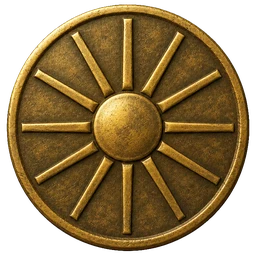
Symbol A white dot inside a black circle
Holy day First Point
- Begin with care.
- Do not mistake the first step for the whole journey.
- Leave room for what you cannot foresee.
The gods
12Oru
The First Point
Greater · Lawful Neutral
First creation, the initial spark, and beginnings shared with Hedd
Patient and unknowable; Oru's silence is interpreted differently by Hedd and Ekkit, neither of whom claims to understand it.
Faith
- Begin with care.
- Do not mistake the first step for the whole journey.
- Leave room for what you cannot foresee.
Holy dayFirst Point, observed at the turning of the year with a moment of complete silence.
Holy textThe Unopened Measure
RitesKeep a silent vigil before beginning a major undertaking. · Mark a new ledger or home with a single dot.
ValuesPotential · Restraint · Origins
Look
SymbolA white dot inside a black circle
- Black
- White
AnimalsMoth · Deep-sea fish
AppearanceA colossal figure seen only as a dark circle against the first dawn, with a pinprick of light at its center.
Followers
WhoAstronomers, founders, and people beginning work whose outcome may outlast them.
BeliefsFollowers believe Oru began existence but does not supervise its daily course; they look to Hedd for the meaning of duration.
The faith
How it began
The oldest creation stories say that Oru's first point gave Hedd a measure to keep, and that the other powers arose as consequences, counterweights, or necessary complications of that act.
The stories disagree on the order and on whether the gods themselves remember their beginnings.
The heavens
Before existence, there was the Still Expanse.
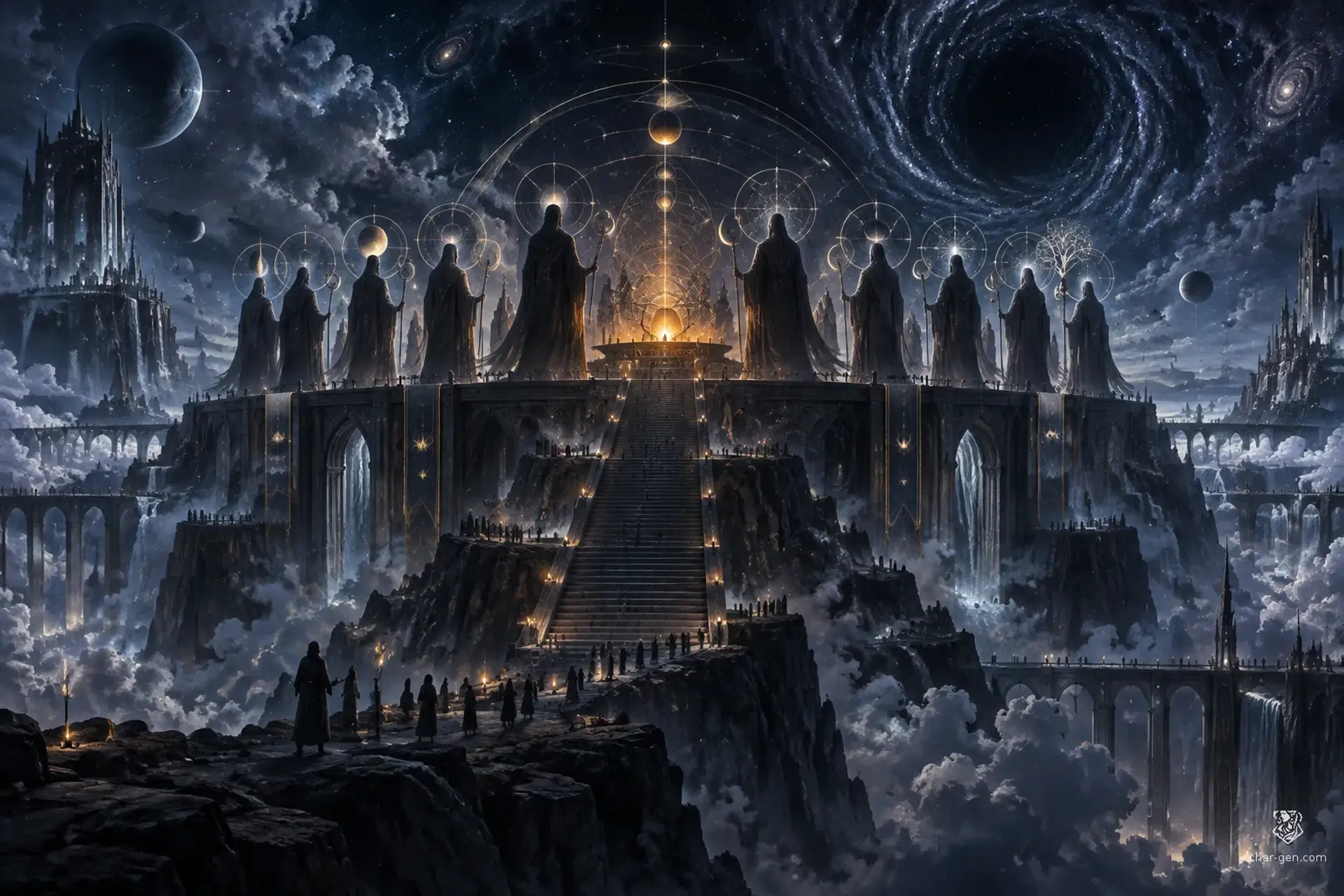
Oru opened a first point of being; Hedd gave it duration. From their work came the world, its heavens, its laws, and the other powers. The gods are not intimate stewards: they remain remote, exerting influence through cosmic cycles, rare signs, and the long consequences of creation. Each claims a necessary part of reality, though none can explain the whole.
Gods and mortals
The gods rarely answer prayers directly.
Their distant influence is interpreted through eclipses, unusual weather, dreams, and lasting changes in the natural world. Temples provide practical services—records, calendars, healing, building, mediation—but insist that no mortal can compel a deity.
After death
The dead pass beyond the created world into the Quiet Outside, where no deity rules.
Their names and deeds remain as faint impressions in the cosmos: Oru is said to hear them, while Hedd insists that even memory must eventually fade.
What people say, what is true
Players may hear
For the GM
Plot hooks
Conflicts
The wars
Oru and Hedd dispute whether creation should endure forever or be allowed to end.
Tzali and Breg contest whether life should be shaped by design or left to change. Qoch steals boundaries from Kuro's ordered heavens, while Ekkit urges the others to unmake what they have made.
| Oru | Hedd | Tzali | Breg | Kuro | Wemba | Qoch | Ilyat | Nima | Sovo | Yarrow | Ekkit | |
|---|---|---|---|---|---|---|---|---|---|---|---|---|
| A | E | A | E | |||||||||
| A | E | A | E | |||||||||
| A | E | A | E | |||||||||
| E | A | E | A | |||||||||
| A | A | E | E | |||||||||
| A | A | E | E | |||||||||
| E | E | A | ||||||||||
| A | E | A | E | |||||||||
| A | E | E | A | |||||||||
| E | A | E | A | |||||||||
| A | E | A | E | |||||||||
| E | E | A | A |
Order of heaven
Structure
There is no single divine court.
The Twelve are grouped in changing traditions: the First Pair, Oru and Hedd, are credited with beginning and duration; the Makers, Wemba, Kuro, and Ilyat, explain substance, pattern, and connection; the Unfixed, Tzali, Breg, Qoch, Nima, Sovo, and Yarrow, embody living change, discovery, depth, daring, and passage. Ekkit stands apart as the Outsider who questions whether creation should continue. Priests disagree about these groupings, and no temple claims authority over every deity.
Theme
Major creator gods of many kinds: origin, time, matter, law, life, transformation, connection, mystery, and unmaking.
Tone
Distant, vast, and contemplative.
The divine is real but rarely personal; creation is an immense process rather than a promise of comfort.
Alignments
Varied: two deities are lawful, three good, three neutral, two chaotic, and two evil.
These alignments describe divine priorities, not mortal moral categories.
Media
0 imagesNo images yet.
Turn Unnamed pantheon into a sheet
A high-res, share-ready sheet you can post or print.
