The Covenant of the Ember-Soul
The Covenant of the Ember-Soul
Invoke a god
Ignisvorn
The Eternal Hearth / The Flame Undying
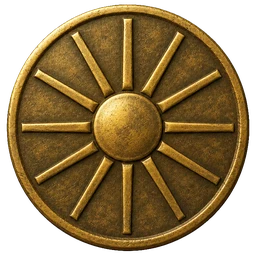
Symbol A glowing crimson scale piercing a drop of blood and water.
Holy day The First Kindling
- Keep the hearth.
- Remember the heart-scale.
- Do not claim to speak for the origin.
The gods
11Ignisvorn
The Eternal Hearth / The Flame Undying
Greater · True Neutral
- Creation
- Life
- Arcana
Ignisvorn is revered as origin, not as an active ruler. He speaks rarely, listens to names of Houses and the stories people tell at their hearths, and does not claim authority over the living. When threatened, he is immense and deliberate, placing himself between danger and the people or relics in its path. The Progenitors are said to have inherited distinct aspects of its first fire, though the faith does not claim to know its present will.
Faith
- Keep the hearth.
- Remember the heart-scale.
- Do not claim to speak for the origin.
Holy dayThe First Kindling, observed at the turning of the year with a vigil in which no flame is allowed to go out. The Hearthfall: each year every hearth is left to burn down to one ember before relighting from the temple flame.
Holy textThe Hearth Without Ash, a collection of origin verses whose oldest lines are recited rather than written.
RitesKeep a household ember through the night before a birth. · Speak the names of all ten Progenitors at a shared ancestral feast. · Leave a place unoccupied at formal councils in remembrance of the absent source. · A dragonborn marks the Birth of the Ten at the Scale-Spire by laying a palm on a scale-stone and naming their House aloud.
Valuesorigin · continuity · creation
Look
SymbolA glowing crimson scale piercing a drop of blood and water.
- deep ember
- unlit bronze
Animalsdragon
AppearanceA colossal draconic figure of ember-dark scales and molten seams, Ignisvorn's outline shifts in the eye: ancient dragon, crowned ancestor, or flame glimpsed through tears. A crimson scale hangs over his heart, pierced by a bead of blood-red light and a clear drop like water. Heat ripples across his body; the air smells of iron and rain on ash, while his voice rolls like a forge beneath a temple.
Followers
WhoHouse elders, keepers of genealogies, and worshippers who seek meaning in origins rather than immediate intervention.
BeliefsFollowers hold that every House descends literally from one of Ignisvorn's ten divine children. Many regard Ignisvorn as too remote to answer prayer; others understand the name as the sacred principle behind life and magic.
The faith
How it began
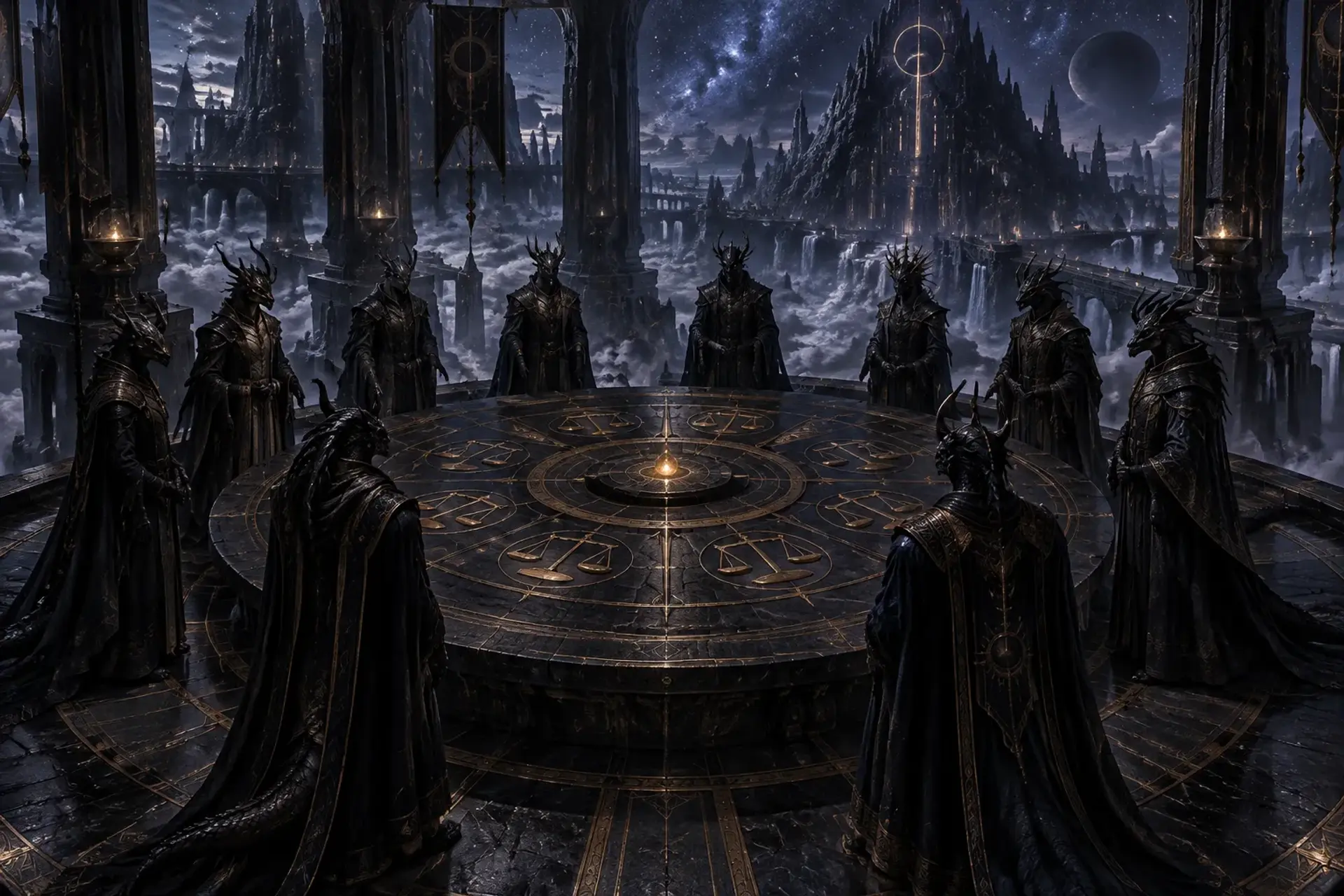
The Covenant teaches that Ignisvorn brought forth ten divine children, each the literal ancestor of the identically named Sacred House.
Draknaari tradition says the descendants of those Progenitors gathered into the Council of Ten Scales, binding worship to ancestry and civic duty. This is the faith's sacred account, not a settled fact about the world's hidden workings.
The heavens
The Covenant teaches that Ignisvorn, the Eternal Hearth, kindled the first sacred flame and brought forth ten Progenitors.
Each became the literal divine ancestor of the House bearing their name, and together their descendants formed Draknaar's sacred order. The heavens are imagined as ten scales around a hidden ember, with the mortal world beneath them and the dead passing beyond its light. The faith does not settle whether the Progenitors still act, whether divine signs are real, or whether the first flame is a god, a cosmic principle, or an ancestral truth.
Gods and mortals
The Covenant is woven into Draknaar's theocracy, whose ten Sacred Houses organize religious, civic, and military life beneath the High Sovereign and the Council of Ten Scales.
House ancestry confers solemn responsibility as well as status, yet rival interpretations of duty shape law and daily custom. The faith is neither a single uniform clergy nor a universal church: local temples, household rites, and House institutions preserve different readings of the same sacred inheritance.
After death
The faithful say the dead cross the Emberless Threshold, where Ignisvorn receives no petitions and gives no verdict.
Each soul is weighed by the deeds it carried into the world, then joins the ancestral fires of its House or returns, unnamed, to the deep quiet. Priests disagree whether this is a true destination, a rite for the living, or a teaching preserved by the Ten Sacred Houses.
What people say, what is true
Players may hear
For the GM
Plot hooks
Conflicts
The wars
Cleth-Aurix's insistence that orthodoxy bind every House collides with Austra-Cleth's delight in irreverent lore and Sarkesh's use of diplomatic deception.
Charirix and Ouss-Sphaer dispute whether force can ever be honorable without restraint. Saurivnos and Scyllagix contest whether survival demands patient cunning or open ferocity, while Vurnthrik exploits each quarrel. Naminsiyesh and Ayrthiarch differ over whether mastery of arcane power begins in study or disciplined action. All Houses invoke Ignisvorn as their common origin, yet none can prove what the distant First Flame wills.
| Ignisvorn | Charirix | Ayrthiarch | Saurivnos | Vurnthrik | Scyllagix | Cleth-Aurix | Ouss-Sphaer | Naminsiyesh | Austra-Cleth | Sarkesh | |
|---|---|---|---|---|---|---|---|---|---|---|---|
| A | A | E | |||||||||
| A | A | ||||||||||
| A | A | ||||||||||
| A | E | A | |||||||||
| A | |||||||||||
| A | E | A | |||||||||
| A | A | ||||||||||
| A | A | ||||||||||
| A | A | ||||||||||
| A | A |
Order of heaven
Structure
The Council of Ten Scales brings the Sacred Houses together in religious and civic deliberation, though the High Sovereign and the wider theocratic order shape its authority.
Each House maintains its own clergy, sanctuaries, rites, and custodians of ancestry. Shared observances honor Ignisvorn and the ten Progenitors; local practice determines how their competing virtues are reconciled.
Theme
Sacred ancestry, competing virtues, inherited power, and the distance between reverence and certainty.
Tone
Distant and solemn.
The divine assembly is approached through inherited rites, ancestral names, and institutional memory; signs remain ambiguous, while mortal choices carry immediate weight.
Alignments
The Covenant spans the full moral and ethical range: lawful good, neutral good, chaotic good, lawful neutral, true neutral, neutral evil, and chaotic evil.
Its teachings value ordered service and personal excellence, but the Houses disagree sharply over what those virtues demand.
Media
0 imagesNo images yet.
Turn The Covenant of the Ember-Soul into a sheet
A high-res, share-ready sheet you can post or print.
