The Creator Gods
The Creator Gods
Invoke a god
Istrak
The First Mason
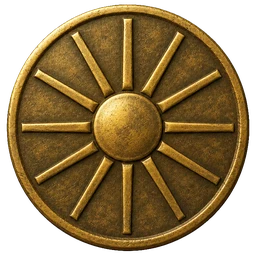
Symbol A square with one side left open.
Holy day The First Measure
- Begin with care.
- Make foundations that can bear another's weight.
- Repair what can still be mended.
The gods
12Istrak
The First Mason
Greater · Lawful Good
Creation and beginnings, which Savaq says must remain open to change.
Patient, exacting, and quietly compassionate; values a sound foundation more than a dramatic result.
Faith
- Begin with care.
- Make foundations that can bear another's weight.
- Repair what can still be mended.
Holy dayThe First Measure, observed at the beginning of the planting year.
Holy textThe Measure of First Things, a set of twelve brief hymns attributed to no known author.
RitesSet the first stone of a building in silence. · Speak a promise over an unfinished object. · Leave one corner of a new shrine uncarved.
ValuesPatience · Craft · Mercy
Look
SymbolA square with one side left open.
- Ivory
- Dawn gold
AnimalsCrane · Mason bee
AppearanceA tall figure whose face is a smooth disk of dawn-colored stone; a narrow seam of light marks where a mouth might be.
Followers
WhoBuilders, judges, midwives, civic planners, and people beginning difficult work.
BeliefsFollowers believe every worthy act begins a small world and that the vanished gods left mortals the responsibility of maintaining their foundations.
The faith
How it began
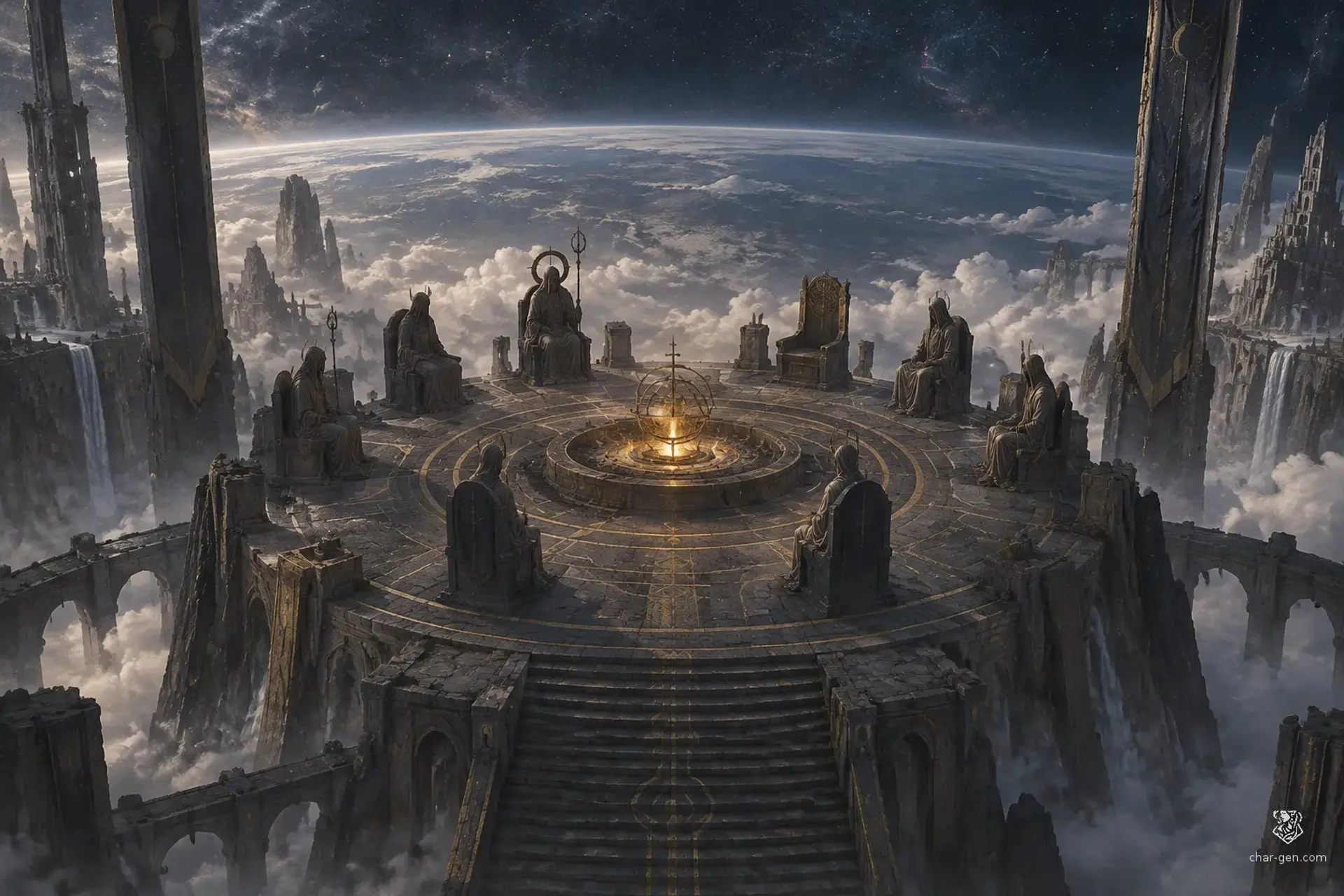
According to the oldest surviving creation chants, the twelve Creator Gods shaped Nevriene from the Unmade and withdrew when their work could stand on its own.
Their supposed departure left no clear sign: some traditions say the sky closed behind them, others that they became the world's laws and materials. Every account is late, fragmentary, and contradicted by another.
The heavens
Before Nevriene there was the Unmade: neither void nor substance, but the absence of distinction.
The Creator Gods drew boundaries through it, and boundaries became sky, sea, land, time, life, and death. Nevriene is not merely a world within a cosmos; it is the great work around which the cosmos formed. Beyond its rim lie the distant reaches called the Outward Silence. No mortal account agrees whether the gods departed through that silence, dissolved into their work, or were never present in the way their worshippers imagine.
Gods and mortals
The Creator Gods are worshipped as distant origins rather than dependable patrons.
Their temples tend shrines, preserve disputed fragments, and guide communal rites, but do not claim regular answers to prayer. Most believers honor several gods according to circumstance; strict devotees of one deity are common, yet no universally accepted church governs the assembly. Local faiths disagree over whether the gods' silence is absence, a test, or the final freedom granted to mortals.
After death
The Creator Gods left no single, confirmed map of the dead.
The dominant doctrine holds that each soul passes through the Quiet Interval, a dark expanse where it hears the twelve first voices receding. Souls then enter the keeping of whichever god they most resembled in life, though some teachings say the gods are gone and the dead simply become part of Nevriene’s unremembering substance. The funerary rite called the Unanswered Question asks a deity by name to receive the departed; no answer is expected.
What people say, what is true
Players may hear
For the GM
Plot hooks
Conflicts
The wars
The central schism concerns whether Nevriene is a completed work or an abandoned draft.
Istrak teaches that the world must be repaired, while Oruveth insists that alteration betrays its maker’s intent. Savaq argues that creation must remain free to change; Khevrun counters that unbounded change will consume it. The gods’ surviving signs are too ambiguous to settle the dispute, and rival temples treat each new wonder as evidence for their side.
| Istrak | Savaq | Khevrun | Veyra | Drevik | Mireth | Tzalik | Namar | Namarith | Oruveth | Ghur | Vurash | |
|---|---|---|---|---|---|---|---|---|---|---|---|---|
| A | A | E | ||||||||||
| A | E | A | ||||||||||
| A | E | A | ||||||||||
| A | A | E | ||||||||||
| A | E | |||||||||||
| A | A | E | ||||||||||
| E | A | A | ||||||||||
| A | E | |||||||||||
| E | E | A | A | |||||||||
| A | E | A | ||||||||||
| E | A | E | ||||||||||
| A | A | E |
Order of heaven
Structure
The religion has no central hierarchy.
Communities maintain local sanctuaries, often with a shared hall for all twelve gods and smaller shrines devoted to particular rites. Temple keepers are custodians, historians, and mediators rather than authorities claiming divine instruction. Councils may settle practical disputes within a region, but no council can speak for the whole faith. Competing translations of the old creation chants are treated as living traditions, not settled scripture.
Theme
Creation without a present creator: inheritance, uncertainty, stewardship, and the uneasy freedom of a world whose makers may never return.
Tone
Distant, reverent, and uncertain.
The divine is encountered through old stones, seasonal patterns, unexplained coincidences, and conflicting testimony rather than frequent miracles or direct intervention.
Alignments
The assembly ranges from ordered good to unbound evil, with most gods occupying mixed or neutral ground.
Their disagreements are theological as well as moral: they disagree about whether creation should be preserved, corrected, or allowed to end.
Media
0 imagesNo images yet.
Turn The Creator Gods into a sheet
A high-res, share-ready sheet you can post or print.
