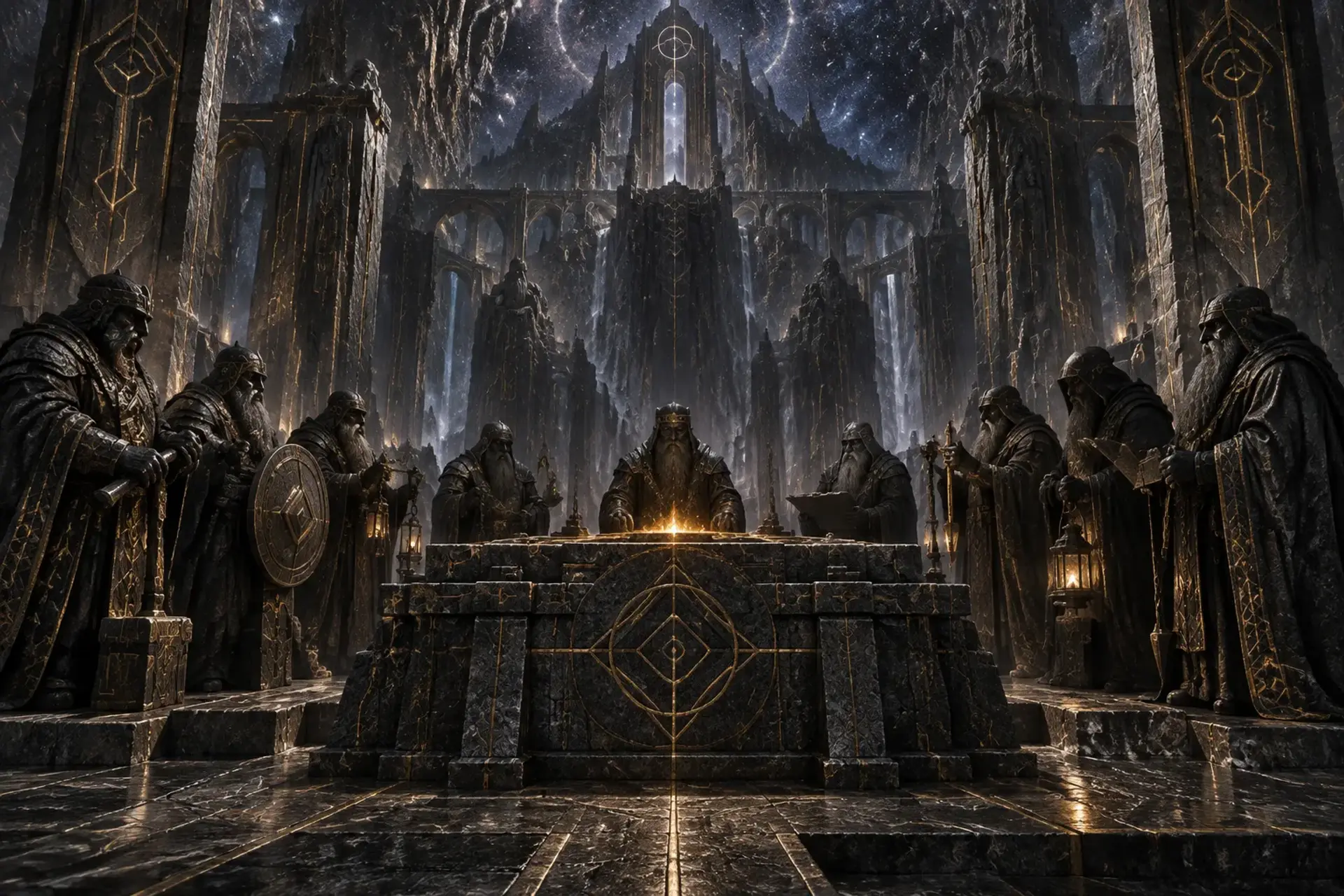
The Stonebound Oath
The Stonebound Oath
Invoke a god
Grundmar, The Unbroken Vow
The First Witness
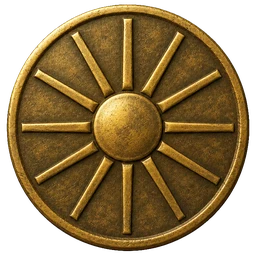
Symbol A stone tablet split by an unbreakable chain.
Holy day The First Inscription
- Swear on the stone.
- Keep it past death.
- Let every crack be answered.
The gods
11Grundmar, The Unbroken Vow
The First Witness
Greater · Lawful Good
Order, where Ymra, Keeper of the Council Halls, gives a vow its public witness · Earth, the mountain's enduring substance shared with Thurgin, The Steady Hand
Grundmar is deliberate, patient, and difficult to provoke. He hears both sides of a dispute, distinguishes a broken promise from an impossible one, and considers mercy compatible with justice. He does not treat every oath as magically binding, and he will not compel a vow made under immediate coercion. He is not thought to forgive a broken vow lightly, yet Kaldrek's teachings temper his justice with regard for the weakness of mortal hands.
Faith
- Swear on the stone.
- Keep it past death.
- Let every crack be answered.
Holy dayThe First Inscription, observed at the turning of the mining year with renewed promises and repairs to ancestral markers. Every Thane-King is crowned with a hand upon his tablet in Kharbal-Ur. The Oath-Binding: formal vows of marriage, fealty or trade are sworn with a palm pressed flat against carved stone in his name. Breaking such an oath is considered to leave a literal crack in the stone somewhere in the Holdfasts, though dwarves take this more as metaphor than fact, and not everyone is sure.
Holy textThe First Stone Oaths, a cycle of sayings and oath forms attributed to the founding clans. Copies differ by Holdfast, and none is regarded as complete.
RitesTouch bare stone before a solemn oath. · Recite the names of the dead who witnessed a clan compact. · Repair a broken marker before asking that a vow be renewed. · A dwarf swears with a palm flat on carved stone and speaks the oath twice, once for the living and once for the dead.
Valuescontinuity · truth · accountability
Look
SymbolA stone tablet split by an unbreakable chain.
- granite gray
- iron black
- oath-red
Animalsmountain goat · badger · stone raven
AppearanceA towering figure of dark, spring-veined granite stands crowned in a mantle of carved tablets. An immense chain passes through the split down his chest, each link bright as hammered silver and immovable as the mountain. His warhammer bears the same split-tablet mark. Dust trembles from nearby carvings as he speaks; the air tastes faintly of iron, and his voice arrives first as a deep vibration underfoot.
Followers
WhoThane-Kings, oath-takers and judges.
BeliefsFollowers hold that an oath sworn in Grundmar's name remains part of the world after the speaker dies. Some take this literally; others understand it as the living community's duty to remember and enforce just promises.
The faith
How it began
Holdfast tradition locates the faith's beginnings in the First Stone Oaths, the founding promises by which the earliest clans are said to have bound themselves to one another and to Kharbal.
The rites grew from labor, defense, mourning, and shared law. Whether the deities were named before those customs or emerged through them is not agreed.
The heavens
The mountain is understood as an archive, not merely a place: its strata hold the pressure of time, its veins record labor, and its caverns keep the silence between generations.
The First Stone Oaths that founded Kharbal are believed to have been carved into the bones of the world. Grundmar anchors that image of binding, while Thurgin gives it structure and Morvek its depth. The faithful disagree on whether these figures are gods, ancestral powers, or names through which the mountain's memory is approached.
Gods and mortals
The faith is practiced locally across Kharbal's Holdfasts, in clan halls, garrisons, workshops, tombs, and mining settlements rather than through a universal church.
Thaned councils consult Ymra's precedents; soldiers invoke Baldrok and Drassia; craftspeople honor Kaldrek, Sifna, and Thurgin; families remember the dead with Morvek and gather under Holgra's customs. Allegiance is layered, and a dwarf may keep several rites without settling what answers them.
After death
The faithful teach that the dead descend into Morvek's Lightless Vein, where their names are kept in stone until the mountain releases them into the ancestors’ unbroken chain.
Morvek is said to guide those lost in cave-ins, while Holgra's remembered table welcomes the dead who arrive hungry or alone. Whether this is a literal journey, a rite of communal remembrance, or a truth beyond mortal knowing is left open.
What people say, what is true
Players may hear
For the GM
Plot hooks
Conflicts
The wars
Grundmar's claim that a sworn vow endures beyond death is tested whenever Baldrok's border-garrisons must choose between an old oath and the living.
Ymra weighs such disputes against clan law, while Brannor argues that survival can demand a hard retreat. Sifna's volatile Star-Sand workings draw scrutiny from Thurgin, whose careful measures cannot always contain them. At the Agscapeviw Fracture, Drassia's vigilance strains against Emberun's blessing of those who descend for Star-Sand, while Morvek tends the dead left by both duty and ambition. Holgra shelters the weary from every side, insisting that no quarrel excuses an empty place at the table.
| Grundmar, The Unbroken Vow | Baldrok, Warden of the First Stone | Ymra, Keeper of the Council Halls | Kaldrek, The Anvil-Father | Sifna, Weaver of Star-Light | Thurgin, The Steady Hand | Morvek, Lord of the Lightless Vein | Drassia, The Fracture Warden | Emberun, Heart of the Core | Holgra, Mother of the Long Table | Brannor, The Unyielding | |
|---|---|---|---|---|---|---|---|---|---|---|---|
| A | A | A | |||||||||
| A | A | ||||||||||
| A | A | ||||||||||
| A | E | A | E | ||||||||
| E | E | A | A | ||||||||
| A | E | A | |||||||||
| A | E | A | |||||||||
| E | A | A | E | ||||||||
| E | A | E | A | ||||||||
| A | A | ||||||||||
| A | A |
Order of heaven
Structure
There is no central hierarchy.
Each Holdfast maintains its own keepers, witnesses, and ritual specialists: oath-recorders attached to councils, ward-priests among garrisons, forge tenders, tomb-keepers, and table hosts. Authority comes from demonstrated service and the trust of a community. Grundmar's vows may be witnessed by Ymra's scribes, while local custom determines how disputes, offerings, and funerary duties are handled.
Theme
Inherited obligation, communal memory, skilled labor, and the difficult balance between keeping a vow and protecting the living.
Tone
Distant
Alignments
The Stonebound Oath ranges from lawful guardianship to unruly craft and impartial natural power: Grundmar, Baldrok, Ymra, Kaldrek, Sifna, Thurgin, Morvek, Drassia, Emberun, Holgra, and Brannor embody distinct duties rather than a single moral command.
Media
0 imagesNo images yet.
Turn The Stonebound Oath into a sheet
A high-res, share-ready sheet you can post or print.
