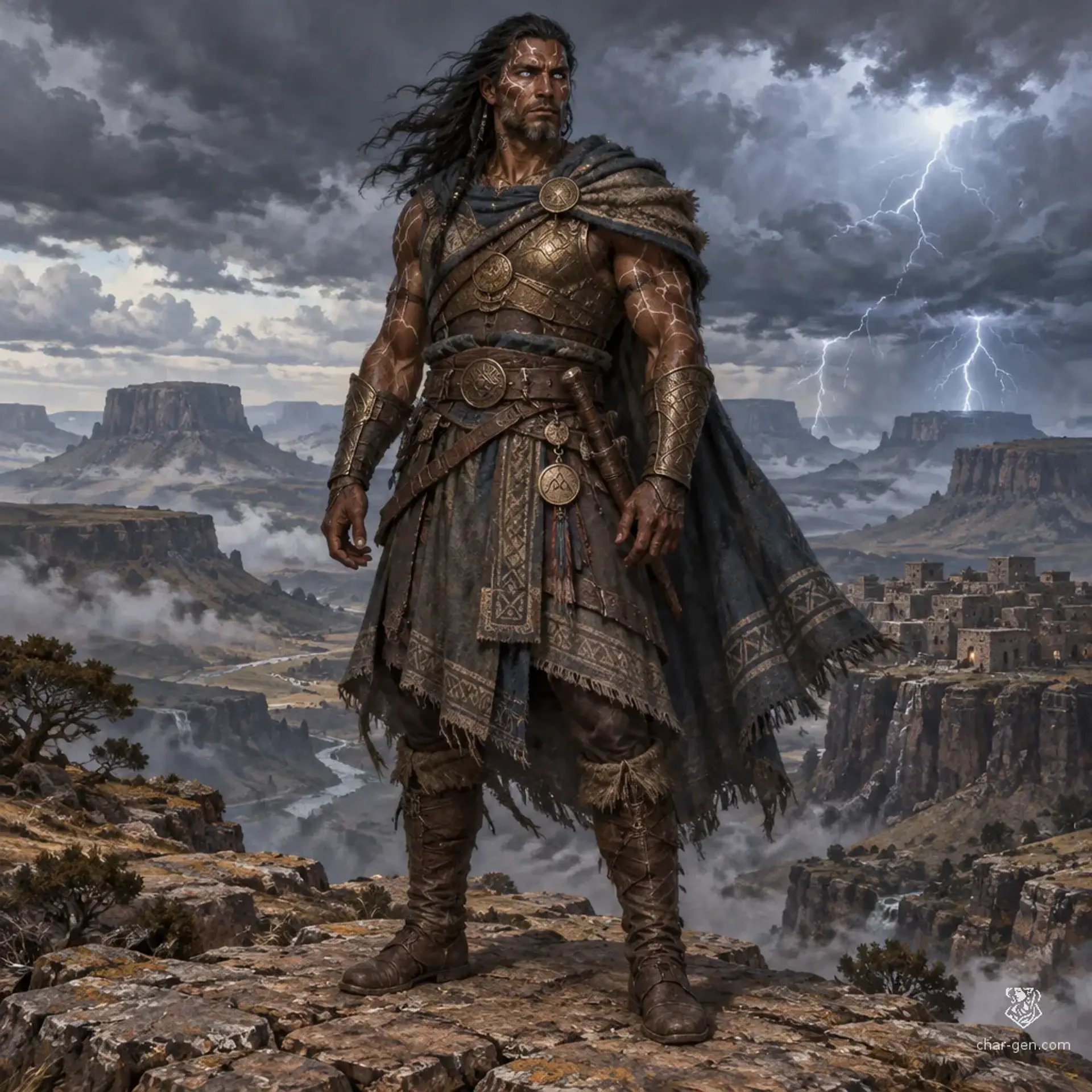
Fulminor montivagus
Raukari are storm-wise plateau warriors who meet one another in ritual duels beneath thunderheads, seeking not conquest but proof of courage witnessed by the clan.
At a glance
Languages Common, Rauk, the language of the high mesas
Height 6 ft. 2 in. to 7 ft. 1 in.
Weight 190 to 300 lb.
Lifespan 90 to 110 years, adult at 18
At the table
Your walking speed is 30 feet.
You gain proficiency in either Athletics or Nature, reflecting your training in bodily contests or close attention to the weather and terrain.
You know the Shocking Grasp cantrip. When you cast it with this trait, you choose Intelligence, Wisdom, or Charisma as your spellcasting ability for it. Starting at character level 3, you can cast Thunderwave with this trait once, and you regain the ability to do so when you finish a Long Rest. You can also cast it using any spell slots you have. Choose Intelligence, Wisdom, or Charisma as your spellcasting ability for these spells when you select this species.
These people tend toward Constitution and Wisdom, shaped by altitude, endurance, and close study of weather. Assign ability score increases as you wish, such as +2/+1 under your table's character creation rules.
Pale, sharply branching scars and an affinity for exposed, wind-battered heights.
Crownscar Raukari live on the highest mesa crowns, where lightning strikes are frequent and the weather changes without warning. They often serve as storm-watchers and formal witnesses at duels.
Raukari are storm-wise plateau warriors who meet one another in ritual duels beneath thunderheads, seeking not conquest but proof of courage witnessed by the clan. Their branching lightning scars are living records of danger faced, while their strict refusal to strike a foe who has yielded makes their honor code plain even to strangers. A Raukari adventurer might leave the high mesas to pursue a missing clan heir, test an unfamiliar idea of justice, or discover what their people can become beyond the storm.
Raukari are tall, powerfully built humanoids with weathered skin in shades of umber, bronze, and gray.
Branching white scars, often left by lightning, cross their limbs and torsos; these marks are regarded as honors only when honestly earned. Their eyes are pale blue or white, and their hair tends to lift and stir when static gathers in the air. They favor layered armor of hammered bronze, leather, and woven highland cloth, worn for protection as much as for ceremony.
Mountainous high mesas, wind-cut plateaus, and storm-facing ridgelines
Children learn to read cloudbanks, climb safely, and recognize the difference between a challenge and a threat.
An adult earns a clan name and may take part in formal storm-duels. Most reach adulthood in their late teens.
Elders are valued as witnesses, weather-readers, and keepers of the names and circumstances behind every honored scar.
Raukari society is organized around fiercely independent clans rather than a single ruler.
Their storm-duels are formal contests held in exposed arenas during thunderstorms, overseen by witnesses who ensure that neither participant attacks a yielded opponent. A lightning scar is honored when its bearer can recount how it was earned; false claims bring lasting disgrace. Clans debate disputes through councils, contests, and negotiated oaths, and no victory excuses breaking the taboo against striking the defeated.
Many Raukari honor the storm as a force that cannot be bribed or commanded, while others revere ancestors who faced it with courage.
Their rites emphasize truthful witness, self-restraint, and the dignity of accepting defeat. They have no single alignment, though clan ideals often favor independence, courage, and fairness over obedience.
Raukari respect people who keep their word and take responsibility for their actions, regardless of rank or origin.
Their independence can make negotiation slow, and outsiders sometimes mistake their formal challenges for needless aggression. A Raukari will not strike a foe who has yielded, and expects allies to respect that taboo even when it is tactically inconvenient.
Their settlements cling to broad mesa crowns and sheltered clefts in the high rock.
Homes are built low against the wind from stone, timber, and hammered bronze, with open courtyards reserved for gathering and formal duels. Tall bronze rods and bell towers stand apart from living quarters to draw lightning safely away from the settlement.
No images yet.
A high-res, share-ready sheet you can post or print.
