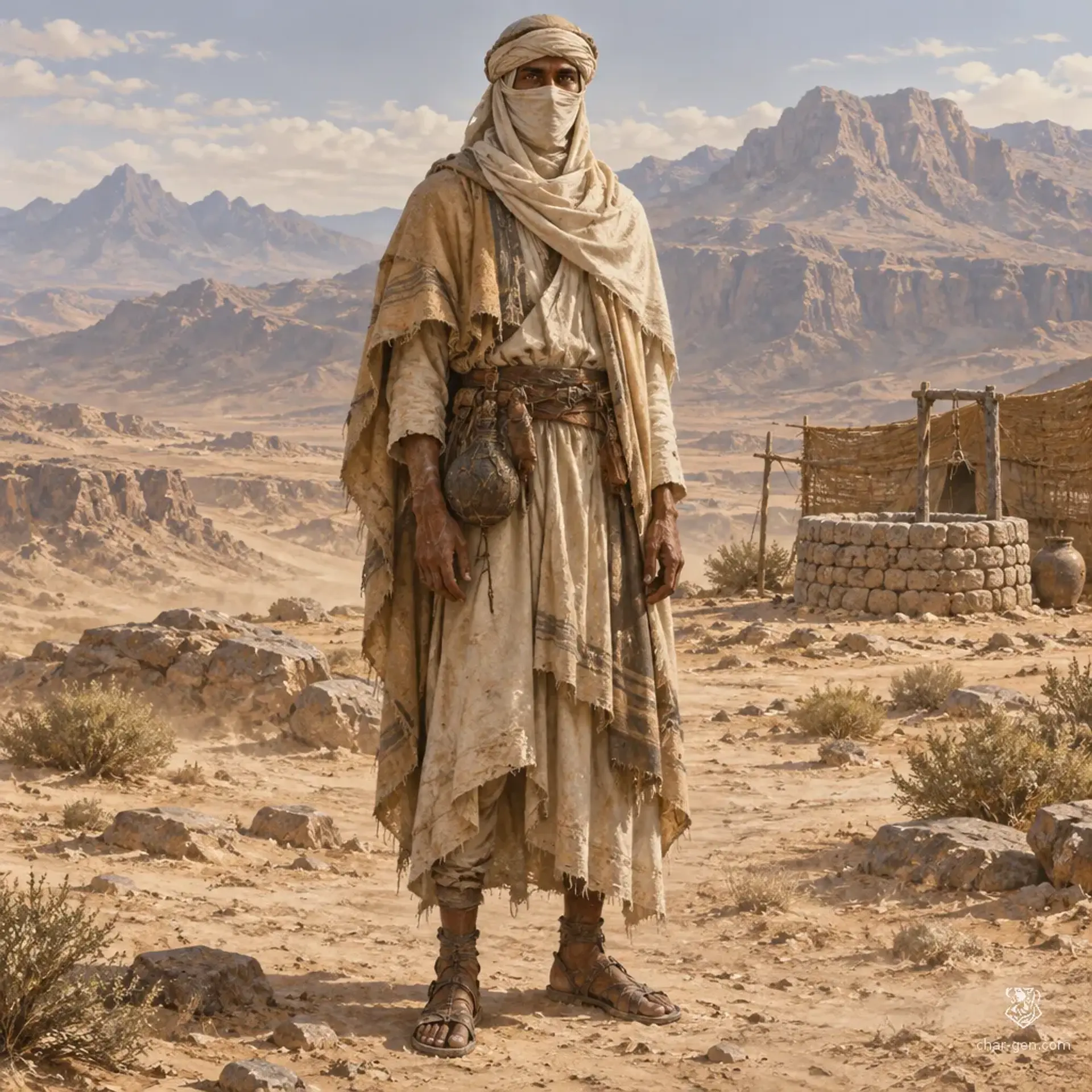
Homo ventivagus
Siroccari are long-limbed wanderers who follow wells and storms across desert basins and mountain passes, guiding caravans along routes they hold in memory rather than ink.
At a glance
Languages Common, Siroccari
Height 6 to 7 feet
Weight 130 to 190 pounds
Lifespan 90 to 110 years
At the table
Your walking speed is 35 feet.
You have proficiency in the Survival skill. If you already have this proficiency, you instead gain proficiency in Nature.
You can move across nonmagical difficult terrain made of loose sand, gravel, or scree without spending extra movement. This benefit does not allow you to ignore other effects of that terrain.
You have a translucent inner eyelid that protects your eyes from blowing grit. You have Advantage on saving throws you make to avoid or end the Blinded condition caused by nonmagical dust or sand.
Common, Siroccari
Survival skill
Siroccari often tend toward Constitution and Wisdom, shaped by long travel and careful attention to weather. Players assign ability score increases as they wish, following the 2024 rules.
Often wear pale wraps and favor open-country routes between widely spaced wells.
These Siroccari specialize in locating, tending, and protecting springs and cisterns. Their remembered histories are especially rich in the names and obligations associated with water.
Siroccari are long-limbed wanderers who follow wells and storms across desert basins and mountain passes, guiding caravans along routes they hold in memory rather than ink. Respected for their knowledge and bound by the custom of never refusing water to a stranger, they remain independent of the cartel that profits from the roads they keep. A Siroccari adventurer may be seeking a lost route, repaying a debt of hospitality, or learning whether an old road still leads where its songs say it does.
Siroccari are tall, wiry humanoids with long limbs and narrow builds suited to covering great distances.
Their skin ranges from sun-baked tan to deep copper, often marked by pale lines where wraps protect them from the sun. A translucent second eyelid slides across each eye to shield it from grit and glare. They dress in layered, sand-colored cloth, veils, and head wraps that can be loosened or tightened against heat, cold, and dust. Their voices are often low and measured, but carry well across open ground.
Desert and mountainous regions, especially arid plateaus, high passes, and seasonal routes between isolated wells.
Young Siroccari learn to read wind, stone, and cloud beneath the close care of their kin. They are not considered ready to guide alone.
An adult earns their standing by memorizing a full seasonal route and guiding others safely along it. Most remain vigorous for many decades.
Elders carry routes, names, and histories that no map records. Many travel less, but their counsel can redirect whole caravans.
Siroccari move with seasonal water and weather, often traveling in kin-based caravans that welcome adopted companions.
Their history is carried through memorized route songs, stories, and carefully taught sequences of landmarks. Writing is uncommon in traditional route-keeping, not because it is forbidden, but because a written map can be stolen, copied, or made useless by shifting ground. Guides train for years before leading others, learning where water can be found, when a pass becomes dangerous, and how to read the signs of an approaching storm. Hospitality is a binding custom: water is offered first, with questions and bargains to follow.
Siroccari traditions honor the life-giving force of rain, the patience of stone, and the obligations created by shared water.
Some speak of storms as ancestral messengers; others treat them as powerful natural events deserving respect rather than worship. Their central taboo is to never refuse water to a stranger. Many value compassion and liberty, but their customs do not prescribe a single alignment.
Caravaners seek Siroccari guidance, and settlements near their routes often rely on them to keep wells safe and paths known.
The cartel tolerates their independence because even its agents need guides, but Siroccari rarely join its ranks and resist attempts to claim their routes. They judge outsiders less by origin than by conduct, especially whether they share water and respect a place they pass through.
Siroccari do not claim a single homeland.
Their routes connect desert basins to mountain springs, and their camps shift with the seasons. Temporary shelters are low, wind-resistant, and easy to dismantle. At dependable wells, they maintain simple stone windbreaks, shaded gathering places, and carefully tended markers. These are waypoints rather than property, and travelers are expected to leave them usable for whoever comes next.
No images yet.
A high-res, share-ready sheet you can post or print.
