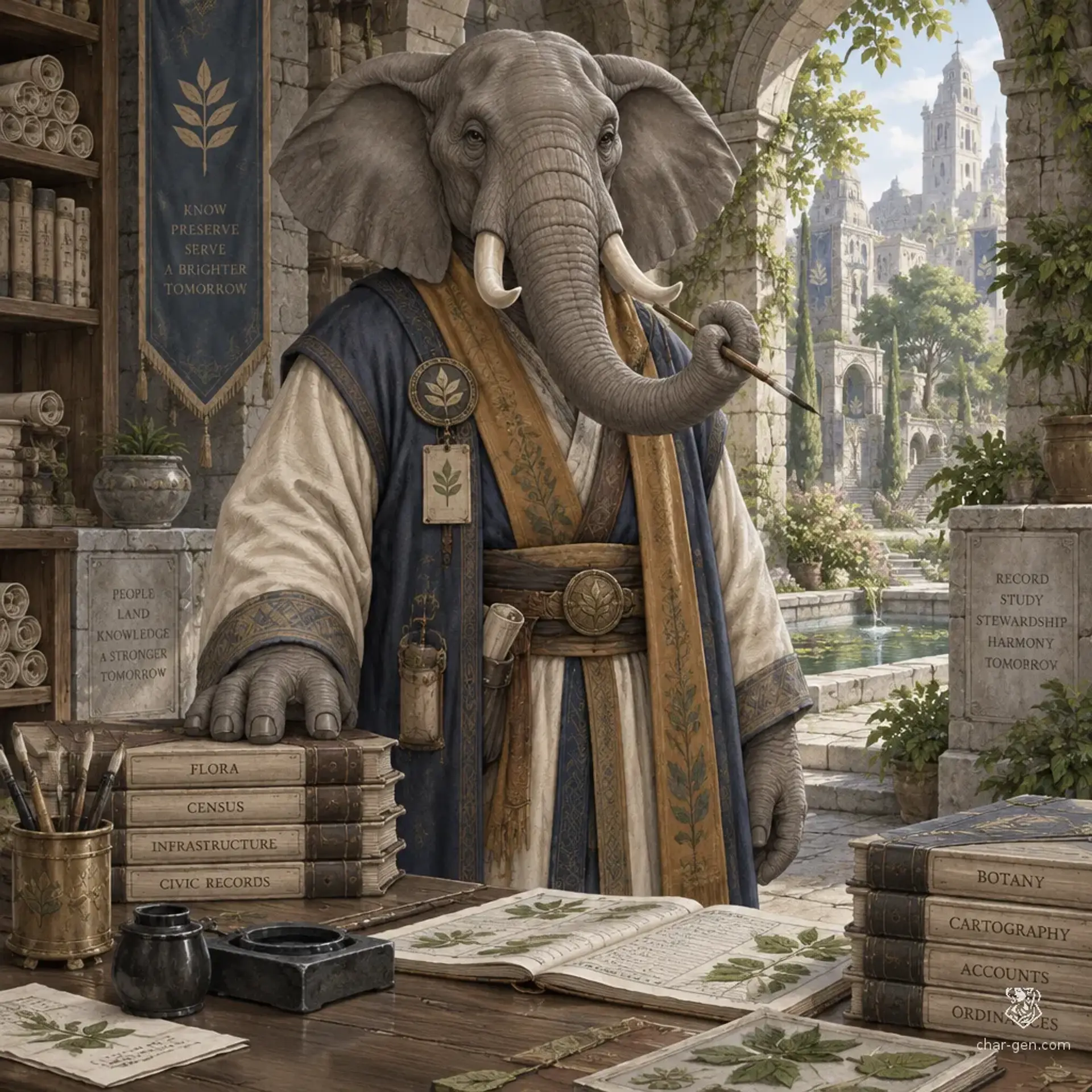
Memorivox urbanus
Calm and steadfast, the gharavi are urban record-keepers whose long memories serve both their neighbors and their own sense of duty.
At a glance
Languages Common, Gharavi
Height 6 ft. 2 in. to 7 ft. 4 in.
Weight 280 to 430 lb.
Lifespan 90 to 120 years, adult at 18
At the table
You can use your trunk to make simple movements, such as opening an unlatched door, lifting or moving an object, or grasping a small item. It can hold and manipulate an object weighing no more than 10 pounds, but it cannot wield a weapon or shield, activate a magic item, or perform tasks requiring fine manual dexterity.
You gain proficiency in the History skill. When you make a History check to recall a name, agreement, or recorded event that you personally studied or witnessed, you can add twice your Proficiency Bonus if you are already proficient in History. You can benefit from this enhanced recall only once per check.
Your attentiveness extends beyond books and city walls. You gain proficiency in the Animal Handling skill.
Common, Gharavi
History
These people tend toward Constitution and Wisdom, reflecting their endurance and patient attention, but players assign any ability score increases as they wish.
Broad, pale-edged ears and a strong affinity for animal behavior and the changing seasons.
Groveward gharavi tend gardens, parks, and green margins around cities. They often keep records of local wildlife, medicinal plants, and seasonal change, and are especially likely to serve as guides between urban and wild communities.
Calm and steadfast, the gharavi are urban record-keepers whose long memories serve both their neighbors and their own sense of duty. Their scholars preserve names, testimony, and the obligations that bind a community together, while their wild affinity draws them beyond libraries to listen among trees and living creatures. A gharavi adventurer might travel as a witness, archivist, mediator, or seeker of a name that should not be lost.
Gharavi are large, heavy-set people with thick grey skin, long muscular trunks, short ivory tusks, and broad fan-like ears.
Their small, patient eyes give them a composed expression, though their ears and trunk are remarkably expressive. Their hands are broad and dexterous, well suited to turning pages, shaping ink brushes, and handling delicate objects. Skin tones range from slate to pale ash, sometimes mottled around the shoulders and ears.
Urban; commonly found in archive districts, market quarters, temples, and civic halls, with close ties to nearby parks and wild places.
Young tusks are still short, and a person is generally considered a child while learning the names, histories, and obligations of their community.
Most reach adulthood in their late teens. Adults take up trades, pursue study, and may earn the responsibility of keeping records for others.
Elders are honored for the breadth of their memory and experience. Many remain active as teachers, judges, and trusted witnesses well into old age.
Gharavi value careful work, trustworthy testimony, and the preservation of memory.
Their scribes record births, agreements, local histories, and the names of the dead, but oral recollection remains equally important: a story is considered incomplete until it has been heard and understood. Their central taboo is to forget a debt or a name. Forgetfulness may be forgiven when honestly admitted, but pretending not to remember is a serious breach of trust. Many gharavi also cultivate a wild affinity, making time for gardens, animal care, and excursions into nearby natural places.
Gharavi traditions honor ancestors, truthful testimony, and the living world.
Some keep small household shrines for teachers and departed relatives; others seek wisdom through seasons, animal migrations, and the growth of city gardens. Their patient habits often incline them toward considerate and orderly conduct, though individuals vary widely in faith and outlook.
Gharavi are respected workers and valued keepers of civic memory.
They often serve as scribes, teachers, legal witnesses, and mediators, earning trust through patience rather than force. Their custom of remembering every name and debt can reassure allies but unsettle those who prefer old obligations to fade. They usually meet other peoples with quiet courtesy, and many build friendships by learning the names of a companion's family, homeland, and chosen kin.
Their communities flourish in old cities, where spacious halls, broad stairways, and sturdy floors accommodate their size.
Archives are built with cool, dry rooms, shaded courtyards, and shelves low enough to reach with trunk or hand. Many urban families maintain a small garden or a quiet grove where they can listen to birds and renew their connection to wild places.
No images yet.
A high-res, share-ready sheet you can post or print.
