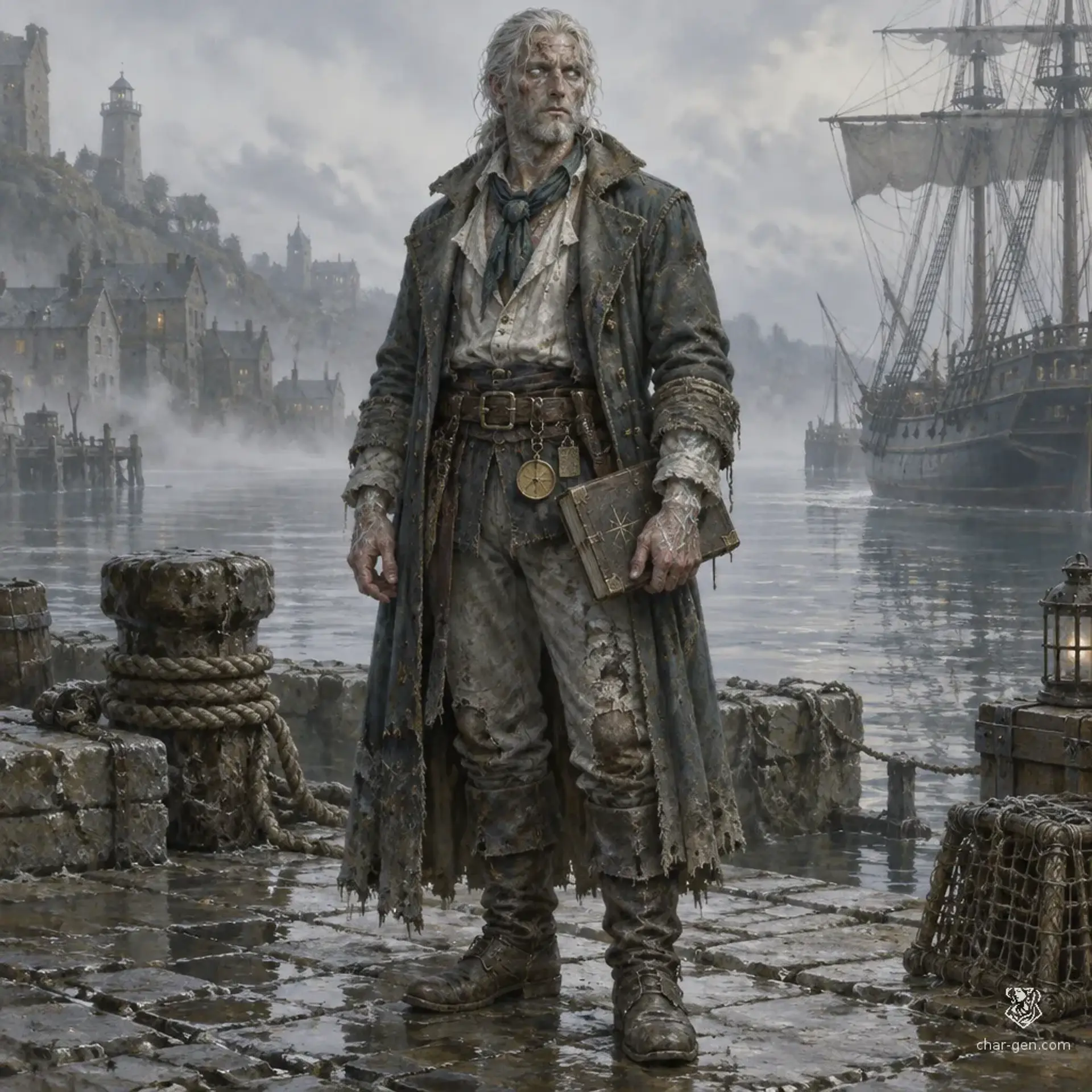
Homo redivivus maritimus
The Tallyfolk are the counted dead who came back with a name, a memory, or a promise still in hand.
At a glance
Darkvision 60 ft.
Languages Common, One other language of your choice
Resistances Necrotic
Height 4 ft. 10 in. to 6 ft. 5 in.
Weight 80 to 230 lb., varying with the body's condition and any salvaged gear worn as part of it
Lifespan Tallyfolk do not age biologically after returning from death
At the table
You are a Humanoid, despite your undead origins. You can choose Small or Medium when you select this species.
Your walking speed is 30 feet. You also have Darkvision with a range of 60 feet.
You have Resistance to Necrotic damage. You also have Advantage on saving throws you make to avoid or end the Poisoned condition.
You don't need to breathe, eat, or drink. You can still consume food and drink if you wish, and you can finish a Long Rest as normal. This trait does not protect you from hazards other than those that specifically require breathing, eating, or drinking.
When you make an ability check to recall a route, identify a navigational hazard, or remember a name or detail you have personally recorded, you can add to the roll. You can use this benefit a number of times equal to your Proficiency Bonus, and you regain all expended uses when you finish a Long Rest.
Necrotic
Tallyfolk often cultivate Constitution and Wisdom through hard voyages and careful reading of weather, but these are tendencies, not rules. Assign ability score increases as your table's 2024 character creation rules allow, such as +2/+1 wherever you choose.
They favor direct speech, reliable routines, and keeping a written record of every passage.
Returned sailors and laborers, the Deckhands are the most numerous Tallyfolk. Their long experience with shipboard work often makes them dependable companions in peril. When you choose this lineage, you gain proficiency in Athletics or Acrobatics.
The Tallyfolk are the counted dead who came back with a name, a memory, or a promise still in hand. They walk among the living as sailors, witnesses, and keepers of unfinished business, carrying the patient calm of people who have already crossed one final boundary. A Tallyfolk adventurer might seek the truth of their own return, protect a crew that has become family, or simply discover what a second life is for.
Tallyfolk are people who have returned from death through strange tides, unfinished obligations, or rituals whose origins are poorly understood.
Their appearances reflect their former lives: a sailor may have salt-stiff hair and a body marked by old rope burns, while a merchant might look almost untouched except for the cool cast of the skin. Their eyes often have the cloudy sheen of sea glass, and their pulses are faint or absent. They do not necessarily smell of decay; many instead carry the clean mineral scent of rain on stone. Clothing, jewelry, and scars are often more important to their identity than changes in their bodies.
Coastal towns, island chains, ship graveyards, and the working decks of vessels that travel dangerous waters.
Tallyfolk also make homes far inland when a river, canal, or community of fellow returners gives them reason to stay.
The newly returned retain a living person's memories and mannerisms, but are often disoriented by the passage of time and the unfamiliar quiet of their own bodies.
After years or decades, most settle into a chosen name, vocation, and community. Their bodies may weather, but do not age in the ordinary sense.
Those who have endured for centuries often become keepers of records, navigational lore, and promises. Some grow remote, while others find renewed purpose in each new generation.
Tallyfolk culture centers on remembrance, practical mutual aid, and the keeping of promises.
Many record the names of the missing, preserve personal effects until rightful kin can be found, and treat a ship's roster as a solemn document. They do not all become sailors, but seafaring communities offer familiar rhythms: watches, shared labor, and clear responsibilities. Among themselves, they debate whether a returned person owes anything to the life they left behind, and whether an old identity can survive a new beginning.
Tallyfolk follow many faiths, including those they held before death, though some find their old beliefs altered by the experience of returning.
They may honor sea gods, ancestral spirits, or deities of passage and memory. Their outlook is as varied as that of any people; the return from death does not dictate alignment.
The Tallyfolk are welcomed in ports where their practical knowledge is valued, but their stillness and connection to death can unsettle the living.
Some families regard a returned relative as a miracle; others feel that grief has been reopened without permission. Tallyfolk rarely assume that another returned person shares their cause or nature. They often respect living customs and make a point of asking how the dead should be remembered in a new community.
Tallyfolk have no single homeland.
Their communities gather around harbors, wreck sites, and places where the dead are remembered by name. They favor sturdy buildings with broad porches, high storage shelves, and dry rooms for ledgers and keepsakes. A common hall may include a wall of brass or shell tags recording those lost at sea, alongside empty spaces reserved for the missing.
No images yet.
A high-res, share-ready sheet you can post or print.
