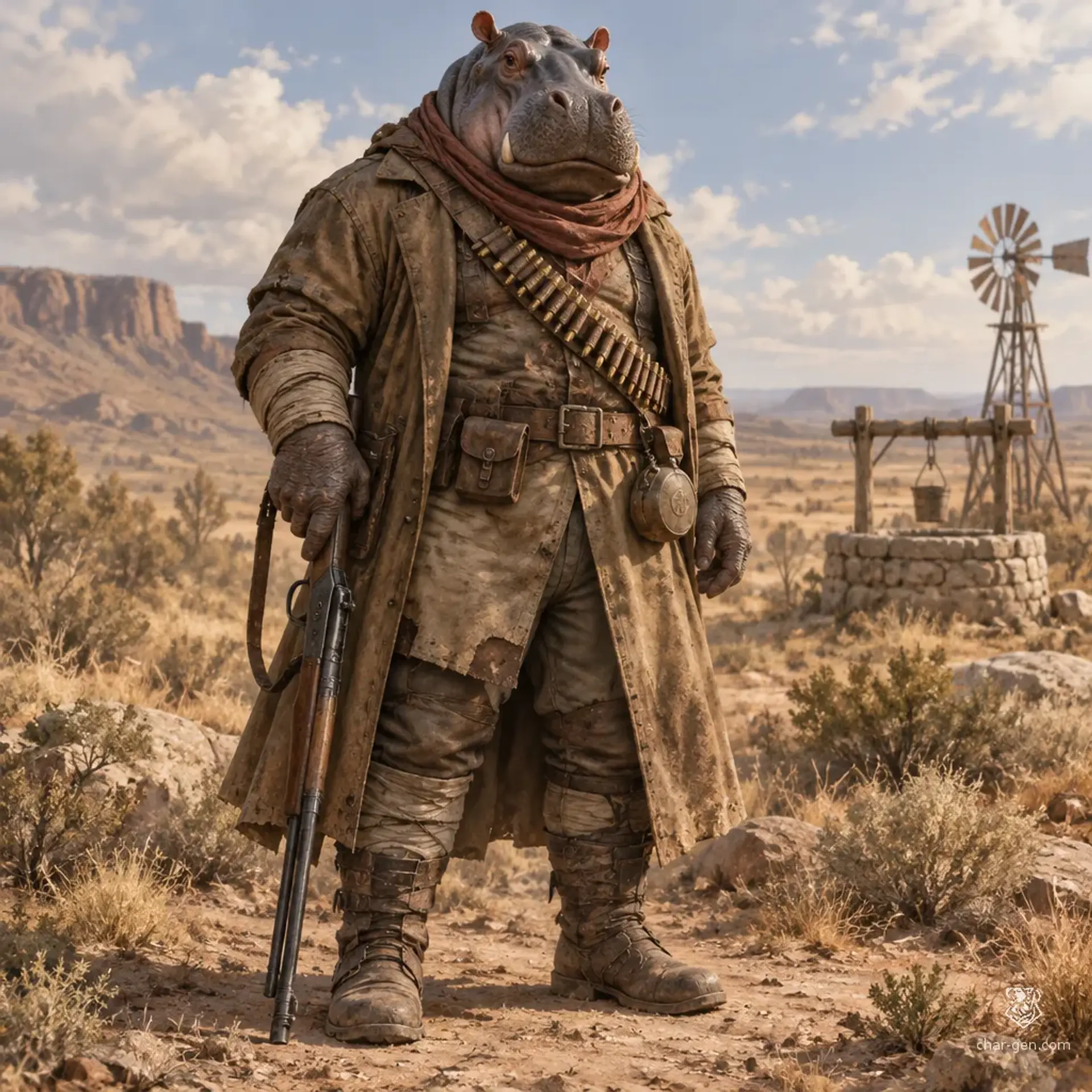
Hippopotamus armiger
A Brasshide is a broad-backed frontier gunner whose discipline is as formidable as their weapon.
At a glance
Languages Common, One other language of your choice
Height 6 ft. 7 in. to 7 ft. 8 in.
Weight 260 to 430 lb.
Lifespan 75 to 90 years, adult at 16
At the table
Your walking speed is 30 feet.
Your broad build gives you an unusual capacity for carrying and hauling. You count as one size larger when determining your carrying capacity and the weight you can push, drag, or lift.
Your tusks are natural weapons, which you can use to make unarmed strikes. When you hit with them, the strike deals piercing damage instead of the normal bludgeoning damage for an unarmed strike. You can use Strength for the attack and damage rolls.
You gain proficiency with firearms if they are available in your campaign. If your campaign does not use firearms, choose one martial weapon instead. This proficiency reflects practical training, not an innate bond with any weapon.
These broad-shouldered folk often develop Constitution and Wisdom through hard travel and disciplined service, but players assign ability score increases as they wish.
Known for patient marksmanship and meticulous maintenance of long guns.
Rangewards favor scouting, long-distance escort work, and watch duty. They learn to read wind, tracks, and distant movement, and are often trusted to keep a company’s powder records.
A Brasshide is a broad-backed frontier gunner whose discipline is as formidable as their weapon. They are respected mercenaries, escorts, and peacekeepers, known for keeping a cool head in a dust storm and never abandoning a comrade. Their code has two simple demands: do not leave your people behind, and do not leave your gun uncleaned.
Brasshides are tall, enormously broad beast-folk with thick grey skin and blunt, hippo-like heads.
Small round ears sit high on the skull, and heavy lower tusks show even when the mouth is closed. Their bodies carry muscle and dense weight, while their broad feet make a steady, deliberate tread. On the range, they favor hard-wearing coats, dust wraps, reinforced boots, and bandoliers arranged with almost ceremonial care. Their bearing is stiff and military, but a relaxed Brasshide can be unexpectedly gentle, especially around children and nervous animals.
Open plains, dry scrublands, desert margins, and frontier roads.
Though built for harsher climates than their river-dwelling ancestors, they seek wells, springs, and seasonal watercourses wherever they travel.
Youngsters learn weapon care, trail discipline, and the names of every member of their household before they are trusted with a loaded gun.
An adult is recognized after completing a long watch or escort in which they keep both their weapon and their companions safe.
Veterans often retire from the firing line to teach, negotiate contracts, or keep the company’s records and memorials.
Brasshide society is shaped by company life, frontier work, and the scarcity of safe water.
Mercenary companies may serve as escort crews, town guards, caravan defenders, or independent lawkeepers, but membership is not universal and contracts never erase personal loyalties. Apprentices learn weapon maintenance alongside navigation, first aid, and camp duties. Their central taboo is to abandon a comrade in danger or leave a gun uncleaned; both acts signal that a person cannot be trusted when lives depend on them. A gun is a tool, a promise, and a responsibility, not an object of worship.
Brasshides have no shared religious affinity.
Some leave offerings at wells or keep small tokens for the dead, while others trust only in preparation and mutual obligation. Their culture prizes loyalty and order, so many lean toward lawful habits, but personal convictions range widely, including among those who reject company life entirely.
Most frontier communities welcome Brasshide guards and caravan escorts, though their reputation for exacting discipline can make them seem severe.
They are valued as reliable professionals rather than feared as a people. A Brasshide may serve beside anyone who honors a bargain and stands by their companions, but betrayal or careless treatment of shared weapons can end a friendship abruptly.
Their settlements gather around reliable wells and sheltered depots, often built from packed earth, salvaged timber, and the plated sides of retired wagons.
Company camps are laid out with military precision: a clear firing lane, a guarded powder store, a communal mess, and a shaded place for cleaning weapons. On the open range they travel in armored caravans, moving between water stops known only to trusted guides.
No images yet.
A high-res, share-ready sheet you can post or print.
