
The Sanguine Accord
The Sanguine Accord was born in the last days of a failing kingdom, when plague, famine, and noble indifference drove the living into the streets and the dead into the temples. In that chaos, a circle of mortuary scribes, disgraced healers, and oath-bound magistrates discovered that the ruling houses were not merely incapable of saving the realm, but had quietly profited from its suffering. The Accord began as a vow of exposure and retribution, a promise that no throne would again stand above the blood it spilled. Its earliest leaders did not preach freedom in the common tongue of rebels. They spoke of order, debt, and consequence. They argued that society had been corrupted by soft mercy and inherited privilege, and that only a harsher covenant could endure. Their rituals were drawn from forgotten burial texts and battlefield censuses, binding the names of the dead into ledgers of obligation. Each martyr became evidence. Each massacre became a clause. In time, their funerary rites hardened into occult doctrine, and their secret courts became as feared as any royal tribunal. When open revolt finally came, it was not a wild uprising but a carefully staged collapse. Grain stores were poisoned, tax archives burned, militia captains blackmailed, and several barons found dead beneath seals of red wax. The Accord did not merely destroy the old regime. It replaced it with cells, tribunals, and blood oaths, promising stability to those willing to kneel and silence to those who would not. Cities that surrendered were spared. Those that resisted were made examples. The Accord called this mercy, because it ended quickly. Over the generations, the faction became a disciplined underground state, equal parts insurgency, cult, and bureaucracy. Its priests of marrow and ink record every favor, every betrayal, and every drop of blood owed to the cause. They recruit from widows, veterans, plague survivors, and the children of the disappeared, teaching them that compassion is a weakness the powerful weaponize. To the public, the Accord speaks of liberation from tyranny. In private, it believes tyranny is only acceptable when it serves the correct hands. Even now, the Sanguine Accord seeks to bring kingdoms to their knees not through chaos, but through managed ruin. They prefer the long decay of institutions, the corruption of courts, and the quiet conversion of enemies into assets. Their revolution is not meant to free the world. It is meant to remake it into something stronger, colder, and obedient, with every citizen owing their life to the red ledger of the Accord.
The Sanguine Accord
- Type
- Occult Revolutionary Order
- Size
- Regional
- Reach
- Significant
- Base
- The Ruins of the Old Sept
Overview
The Sanguine Accord was born in the last days of a failing kingdom, when plague, famine, and noble indifference drove the living into the streets and the dead into the temples. In that chaos, a circle of mortuary scribes, disgraced healers, and oath-bound magistrates discovered that the ruling houses were not merely incapable of saving the realm, but had quietly profited from its suffering. The Accord began as a vow of exposure and retribution, a promise that no throne would again stand above the blood it spilled. Its earliest leaders did not preach freedom in the common tongue of rebels. They spoke of order, debt, and consequence. They argued that society had been corrupted by soft mercy and inherited privilege, and that only a harsher covenant could endure. Their rituals were drawn from forgotten burial texts and battlefield censuses, binding the names of the dead into ledgers of obligation. Each martyr became evidence. Each massacre became a clause. In time, their funerary rites hardened into occult doctrine, and their secret courts became as feared as any royal tribunal. When open revolt finally came, it was not a wild uprising but a carefully staged collapse. Grain stores were poisoned, tax archives burned, militia captains blackmailed, and several barons found dead beneath seals of red wax. The Accord did not merely destroy the old regime. It replaced it with cells, tribunals, and blood oaths, promising stability to those willing to kneel and silence to those who would not. Cities that surrendered were spared. Those that resisted were made examples. The Accord called this mercy, because it ended quickly. Over the generations, the faction became a disciplined underground state, equal parts insurgency, cult, and bureaucracy. Its priests of marrow and ink record every favor, every betrayal, and every drop of blood owed to the cause. They recruit from widows, veterans, plague survivors, and the children of the disappeared, teaching them that compassion is a weakness the powerful weaponize. To the public, the Accord speaks of liberation from tyranny. In private, it believes tyranny is only acceptable when it serves the correct hands. Even now, the Sanguine Accord seeks to bring kingdoms to their knees not through chaos, but through managed ruin. They prefer the long decay of institutions, the corruption of courts, and the quiet conversion of enemies into assets. Their revolution is not meant to free the world. It is meant to remake it into something stronger, colder, and obedient, with every citizen owing their life to the red ledger of the Accord.
How it began
Elara Vane, the founding matron, was executed by being buried alive in a salt mine. Legend among the Accord states her blood was so potent that even in a salt mine, flowers began to bloom from the cracks in her tomb. Her final journals, the 'Codex Vitalis', remain the faction's primary theological and surgical text.
How to know them
Crimson, Bone White, Slate Grey
The Bleeding Heart, The Scalpel and Rose, Horizontal wrist scars
Standing
What they say they want
What they are doing now
Where it leads
A world where the Earth and its inhabitants are physically and magically linked through a literal flow of vital essence, directed and maintained by the Accord's elite hemomancers.
How others see them
To the poor, they are Robin Hood-like figures who provide medicine where the crown fails. To the wealthy, they are a terrifying cult of blood-magic users and murderers.
People
4 ranks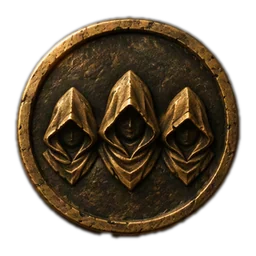
The Hemomancer
Meticulously calm, intensely empathetic yet clinically detached, and possesses a terrifying sense of absolute certainty.
- The Aorta1 member
Supreme leadership and direction of the Accord's grand strategy. Comprised solely of The Hemomancer.
- The Arteries12 members
High Priests and Master Surgeons who oversee regional cells and conduct the most complex blood-rites.
- The Capillaries150 members
The backbone of the organization: rogue mages, field surgeons, and infiltration specialists.
- The Pulse800 members
Laborers, disillusioned peasants, and street-level informants who provide logistics and manual force.
Other key members
- Sister Sybil Chief Surgeon of the Old Sept
- Kaelen the Butcher Master of Enforcers
How they are organised
- Must have experienced a personal loss due to noble negligence
- Must undergo the 'Rite of the First Cut', permanently scarring one's palms
- Willingness to offer a pint of blood monthly to the faction's communal reservoirs
Relations
8 factionsA pact-bound cabal of blood mages that funds the Accord's rituals, supplies relics, and benefits from its orderly purges of rival cults.
Operations
What they do
How they do it
Services for hire
- Hemostatic HealingA service to be named later or a donation of blood.Instantly closing wounds using blood magic.
- Genealogical Verification200 Gold Pieces.Using blood testing to prove or disprove noble lineage.
What they can do
What they have
Where they are weak
Territory
Headquarters
The Ruins of the Old SeptA crumbling, ivy-choked temple dedicated to a forgotten god of the harvest. Below the sanctuary lies a vast laboratory and ritual chamber where the air is metallic with the scent of iron and the walls are etched with glowing, crimson ley-lines.
Lands they hold
Outposts
- The Bleeding BriarEastern BorderlandsA fortified apothecary used for training field mages.
- Cell 7The DocksInfiltration and smuggling of ritual components and abducted nobles.
Secrets
Plot hooks
10 hooks- 1The Ledger Before DawnMediumReward: Faction FavorA Sanguine Accord courier offers a sealed writ promising safe passage through rebel territory if the party retrieves a stolen ritual ledger from a rival cell before dawn.
- 2The Missing InitiatesHardReward: GoldA string of unexplained disappearances traces back to a blood rite meant to awaken dormant sympathizers, and the Accord hires the party to recover the missing initiates alive.
- 3The Red GallowsMediumReward: ContactsThe order needs outsiders to escort a masked prelate to a public execution, where the crowd must be quietly turned into a weapon of propaganda.
- 4Ashes of the SaintHardReward: SecretsA temple archive contains proof that a beloved saint once bargained with the same powers the Accord now serves, and the faction wants the evidence burned or stolen.
- 5False TreasonMediumReward: GoldA noble house is funding anti-Accord militias, and the faction asks the party to ruin the house from within by planting forged evidence of treason.
- 6The Blood Well MapVery HardReward: Magic ItemThe Accord has uncovered a map to an ancient blood well beneath the city, but the route passes through wards that only respond to a living sacrifice or a clever substitution.
- 7Broken DisciplineHardReward: Faction FavorA rogue cell of the Accord has begun killing indiscriminately, threatening the order's fragile discipline, and the party is sent to silence the cell without exposing the movement.
- 8The Zeal SerumHardReward: Spell ScrollsAn imprisoned alchemist has devised a serum that can amplify zealotry, and the Accord wants the party to break them out before the crown can interrogate them.
- 9The Defector's ListMediumReward: InformationA veteran revolutionary plans to defect with the faction's names, ciphers, and safehouses unless the party convinces, coerces, or eliminates him first.
- 10Festival of OathsVery HardReward: Dark BoonThe order seeks a discreet team to perform a blood-bound consecration during a citywide festival, binding hundreds of attendees to an oath they will not remember making.
Work they offer
What gets in the way
Rumours
Media
0 imagesNo images yet.
Turn The Sanguine Accord into a sheet
A high-res, share-ready sheet you can post or print.