Skip to content
CreatePricing
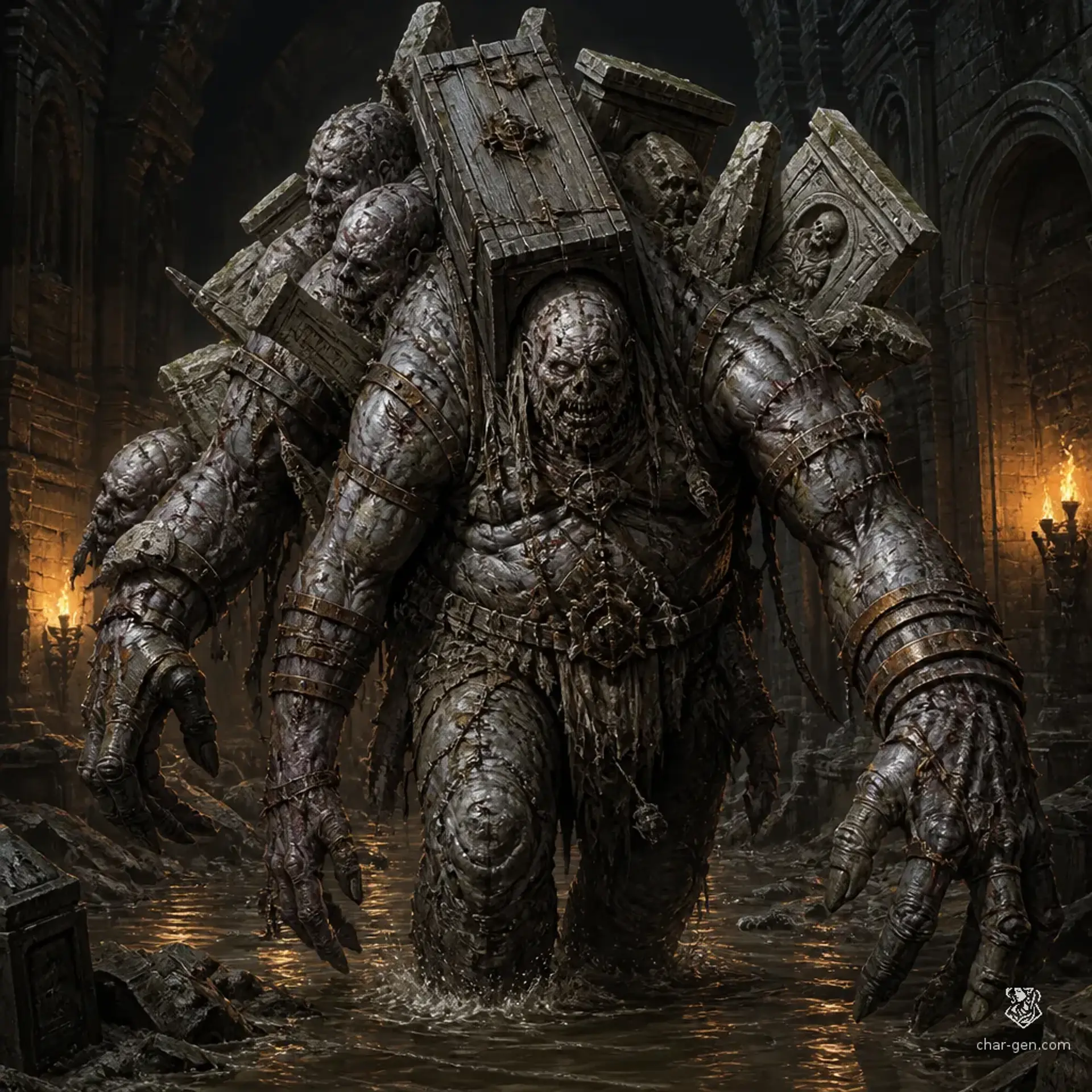
Sepulchral Brute - AI-generated fantasy Monster

Sepulchral Brute

Cult scribes call it a successful failure. The brute was built as a vessel for a bound grave spirit, but the spirit rejected the body and was forced into obedience by repeated funerary rites. The result is a monster that can still hear every burial prayer ever carved into its bones. Some necromancers claim the cracked stone packed into its flesh came from the tomb it was meant to guard, making the brute both prisoner and lock.

Large medium · High · rare

Sepulchral Brute

A coffin-fed undead siege brute stitched together by a cult to guard the deeper necropolis, smash through sealed tombwork, and serve as a living summoning engine for the dungeon's fallen dead.
AC17
HP168/168
CRHigh
Init
STR
DEX
CON
INT
WIS
CHA
ConditionsNone

Combat

AC 17 · HP 168 · High

Sepulchral Brute

Large medium (undead), typically lawful evil
Armor Class17
Hit Points168 (16d12 + 64)
Speed
30 ft.,
climb 20 ft.,
burrow 10 ft. through loose rubble, grave soil, or collapsed masonry
STR
DEX
CON
INT
WIS
CHA
Saving ThrowsConWis
SkillsAthleticsPerception
Damage Resistances
bludgeoning, piercing, and slashing from nonmagical attacks
Immunities
necrotic,
poison,
exhaustion,
poisoned
Weaknesses
radiant damage,
consecrated ground,
effects that prevent grappling or forced movement,
dm adjudicated vulnerability to thunder in heavily cracked chambers
Senses
darkvision 60 ft.,
passive Perception 11
Languages
understands Common and Abyssal but cannot speak
ChallengeHigh
Proficiency Bonus+4
Magic Resistance. The brute has advantage on saving throws against spells and other magical effects.
Grave-Wrought Bulk. The brute can move through a space as narrow as 5 feet wide without squeezing if the space is made of rubble, broken masonry, or collapsed tombwork.
Siege Monster. The brute deals double damage to objects and structures, and its attacks can damage dungeon masonry at the DM's discretion.
Funerary Collapse. When the brute drops to 0 hit points, it collapses into inert coffin plating and stitched remains. Any summoned undead it controls remain for 1 minute unless destroyed earlier.

Actions

Multiattack. The brute makes two Tombstone Maul attacks.
Tombstone Maul. Melee Weapon Attack: to hit, reach 10 ft., one target. Hit: 18 () bludgeoning damage plus 7 () necrotic damage. If the target is Medium or smaller, it must succeed on a Strength saving throw or be knocked prone.
Bone-Rending Grapple. Melee Weapon Attack: to hit, reach 5 ft., one target. Hit: 13 () bludgeoning damage, and the target is grappled (escape ) if it is Large or smaller. Until this grapple ends, the target is restrained, and the brute cannot use Bone-Rending Grapple on another target.
Wall-Breaking Charge. The brute slams into a weakened wall, sealed doorway, or cracked floor section. It destroys up to a 10-foot cube of nonmagical stone, brick, or packed earth that is damaged, cracked, or already weakened by the dungeon's collapse. Creatures adjacent to the destroyed section must succeed on a Dexterity saving throw or take 10 () bludgeoning damage and fall prone. This movement does not provoke opportunity attacks.
Coffin-Feed Summons. Recharge 5-6. The brute cracks open the coffin-panels fused into its back. Each undead creature of its choice within 30 feet that can hear it regains 10 hit points. Then the brute animates grave debris in a 20-foot-radius sphere centered on a point it can see within 60 feet. Each enemy in the area must make a Dexterity saving throw, taking 18 () necrotic damage on a failed save, or half as much on a success. Until the start of the brute's next turn, the area is difficult terrain for its enemies. If corpses, bones, or shattered sarcophagus remains are present, the brute can instead raise 2 skeletons or 1 zombie in unoccupied spaces within the area under its control until destroyed.

Reactions

Closing Grip. When the brute is hit by a melee attack from a creature within 5 feet, it can attempt to grapple that creature if the attacker is Large or smaller. The attacker must succeed on a Strength saving throw or become grappled.

Legendary Actions

Shamble. The brute moves up to half its speed without provoking opportunity attacks.
Coffin Slam (costs 2 actions). The brute makes one Tombstone Maul attack.
Grave Command (costs 2 actions). One undead ally within 30 feet of the brute can use its reaction to move up to its speed or make one melee attack.
Role
Heavy undead brute and battlefield anchor
Built for
7-9

Gear

  • Tombstone Maul (weapon, n/a)A fused slab of coffin wood and funerary stone used as a club
  • Ritual Binding Harness (armor, n/a)Iron coffin straps, reliquary nails, and ritual chains that bind the corpse assembly together

Feats

Siege Monster
Immutable Form
Undead Fortitude
Grave-Born Power

Augmentations

Iron coffin-plating bolted over the torso
Ritual binding chains with funerary sigils
Stone-laced marrow grafts for structural reinforcement

Notes for the game master

The brute is an undead creature.
Grave-Feed Summons is intended to create escalating battlefield pressure rather than replace a full necromancer encounter.
Use nearby broken walls, flooded trenches, and sarcophagi as terrain features the brute can exploit.
If you want a simpler solo fight, remove legendary actions and increase hit points to 190.

Tactics

  1. Opening

    It opens by charging the nearest clustered foes, attempting to knock one prone and seize another with Bone-Rending Grapple. It prefers to fight in narrow halls, collapse-prone chambers, and rooms with broken stone or sarcophagi nearby.

  2. Mid-fight

    At half hit points, it unleashes Coffin-Feed Summons to heal nearby undead or flood the field with skeletons and necrotic rubble. It focuses on isolating a grappled target and dragging them into hazard zones, broken stairs, or flooded sarcophagus pits.

  3. End of the fight

    When bloodied, it becomes desperate and relentless, using Wall-Breaking Charge to crush the strongest-looking intruder into a wall or into the flooded floor. If the party tries to kite it, it hurls itself through terrain to keep the fight close and ugly.

  4. Retreat

    It does not retreat unless its summoning sigil is shattered or its controlling cultist is slain. If the ritual fails, it fights until destroyed, then collapses into a pile of coffin splinters and stitched meat.

How it fights

Advance straight through the most obvious route, forcing the party to respond to its bulk
Use Wall-Breaking Charge to split the party or open flanking lanes for undead allies
Prioritize grappled targets and drag them away from healers or radiance sources
Stand in chokepoints to deny movement and make every round feel like a siege

Who it attacks first

Clustered casters
Healers who can remove conditions or restore allies
Characters carrying holy symbols or radiant damage
Anyone already pushed prone or trapped near a wall

Works well with

Works especially well beside necromancers who can keep its summons alive
Pairs with cultists who use forced movement to push victims into its grapple range
Benefits from lair hazards like collapsing floors, flooded pits, and narrow bridges

How to beat it

Radiant damage and turn undead effects disrupt its momentum
Freedom of movement or teleportation can break its grapple pressure
Forcing it into open ground reduces the value of Wall-Breaking Charge
Thunder damage can exploit already cracked stone and collapse unstable terrain beneath it, though this is a tactical rather than rules-based advantage

Ways to avoid a fight

It can be bargained with if the party knows the burial name etched into the amulet fused beneath its sternum
It may pause before desecrated family tombs or ancestor shrines, allowing stealth or ritual interference
A successful holy consecration of the room can weaken its summoning magic and reduce its battlefield control
If its controlling cultist speaks a command litany, the brute may obey rather than attack, opening a path to the sanctum

Ecology

A towering corpse stitched from several bodies and wrapped in iron bands, the Sepulchral Brute wears half a coffin like a shell of armor. Its ribcage is bolted shut with reliquary nails, its arms are oversized funeral slabs of muscle and bone, and fragments of carved masonry are fused into its flesh like grave-marker plates. Old tomb dust drifts from every step. When it moves, the seams in its body leak muddy water, ash, and chanting whispers from the cult that made it.

Behavior

The Sepulchral Brute is slow, methodical, and monstrously direct. It does not waste motion. It advances like a funeral procession, then explodes into violence when prey enters range. It reacts poorly to radiant displays and holy symbols, but it is especially dangerous in cramped necropolis corridors where it can pin enemies against cracked masonry.

How it lives

Created in the crypt-vats beneath the necropolis, the brute is assembled from battlefield dead, burial stone, and whatever remains the cult could steal from sealed tombs. It is often stationed near flooded ossuaries, broken stairwells, and inner sanctum approaches where its bulk can defend chokepoints and its summoning magic can replenish lesser undead.

Lair

The brute prowls the lowest accessible necropolis corridors, especially where the floor has sunk, the walls are bowed inward, and the cult's summoning circles are carved into the stone. Its lair often includes a collapsed chapel, a broken stair landing, or a flooded burial hall with smashed sarcophagi serving as battlefield cover.

Habitat
Flooded tomb corridors, collapsed burial vaults, chapel crypts, ossuary intersections, and the inner sanctum's cracked foundation chambers

Signs that it is near

Fresh cracks spiderweb across nearby stone with no obvious cause
Wet tomb dust falls from ceilings when it approaches
The sound of chains dragging is heard before any footsteps
Sarcophagi are found smashed from the inside
Undead in the area become unnaturally still, as if listening

Tags

undead,
necropolis,
cult,
summoning,
brute,
siege,
guardian

Lore

Cult scribes call it a successful failure. The brute was built as a vessel for a bound grave spirit, but the spirit rejected the body and was forced into obedience by repeated funerary rites. The result is a monster that can still hear every burial prayer ever carved into its bones. Some necromancers claim the cracked stone packed into its flesh came from the tomb it was meant to guard, making the brute both prisoner and lock.

What drives it

Protect the cult's inner ritual chamber, gather fresh dead for the summoning engine, and crush any intruders who threaten the sanctified architecture holding it together.

After the fight

When it falls, the coffin-panels split open and the stitched cadavers inside spill out with a smell of wet stone and old incense. Any surviving cultists may scramble to recover its cracked amulet, which can reveal the layout of the deeper sanctum or the ritual key used to bind it.

“The brute was built as a vessel for a bound grave spirit, but the spirit rejected the body and was forced into obedience by repeated funerary rites.”
From its lore

Variants

Coffin Colossus, a larger siege version with higher hit points and slower speed
The Buried One, a half-buried sentinel that bursts from floors instead of walking
Sepulchral Brute Prime, a boss-bound version with one additional legendary action per round

Hooks

Plot hooks

The party hears masonry cracking in the dark long before the brute appears, suggesting something huge is tunneling toward them
A missing grave keeper claims the cult is rebuilding the dead into something that remembers how to break walls
The inner sanctum can only be reached through a collapsed passage guarded by a coffin-shaped shadow that never stops moving
A cracked sarcophagus in the chapel crypt contains the brute's original face, and destroying it may free the creature or make it more vicious

How to use it

Use as a mid-dungeon guardian after the party has beaten the necropolis sentries and cult acolytes
Best in a chamber with broken walls, sarcophagi, or floor hazards so Wall-Breaking Charge changes the battlefield
Pair with necromancers, cult fanatics, or weaker undead to make the brute a mobile anchor for the enemy line
Works well as a reveal monster when the dungeon itself seems to move, crack, or breathe before the brute emerges

Treasure

A cracked funerary amulet bearing the cult's summoning seal
A reliquary key that fits a deeper sanctum lock
1d4 black pearls worth 50 gp each sewn into the coffin harness
A prayer strip that reveals the name of a buried saint or forgotten patron

Media

0 images

No images yet.

Visual sheet

Turn Sepulchral Brute into a sheet

A high-res, share-ready sheet you can post or print.