Oskar Finsterfinger
Oskar Finsterfinger
At the table
Voice
A quick, slightly winded voice with the dry edge of someone used to talking over market noise. His consonants are crisp when he recites figures and titles; his vowels broaden when he imagines Hinterwald's future. In anger he gets more forceful and rapid, not quieter, and often interrupts himself to add another justification.
His voice has a forward-thrown, slightly breathless quality, as if he has started speaking while still hurrying across a room. Years of bargaining have trained him to land key words cleanly and leave space for an answer. He clips numbers and dates into crisp little units, then lets civic aspirations swell into elaborate sentences. When grief catches him, his phrasing turns plain and practical.
Speech patterns
How to play them
Begin with warmth, a remembered detail, and an offer to be useful. Oskar responds well to practical advice framed as a way to make his plans succeed. If challenged bluntly, he blusters; if shown a clear cost or a person who would be harmed, he may reconsider, especially if the argument echoes his late wife's plainspoken reasoning.
Goal
Win a formal charter and establish a permanent market square that will make Hinterwald a recognized town within Wodenreich.
Motivation
He wants to prove that a peasant-born family can shape the future of a town, and to make the place worthy of the people who live there.
Appearance
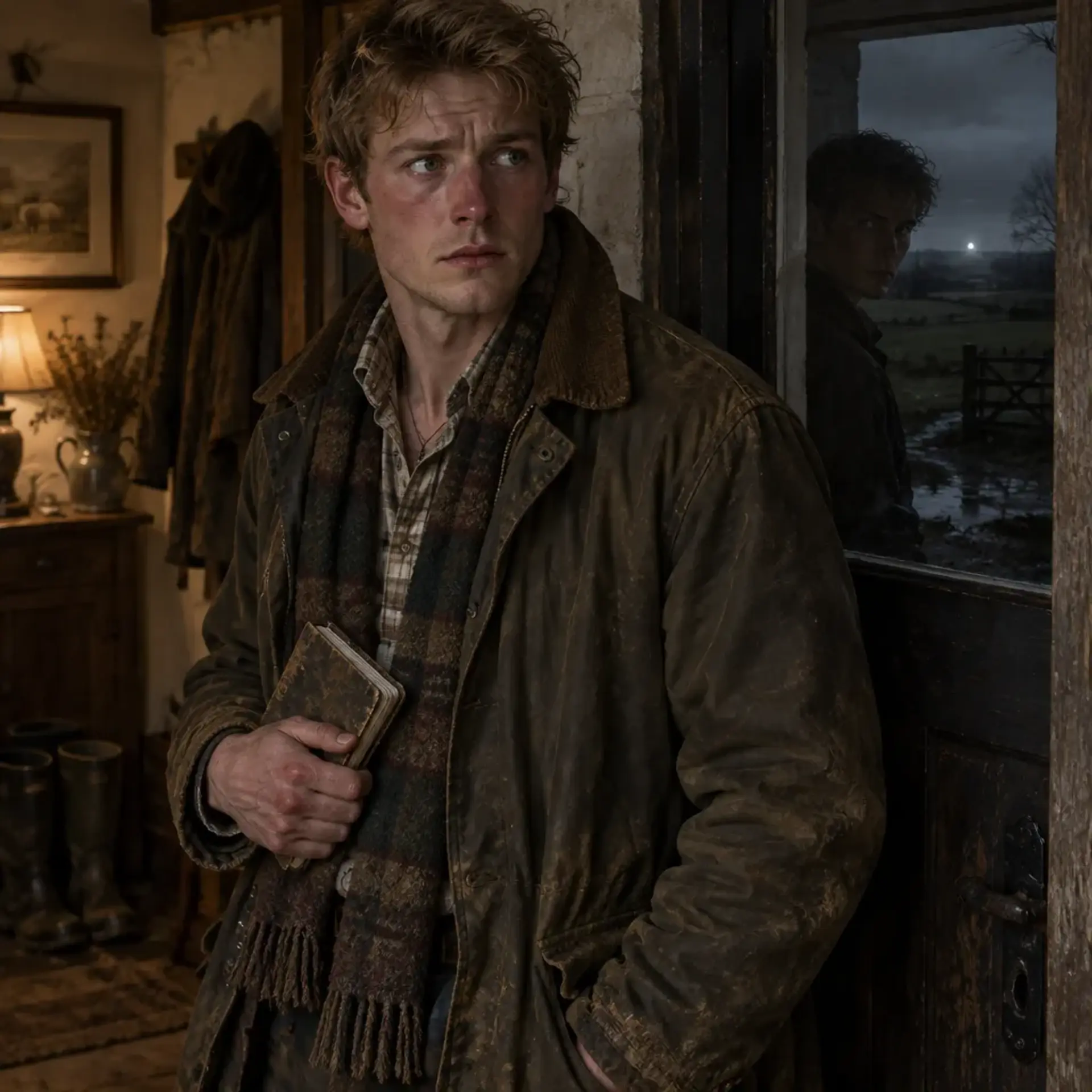
Oskar has the carefully assembled look of a man who expects to be assessed at a glance. His fine coat sits stiffly across his shoulders, its velvet nap rubbed shiny at the elbows, while the hem is perpetually freckled with pale road dust. He walks with a brisk, forward-leaning stride, turning his whole torso toward whoever has caught his attention, as if every passerby might be a prospective ally. His hands are broad and blunt, with a merchant's ink stains caught around the nails; he smooths his cuffs when nervous and gestures as though laying out invisible plots of land. The unexpected detail is a tiny painted wooden duck pinned inside his lapel, visible only when his coat shifts. It was carved by his younger son, and Oskar insists it is a good-luck charm.
Clothing
A dark plum velvet coat with tarnished brass buttons, a cream waistcoat, polished boots, and a high collar chosen to imitate the dress of Wodenreich's better-connected officials. The tailoring is respectable but dated, and he keeps a folded handkerchief tucked conspicuously in one cuff.
Body language
He advances half a step when pitching an idea and opens both hands as if presenting a deed. When someone challenges his figures, his shoulders square and his thumb begins rubbing the worn edge of his signet ring. In private grief, he goes still and presses the little wooden duck through his coat.
- Height
- 5 feet 8 inches
- Build
- Average height and solidly built, with a soft middle earned by comfortable meals rather than hard labor.
- Eyes
- Hazel brown
- Hair
- Dark brown, thinning at the temples and carefully combed into place.
- Skin
- Weathered fair skin, ruddy across the nose and cheeks.
- Age
- 45
- Gender
- Male
- Size
- Medium
Distinguishing features
Personality
14 traits and drivesOskar is outgoing and generous with attention, yet his confidence often outruns his evidence. He loves a bold plan and genuinely wants ordinary residents to prosper, but he can mistake being admired for being trusted. In public he is expansive and buoyant; under pressure he becomes argumentative and brisk. When alone with someone he trusts, especially Ernst, he can admit uncertainty, though he usually disguises it as a request for better figures.
- Alignment
- Lawful neutral, with a sincere civic streak and a willingness to bend a rule when he thinks the town needs it.
Quirks
Habits
Traits · 3
Flaws · 4
Fears · 3
Wants and needs · 4
Combat
AC 10 · HP 4 · 30 ft.Oskar avoids combat. He tries to talk down a threat, put a table or other obstacle between himself and danger, and escape toward witnesses or the nearest occupied building. If cornered, he uses his walking stick to create an opening and flees.
Oskar Finsterfinger
Actions
Reactions
Services they sell
Rewards they can give
Equipment
- Walking stick (adventuring gear)A polished wooden walking stick with a brass knob. It is more useful for balance and emphasis than for fighting.
- Council finery (clothing)A well-kept but visibly worn velvet coat and waistcoat, chosen to resemble the clothing of minor nobility.
- Signet ring (personal)A signet ring bearing the family mark, worn smooth at the edges from habitual rubbing.
- Civic papers (documents)Council minutes, rough plans for a market square, and estimates with several figures still to be verified.
- Wooden duck charm (keepsake)A small painted duck tucked inside his lapel, a keepsake from Friedrich.
Possessions
Background
Oskar's parents were prosperous traders who made their living supplying farmsteads and timber camps around Hinterwald. They raised him to be a substantial man in a small place: taught him figures, introductions, and the art of sounding certain before anyone had asked a question. He entered the town council believing that ambition and good accounts could make Hinterwald a proper town of Wodenreich. His wife, whose practical judgment kept his grand schemes honest, used to ask who would pay for each improvement and who would be left carrying the burden. When fever took her a few years ago, Oskar lost not only his partner but the one person who could puncture his confidence without humiliating him. His elder son, Ernst, now serves as town clerk and often has to turn his father's promises into workable minutes and budgets. His younger son, Friedrich, rejected the family’s privileges and chose fishing; their affection survives, but their arguments about status and obligation do not. Oskar is currently pushing for a proper market square and a more formal charter while trying to keep the council from noticing how little money is actually available.
Role in the story
A driven civic power-broker and potential patron whose ambitious projects can improve the town but also create debt, friction, and opportunities for the characters to intervene.
“He entered the town council believing that ambition and good accounts could make Hinterwald a proper town of Wodenreich.”
- Faction
- Hinterwald town council; the Finsterfinger family trading interests.
Known connections
Media
0 imagesNo images yet.
Turn Oskar Finsterfinger into a sheet
A high-res, share-ready sheet you can post or print.