Tamas
Tamas
At the table
“That may be lawful. I am not yet convinced it is fair.”
Voice
His voice has the dry rasp of a man who spends long hours reading aloud in rooms full of dust and damp paper. Consonants land cleanly, as if each has been checked against a form. When a matter touches someone vulnerable, the rasp catches and his words come quicker, betraying how personally he takes the hearing.
He speaks in carefully separated clauses, shaped by reading testimony aloud and by years of listening for the exact word a frightened person means. When tired, river-town vowels return and his sentences become more direct. He does not raise his voice to dominate a room; he repeats a question more plainly.
Speech patterns
How to play them
Tamas is courteous but not ingratiating. He explains what authority he has, asks permission before examining personal belongings, and records promises aloud so nobody can later claim he invented them. Earn his trust by being candid about uncertainty; pressure or flattery makes him retreat into formal procedure.
Goal
Reopen the warehouse-fire case with enough reliable evidence to secure a lawful review, while protecting the living people still entangled in it.
Motivation
To make justice understandable and usable by ordinary people, not merely correct in the language of the court.
Appearance
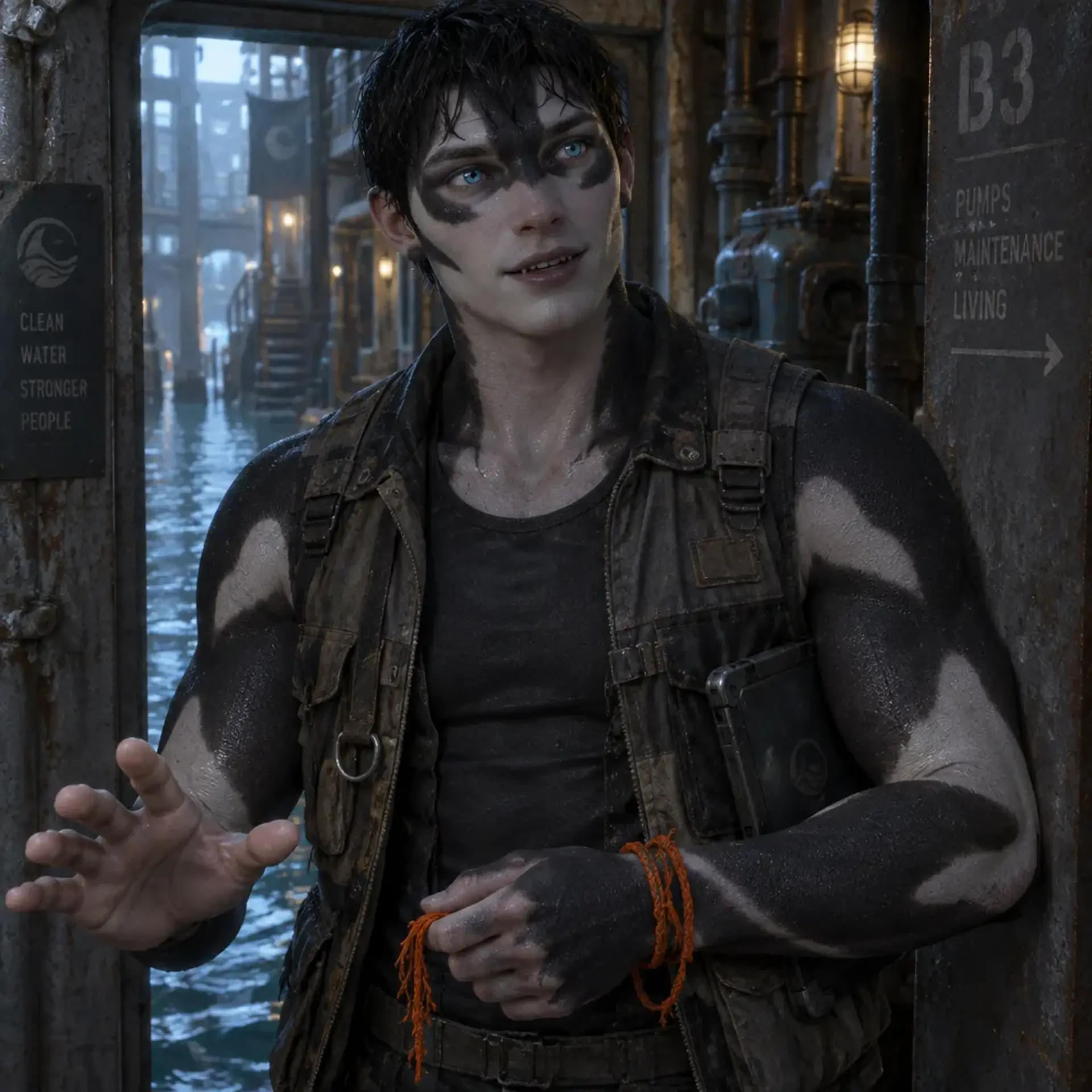
Tamas is a young human man with a narrow, attentive face and a posture that seems to keep an invisible desk between him and the world. He moves in small, deliberate turns, as if giving every person and doorway a fair hearing. His palms are faintly ink-stained, and the pads of his fingers have calluses from years of sorting damp petitions and pressing seals. A brass pocket astrolabe hangs at his belt, its thumb wheel worn smooth on one side from nervous use; people often notice it before they notice his official badge. Despite his sober office, he keeps a tiny paper kite folded inside his sleeve, an unexpectedly childish keepsake from his little sister.
Clothing
A charcoal wool coat with a high collar, a plain blue sash marking his office, a weatherproof capelet, and boots polished more often at the toes than the heels. His cuffs are clean but ink has worked into the seams.
Body language
In public, Tamas squares his shoulders and keeps both hands visible on the table. When unsure, he rubs the worn side of his astrolabe wheel with his thumb. He leans forward when someone describes a practical hardship, then catches himself and sits upright when he realizes others are watching.
- Height
- 5 feet 9 inches
- Build
- Lean and slightly angular, with the sturdy forearms of someone who has carried boxes of paper
- Eyes
- Dark hazel, with a habit of tracking hands while people speak
- Hair
- Dark brown, cut short and usually flattened by rain or his court cap
- Skin
- Warm olive with a faint gray cast from too many indoor hours
- Age
- Twenty-four
- Gender
- Male
- Size
- Medium
Distinguishing features
Personality
12 traits and drivesTamas wants to be impartial, yet cannot stop himself from rooting for the person least able to navigate the room. In a calm hearing he is methodical and almost dry; when someone is frightened, he becomes unexpectedly warm and forgets to hide his sympathy. Under pressure he turns rigidly formal, then privately regrets the distance he created.
- Alignment
- Lawful good, though he is learning that legality and justice can diverge
Quirks
Habits
Traits · 3
Flaws · 3
Fears · 3
Wants and needs · 3
Combat
AC 13 · HP 9 · 30 ft.Tamas avoids initiating violence. He uses his short sword only to defend himself or another person, favors retreating toward cover, and calls for witnesses or guards when possible. He tries to end a fight by making the consequences clear rather than trading blows.
Tamas
Actions
Reactions
Services they sell
Rewards they can give
Equipment
- Shortsword (weapon)A well-maintained simple blade carried as a sidearm, not a badge of authority.
- Light hammer (weapon)A light hammer used as a tool and, if necessary, a backup weapon.
- Court insignia (badge)A blue sash and brass seal case identifying him as a junior magistrate.
- Pocket astrolabe (personal keepsake)The brass instrument's wheel is polished smooth where his thumb worries it.
- Clerk's satchel (tools)A small writing kit, blank forms, wax, and a packet of copied case notes.
Possessions
Background
Tamas grew up above his mother's copy shop in the river town of Bellweather, where he learned to read from discarded court notices and learned that a badly copied name could ruin a life. His mother, Dalia, taught him patience with the frightened; his older mentor, magistrate Oren, taught him to distrust any account that arrived already polished. At seventeen, Tamas witnessed a grain-warehouse fire blamed on a dockworker who could not read the confession put before him. Tamas found the confession had been copied from an unrelated case, but the accused had already been condemned. That failure changed his ambition: he studied law not to become powerful, he decided, but to make the process legible to people who had none. Newly appointed as a junior magistrate, he now handles petitions, minor disputes, and preliminary hearings while trying to reopen that old case. His relationship with Oren is strained because the older man urges caution, while Tamas sees caution becoming a convenient excuse. Meanwhile, his mother is being pressured by a property assessor to sell the copy shop, and his sister Neri writes him cheerful letters that conceal how much she needs help.
Role in the story
A principled but inexperienced official who can open doors to records and lawful remedies, while the unresolved case tests whether he can act before certainty becomes an excuse.
“At seventeen, Tamas witnessed a grain-warehouse fire blamed on a dockworker who could not read the confession put before him.”
- Faction
- Junior officer of Bellweather's municipal court; increasingly at odds with its cautious senior magistrates
Known connections
Media
0 imagesNo images yet.
Turn Tamas into a sheet
A high-res, share-ready sheet you can post or print.