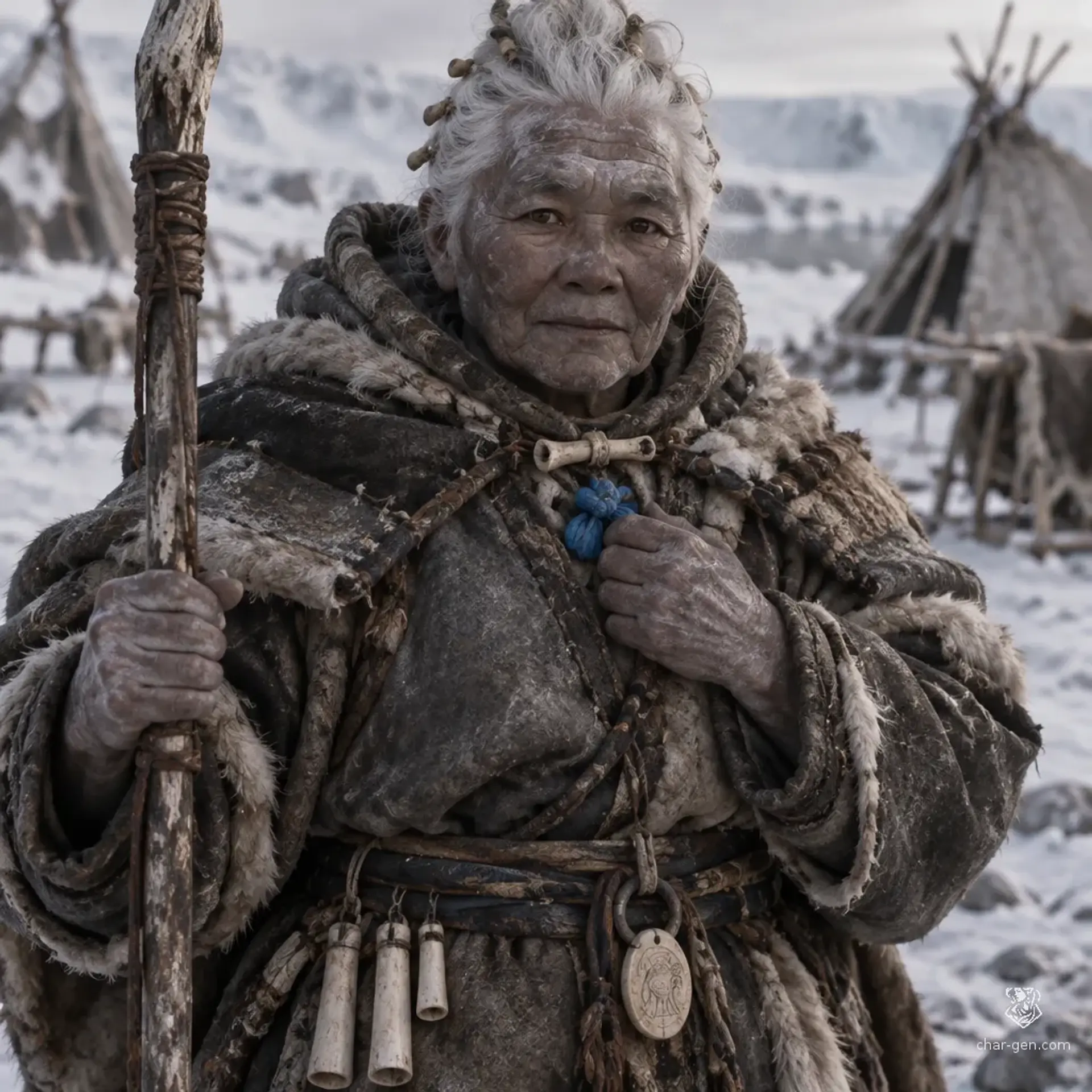
Uru White-Comb
Uru White-Comb
At the table
Voice
A dry, carrying rasp shaped by cold air, long-distance calls, and years of keeping rhythm with hollow bone. Each phrase begins with a small intake through the nose, then lands in firm, separated beats. When grief catches them, the cadence falters rather than softening.
Uru's words have the dry, clipped rhythm of someone used to calling directions through wind. They favor concrete nouns and verbs, often turning warnings into repeated beats that a crowd can carry. In private, their sentences lengthen and circle back, especially when speaking about the lost.
Speech patterns
How to play them
Begin with practical questions about supplies, routes, and who might be left behind. Uru warms to people who give clear answers and make room for disagreement. They distrust requests to perform the famous chant as entertainment, but may use it to protect a group.
Goal
Establish shared winter stores and reliable thaw-warning routes among the scattered clans before the next warm season.
Motivation
To make survival depend on shared preparation and mutual care rather than the authority of omens.
Appearance
Uru is compact and broad through the shoulders, with weather-roughened grey skin stippled by pale patches where years of wind-driven ice have scoured it. Their white hair is combed upright into a stiff crest bound with small bone toggles, each clicking softly when they turn their head. They walk with a careful, heel-first test of every surface, yet when the old chant takes them they plant their staff and seem suddenly immovable. Within a minute of meeting anyone, most people notice Uru repeatedly checking the knot on a tiny, brightly dyed scrap of cloth tied beneath their collar, an unexpectedly tender keepsake on a famously hard war singer.
Clothing
Layered seal-hide and coarse woven wraps, patched with strips of felt; a bone toggle fastens the throat, and a hood is usually pushed back to keep the crest visible.
Body language
Uru keeps their shoulders squared against imagined weather and angles their body toward the nearest exit or high ground. Their thumb checks the hidden cloth-knot whenever someone invokes prophecy, and their staff taps twice before they begin a chant.
- Height
- 4 feet 8 inches
- Build
- Short, broad-shouldered, and densely muscled from travel and carrying winter stores
- Eyes
- Dark brown, with a steady, assessing gaze
- Hair
- White
- Skin
- Stone-grey, weather-roughened and pale-stippled where wind-driven ice has scoured it
- Age
- About 58 years
- Gender
- Nonbinary
- Size
- Small
Distinguishing features
Personality
12 traits and drivesUru is blunt about danger but unexpectedly patient with frightened children and anyone learning the old routes. They distrust grand certainty, yet take pride in the force their own chant can command. In a crisis they become brisk and directive; afterward they are self-questioning, sometimes to the point of refusing praise.
- Alignment
- Neutral good
Quirks
Habits
Traits · 3
Flaws · 3
Fears · 3
Wants and needs · 3
Combat
AC 11 · HP 7 · 25 ft.Uru avoids prolonged fighting. They use the staff to keep attackers at a distance, rally allies into an orderly retreat, and choose firm ground over dramatic positions. They will stand their ground only long enough to get others to safety.
Uru White-Comb
Actions
Reactions
Services they sell
Rewards they can give
Equipment
- Thaw-walking staff (weapon)A sturdy staff used for probing snow and keeping opponents at reach.
- Bone chant kit (musical instrument)A bundle of hollow bone tubes and carved clappers used to mark the chant's rhythm.
- Keepsake cloth (personal)A small blue scrap, carefully knotted and kept out of sight.
Possessions
Background
Uru was born among the Halli, The Grey Ones, in a bone-tribe camp that moved with the herds and the reliable freeze. They learned chants from their grandmother, who used rhythm to keep children stepping together through whiteouts. During the disastrous thaw, a chain of warm rains broke the old ice roads and sent clans, stores, and burial grounds sliding into floodwater. Uru had argued for days that the elders' occult augury was leading the people toward a doomed crossing. When the augurs insisted, Uru answered with a blunt anti-occult war chant, naming practical landmarks and rally points instead of spirits. Scattered clans followed the beat, found high ground, and survived; Uru became famous, though the chant could not save their younger sibling, who vanished in the flood. Since then Uru has opposed divination that claims certainty, but privately fears that their own warning came too late. They now travel between camps, trying to reconcile the survivors with the augur families and persuade them to prepare shared winter stores. Their closest ongoing tie is to a former augur who still disputes Uru's account but sends them news of threatened camps.
Role in the story
A celebrated survivor whose anti-occult chant once united scattered clans. Uru can guide the party through thaw-country, provide a grounded account of the disaster, and draw them into the unresolved question of who was lost and who was left behind.
“They learned chants from their grandmother, who used rhythm to keep children stepping together through whiteouts.”
- Faction
- A famous singer of the Halli, The Grey Ones, and a respected but sometimes contentious voice among the bone-tribe survivors.
Known connections
Media
0 imagesNo images yet.
Turn Uru White-Comb into a sheet
A high-res, share-ready sheet you can post or print.