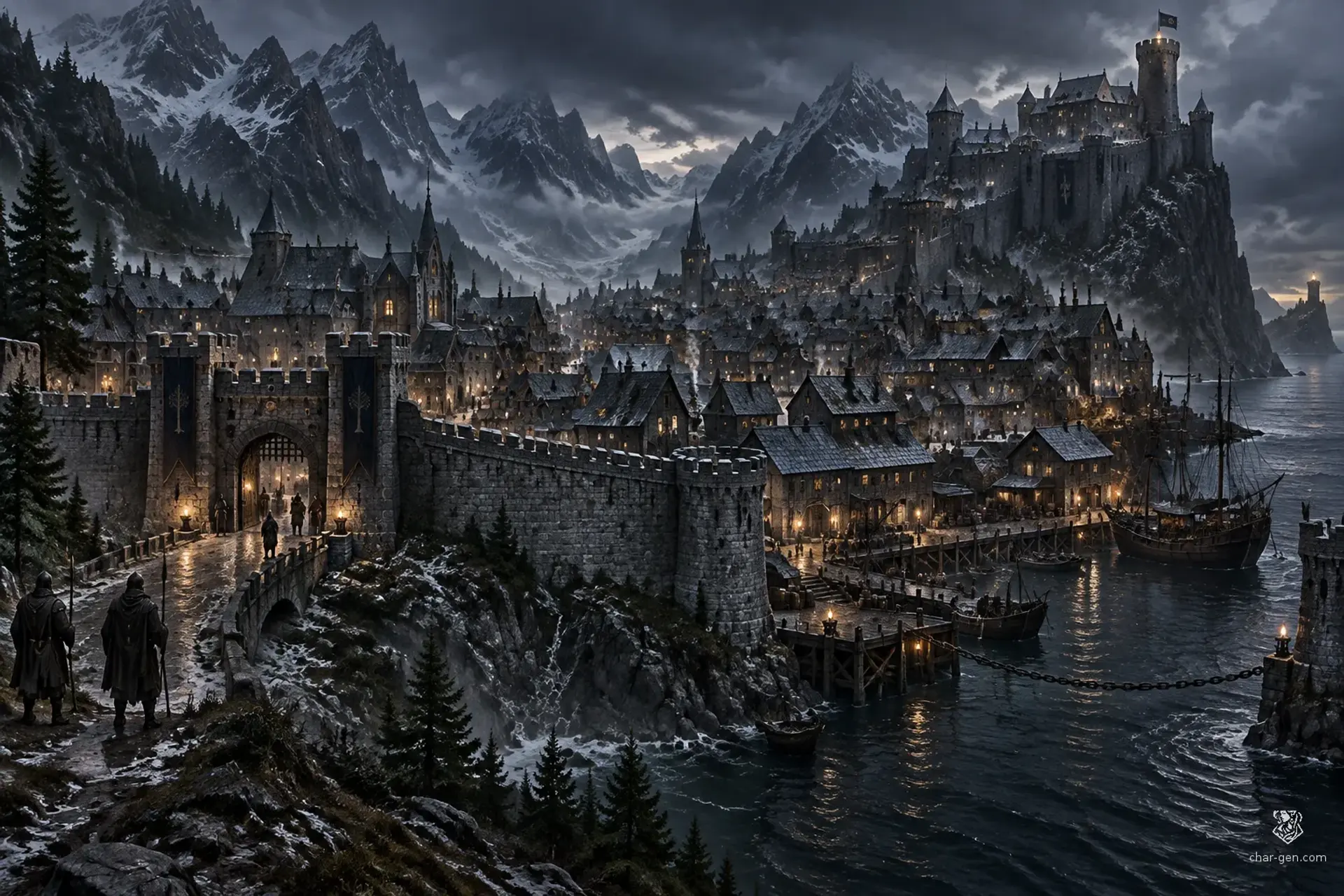
Wallbruch
Wallbruch stands in the only broad break between two jagged mountain ranges on this stretch of eastern coast. Its road gate faces inland, where forest tracks and a difficult pass meet the shore route. The dark sea gives the city a harbor, while the mountains shelter its docks from the worst winds. Stone streets climb from the pier toward the central market and northern citadel. The city survives by controlling passage, and by recording what passage costs.
Wallbruch
- Population
- 12,000
- Rule
- Governor Tseren Koba
- Wealth
- Uneven
- Defence
- Wallbruch Watch
Overview
Wallbruch stands in the only broad break between two jagged mountain ranges on this stretch of eastern coast. Its road gate faces inland, where forest tracks and a difficult pass meet the shore route. The dark sea gives the city a harbor, while the mountains shelter its docks from the worst winds. Stone streets climb from the pier toward the central market and northern citadel. The city survives by controlling passage, and by recording what passage costs.
Atmosphere
Wallbruch is a city that keeps its shutters barred even when the weather is calm. Salt wind carries coal smoke through the narrow streets, and the mountain walls make every bell sound close. The harbor never quite sleeps, but its workers speak softly around the gate clerks. In winter, wet rope freezes to the pier and the market stones shine black. People here measure safety by who holds the ledger.
Culture
- The Hearth Mother, honored in household shrines
- The Lantern Saint, invoked by sailors and travelers
- The Quiet Judge, worshiped by clerks and those seeking fair measure
Humans, Dwarves, Half-orcs, Halflings
Economy
Harbor handling, Blacksmithing, Fish curing, Caravan toll collection
Salted fish, Iron fittings, Mountain timber, Transit permits
Grain, Lamp oil, Medicinal herbs, Wool and finished cloth
Geography
Ways in and out
Places to see
- Central MarketA wide cobbled square where the city posts ration allotments and toll changes. On market days, traders from the pass and the harbor compete for the same dry ground.
- Harbor PierThe long wooden pier reaches into dark water and is lined with cargo sheds, weather tents, and mooring posts. At night, watch lanterns mark the safe boards, though storms often tear them loose.
- The Split ViewA narrow stone stair climbs to a ledge above the northern wall. From there, travelers can see the mountain pass, forest edge, and harbor entrance at once.
Power
3 factionsGovernment
Laws
Trouble
- Dead names are blocking living families from food and safe passage.The ledger lists several residents as dead while their families remain charged for the deceased person's unpaid transit debts. The gate clerks have begun refusing permits to those households, and a cold spell is closing the pass. The governor will not suspend the entries without proof of fraud, but the relevant original books are held in the citadel archive.Involves
Tseren Koba, Salia Shesh, Guram Ketsk
- The city may lose its winter grain while officials argue over procedure.A weakened harbor chain has jammed halfway up. The Pier Union wants the city to unload urgent grain before repairs; the Ledger Office refuses to admit cargo without a complete tally. A storm is forecast, and a ship waiting outside could be driven onto the rocks.Involves
Jabari Mtemi, Tseren Koba
Factions
- The Ledger OfficeCivic clerksThe Gate Ledger Office controls transit records, tolls, and the official declaration of who is owed what. Its clerks insist the system prevents famine by making every obligation visible. Its most powerful members work from the town hall and consult the citadel's old books.GoalsKeep the debt ledger as the legal basis for gate access and food allotments, even if doing so means recognizing inherited debts.Allies
Wallbruch Watch
RivalsThe Open Hand, Pier Union
- The Open HandMutual-aid fellowshipA loose fellowship of healers, householders, and market sellers who maintain an unrecorded mutual-aid store beneath the hospital. They believe the city can ration supplies without making families answer for debts incurred generations ago. Their members conceal the store's scale from officials.GoalsEnd inherited debt claims and secure food and medicine as public rights, directly challenging the Ledger Office's authority.Allies
Pier Union
RivalsThe Ledger Office
- Pier UnionLabor associationThe dock crews elect speakers who bargain over cargo, wages, and access to the pier. They can halt unloading quickly, but their households depend on the same toll system that they oppose. Some crews accept ledger advances in winter, giving officials leverage over their members.GoalsWin control over harbor tolls and refuse to unload cargo seized to satisfy household debts.Allies
The Open Hand
RivalsThe Ledger Office
Defences
- A curved stone wall encloses the city, with a heavily guarded southwestern gate.
- The northern citadel is built against the cliff, with a round watchtower commanding the harbor and mountain pass.
- A chain boom can be raised across the inner harbor mouth, though its winch is badly worn.
Law and order
People and places
12 entriesGovernorTseren Koba Human Male
A formal governor who keeps his gloves on indoors and studies every document before answering.
Pier Union speakerJabari Mtemi Human Male
A dock speaker who wears a length of blue rope around one wrist and watches the harbor mouth while talking.
Herb and provisions sellerDalia Vash Halfling Female
A market seller who counts change twice and keeps a small notebook tucked into her apron.
Road courierThabo Human Male
A lean courier with a stiff left hand, who whistles passer's tunes when nervous.
ProvisionsThe Last Measure Kept by MosiA narrow provisions shop beside the central market sells dried fish, flour, lamp oil, and travel rations. Its owner keeps the shutters half closed even at midday and quietly sets aside goods for households struck from the official allotment lists.
ChandlerySail's End Kept by Zuri SengoA cramped chandlery near the harbor sells rope, hooks, tar, and patched sailcloth. The owner keeps a small stool outside for sailors waiting on permits and listens to their accounts of the coast. She refuses to sell the best rope to the Ledger Office until it pays an old harbor bill.
TavernThe Bent Mast Kept by FikruA low-ceilinged harbor tavern built from ship timbers, with benches scarred by knives and old cargo marks. Its windows face the pier, so everyone can see when a vessel arrives. The keeper serves hot stew late into the night and sometimes lets stranded travelers sleep in the loft.
TavernThe Quiet Slate Kept by NadiyaSet in an old stone counting house just off the market, this tavern is warmer and quieter than the harbor rooms. Its tables are popular with people who need to talk without being overheard from the street. The keeper tolerates unpaid meals for children, but writes every adult's name on a slate.
CitadelThe High Keep Run by Guram KetskThe citadel occupies the northern cliff and overlooks the city, pass, and harbor. Its round watchtower is visible from the outer road. The archive beneath the old barracks holds original toll books, including records from the years surrounding the Closed Gate. Its doors are guarded but its lower vault floods at spring tide.
Town hallThe Toll Hall Run by Salia SheshThe town hall faces the central market and houses the council chamber, permit desks, and public rolls. Residents queue beneath a carved stone arch showing a ship passing through a mountain cleft. The council hears disputes here twice each week, but the clerks decide which documents qualify for a hearing before anyone reaches the chamber.
HospitalThe Market Infirmary Run by Beka NjoroThe hospital stands beside the market so carts can reach it from both the gate road and the harbor. Its narrow wards are crowded in winter, and patients' families often sleep in the covered courtyard. The building receives a fixed fuel allotment from the city, though its staff quietly stretch that supply with reclaimed ship timber.
ForgeThe Split Anvil Run by Kato GichuThe forge sits on a cobbled lane between the market and the outer ring. Its smoke blackens the stone above the door, and its bellows can be heard from the harbor in still weather. The smith repairs cart axles, anchor fittings, and gate hinges, but has recently refused work on the harbor chain until the city settles a dispute with the dock crews.
Events
Lately
- Several households were denied their winter grain allotment after old debt entries reappeared in the public rolls.The Open Hand has gained support, while the governor's office is blamed for letting clerks decide who eats.
- A harbor chain winch failed during a routine test.Ships are waiting outside the harbor, and the Pier Union has threatened to stop unloading until repairs and wages are guaranteed.
- A sealed archive door in the High Keep was found wet from within.Rumors say the tide reached a locked record room, but Guram Ketsk has barred the lower stairs.
Calendar
- First thawOpening of the RollsThe harbor office opens the sealed winter cargo accounts in the central market. Merchants come to dispute fees while the gate wardens check names against the debt rolls.The twist · GM only
- Midsummer eveLantern TideDockhands and inland traders share food at the pier, then light small lamps for those lost at sea or in the mountain passes.The twist · GM only
- Last day before winterWinter MeasureThe town hall announces which outer wards will receive firewood, grain, and hospital coal before the roads close.The twist · GM only
History
Wallbruch began as a guarded pass station and became a port because the mountain gap gave caravans and ships a rare shared route. Its toll charter once kept grain moving through hard winters. Over generations, the emergency accounts became a permanent civic instrument. The city tells this as a story of prudent survival. Its oldest songs remember that officials used the same books to decide who was allowed to leave.
- Founding yearsThe First GatePass traders founded a toll station where the mountain road met the coast. The first families built shelters around its storehouse, then the harbor grew as ships sought a protected landing.
- Two centuries agoThe Winter AccountA winter storm destroyed the old pier and stranded caravans inside the pass. The city survived by issuing grain on credit, a decision later cited as the beginning of its debt ledger.
- Forty years agoThe Closed GateThe official account says the governor's predecessor closed the gate during a fever to protect Wallbruch. Old dock songs instead claim the gate stayed shut to keep unpaid laborers from escaping, and that the dead were entered in the ledger before the sickness arrived.
Secrets
2 secrets · 5 rumours- Secret 1 · GM only
- Secret 2 · GM only
Rumours
Plot hooks
4- 1The Page Below the TideSalia Shesh asks the party to retrieve a missing page from the flooded archive beneath the High Keep. The page can challenge the disputed debt entries, but it also records which council families profited when the gate was closed. Recovering it may clear one household and implicate another.
Investigation · Starts with Salia Shesh · Reward: A cleared transit debt, access to the archive, and a favor from the Open Hand
- 2Grain Before the StormJabari Mtemi asks the party to help bring a grain ship through the jammed harbor chain before the storm. The chain's damaged winch can be repaired, but a Ledger Office inspection will reveal that the cargo was pledged to pay several old debts. The crew will unload only if the party can protect them from seizure.
Negotiation and emergency · Starts with Jabari Mtemi · Reward: A share of the cargo, dockside allies, or a harbor passage without toll
- 3A Witness at the GateDalia Vash has found a living witness who can prove an entry was altered, but the witness is currently held at the southwestern gate as a debtor. The governor will hear testimony only if it is delivered in person. The complication is that freeing the witness may void a separate household's claim to winter food.
Rescue and civic dispute · Starts with Dalia Vash · Reward: Market supplies, a public hearing, and a written travel permit
- 4The Key That Was Not LostThe chain key hidden by Kato Gichu has vanished, and the harbor chain is stuck as another ship approaches. The party can search the forge, union stores, or the watch station, but the key was taken by someone trying to force a public confrontation. If the chain is raised at the wrong moment, the ship will be trapped outside in the storm.
Investigation and crisis · Starts with Kato Gichu · Reward: A repaired set of equipment, the Pier Union's support, or a favor from the governor
Media
0 imagesNo images yet.
Turn Wallbruch into a sheet
A high-res, share-ready sheet you can post or print.
