Lake and Rail
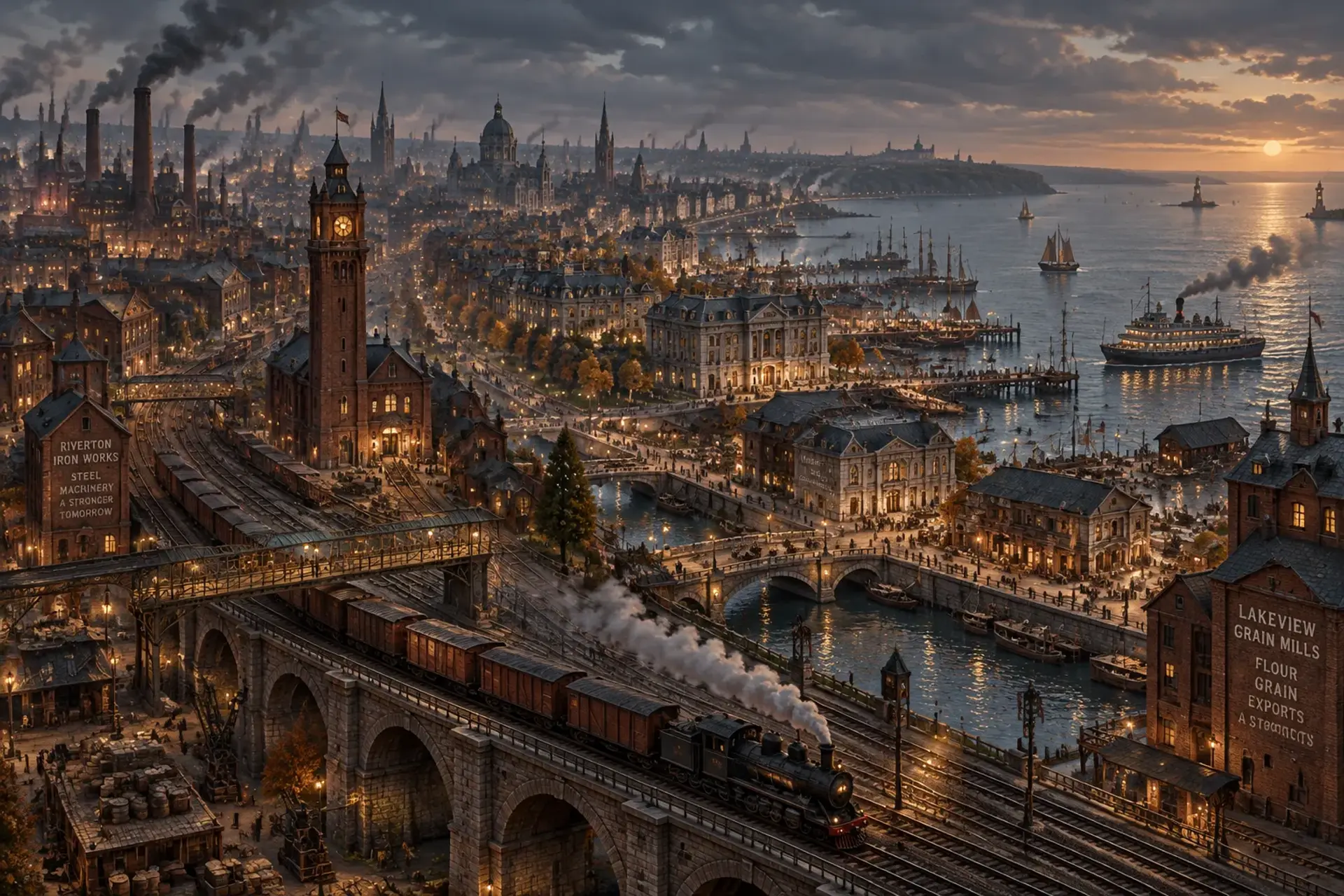
Lake and Rail occupies the eastern shore of a broad inland lake, with the waterfront bending north and southeast around deep natural harbors. Wealthy homes and customs offices face the water; commerce and crowded housing spread west through a grid cut by rail lines. The city grew by joining rival dock towns and inland depots. Its defining truth is that the public timetable doubles as a hidden system for deciding which wards prosper.
Lake and Rail
- Population
- 180,000
- Rule
- Mayor Delya Morcant
- Wealth
- Wealthy overall
- Defence
- Lake Guard
Overview
Lake and Rail occupies the eastern shore of a broad inland lake, with the waterfront bending north and southeast around deep natural harbors. Wealthy homes and customs offices face the water; commerce and crowded housing spread west through a grid cut by rail lines. The city grew by joining rival dock towns and inland depots. Its defining truth is that the public timetable doubles as a hidden system for deciding which wards prosper.
Atmosphere
Lake wind carries coal smoke west from the yards, while the eastern avenues smell of wet stone, fish, and expensive horse tack. Trains divide the day into punctual bursts: shutters rise when the first line passes, arguments pause for the whistles, and workers know which neighborhoods are being favored by how often their cars arrive. Residents speak of the timetable as if it were weather. It is not weather.
Culture
- Local lake and hearth traditions
- The Lantern Creed
Humans, Dwarves, Halflings, Elves
Economy
Rail transport, Ship repair, Metalworking, Grain storage and milling
Machinery and rail fittings, Processed fish, Grain and flour, Furniture
Coal, Fine cloth, Spices, Timber
Geography
Ways in and out
Places to see
- North Shore WalkA long public promenade follows the northern harbor. Its stone benches carry plaques for ship captains, while the older dockworkers' names survive only in weather-worn chalk marks beneath the railings.
- West YardA maze of switching tracks and freight sheds west of the central wards. At shift change, workers cross on marked footbridges while private guards watch the cargo gates. A disused signal box still has a clear view of the route used during the flood.
Power
3 factionsGovernment
Laws
Trouble
- A rail cut threatens westward wages and housing.The westward line serving the densely populated Foundry Ward is slated for reduced service just as several factories expand their shifts. The mayor could order an emergency review, but the dispatch board can claim the change follows property assessments. Residents suspect that the timetable is being used to force families out before a land purchase.Involves
Delya Morcant, Ewan Pell, Niko Sato
- Missing cargo ties a recent fire to old emergency decisions.A harbor warehouse has burned, and the surviving cargo ledger lists shipments that never appeared in customs records. The mayor fears that an investigation will reveal that city officials diverted trains during the last flood. Dockworkers fear being blamed for a decision made above their rank.Involves
Delya Morcant, Ailis Vale, Bran Osei
Factions
- The Eastern Shore BoardProperty and shipping interestA circle of dock owners, property holders, and senior clerks who meet quietly before each timetable revision. They claim that dependable service protects the city's tax base. Their members are rarely seen together in public, but their signatures recur on land transfers near new stops.GoalsKeep passenger and freight priority close to the lakefront and ports, where their properties and warehouses stand.Allies
Lake Guard
RivalsWest Ward League
- West Ward LeagueCivic reform coalitionResidents, small shopkeepers, and ward organizers who demand that rail service be allocated by need rather than property value. They have won public meetings and petition drives, but few seats on the dispatch board. Their support is strongest in the blocks where missed trains mean missed wages.GoalsMake service and repairs follow population and public need, even if that cuts profitable lakefront runs.Allies
The Switchmen's Union
RivalsThe Eastern Shore Board
- The Switchmen's UnionLabor unionThe Switchmen's Union includes signal crews, track hands, and dispatch clerks. Members know which trains are delayed by weather and which are held by instruction. They can keep the city moving or bring it to a halt, but a stoppage risks leaving ordinary passengers stranded along the lines.GoalsSecure worker control over dispatch records and prevent the board from using schedules to punish entire wards.Allies
West Ward League
RivalsThe Eastern Shore Board
Defences
- Stone customs posts guard the eastern docks.
- Iron gates can seal the rail cuts between the central wards.
- A watch platform overlooks the harbor approaches.
Law and order
People and places
11 entriesMayorDelya Morcant Human Female
A human mayor with a silver streak in her dark hair, she folds her gloves into precise squares when listening.
Ward organizerAilis Vale Halfling Female
A halfling organizer with a quick step and a habit of pinning petitions to her coat rather than carrying a folder.
Union clerkEwan Pell Human Male
A human rail clerk with a crooked tie and a grease pencil tucked behind one ear.
Teacher and ward statisticianNiko Sato Human Male
A human schoolteacher who chalks train times onto the slate outside his classroom and wears one cuff neatly mended in red thread.
Harbor inspectorGwyneth Fenn Dwarf Female
A dwarf inspector with a weather-cracked face, a brass measuring rule, and a habit of smelling cargo seals before opening them.
Hardware storeBent Rail Supply Kept by Mairi DunnA narrow hardware shop squeezed between a repair shed and a freight entrance. Its shelves are organized by what breaks most often: hinges, stove parts, signal wire, and cheap locks. The owner knows which neighborhoods are being renovated because contractors buy in bulk before a timetable change is announced.
Provisions shopTwo Piers Provision Kept by Orrin PikeA tea and provisions counter near the southeast port, frequented by ferrymen and clerks waiting for cargo papers. The shelves hold dependable staples rather than luxuries. Its owner keeps a chalkboard of ferry and rail delays, ostensibly for customers, though the notes are often more accurate than official notices.
TavernPier and Hook Kept by Toru KellsA low-ceilinged tavern near the southeast harbor, built from timber salvaged after a pier collapse. The room is loud when shifts change and watchful after dark. Regulars leave one chair empty for workers caught on delayed trains, a custom that began as a joke and now marks who has not made it home.
TavernTrack and Slate Kept by Pella WynA narrow tavern on the edge of the western commercial district, with a long window facing the tracks. The drinks are plain and the food is filling. At every passing train, conversation stops for a moment as patrons check whether it slows at the platform. The keeper treats that pause as a kind of local prayer.
Civic hallGrain Exchange Hall Run by Tamsin RookThe council meets in a former grain exchange, where the broad public chamber sits below cramped committee rooms. Residents can attend hearings but must pass through a narrow entry watched by clerks who decide which petitions reach the agenda. Mayor Delya Morcant keeps her office here, with a map of the rail network pinned behind her desk. The map is updated less often than the public timetable.
Rail officeSignal House Run by Cerys BellThe dispatch offices occupy a brick tower above the central rail junction. From the upper windows, clerks can see the northbound line, the southeast port spur, and the western freight yards. Citizens are allowed into the lobby, but not onto the signal floor. The board says the locked doors protect safety; Switchmen say they keep decisions from being witnessed.
Events
Lately
- A westward passenger line lost two daily runs without a public hearing.Factory workers are arriving late, and residents suspect the closures are intended to depress local property values.
- A warehouse fire destroyed records and a shipment awaiting customs clearance.Dockworkers face suspicion, while the harbor office is quietly searching for a missing ledger.
Calendar
- First thaw, 3rd dayTimetable DayThe rail companies and ward clerks publish the spring timetable at the central platform. Crowds gather to see which districts get the earliest freight and passenger runs. The announcement is also a chance for residents to challenge errors in their assessed property values, but only if they can reach the clerk before the platform closes.The twist · GM only
- Midsummer, 18th dayThe Roll of NamesDock families hold a lakeside meal to remember those lost in the flood years. Fishmongers give away small portions, and the mayor is expected to read the names of the dead. The event is usually calm, though rail workers use the gathering to make public complaints that are otherwise kept off the platforms.The twist · GM only
History
Lake and Rail formed when rival harbors joined to survive a bad winter. Its prosperity came from linking water trade to inland rail, but the public story of shared growth hides a steady transfer of control to dispatchers and property owners. The flood relief timetable remains a sore point: the official version credits decisive leadership, while old records suggest a deliberate choice about whose goods and lives were moved first.
- Founding generationThe Joined HarborsTwo rival dock settlements agreed to join after a winter storm wrecked both harbors' stores. Their councils insisted on equal representation, a promise that later vanished when rail investors began choosing routes.
- Thirty years agoThe Flood TimetableA flood forced the city to run relief trains west, carrying families away from the lakefront. Official accounts say the schedule was improvised by the mayor. A surviving dispatch clerk's copy suggests the route was planned weeks earlier, after wealthy owners had already moved their goods.
- Twenty years agoThe Westward TracksThe city extended its rail grid through the western wards, promising regular passenger service in exchange for land and labor. Freight trains arrived as promised; passenger service became intermittent, setting the pattern residents still argue over.
Secrets
2 secrets · 4 rumours- Secret 1 · GM only
- Secret 2 · GM only
Rumours
Plot hooks
3- 1The Empty PlatformAilis Vale asks the party to attend a public hearing and present evidence that westward passengers are being stranded. The obvious evidence is a stack of missed-train reports. The complication: several reports were filed by workers who deliberately held doors open, and exposing them could cost the union its strongest supporters.
Civic dispute · Starts with Ailis Vale · Reward: A ward's public support, useful contacts among rail workers, and a modest fee from the council.
- 2Ashes in the LedgerGwyneth Fenn hires the party to inspect the burned warehouse before its remains are cleared. They will find signs of an intentional fire and a false cargo seal. The complication: the missing shipment was diverted to feed flood refugees, and the person who ordered it was protecting families, not enriching themselves.
Investigation · Starts with Gwyneth Fenn · Reward: A harbor permit, a share of recovered cargo, and leverage with the customs office.
- 3The Clerk's CopyEwan Pell wants the party to escort a switch worker carrying original dispatch records to a hearing. The complication: the records prove the board manipulated service, but they also show that union members cooperated in one diversion. Publishing them may force reform while splitting the labor movement.
Political intrigue · Starts with Ewan Pell · Reward: Union aid, safe passage through the yards, and access to rail schedules.
Media
0 imagesNo images yet.
Turn Lake and Rail into a sheet
A high-res, share-ready sheet you can post or print.
