
Best AI Video Model for Fantasy in 2026: Early Results
Find the best AI video model for fantasy through CharGen's early blind ranking, with current costs, sample limits and a fair test for D&D scenes.
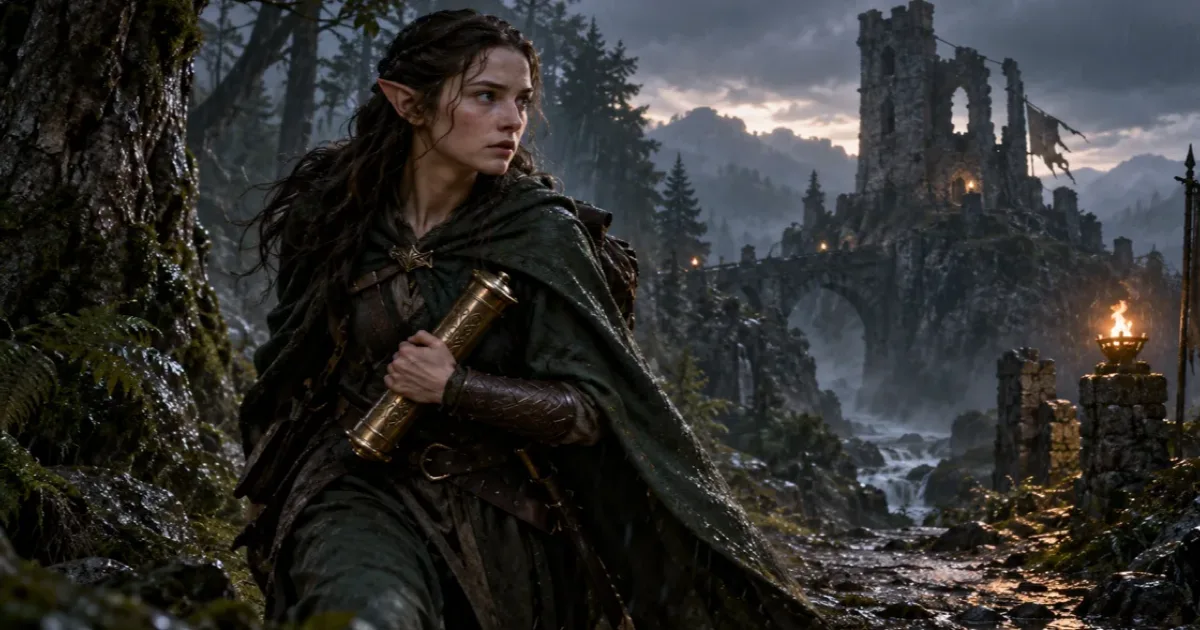
The best AI video model for fantasy remains unsettled. CharGen's VIDEO board listed 24 models and 18 counted preferences on 5 October 2026. HappyHorse 1.1 led at 1,032 Elo from four counted battles. That gives us a useful starting point, not a final winner.
I would be cautious with any ranking built from a small sample. One pair of clips can move a model near the top. A later choice can move it again. I ask a narrower question. Which model should I test for this shot and budget?
The live CharGen video model leaderboard gives me a public place to start that check. It shows each model's rating, counted record, task and listed Gold cost. Its methodology page explains how anonymous pairwise choices change the ratings. Both matter more than a single rank.
Best AI video model for fantasy: what the board says
The figures below are a snapshot of the VIDEO task on 5 October 2026. CharGen listed 24 models and 18 counted preferences. These six rows have at least two counted battles. “Gold per run” is the typical listed cost at the time of checking.
| Model | Elo | Record | Counted battles | Win rate | Typical Gold per run |
|---|---|---|---|---|---|
| HappyHorse 1.1 | 1,032 | 3 wins, 1 loss | 4 | 75% | 30 |
| Kling 3.0 Pro | 1,029 | 2 wins, 0 losses | 2 | 100% | 70 |
| Wan 3.0 | 1,027 | 2 wins, 0 losses | 2 | 100% | 50 |
| Kling 1.6 (Pro) | 1,001 | 1 win, 1 loss | 2 | 50% | 50 |
| Grok Imagine Video 1.5 | 999 | 1 win, 1 loss | 2 | 50% | 55 |
| Seedance 2.5 | 999 | 1 win, 1 loss | 2 | 50% | 125 |
HappyHorse 1.1 has the highest rating in this group and the most counted battles. Kling 3.0 Pro has won both of its counted battles. That record comes from only two results. A perfect record from two choices gives me less confidence than a lead built over dozens of tests.
The board also contains models with no counted battles. An untested row is not a poor result. It is no result yet. MiniMax H3 and Veo 3.1 had no counted video battles in this snapshot. I would mark either “not enough votes” and run a direct test if it suits the job.
The listed costs change how I shortlist models. HappyHorse 1.1 costs 30 Gold per run in this snapshot. Kling 3.0 Pro costs 70. Seedance 2.5 costs 125. Those figures do not measure visual quality. They help me estimate the cost of a test with several retries. Check the live row before you spend, because model pricing and availability can change.
Why 18 preferences cannot name one winner
The board uses blind pairwise choices. Two available models receive the same prompt through their normal CharGen generation paths. The model names stay hidden while the voter compares the outputs. A vote can favour A, favour B, count both as poor, or be skipped. The full Arena method explains which results change a rating.
Models start at 1,000 Elo. A counted win, loss or tie changes ratings with a K-factor of 32. The rating considers an opponent's current rating, so the score is not a simple total of wins. “Both poor” stays useful as product feedback, but it does not add a win. A skipped comparison does not affect the rating.
That method gives a structured preference signal. It does not give a lab score for every kind of fantasy video. The board has a small sample, users choose the prompts, and each model may have met a different opponent. A score of 1,032 cannot show if a model keeps a scar on a moving face. It also cannot show if it puts a sword in the correct hand.
There is another limit: a vote chooses between two clips. It does not prove that the preferred clip is ready to publish. Both clips may have missed the prompt. A blind winner can still need editing, another generation, or a simpler shot. I use the vote to decide what to test next, not to skip review.
Choose a model for the shot you need
Fantasy video mixes several hard jobs. A slow camera move across a stone hall is different from a duel with fast weapon movement. A close-up of one character asks for face stability. A dragon crossing a village asks for scale, motion and background consistency. One overall rank cannot describe all those needs.
For a character close-up, write down the features that must remain fixed. Name the hair, clothing, face marks, equipment and screen position. Look for changes between the beginning and end of the clip. A model that makes one striking frame but changes the character halfway through may not suit a recurring hero.
For action, simplify the shot before judging the model. Give one character one clear movement and one camera instruction. A clear action is easier to assess. For example: “The guard turns, raises a lantern and steps back.” A paragraph with five characters fighting in a collapsing tower is harder to assess. Count whether the model follows the movement in order.
For world shots, check composition and scale. State where the camera starts, where it moves, and what remains in the foreground. If the image is a map-like establishing shot, ask whether the walls, road, bridge or shoreline stay legible through motion. A beautiful opening frame does not guarantee a useful full clip.
For table cutscenes, consider the final use. A clip that will play on a phone needs a clear subject in a narrow frame. A clip used behind a virtual tabletop may need a wide crop and a quiet loop. Set the output shape and duration before judging colour or detail. Otherwise, a model may win a test that does not match your session.
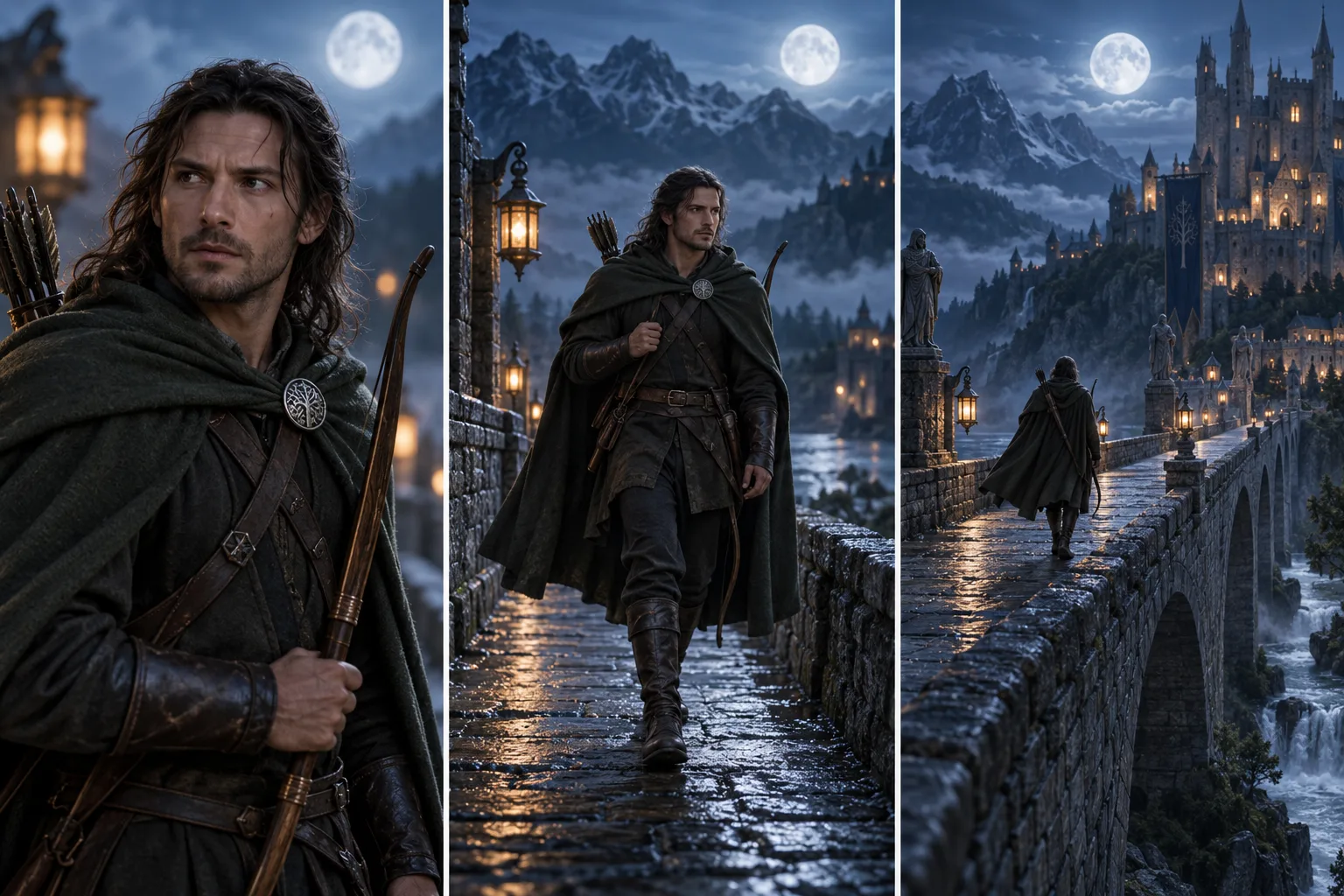
I would score each clip on five points: prompt accuracy, identity continuity, motion, camera control and repair effort. Use a simple 0-to-2 score for each. Zero means it failed, one means it needs repair, and two means it worked for the shot. Add the generation cost beside the score. That gives me a practical comparison without pretending the result is universal.
A useful note separates the model result from the scene brief. Write down the intended format before you compare. For a six-second session intro, I care about one clear movement, a legible face, and a clean final frame. I would score that clip differently from a looping background or a token animation. A general leaderboard cannot show which detail matters most to your table.
Record a visible failure in plain language. “The brooch disappears after the turn” is easier to compare than “bad continuity”. This can also reveal a prompt problem. If both models lose the brooch at the same moment, simplify the brief or shorten the shot. If only one loses it, record that as a model-specific result. Keep the original prompt so you can repeat the check.
Set a stop rule before you spend Gold. For example, make one clip with each finalist and allow one retry only when you can name a visible defect. If neither meets the brief, stop and revise the scene. Do not keep spending because a board rank suggests that a model should succeed. A fixed test budget leaves Gold for the rest of your prep.
Fantasy prompts also invite too many details. A dragon, a crowd, a storm, a camera orbit, and a speech line can compete for attention. Test the subject and movement first. Add weather or background activity only after the core action works. This gives you a cleaner comparison and makes the failure easier to fix.
Run a fair fantasy video test in CharGen
Start by opening the VIDEO leaderboard. Confirm that the board is on the video task. Read the rating beside the counted record. The total at the top is the board's sample size, not a promise that every listed model has been judged. Open the model row to check its listed run cost before you plan repeated generations.
For your own comparison, choose one short scene. Keep the prompt, duration, aspect ratio, seed or reference image consistent where the product supports those controls. Do not change a character description for one candidate and the camera move for another. If a setting is unavailable for a model, write that down instead of silently changing the test.
If your goal is a finished session intro, read the AI video cutscene guide for D&D. It covers the wider workflow. The leaderboard compares models. The guide helps you plan and assemble a clip.
Here is a test brief I would use for a recurring D&D character:
A scarred half-elf courier in a dark green cloak crosses a rain-soaked stone bridge at night. Keep the same face, silver brooch and leather satchel throughout. The camera follows from behind, then moves to a side view as the courier turns towards a distant orange lantern. Slow steps, restrained movement, no extra people.
That brief gives me visible checks. Does the scar stay in place? Does the satchel remain on the same shoulder? Does the courier cross the bridge before turning? Does the camera move as requested? I can answer those questions more clearly than “Does this feel cinematic?”
Run each candidate once. Rerun only clips that fail for a reason you can name. Record the date, model, prompt, controls and Gold spent. Add one sentence about the result. If a model needs five retries and another works on the first run, record that. The difference matters when you prepare six shots before game night.
Do not add every experimental clip to a campaign gallery. Keep the chosen output, a short note and the prompt that produced it. For a larger scene, split the action into shots and check continuity between the exported clips. A video model may not remember the character from the previous generation unless you provide a supported reference.
What new video releases tell us
Model announcements can help you decide what to test, but a provider's feature list is not a head-to-head result. Google DeepMind's Veo model page describes reference-image and camera-control features in its current product information. Those details may suit a shot that needs a steady subject or a planned camera path. The page does not show how Veo compares with the other models in CharGen's current fantasy votes.
ByteDance's Seedance 2.5 announcement describes longer one-take generation and flexible reference inputs. That is useful context if you need a longer scene or must keep a visual element in view. CharGen's board lists Seedance 2.5 at 999 Elo from two counted battles in this snapshot. Its provider's feature claims and its small preference sample answer different questions.
When a new model appears, I check three things. Is it available for the task I need? What is its current run cost? How many relevant comparisons does it have? Then I write a test that uses the feature named in the release note. A reference-image model should get a reference image. A camera-control model should get a specific move. Otherwise I am not checking the advertised feature.
If the board has no votes for a new model, I may test it. I do not call it the best model without results. With one or two votes, I treat its rating as provisional. New entries add choice. The board needs matching prompts and more voters to show a stable preference.
Budget for attempts, not only one generation
The number beside “Gold per run” is a useful starting point. It is not the full budget for a scene. If a model costs 70 Gold per run and I need three takes, I should plan for about 210 Gold. A 30 Gold model would cost about 180 Gold over six attempts. The cheaper run does not always mean the cheaper finished clip.
CharGen's pricing page lists 10 daily Gold on the free plan. Text generators are unlimited and do not use Gold. Image, video, audio and session processing use Gold, with the cost shown before creation. A short comparison can use the daily amount quickly, especially when I test several models or rerun clips. Check the current pricing and model cost before you start.
I would test the scene in stages. Begin with one model that has a useful board signal and one lower-cost candidate. Keep the prompt short. If both miss the key action, rewrite the brief before adding another model. If one preserves the character but misses the camera move, adjust the camera instruction once. The point is to identify the cause, not spend Gold collecting near-duplicate failures.
For a campaign, reuse successful prompts as shot templates. Keep stable details in one block, then change only the location or action. That makes the next comparison easier to read. It also helps me tell whether the model changed the character or the prompt did.
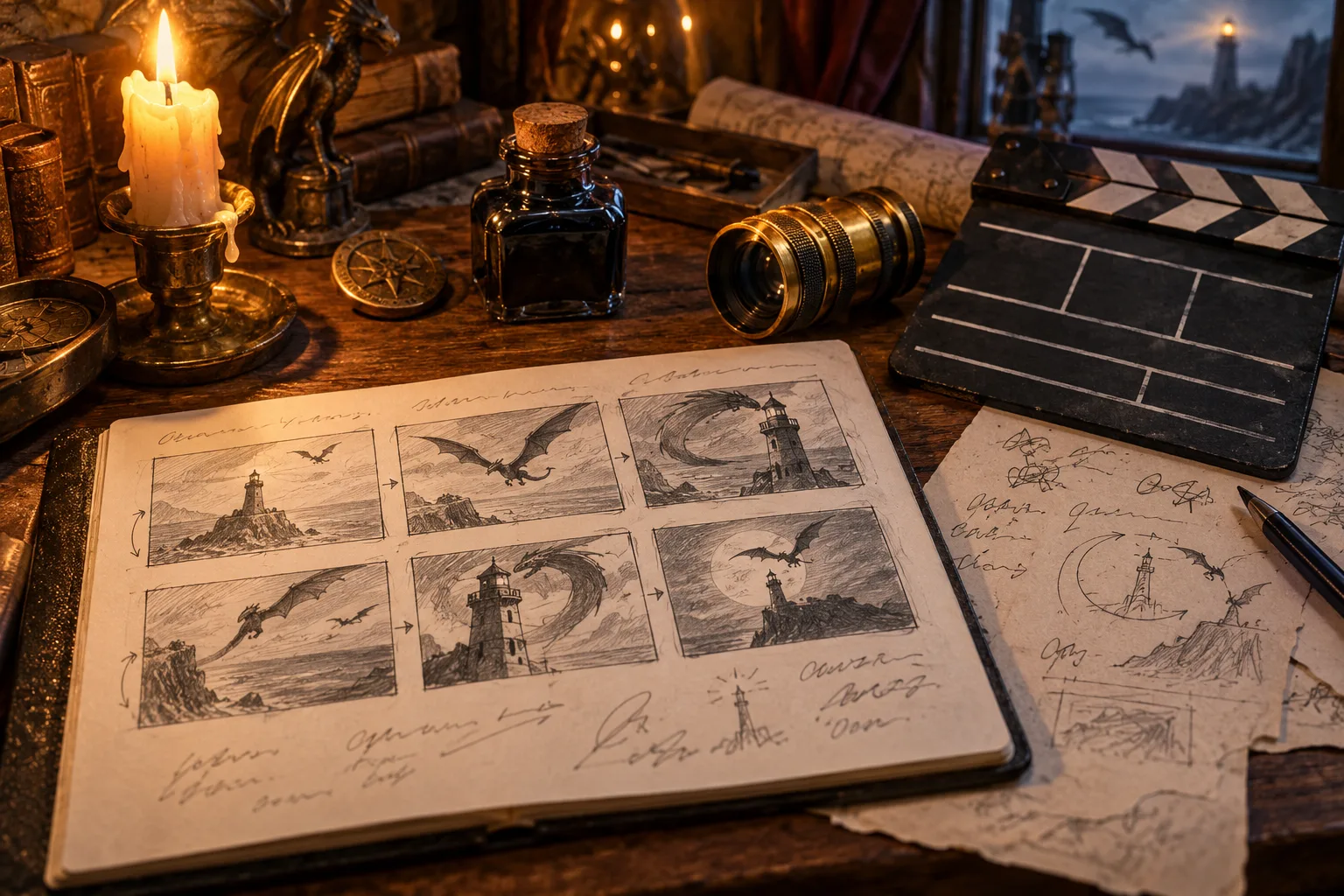
The early verdict for fantasy video
HappyHorse 1.1 leads the current CharGen video board at 1,032, with four counted battles. Kling 3.0 Pro is close at 1,029 from two battles and has won both. Wan 3.0 follows at 1,027 from two battles. Those samples are small. The board has 18 counted preferences across 24 listed models, so there is no stable universal winner yet.
For a quick shortlist, test HappyHorse 1.1, then compare Kling 3.0 Pro with Wan 3.0. Both have two wins from two battles, and Wan 3.0 has the lower listed cost in this snapshot. These results are small. The live table cannot settle Kling versus MiniMax today. MiniMax H3 has no counted video battles. Run the same brief for both and record cost and repair effort.
The best AI video model for fantasy follows your shot brief at a cost you can repeat. Use CharGen's live video leaderboard to check today's rows. Then judge the clip you need for your campaign. Keep the vote count beside the model name. On a board this small, that is part of the answer.
Compare current video model resultsFrequently asked questions
- Which AI video model is best for fantasy in 2026?
- CharGen's video board currently places HappyHorse 1.1 first at 1,032 Elo. It has four counted battles. Treat that as an early preference signal. Check the live vote count before you choose.
- Is Kling 3.0 Pro better than MiniMax H3 for fantasy video?
- The current CharGen board does not answer that comparison. Kling 3.0 Pro has two counted battles. MiniMax H3 has none on the video task. The board has no direct head-to-head evidence for them.
- How should I compare AI video models for a D&D scene?
- Give each model the same scene, duration, aspect ratio and reference image when supported. Compare character continuity, motion, camera control and prompt accuracy. Record retry cost, the count and the date.
- Does CharGen's video model ranking show objective quality?
- No. The board records blind pairwise preferences. Ratings can move quickly with a small sample. Read each score with its vote count and task.