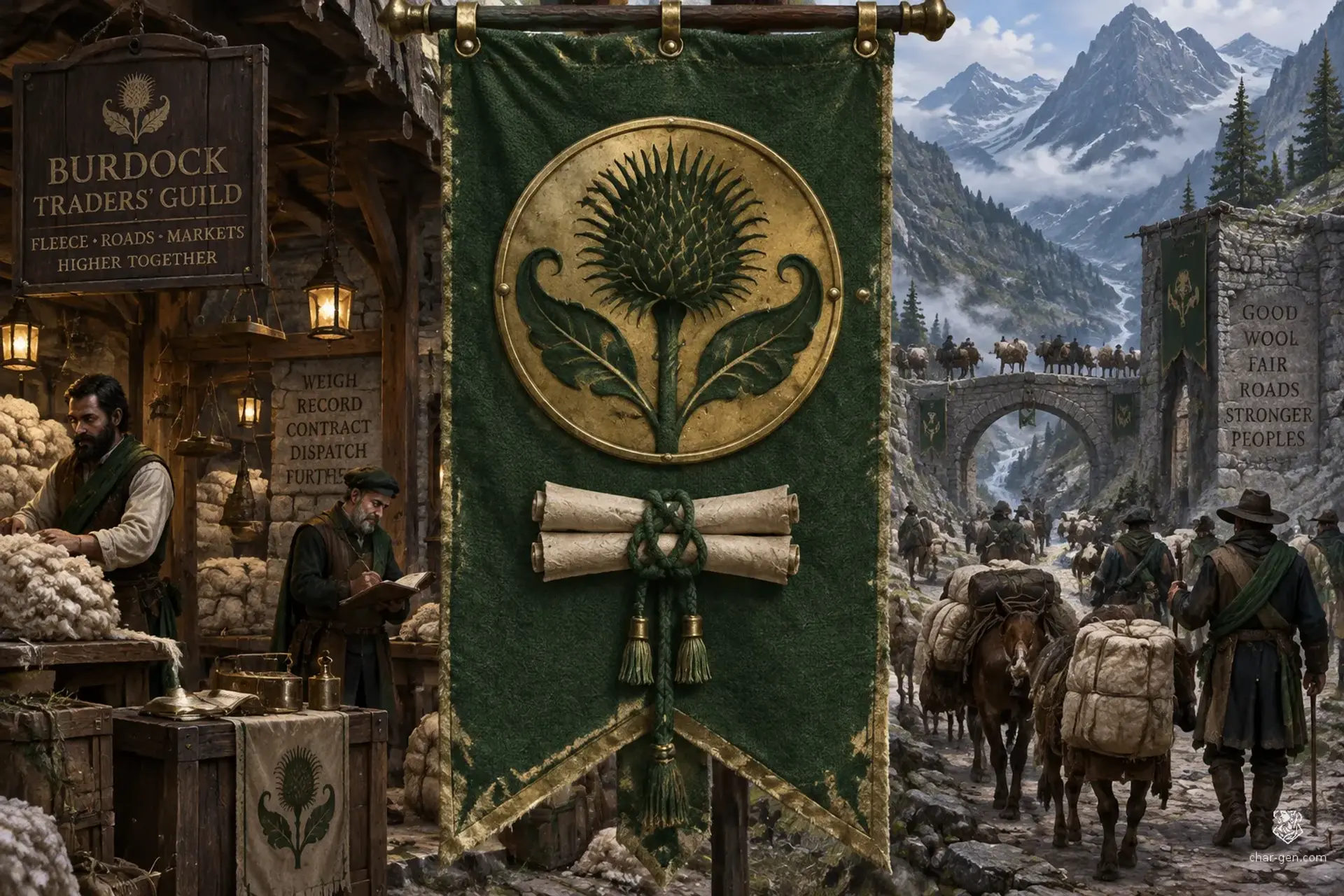
Burdock Company
The Company was founded after the Long Snow, when three pack merchants organized a relief train to stranded camps. Their shared venture became the Burr Compact, a buying agreement that offered dependable prices in return for access to a protected route. For years, the Company was small and useful: it advanced salt, grain, and tools before shearing, then settled accounts when wool reached market. Its first major triumph came when it coordinated repairs to the Broken Ladder track after a rockslide cut off two valleys. The route reopened in time for the spring caravan, and even skeptical herders accepted the Company as a necessary partner. The name Burdock Company began appearing on pack tags and wool seals throughout the highlands. The watershed moment was the White Ledger winter, seventeen years ago. A blizzard destroyed several private stores and exposed false weights used by rival buyers. Burdock Company opened its warehouses and issued food against future wool, keeping many families alive. In return, its agents asked borrowers to sign standardized contracts. The contracts were legal, clear, and far more binding than the old spoken bargains. The Company's public reputation soared, while its leverage over local production grew sharply. A decade later, a poor shearing season left many borrowers unable to repay. The Company converted unpaid debts into long leases and exclusive purchase agreements. It argued that the leases prevented land disputes and secured future trade. The Keepers of the Commons called it a quiet enclosure of shared pasture. A split within the Company followed: older Roadmasters and Bookhands defended the Compact's communal spirit, while younger Factors argued that predictable ownership was the price of investment. Today, Burdock Company is growing among herders and traders. It still provides credit, transport, and access to distant buyers, but its search for new grazing leases and profitable wool contracts has made its founding promise a matter of bitter debate.
Burdock Company
- Type
- Merchants' consortium
- Size
- Approximately 870 formal staff and…
- Reach
- Growing among herders and…
- Base
- Kestrel Ford
Overview
The Company was founded after the Long Snow, when three pack merchants organized a relief train to stranded camps. Their shared venture became the Burr Compact, a buying agreement that offered dependable prices in return for access to a protected route. For years, the Company was small and useful: it advanced salt, grain, and tools before shearing, then settled accounts when wool reached market. Its first major triumph came when it coordinated repairs to the Broken Ladder track after a rockslide cut off two valleys. The route reopened in time for the spring caravan, and even skeptical herders accepted the Company as a necessary partner. The name Burdock Company began appearing on pack tags and wool seals throughout the highlands. The watershed moment was the White Ledger winter, seventeen years ago. A blizzard destroyed several private stores and exposed false weights used by rival buyers. Burdock Company opened its warehouses and issued food against future wool, keeping many families alive. In return, its agents asked borrowers to sign standardized contracts. The contracts were legal, clear, and far more binding than the old spoken bargains. The Company's public reputation soared, while its leverage over local production grew sharply. A decade later, a poor shearing season left many borrowers unable to repay. The Company converted unpaid debts into long leases and exclusive purchase agreements. It argued that the leases prevented land disputes and secured future trade. The Keepers of the Commons called it a quiet enclosure of shared pasture. A split within the Company followed: older Roadmasters and Bookhands defended the Compact's communal spirit, while younger Factors argued that predictable ownership was the price of investment. Today, Burdock Company is growing among herders and traders. It still provides credit, transport, and access to distant buyers, but its search for new grazing leases and profitable wool contracts has made its founding promise a matter of bitter debate.
How it began
Burdock Company began after the Long Snow of 31 years ago, when a late storm closed the Nimba passes and stranded wool caravans above the tree line. Three pack merchants pooled their last grain, hired local guides, and carried food to isolated herding camps in exchange for wool promises and rights to use a sheltered route. The burrs that clung to every pack on that journey became their mark. Their first agreement was remembered as the Burr Compact: buyers would guarantee a minimum wool price, and herders would help keep the route open. The Company grew from that bargain, but its present leases have stretched the original idea of mutual obligation almost beyond recognition.
How to know them
Burdock green, undyed wool, weathered brass
- A hooked burdock burr
- A brass pack strap
- A three-knot cord tied around contract bundles
Standing
What they say they want
What they are doing now
Where it leads
A connected highland market in which herders can sell wool year-round, caravans travel safely, and the Company becomes the trusted standard for trade. The contradiction is that the Counting Table's preferred path to stability is to control more of the land, credit, and routes that make trade possible.
How others see them
Many traders regard Burdock Company as dependable, practical, and far less predatory than distant buyers. Herders remember its aid during the White Ledger winter, but some now fear that accepting credit means surrendering choices about where their flocks graze and who can buy their wool.
People
5 ranks
First Factor
Patient, reserved, and uncomfortable with theatrical authority. He can be compassionate in a crisis and implacable in a meeting. He believes that a fair contract is better than a kindly promise, even when others do not agree.
- The Counting Table7 members
Sets prices, approves leases, authorizes large loans, and elects the First Factor. Each seat represents a major line of trade or a large share of Company capital.
- Factors23 members
Manage buying houses, negotiate contracts, settle disputes, and report on markets. Factors can make local bargains but need Counting Table approval for exclusive leases.
- Roadmasters86 members
Coordinate pack trains, route maintenance, weather reports, and caravan security. They hold considerable influence because delayed goods can ruin a contract.
- Bookhands214 members
Keep accounts, witness signatures, grade wool, and handle correspondence. Many are recruited from herder families and know the customary boundaries better than the senior Factors.
- Burr Partners540 members
Independent herders, carriers, and small traders who accept Company contracts or seasonal loans. They are affiliated rather than salaried members and have limited voting rights.
Other key members
- Atsumi Senior Factor for grazing leases and likely successor
- Sverre Kall Roadmaster of the upper passes
- Shuneth of the Cold Shelf Keeper of contracts and archival ledgers
How they are organised
- A prospective Burr Partner must provide a reference from a herder, carrier, or established trader.
- Applicants must state what goods or services they can reliably provide through one full season.
- New members attend a public weighing and contract-reading session before taking credit.
- Factors and Bookhands must complete an apprenticeship in accounts, weights, and local grazing customs.
Relations
7 factionsMany herders depend on Burdock Company buyers for predictable prices and winter credit. The relationship is useful but uneasy, since the Company increasingly favors large flocks and long leases.
Operations
What they do
How they do it
Services for hire
- Wool weighing and certificationA negotiated share of the next shearing, or a small fee in coinGrades wool, records its weight, and issues a sealed receipt that most regional buyers recognize.
- Seasonal advanceRepayment in goods, coin, or labor under a written seasonal contractProvides grain, salt, tools, and other essentials before the next market season.
- Caravan arrangementA per-pack fee, sometimes waived for Burr PartnersFinds carriers, guides, and route information for merchants moving goods through the highlands.
- Lease mediationA negotiated fee or reciprocal labor agreementConnects herders with valley councils and local landholders to negotiate temporary or longer grazing access.
What they can do
What they have
Where they are weak
Territory
Headquarters
Kestrel FordA former wool-sorting shed expanded into a courtyard of weighing rooms, contract desks, dormitories, and lockable stores. Pack saddles dry beneath the eaves, while every doorway has a small brass hook where visitors are asked to hang their travel packs. The hook is practical, but also an old custom: no burrs are to be carried into the contract room.
Lands they hold
Outposts
- Upper Weigh HouseA seasonal meadow above the eastern passGrades wool at shearing time, stores salt, and coordinates pack trains before the pass closes.
- Red Wool ShedA roadside market on the southern descentCombines small lots from distant camps and sells them to caravans bound for the lowlands.
- Spring Ledger PostA sheltered spring used by three herding routesKeeps route notices, water-use agreements, and a small emergency supply of grain.
Secrets
Plot hooks
5 hooks- 1The Missing MeasurePersonal, low to moderateReward: Debt relief, useful contacts, or access to the contract archiveA character's relative has inherited a Company debt that appears to exceed the original loan. Shuneth asks the characters to find an older contract copy before the Counting Table rules on the claim.
- 2Wool Before WinterLocal, moderateReward: Payment, a herder ally, or a negotiated change to the contractA small herding camp is accused of breaking an exclusive wool contract. The camp insists that a rockslide made the Company's buying house unreachable. The party must establish what happened before Company agents seize the flock as collateral.
- 3The Pack Train That Never ArrivedRegional, moderate to highReward: A major favor from the Roadmasters, a share of recovered goods, or leverage over the Counting TableA caravan carrying the Company's emergency grain store vanishes on a route that Sverre says was deliberately marked safe. The missing grain could feed a valley, but its cargo papers also reveal a secret Company account.
- 4A Line Across the GrassFaction-scale, highReward: Political influence, a grazing agreement, or the trust of one side in the disputeThe Keepers of the Commons are preparing to block a new lease signing. Atsumi asks the party to keep negotiations peaceful, while another Factor privately offers extra pay to ensure the lease proceeds regardless of consent.
- 5The Trust LedgerCampaign-scale, highReward: A reformed Burdock Company, a public scandal, or control over the region's trade balanceSomeone has found evidence that the Company used a neighboring valley's relief grain during the White Ledger winter. Haldren wants the document recovered quietly. Shuneth wants it brought before the council. Either choice could change the Company's future.
Work they offer
What gets in the way
Rumours
Media
0 imagesNo images yet.
Turn Burdock Company into a sheet
A high-res, share-ready sheet you can post or print.
