Thunderstep Tribe
After the Three Falls, the survivors formed a mobile community around shared routes, common stores, and the rule that no family could privately claim a spring or pass. They became skilled guides and mediators, helping lowland communities survive harsh winters in exchange for supplies and the right to move through their lands. Their first great triumph came when they led several settlements through a high pass during a winter of blocked roads. The settlements survived, but the success brought merchants and surveyors who wanted permanent access. Over the following generations, Thunderstep guides became valued and their routes became contested. The watershed moment was the White Crack, about eighty years ago. A survey crew blasted into a ridge during a season of unstable weather. The resulting collapse buried a camp and diverted a stream into a neighboring valley. The tribe rescued survivors, including several workers who had helped damage the ridge, but refused to reveal the route to the buried refuge. Their restraint earned lasting respect from some communities and enduring suspicion from those who believed the tribe had hidden valuable land. In the decades since, the tribe has become both a cultural community and a regional authority on highland travel, weather, and land disputes. Its population has fallen through disease, dangerous winters, and young people choosing lives elsewhere. The Thundersteps remain self-governing, but they are no longer sure whether preserving their old customs will save them or slowly empty them.
Thunderstep Tribe
- Type
- Druidic Circle
- Size
- 127 members
- Reach
- Regional
- Base
- The Three-Fall Shelf, a seasonal camp on the upper valley's protected stone shelf. The name is a shortened local form of an older phrase meaning the refuge beneath the three avalanche chutes.
Overview
After the Three Falls, the survivors formed a mobile community around shared routes, common stores, and the rule that no family could privately claim a spring or pass. They became skilled guides and mediators, helping lowland communities survive harsh winters in exchange for supplies and the right to move through their lands. Their first great triumph came when they led several settlements through a high pass during a winter of blocked roads. The settlements survived, but the success brought merchants and surveyors who wanted permanent access. Over the following generations, Thunderstep guides became valued and their routes became contested. The watershed moment was the White Crack, about eighty years ago. A survey crew blasted into a ridge during a season of unstable weather. The resulting collapse buried a camp and diverted a stream into a neighboring valley. The tribe rescued survivors, including several workers who had helped damage the ridge, but refused to reveal the route to the buried refuge. Their restraint earned lasting respect from some communities and enduring suspicion from those who believed the tribe had hidden valuable land. In the decades since, the tribe has become both a cultural community and a regional authority on highland travel, weather, and land disputes. Its population has fallen through disease, dangerous winters, and young people choosing lives elsewhere. The Thundersteps remain self-governing, but they are no longer sure whether preserving their old customs will save them or slowly empty them.
How it began
The tribe says its surviving lineages came together in the winter called the Three Falls. A chain of avalanches buried three separate Goliath camps, while a lightning storm split the ridge above them and opened a narrow descent into a sheltered valley. The survivors met there, shared their remaining food, and chose to travel as one people rather than die in isolated camps. Their first council vowed that no single family would own the trail that had saved them. The storyteller's account names no sole founder: in the Thunderstep telling, the storm and the shared meal founded the tribe.
How to know them
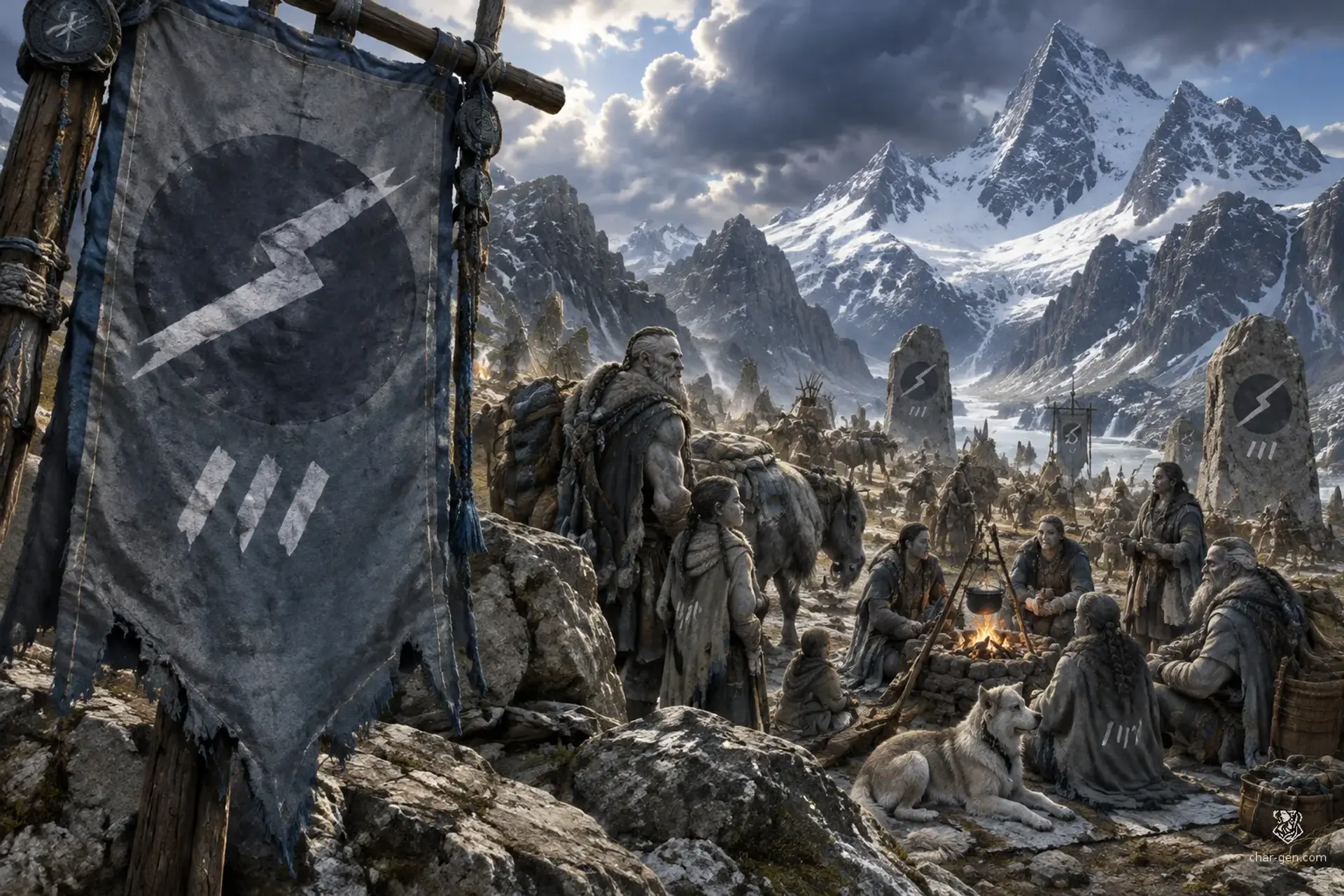
Slate gray, Cloud white, Deep blue
- A branching lightning mark representing both danger and a path revealed
- Three short strokes beneath the mark for the camps that survived the Three Falls
- A smooth, palm-sized river stone carried by some guides as a reminder to listen before acting
Standing
What they say they want
What they are doing now
Where it leads
Remain a self-governing people while making the highlands safer for those who live in and travel through them. The tribe hopes to pass on its routes, ecological knowledge, and customs without turning them into property that outsiders can buy or command.
How others see them
Respected as excellent guides, stubborn negotiators, and reliable witnesses to the habits of the mountains. Some settlements view them as generous protectors; others consider them secretive gatekeepers who decide which people may travel and which histories may be told.
People
6 ranks
High Listener
Cautious, humane, and hard to read. She can admit uncertainty in private, but in public she speaks only after she has tested a decision against its likely costs.
- High Listener1 member
The elected leader coordinates seasonal decisions, speaks for the tribe in negotiations, and is expected to listen to dissent before acting. The title implies stewardship, not absolute command.
- Weather Council7 members
Seven respected members, chosen for practical knowledge rather than family rank, decide on migration, sanctuary, and relations with outsiders. Major decisions require a strong majority and public reasons.
- Trailwardens14 members
Experienced scouts, herbalists, and guides who patrol routes, assess hazards, escort visitors, and carry council decisions between camps.
- Hearthkeepers24 members
The people responsible for shared stores, child care, winter shelters, craft teaching, and the daily work that keeps camps viable. The title includes many non-druidic roles.
- The Walking Kin70 members
The wider body of adult members, including hunters, herders, craftspeople, storytellers, druids, and seasonal guides. Any member may speak at an open council.
- Young Steps18 members
Children and adolescents learning the routes, histories, and responsibilities of the tribe. They are not a lesser caste, and their questions are traditionally heard at the end of open councils.
Other key members
- Kettik Hearthkeeper steward and likely challenger for a council seat
- Vukuta Goliath bard, storyteller, and keeper of public memory
- Zuberi Druid of the Weather Council and investigator of the unnatural storms
- Talgu Trailwarden, organizer of young members, and possible successor to Otsana
How they are organised
- A prospective member must spend a season traveling with a camp and take part in ordinary work, not only rituals or scouting.
- They must learn the tribe's rules for shared water, food stores, and safe conduct on the routes.
- They must be accepted by an open gathering of the Walking Kin, with objections heard and answered rather than ignored.
- Goliath ancestry is not required for a person to be a trusted companion or long-term resident, but the tribe's governing membership remains rooted in its Goliath lineages and kinship customs.
Relations
7 factionsThe settlements along the upper passes depend on Thunderstep guides, avalanche warnings, and mediation over grazing rights. In return, they supply grain, ironwork, and winter shelter. Their goodwill weakens whenever the tribe closes a pass without explanation.
Operations
What they do
How they do it
Services for hire
- Pass GuidanceA negotiated fee, useful goods, or a reciprocal serviceA local guide who can assess a route, point out likely hazards, and identify places to avoid. The guide will not promise safety where the weather makes that impossible.
- Storm ShelterShared supplies or an agreement to aid the tribe laterA temporary place in a protected camp during severe weather, provided the visitors follow camp rules and do not attempt to explore restricted areas.
- Open Ground MediationAn honest account of the dispute and a commitment to honor the settlementA witnessed mediation over grazing access, travel rights, or water use. The tribe's judgment carries weight because its guides often know the terrain better than either disputing party.
What they can do
What they have
Where they are weak
Territory
Headquarters
The Three-Fall Shelf, a seasonal camp on the upper valley's protected stone shelf. The name is a shortened local form of an older phrase meaning the refuge beneath the three avalanche chutes.The tribe's principal gathering place is a broad shelf of stone above a sheltered valley. Low, windbreak-shaped lodges sit among natural pillars, with no permanent wall or gate. A ring of standing stones serves as a council ground and weather observatory. The central hearth is kept burning through the cold season, but it is not a temple; it is a place for meals, testimony, and decisions.
Lands they hold
Outposts
- SennelA sheltered ledge above the southern grazing valleyA seasonal camp and meeting point with local shepherds. Its name is a worn shortening of an older Goliath phrase for the ledge where wind loses its bite.
- The Split RestA narrow ravine overlooking the old high routeA watch camp used to monitor storms and warn travelers away from unstable slopes. The local name was shortened from the resting shelf beside the split ridge.
Secrets
Plot hooks
6 hooks- 1The Verse With No NamePersonal, social investigationReward: A place in the tribe's trust, a family revelation, or access to a protected routeA character with Goliath ancestry receives a song fragment from Vukuta that describes a family name absent from the tribe's public histories. The fragment may be an invitation, a test, or a warning that the character's ancestors were involved in the White Crack.
- 2Stores in the SnowLocal, exploration and negotiationReward: Allied standing, payment, and a negotiated travel agreementA settlement's food caravan has vanished near a route the tribe recently closed. The Thundersteps insist the pass was unsafe, while the settlement's leaders accuse them of theft. The party must find the caravan, establish what happened, and prevent retaliation.
- 3A Road Through the ThunderRegional, ethical conflict and wilderness hazardReward: A regional alliance, access to guides, or leverage over the road companyNorthcut Road Company has hired workers to blast a new path through the ridge. The Thundersteps ask the party to delay the work, but the workers claim the road will bring food and medical aid to isolated settlements. A changing storm pattern makes every choice urgent.
- 4The Storyteller's Missing StanzaParty-scale, investigation and faction politicsReward: Influence in the succession debate and a chance to shape what the tribe revealsVukuta disappears after performing a new verse that hints the tribe concealed evidence of the Three Falls. The council asks the party to find him discreetly; Talgu asks them to bring the story to the public gathering instead.
- 5The Ridge RemembersCampaign-scale, dangerous exploration and consequential choicesReward: The tribe's deepest trust, knowledge of the refuge, and the chance to avert a regional disasterStorms begin arriving on clear days, and animals flee from the buried refuge. Otsana wants a small team to investigate without alarming the settlements. The party may discover that the threat is real, misunderstood, or bound to an old act of tribal magic.
- 6Kin From Beyond the PassRegional, social conflict with long-term consequencesReward: A new alliance, a resolved ancestral claim, or a decisive shift in tribal politicsSeveral Goliath descendants arrive together, claiming that a Thunderstep ancestor promised their families a place in the tribe. Their arrival threatens to reopen old disputes over membership, resources, and the hidden refuge.
Work they offer
What gets in the way
Rumours
Media
0 imagesNo images yet.
Turn Thunderstep Tribe into a sheet
A high-res, share-ready sheet you can post or print.
