The Wellkeepers
The compact grew from Daro's first tally into a network of shared rules. In its early decades, its wardens used colored cords and stone counters to make prices legible to households that could not read. The arrangement spread because it reduced fights at wells and gave small farmers a way to challenge a sudden price increase. Its first triumph came when wardens coordinated repairs to a string of linked wells after a season of shifting sand buried their access paths. Rather than compete for the few open draws, member villages pooled labor and agreed to stagger use. The repair became a model for later agreements. The watershed moment was the Salt Ledger Crisis, thirty-one years ago. A powerful landholder paid a clerk to erase the household allocation for an entire farming quarter and replace it with a higher commercial allotment. The theft was exposed when a potter compared the ledger's ink with the marks on her own clay receipt. The resulting hearings lasted nine days. The compact expelled the clerk, returned the stolen allocation, and made its records viewable at every member oasis. It also gained a reputation for fair dealing. That victory changed the compact. Before the crisis, wardens were trusted neighbors with a loose common rule. Afterward, the Seven Tallies became a formal council, and the compact began keeping duplicate records and sending inspectors across settlement lines. This made the system harder to corrupt, but it also gave the council a central authority it had never possessed. In the past decade, caravans have grown larger, farming methods have changed, and several old channels have begun to fail. The Wellkeepers now mediate between household survival and commercial demand. They are respected because prices remain predictable in most member settlements, yet some residents fear that the compact's ledgers, maps, and wardens are becoming a government without ever being voted into one.
The Wellkeepers
- Type
- Civic compact
- Size
- 211 members
- Reach
- Strong around settled oases
- Base
- Kett's Reach, a settled oasis named for the Kett family, whose long-gone trade was weighing caravan loads at the crossing.
Overview
The compact grew from Daro's first tally into a network of shared rules. In its early decades, its wardens used colored cords and stone counters to make prices legible to households that could not read. The arrangement spread because it reduced fights at wells and gave small farmers a way to challenge a sudden price increase. Its first triumph came when wardens coordinated repairs to a string of linked wells after a season of shifting sand buried their access paths. Rather than compete for the few open draws, member villages pooled labor and agreed to stagger use. The repair became a model for later agreements. The watershed moment was the Salt Ledger Crisis, thirty-one years ago. A powerful landholder paid a clerk to erase the household allocation for an entire farming quarter and replace it with a higher commercial allotment. The theft was exposed when a potter compared the ledger's ink with the marks on her own clay receipt. The resulting hearings lasted nine days. The compact expelled the clerk, returned the stolen allocation, and made its records viewable at every member oasis. It also gained a reputation for fair dealing. That victory changed the compact. Before the crisis, wardens were trusted neighbors with a loose common rule. Afterward, the Seven Tallies became a formal council, and the compact began keeping duplicate records and sending inspectors across settlement lines. This made the system harder to corrupt, but it also gave the council a central authority it had never possessed. In the past decade, caravans have grown larger, farming methods have changed, and several old channels have begun to fail. The Wellkeepers now mediate between household survival and commercial demand. They are respected because prices remain predictable in most member settlements, yet some residents fear that the compact's ledgers, maps, and wardens are becoming a government without ever being voted into one.
How it began
The Wellkeepers say their charter began after the Drought of Nine Empty Jars, when a chain of private cistern owners closed their gates as wells failed. A tally clerk named Daro, now remembered only through the name of the old Daro's Measure, walked from settlement to settlement recording each well's depth, daily draw, and surviving households. Farmers brought those records to a gathering at the Kett family's abandoned measuring yard. They agreed that no household would be denied a basic draw while water remained, and that every sale would be marked publicly. The first compact was less a grand council than a row of witnesses signing a clay tablet with their thumbprints. Its founding promise was practical, not idealistic: no one should have to guess whether tomorrow's water would be affordable.
How to know them
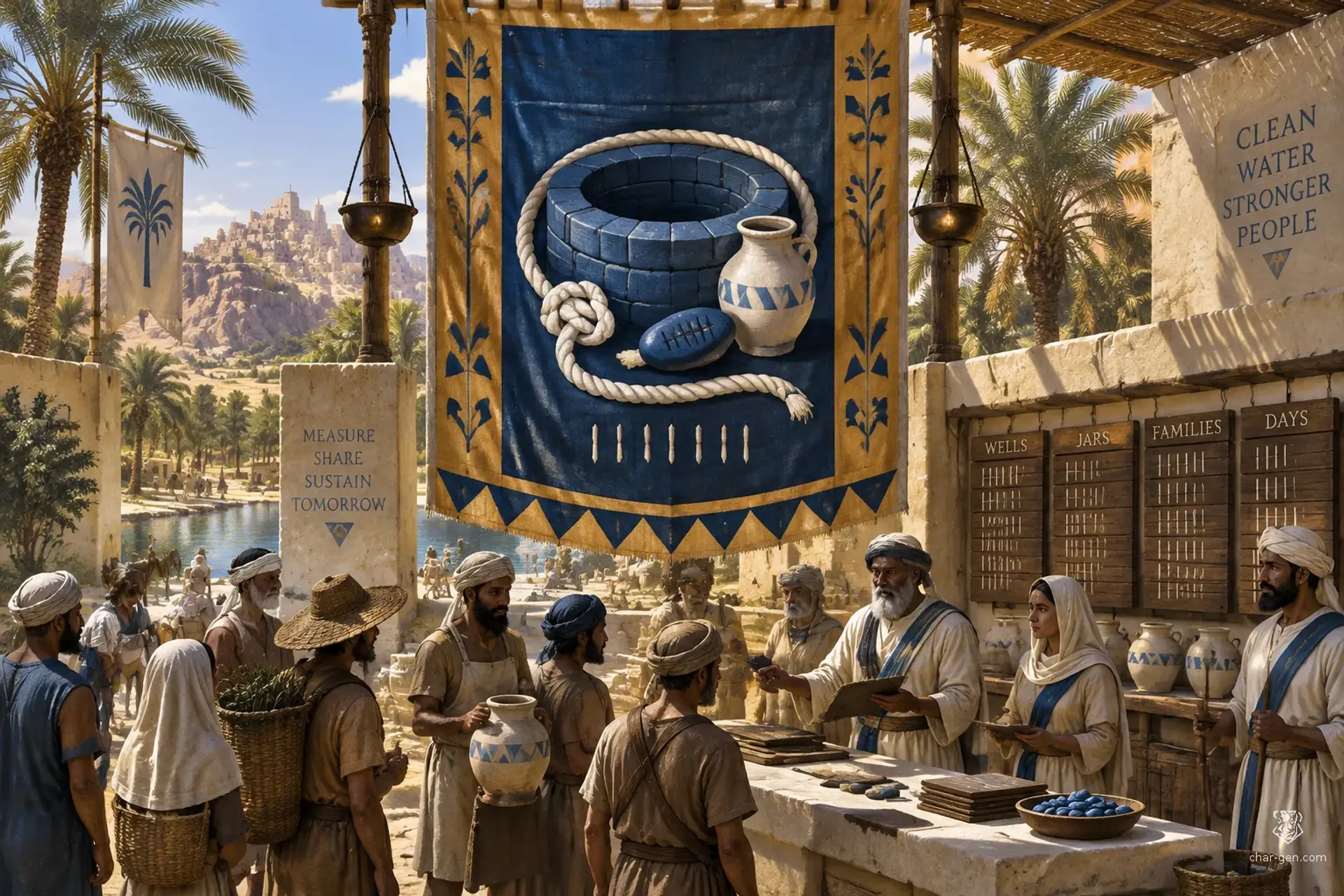
Cistern blue, Sun-baked ochre, Chalk white
- A knotted measuring cord
- A blue tally stone placed beside a white jar
- Seven small marks cut around a well-mouth
Standing
What they say they want
What they are doing now
Where it leads
A chain of settlements where every household can know the price and measure of its water in advance, where neighboring oases can share emergency supplies without surrendering local rights, and where no private claim can quietly erase a community's history.
How others see them
Among small farmers, the Wellkeepers are practical protectors who make sure a household can plan its week without bargaining for every jar. Caravaners see them as fair but slow. Wealthy landholders describe them as meddlesome clerks who mistake custom for law.
People
5 ranks
First Measure
Patient, plainspoken, and stubbornly fair-minded. She hears petitions without promising their outcome. Her fear of a regional water war sometimes makes her too cautious to share information.
- First Measure1 member
Chairs the council, represents the compact in treaties, and can order emergency rationing. Cannot change a household price ceiling alone.
- The Seven Tallies7 members
Elected stewards representing settled oases. Approve budgets, price bands, major repairs, and new charter membership. Decisions require five votes, except during declared emergencies.
- Wellwardens31 members
Inspect wells, witness sales, maintain draw schedules, and mediate local disputes. Each warden serves a cluster of wells and reports its measurements to the ledgers.
- Line Readers12 members
Survey channels, test water, maintain maps, and train apprentices. Their technical findings can overrule a warden's estimate, but not the council's allocation decision.
- Charter Hands160 members
Farmers, potters, carriers, and other residents who pay dues, witness annual counts, and may petition for review. They are members, not merely customers.
Other key members
- Benkir Senior Line Reader and likely successor
- Tazeg of Kett's Reach Wellwarden and council dissenter
- Suth Keeper of duplicate ledgers
How they are organised
- Live in, work in, or regularly supply a charter settlement.
- Accept public measurement of water sales and submit to the same household draw rules as other members.
- Contribute labor, dues, or skilled service to a shared well or channel.
- Attend a witnessed annual count or appoint a representative who can answer questions about the member's draws.
Relations
7 factionsSmall farmers rely on the compact to keep household water affordable. Their support is strong but conditional: they expect the Wellkeepers to defend their wells before protecting commercial expansion.
Operations
What they do
How they do it
Services for hire
- Water CountNo fee for member households; nonmembers contribute labor or a negotiated paymentA witnessed measurement of a well, cistern, or household allotment, with a written or marked record of the result.
- Well Repair MusterMaterials and labor contribution, waived during declared emergenciesInspection and coordinated repair of a communal well, including help organizing local work teams.
- Charter HearingSmall filing fee, returned if the petitioner cannot afford itA public hearing for disagreements over water price, allocation, or recorded use.
- Route Water NoticeNegotiated per journey; member caravans pay reduced ratesAdvice on safe, active wells and current draw restrictions along recognized routes.
What they can do
What they have
Where they are weak
Territory
Headquarters
Kett's Reach, a settled oasis named for the Kett family, whose long-gone trade was weighing caravan loads at the crossing.The compact meets in a low, shaded counting house built around a disused balance pit. Its walls are coated with pale lime to keep the rooms cool. Public ledgers hang behind slatted screens, visible to visitors but protected from dust and casual handling. A line of water jars stands by the entrance, each marked with the day's household price. Beneath the floor lies a locked archive of older channel maps and sealed allocation agreements.
Lands they hold
Outposts
- Tally PostA dry crossing where several caravan tracks meetRecords caravan purchases and directs travelers to wells with available capacity. Named for the trade of counting loads, once performed there by a now-vanished caravan office.
- Hesh's YardA farm settlement two days east of Kett's ReachStores repair tools and hosts seasonal hearings. Named for Hesh, a long-dead keeper of the settlement's irrigation channels whose actual title has been forgotten.
Secrets
Plot hooks
4 hooks- 1The Uncounted JarLow, suited to a personal investigationReward: A local ally, modest payment, and access to a wellwarden's recordsA family receives a notice that its household draw has been reduced, but the public ledger shows no change. The party can find the missing receipt, identify a clerical mistake, or discover that someone is using the family's name to divert water.
- 2The Survey CordModerate, suited to a settlement-scale conflictReward: A favor from the Wellkeepers, information about local channels, and a choice over who sees the reportTazeg asks the party to escort a Line Reader carrying a survey report through contested farmland. Salt Measure's agents want the report destroyed, while farmers fear it will justify an outside claim to their spring.
- 3Water Under the WallHigh, with social and logistical consequencesReward: Influence over a regional water agreement and possible access to a new water sourceA buried channel has begun feeding a failing well, but its flow appears to come from beneath a neighboring settlement. Shosi wants a quiet inspection before anyone makes a claim. Benkir wants the compact to cap the channel immediately.
- 4The Page Beneath the PageCampaign-scale political dilemmaReward: The trust of the compact, a major political concession, or evidence capable of reshaping regional powerA duplicate page from the Salt Ledger Crisis surfaces in a collector's hands. It seems to prove that the compact's heroic account is false. The party must decide whether to publish it, investigate the clerk's original conspiracy, or negotiate a disclosure that does not trigger a rush on the wells.
Work they offer
What gets in the way
Rumours
Media
0 imagesNo images yet.
Turn The Wellkeepers into a sheet
A high-res, share-ready sheet you can post or print.
