Charlie Frost
Charlie Frost
At the table
Voice
His voice is a little breathless from speaking while watching for things, with a dry rasp at the end of long sentences, like someone used to cold air and smoke. He clips practical statements short, but when describing lights or old memories he runs words together, rushing to get the account out before it disappears. There is a faint roughness that suggests years of outdoor weather, though his face remains young. When he is excited by a May Day prank, his laugh comes too quickly and seems to continue a beat after the joke has ended.
Charlie speaks in plain, practical English, shaped by remembered farm work and a long life spent around people whose speech changed with the centuries. He uses old rural turns of phrase without noticing, then borrows modern words such as aliens and UFOs with earnest precision. He tends to explain frightening events as if reporting the weather: lights were over the field, a voice came from the pantry, someone had been standing outside. When a memory fails, his sentences stop mid-thought and restart with a different detail.
Speech patterns
How to play them
Treat him as a frightened and capable person, not as a puzzle to be solved. Offer a small practical task, speak plainly, and let him choose whether to discuss the lights. Mary’s presence calms him. Aggressive questioning about his father, his mother, or the Christmas mirror may provoke retreat or confusion. If the group protects his privacy and keeps him grounded, he may share a dream as a clue, while admitting it might not be literal.
Goal
Find a trustworthy explanation for the missing years and the lights, without losing the fragile life he has made with Mary and the other county personifications.
Motivation
To be useful, to keep Mary’s home safe, and to discover whether his lost memories belong to a human child, a fae creature, the land of Shropshire, or all three.
Appearance
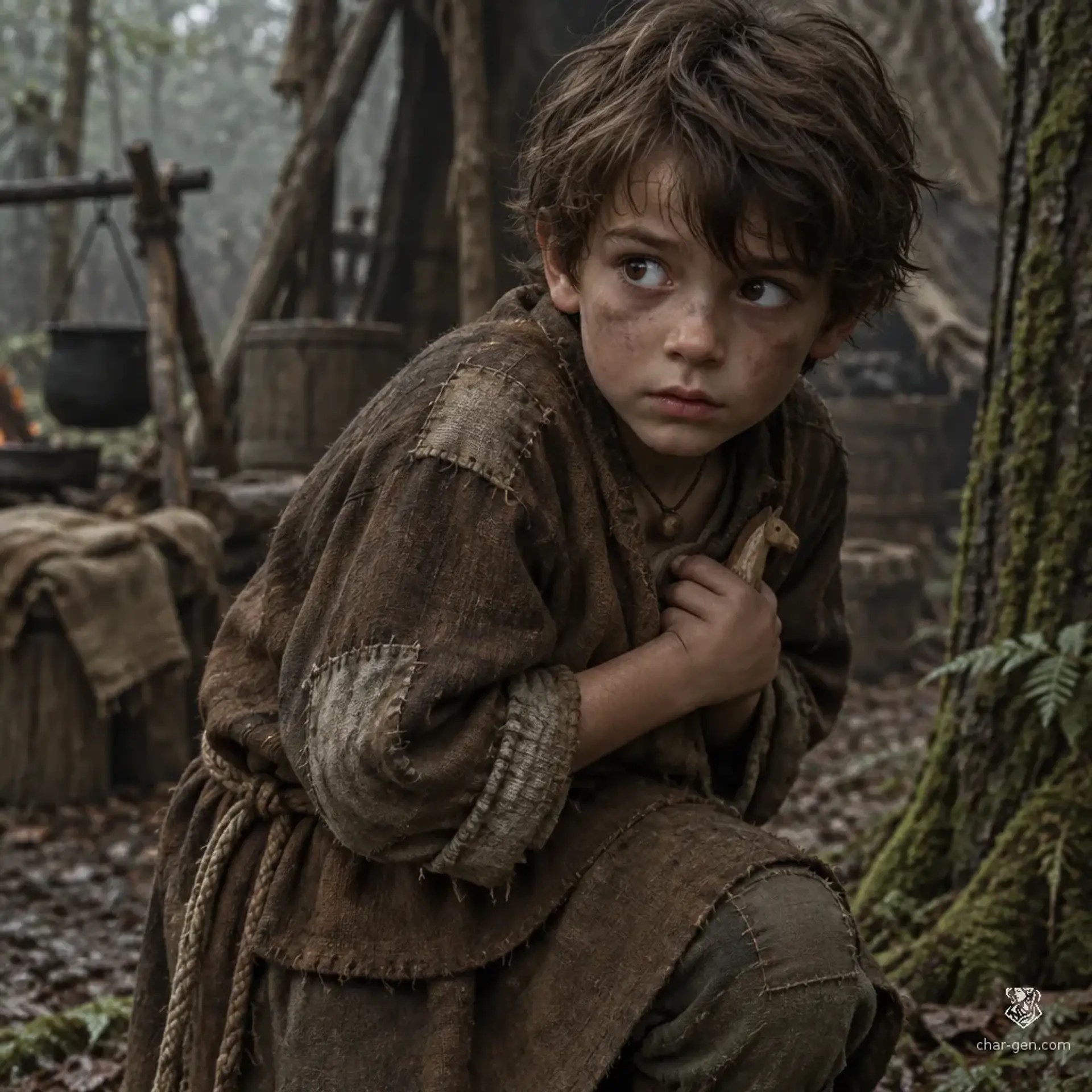
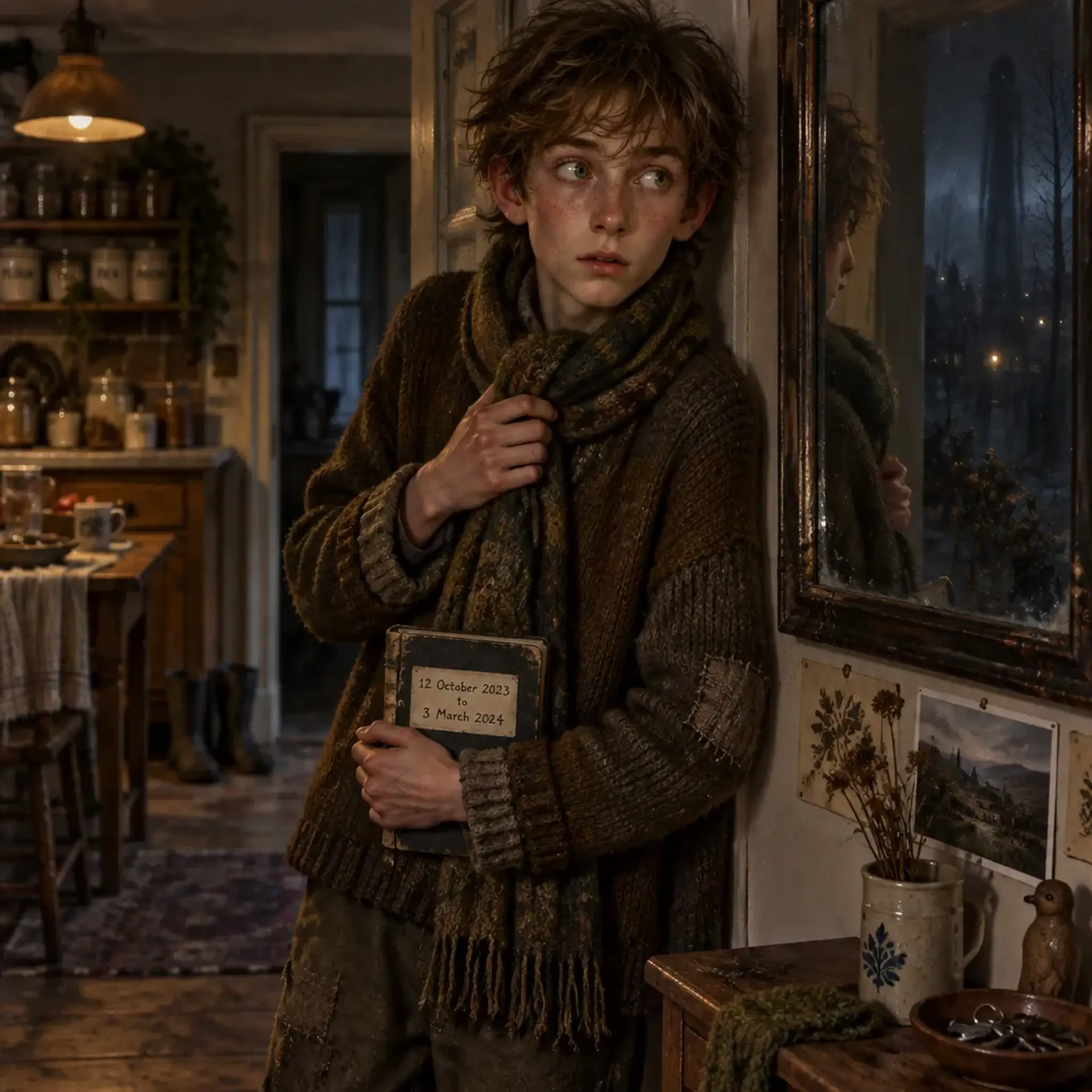
Charlie looks like a child someone has stretched to an improbable height: nearly five feet ten inches, narrow through the shoulders, with long limbs that seem to arrive a moment after the rest of him. His blond-brown hair has the dull, wheat-straw sheen of a head that has been slept on, dampened by weather, and combed with impatient fingers. Green eyes, wide and watchful, catch reflections too sharply; he sometimes tracks a light no one else can see. His skin is pale, weather-roughened around the knuckles and nose, with a faint ground-in look that does not wash away. He walks with the careful, economical tread of someone used to muddy fields, then abruptly darts or freezes as if listening to a second conversation. His sleeves are often too short, his hems carefully repaired, and he keeps one old wool scarf unnaturally clean. The unexpected detail: for someone who has spent ages around farms and fighting, he is meticulous about labeling household jars in Mary’s kitchen, using small, neat handwriting and dates that occasionally precede the jars by centuries. His presence leaves the impression of a child who has wandered out of an old landscape and is still waiting for someone to explain the modern one.
Clothing
A secondhand jumper, patched trousers, practical boots, and a wool scarf Mary mended for him. The clothes are chosen for warmth and ease of repair, not fashion. He has a habit of wearing his cuffs rolled unevenly and keeping the scarf clean even when the rest of him is muddy.
Body language
He keeps his shoulders slightly hunched as if expecting a low doorway, though he is unusually tall. His gaze jumps to the corners of rooms and to any mirror. When comfortable, he sits cross-legged on the floor and turns small household objects over in his hands. When frightened, he grips Mary’s sleeve or presses his fingertips together until they whiten. In a boggart episode, his movements become abruptly light and quick, with a stillness between motions that feels less human than his size suggests.
- Height
- 5 ft 10 in (178 cm); appears to be a young child despite his height
- Build
- Long-limbed and narrow, with the awkward proportions of a child who has grown tall without growing older. His strength is modest, but field work and years of carrying supplies have given him practical endurance.
- Eyes
- Green
- Hair
- Blond-brown, like weathered wheat
- Skin
- Pale, with weather-roughened skin around the nose and knuckles and a faint ground-in cast that never quite washes away
- Age
- Appears to be a young child, but his calendar age is uncertain and spans many centuries. He believes he was born during the old conflicts between Mercia and Welsh kings. He has not visibly aged since the day he was taken.
- Gender
- Male
- Size
- Average adult height, but with the appearance and manner of a young child
Distinguishing features
Personality
19 traits and drivesCharlie wants to be treated as useful and grown-up, but he still seeks the reassurance of a child who expects to be left behind. Around Mary he is affectionate, practical, and quietly demanding; he will insist he can manage a task, then hover nearby to make sure she has not gone. With Philip he is dryly sarcastic about money and boasting, though he likes the security Philip’s money provides. With Thumber he becomes deferential, then resentful of his own deference. With Wilt he argues about aliens and changelings as if the right label could make both of them safe. When calm, Charlie is observant and unexpectedly funny, noticing small failures of routine that adults overlook. When embarrassed, he talks rapidly and invents confident explanations. When frightened, he becomes literal, asks repeated questions, and watches mirrors rather than faces. During the first three days of May, his humor turns into a bright, unsettling delight in harmless confusion. Around Halloween and All Saints’ Day, he is defensive and possessive of familiar spaces, and the pleasure in mischief darkens into an urge to frighten people away. He is not simply innocent or sinister: he hates frightening his family, but part of him thrills when a room goes quiet because everyone has noticed him.
- Alignment
- Not a Call of Cthulhu 7E statistic. Protective in familiar company, unpredictable when frightened or caught in seasonal fae moods.
Quirks
Habits
Traits · 5
Flaws · 5
Fears · 5
Wants and needs · 4
Combat
HP 11 · MOV 8, as a noncombatant human-scale NPC; supernatural movement is not represented as a standard statistic.Charlie is not a trained combatant. He tries to get behind a door, under a table, or out of the room. If cornered, he lashes out with a bite or a clumsy blow and then flees. In a home he regards as his own, he may use custom boggart mischief to distract and frighten rather than directly injure. His ordinary Call of Cthulhu statistics describe a vulnerable, noncombatant NPC, not a boss creature.
Charlie Frost
Actions
Reactions
Services they sell
Rewards they can give
Equipment
- Memory notebook (personal item)A pocket notebook filled with sketches of lights, short dream fragments, and dates he does not always trust.
- Mary's scarf (clothing)A mended wool scarf given care beyond its modest value. During frightening episodes he grips it as an anchor.
- Sewing kit (tool)A small household sewing kit Mary lets him use. He is better at basic repairs than he admits.
Possessions
Background
Charlie Frost is Shropshire, or so his family says when the truth is being spoken plainly. He calls himself Charlie because it is the name that fits on current forms, and Shorpy because it is the name that survived in stories and affectionate teasing. He was born, as far as his dreams and the fragments of other people’s histories agree, in the years when Mercian power and the Welsh kings pressed against one another. His first home was a small settlement within the land that would be called Shropshire. His mother died after his birth, worn down by illness and hardship. His biological father was a brutal raider, not the husband who had been publicly named as his father. Charlie grew up as an inconvenient bastard in a crowded family, among half-siblings who learned early to keep their eyes down when armed men came through. The land around him was never quiet. Men marched across fields, sheep were driven away to feed armies, and villagers repaired what the next raid would break. Charlie remembers the smell of wet wool, smoke caught in thatch, and the muddy pressure of feet on a narrow road. He remembers being told to stay in the house, and remembers leaving it anyway. He cannot say whether he was a child who survived those years, a spirit born from the land’s long quarrel, or both. The story his family uses is that he is the personification of Shropshire, a place of strife and stubborn devotion. Charlie himself has never found that explanation especially helpful. He thinks in terms of people, rooms, food, weather, and the lights that sometimes move where no lights should be. His first family vanished from his life in the way a familiar landscape vanishes during fog. He remembers being taken, but not by whom. He remembers a night with no moon, a sound like a cart being pulled over stones, and a face at the window that might have been an animal’s or a person’s. Then there was a gap. He has spent centuries explaining that gap as an abduction by visitors from elsewhere. Aliens, he says, because the word gives the event a shape and because the strange lights he has seen in later years seem to support it. He is convinced Wilt was abducted too. He suspects Ewan may be an alien, though he is careful to add that Ewan might simply be “not from the same sort of place.” The present family is made of other personifications of English counties, people Charlie calls his brothers and sisters even when the relationships are more complicated than ordinary kinship. Mary, Westmorland, is his closest daily support. She is practical, traditional in her northern ways, and kinder than she likes to admit. She sews his clothes, keeps him fed, and finds small useful tasks for him in the house. She is not a witch, despite her brothers’ teasing and the old beliefs that cling to her name. Charlie helps with chores because he wants to be useful and because looking like a child makes finding paid work difficult. Mary will not pretend that this is fair, but she will also not let him make a nuisance of himself trying to prove he can carry a full-grown laborer’s burden. Wiltshire, called Wilt, is black-haired, with eyes like a pond under a full moon. He insists that he is merely slow to age and denies being a changeling, though Charlie believes they were both taken by the same sort of visitors. Wilt’s denial irritates Charlie, who wants a witness more than he wants to be right. Northumberland, or Thumber, is a border man, blond and blue-eyed, marked by a lingering old scar and by a lifetime of fighting with and against neighbors. Charlie respects him and is frightened by how readily Thumber can recognize a battlefield in an ordinary argument. Cumberland, called Cyril, is a red-brown-haired man with freckles and green eyes, a steadier presence whose quiet company Charlie can tolerate even when speech becomes difficult. Hampshire, Philip, has worked at sea, in shipyards, and in metalwork; now he has money and likes to say so. Charlie finds Philip’s boasting exhausting, but he is secretly pleased that Philip can pay for things without making Mary worry. Kent, Ken, works as a gardener for the wealthy and tries to appear better-born than he is. Charlie likes the smell of soil on him and dislikes the performance of status. Their father is a sorcerer, a fact the family treats with care and old tradition. Charlie avoids him. He does not know whether this is because the father frightens him, because iron and sorcery seem to meet in his worst memories, or because part of him is angry that a father could exist and still leave so much unexplained. The others speak around the subject. Mary changes the conversation; Thumber watches Charlie’s face; Wilt says Charlie is making connections where there are none. Charlie hears the pause beneath every answer. In 2026 he lives with Mary and does the jobs that can be done without anyone asking for identification or wages: mending, carrying, sorting, watching the kettle, fetching supplies, and standing beside someone who does not want to be alone. His knowledge of farming, sheep, old roads, and the habits of frightened animals is real, but it is badly matched to forms, employers, and modern assumptions about a child’s height. He has no stable explanation for his memories. Some are detailed enough to smell; others end at a blank wall. He keeps paper notes about lights, voices, and missing time, though he cannot tell whether the notes help or merely give the fear a filing system. A formative memory comes to him in dreams. He is small enough to be hidden beneath a cart. Rain strikes the boards above him. His mother’s hand, cold and rough, closes around his wrist and tells him not to answer if a voice calls from outside. Then the voice uses the name he had only heard his father use. The dream always changes at that point. Sometimes the cart is moving toward a river; sometimes toward a churchyard; sometimes it never moves at all. Charlie wakes with his fingers clenched and a taste of iron in his mouth. He has never told Mary the full dream because he fears that she will recognize the voice. At a Christmas gathering with his present family, Charlie went to the hall to fetch a dish and found the mirror above the washstand fogged by warmth. The room behind him was full of conversation: Philip telling a story too loudly, Ken correcting a detail, Mary asking who had put the good scissors away. In the glass, the hallway was not the hallway. It was a dark passage of stone, narrow as a sheep track, with a low ceiling that seemed to breathe. Charlie saw his own reflection turn toward him before he did. The child in the glass had the same green eyes but no human stillness. Its outline kept slipping: a small, hairy figure with long arms, then a black horse’s head, then a soot-colored shadow with a child’s face set too high above its shoulders. Its mouth was open in a delighted grin. Behind it stood a row of pale lights, floating like lanterns over a field. The reflection lifted one hand and pressed its palm to the glass. Charlie felt no glass under his own hand, only cold air and the hard, painful insistence of iron somewhere in the wall. He stumbled backward and dropped the dish. Mary reached him first. He clung to her sleeve and said the visitors had found the house. No one else saw the changing reflection; Philip found only an ordinary mirror and a broken dish. Mary did not call him foolish. She wrapped him in the clean scarf, made him sit by the fire, and stayed beside him until his hands stopped shaking. Later, Charlie remembered the grin more clearly than the fear. He hated that it had looked happy. May Day brings a different trouble. On the first three days of May, the change arrives with the force of a hammer driving a nail. It begins with a buzzing in Charlie’s teeth and a sense that every path has been laid out for his amusement. He becomes quick, playful, and unnaturally joyful. He hides shoes, makes the house sound occupied when it is empty, and leaves tiny signs in flour or garden soil: circles, hoof marks, a child’s handprint too long in the fingers. He laughs at things that are not funny and feels a bright, almost unbearable delight when people become confused. It is not a pleasant happiness. It seems to belong to something that has borrowed his face and loves the moment just before someone loses their way. Mary keeps him near the house and gives him harmless tasks. Charlie later remembers the laughter but not always the tricks. Halloween and All Saints’ Day are worse. As nights lengthen, the playful quality turns predatory. Charlie hears voices from dark rooms and begins to believe that people who leave the house will not find their way back. Doors seem to lead to the wrong places; familiar names sound like invitations. His boggart nature presses against the household, testing its routines and its fear. He may leave an object in a doorway, whisper from the stairwell, or follow someone just beyond the reach of the light. He does not want to hurt his family, but the fear in their faces can feel, for a brief and shameful instant, like proof that he is powerful. Mary and the others have learned to keep him company, speak to him by name, and avoid trapping him in a dark room. Charlie fears those nights because he cannot be sure which impulses are his. Charlie’s present conflict is not simply learning what he is. It is deciding whether an answer would make him safer or only give his fear a sharper name. He wants proof of what happened to his first family, but the evidence may be another dream, a voice behind a wall, or a memory that belongs to the land rather than to him. He wants work, privacy, and a life in which people do not stare at him as if he were a strange child. He also wants Mary to keep leaving the hall light on. He insists those needs are unrelated.
Role in the story
A vulnerable witness, uncanny household companion, and source of unreliable but emotionally powerful clues. Charlie can lead investigators toward forgotten local history, a hidden fae presence, or a human explanation for the missing memories. His seasonal changes create danger without making him a conventional monster.
“His first home was a small settlement within the land that would be called Shropshire.”
- Faction
- The family of English county personifications. No formal organization. Charlie has no confirmed connection to a human occult society.
Known connections
Media
0 imagesNo images yet.
Turn Charlie Frost into a sheet
A high-res, share-ready sheet you can post or print.