Malik ibn-Zayd
Malik ibn-Zayd
At the table
Voice
A low gravelly baritone with a dry rasp at the end of each sentence. When commanding, he becomes surprisingly loud without sounding angry. When speaking to children, he softens his consonants and uses a nearly musical rhythm.
Low, dry, and deliberate. Malik speaks as if every sentence must survive being repeated by frightened people in a dark corridor. His commands are short and unmistakable, while his stories unfold slowly, with pauses where others might expect anger.
Speech patterns
How to play them
Malik first assesses whether visitors are hungry, armed, frightened, or lying. He offers useful work before trust, asks specific questions, and tests promises against practical details. Respect is earned by protecting civilians, keeping agreements, and accepting an orderly retreat. He reacts poorly to grand speeches but warmly to people who quietly repair a broken hinge or share a ration.
Goal
To preserve the Green Banner Hall, expose the planned water diversion, and distribute trustworthy copies of the water-rights archive before the Sultanate can destroy it.
Motivation
Malik is driven by the conviction that survival is a communal craft. He wants ordinary people to possess enough knowledge, discipline, and mutual trust that no official can turn a bad harvest into obedience.
Appearance
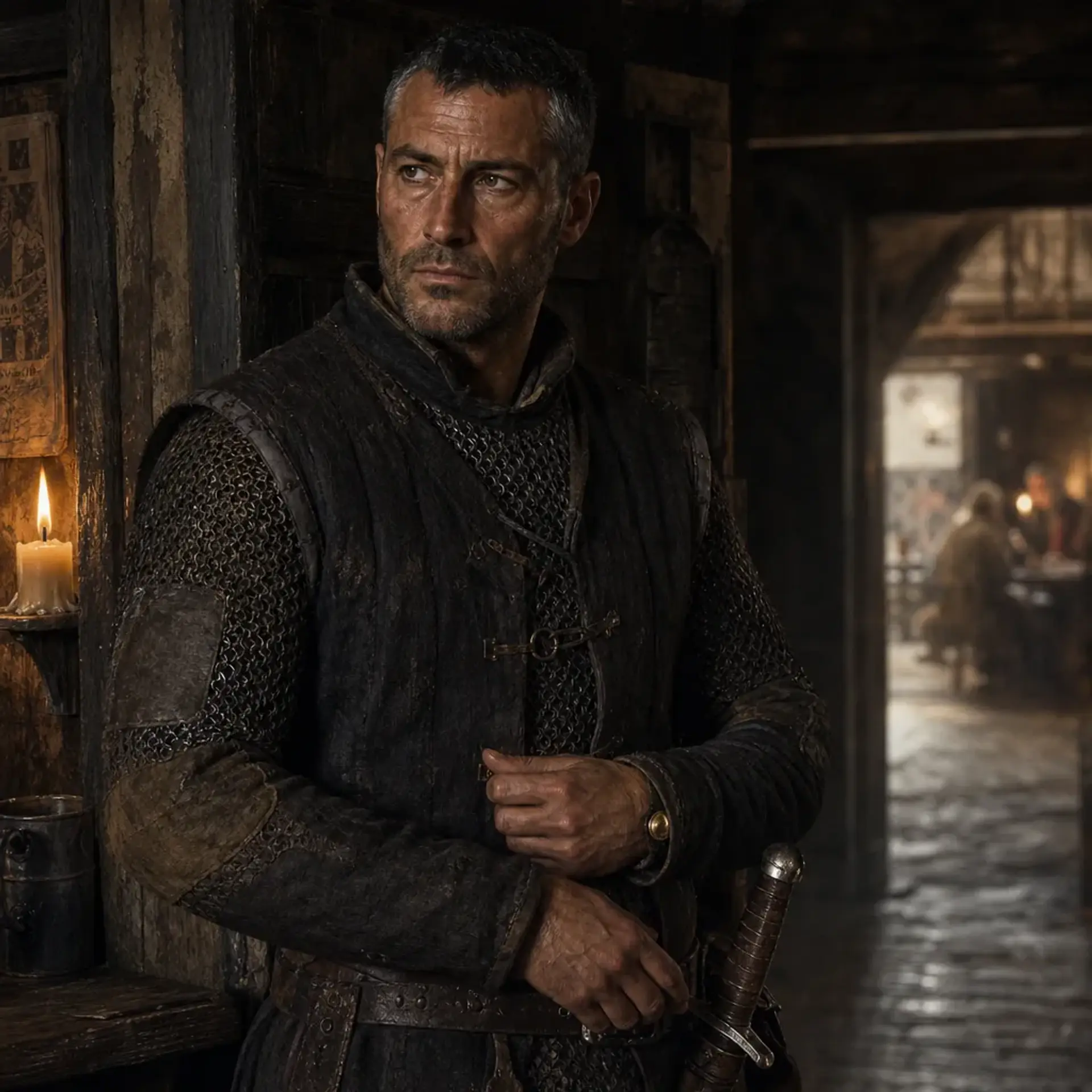
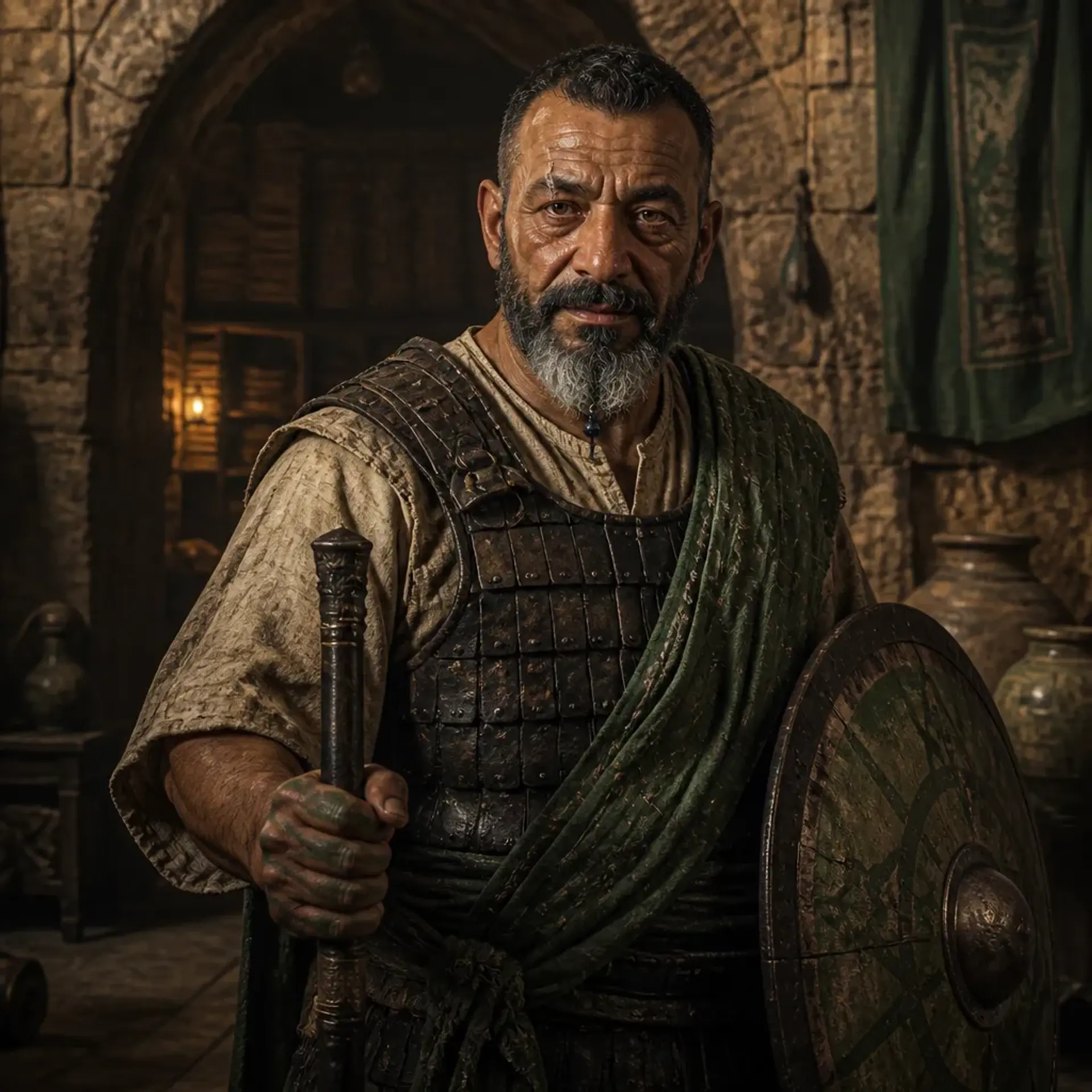
Malik ibn-Zayd is a weathered human man with a broad, slightly stooped frame built by decades of climbing terraces and carrying wounded laborers downhill. His face is the color of sun-baked olive wood, crosshatched with fine lines around the mouth and eyes. His nose was broken long ago and healed crooked, giving his stern expression an almost birdlike angle. One leg drags with a permanent limp, yet his upper body moves with startling precision, as if every gesture has been measured before he makes it. His beard is clipped short but uneven, silver at the chin and black near the jaw. His hands are thick-knuckled, scarred, and permanently stained with green dye from the Hall's banner cloth. He leaves an impression of battered iron and freshly watered soil. The contradiction is that his intimidating silhouette is softened by a small, meticulously polished blue glass bead braided into his beard, a child's trinket he refuses to remove.
Clothing
A patched sand-colored tunic under a sleeveless leather lamellar vest, loose charcoal trousers, wrapped calves, and a faded green sash bearing dozens of tiny stitched notches. His left boot is reinforced with layered leather to support his damaged leg.
Body language
He plants his baton before turning, keeps his good shoulder toward possible threats, and uses two fingers to indicate directions with military economy. When listening to grief, he lowers himself painfully onto one knee so the speaker does not have to look up at him.
- Height
- 5 feet 9 inches
- Build
- Dense, powerful, and worn down by age, with a strong back, heavy forearms, and one leg thinner than the other
- Eyes
- Dark hazel, with a pale crescent scar cutting through the right eyebrow
- Hair
- Black fading to iron gray, worn close to the scalp
- Skin
- Sun-baked olive brown with darker weathering across the hands, neck, and forehead
- Age
- Late sixties
- Gender
- Male
- Size
- Medium
Distinguishing features
Personality
17 traits and drivesMalik is patient with the inexperienced, merciless toward cruelty, and deeply suspicious of anyone who enjoys authority. He appears stern during drills because he believes clarity saves lives, but he is quietly generous when nobody is watching. With strangers, he shares food before asking their allegiance. With his own family, he is guarded and miserly with affection, fearing that tenderness will become another weakness enemies can exploit. In battle he is calm, almost gentle, while in private he can become consumed by old failures. He dislikes being called brave and becomes embarrassed by praise, yet he will deliberately place himself in danger if doing so gives someone else a clean escape.
- Alignment
- Lawful Good
Quirks
Habits
Traits · 5
Flaws · 4
Fears · 4
Wants and needs · 4
Combat
AC 15 · HP 38 · 20 feetMalik refuses heroic duels. He establishes a fallback route, places civilians behind cover, and turns furniture, cooking benches, archive shelves, and narrow stairways into defensive positions. He targets weapons, knees, and hands rather than vital organs when facing confused or conscripted opponents. If the Hall cannot be held, he executes a disciplined withdrawal while carrying the records most likely to save lives later.
Malik ibn-Zayd
Actions
Reactions
Services they sell
Rewards they can give
Equipment
- The Register Stick (weapon)A dense ironwood baton capped with a brass ring, marked with the names of fallen defenders.
- Terrace Hook (weapon)A short hooked blade used for cutting reins, ropes, and shield straps as much as for fighting.
- Furrow Guard Vest (armor)Patchwork leather lamellar reinforced over the ribs and left shoulder.
- Hall Shield (armor)A battered round shield painted green and repeatedly repainted over old battle scars.
- The Redacted Ledger (quest item)A sealed packet containing copied water agreements, diversion maps, and names of bribed officials.
- Five-Call Whistle (tool)A brass whistle whose tones signal hold, withdraw, fire, flood, or open the inner gate.
Possessions
Background
Malik was born to terrace farmers above a river valley whose water was governed by old agreements, public markers, and seasonal oaths. As a young man he served as a messenger between millers, shepherds, and village elders, learning that disputes over water rarely began with thirst. They began with missing records, altered boundary stones, and magistrates who arrived after the crops had failed. During a famine, Malik joined the terrace guard and fought to keep armed tax collectors from seizing communal grain. He earned his broken nose and limp when a magistrate's hired soldiers collapsed a retaining wall beneath him. Malik survived three days under the rubble beside a trapped child named Samira, sharing the last of his water with her before rescuers arrived. The experience changed him permanently. Before it, he believed courage meant standing one's ground. After it, he decided courage meant making sure others had a way out. He eventually became commander of the Furrow Guard at the Green Banner Hall, where he trains ordinary people to defend kitchens, archives, sleeping quarters, and escape tunnels. He maintains a wary friendship with Archivist Nura al-Hadi, who trusts his memory but believes he is too cautious, and a bitter correspondence with his estranged son Harun, a Sultanate engineer who designs irrigation works for the magistrates. Malik's current crisis is a secret order to raid the Hall, timed to coincide with a planned water diversion that would starve three villages while enriching a noble estate.
Role in the story
Malik is a grounded ally, defensive commander, and moral counterweight to characters who equate victory with conquest. He can organize a town's resistance, teach the party how to defend noncombatants, provide access to the Hall's archives, or become the target of a political operation designed to provoke an open rebellion.
“As a young man he served as a messenger between millers, shepherds, and village elders, learning that disputes over water rarely began with thirst.”
- Faction
- Commander of the Furrow Guard and sworn defender of the Green Banner Hall. Publicly, he is labeled a revolutionary by Sultanate magistrates. Privately, he considers himself a custodian of lawful communal water rights.
Known connections
Media
0 imagesNo images yet.
Turn Malik ibn-Zayd into a sheet
A high-res, share-ready sheet you can post or print.