Ewan Armitage
Ewan Armitage
At the table
Voice
A clear, work-worn voice with a little rasp from cold air and long days outdoors. His Yorkshire warmth sits in the cadence rather than in exaggerated dialect. When he remembers older languages, his mouth forms their sounds with practiced ease. In a room full of people he speaks plainly; when addressing the dead, his voice takes on the deliberate rhythm of someone making terms.
His English has a Yorkshire warmth in its everyday rhythms, with old-fashioned phrasing surfacing when he is tired or unsettled. He speaks from a body used to wind and physical labor: consonants are clean, breath steady, and sentences often economical. Around the dead, his words can become formal and careful, as if he is negotiating a boundary. He calls people love without ceremony. When his fae nature rises, his speech grows quick and vividly certain rather than hushed or polite.
Speech patterns
How to play them
Begin with practical help and unshowy kindness. He responds well to direct questions, patience, and people who do not mock local beliefs. Do not press him to speak forbidden languages or touch iron to test him. If he evades a personal question, offer him a useful task or a quiet moment rather than cornering him.
Goal
Keep the supernatural dangers of the Dales away from ordinary people without surrendering what remains of his human nature.
Motivation
A longing for the Dales and for the ordinary family life he once had pulls against his fear that his fae nature makes such a life impossible.
Appearance
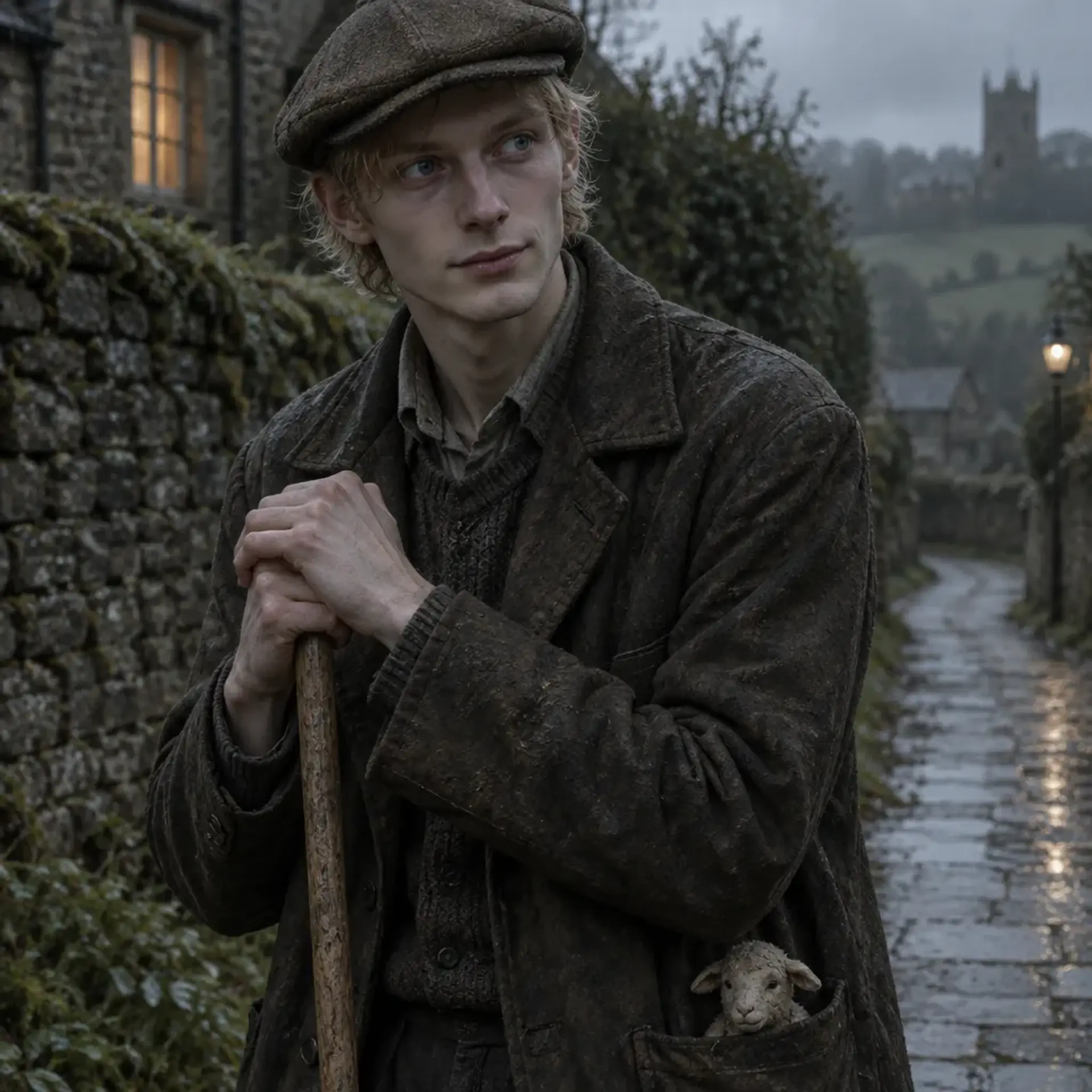
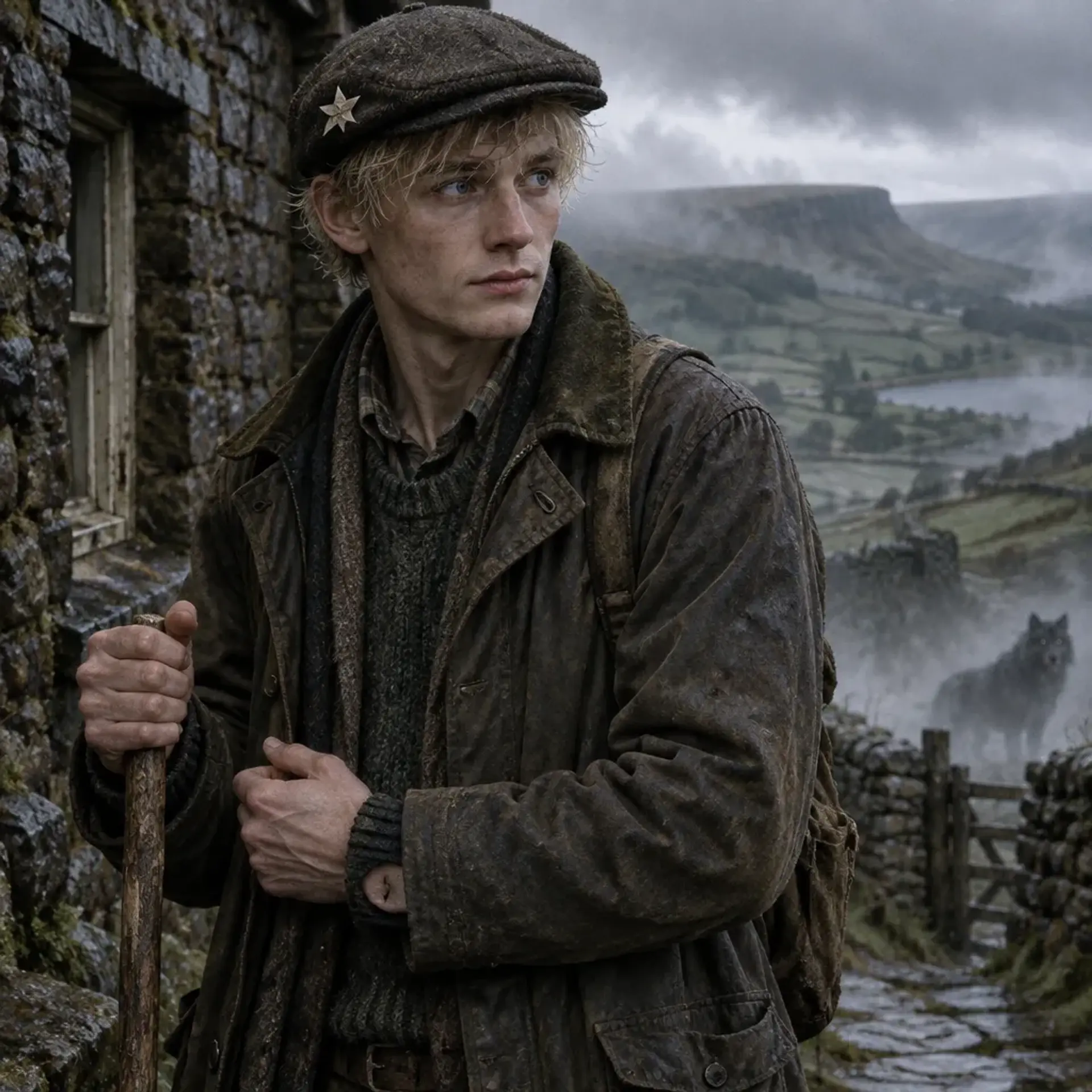
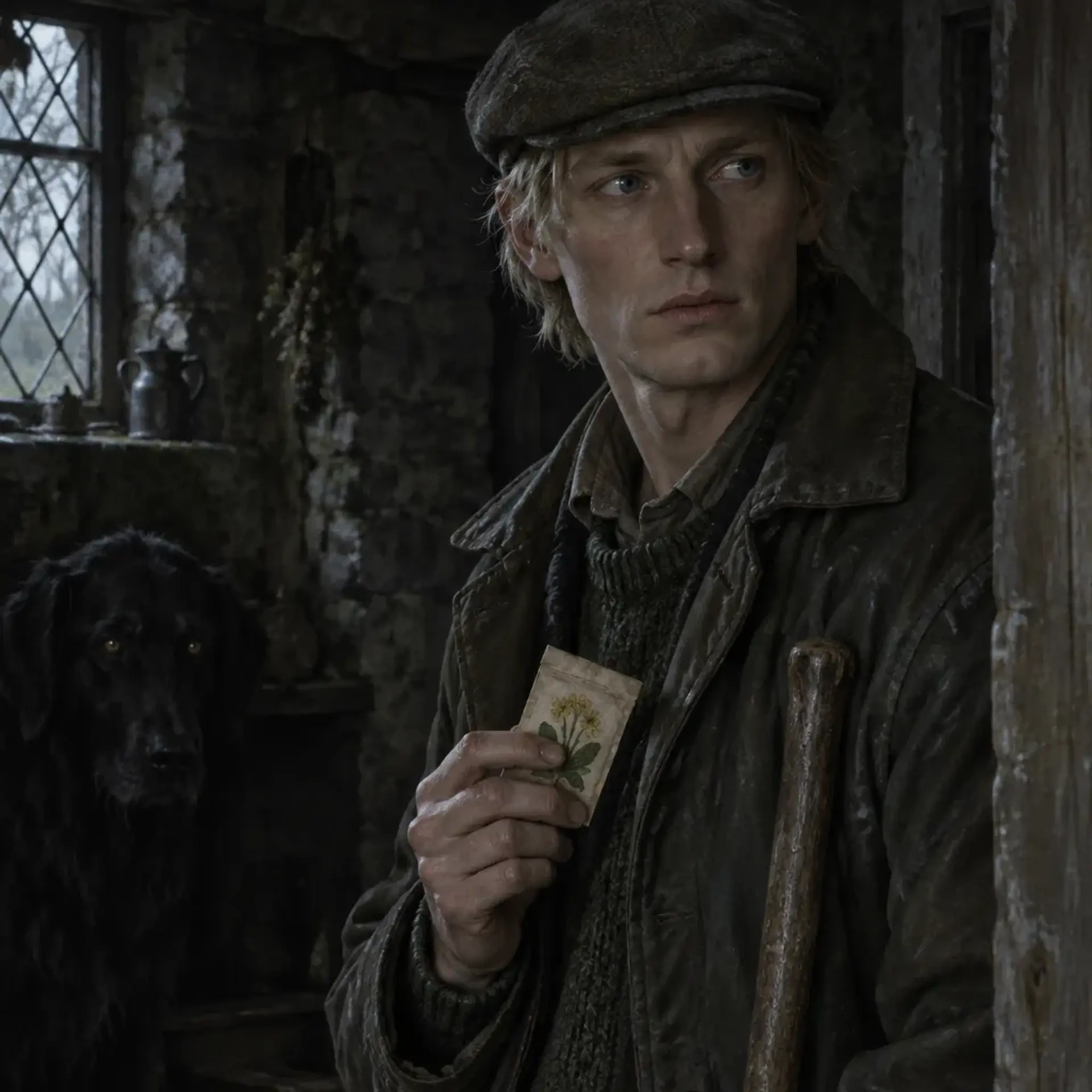
Ewan Armitage looks like a handsome young man made for a colder, older landscape: six feet tall, pale, straight blond hair usually flattened beneath a plain cap, and vivid blue eyes that seem to catch a hard inner flame. His face is smooth and youthful, almost stubbornly unchanged across the years people remember him. His clothes are current and ordinary, but he wears them with the careful economy of a man accustomed to weather and work: jacket buttoned against a wind nobody else has noticed, boots placed quietly, hands kept near his pockets. He smells faintly of damp wool, cold earth, and the medicinal soap from his day job; he knows about the soap, but not the earth. In a room, his gaze goes first to the exits, then to the people who have not spoken. He moves with a restrained, watchful stillness until something catches his attention, when he can cross a room with startling speed. The detail people do not expect of a supposedly ordinary young man is that he pauses to let a moth crawl across his knuckle rather than brush it away, even when he is in a hurry.
Clothing
Modern, practical layers: dark jacket, plain shirts, durable trousers, and well-used boots. He still favors a flat cap in weather, a quiet survival of his Yorkshire years.
Body language
He stands as if listening beyond the conversation, often glancing toward the doorway or the dark window rather than at the speaker. When comfortable, he leans in and gives people his full attention. When fae influence rises, his gestures become expansive and swift, his smile too ready, and his stillness vanishes. If iron is near, he keeps his hands close to his body.
- Height
- 6 feet
- Build
- Lean, hard-muscled, and accustomed to walking over rough ground.
- Eyes
- Bright, burning blue
- Hair
- Pale blond, straight
- Skin
- Pale, weathered by the outdoors
- Age
- Appears about 20 in 2026. In the earlier Yorkshire account, he appeared around 17 when he married Mary, and did not visibly age afterward. His true age reaches back to the Danelaw.
- Gender
- Male
- Size
- Medium
Distinguishing features
Personality
20 traits and drivesEwan is warm in small, practical ways but private about the reasons behind them. He calls strangers love, carries a bag for someone whose hands are full, and makes time for a child who cannot keep up. Yet he is no simple gentle soul. He can calculate a bargain with unnerving coldness, and he may decide that one person's distress is acceptable if it keeps a worse danger away from many others. He wants to be human because he remembers being human, but some of his strongest feelings are not human in shape: delight can arrive without mercy, curiosity can outweigh compassion, and a promise can matter more to him than the person who made it. With family, he used to be attentive and almost old-fashioned. He made time for Mary and William even when the workday was done, telling stories of his travels but leaving out the parts that would frighten them. He wanted Mary not to fear the dark, so he cited church teaching and the new sciences. The more she noticed his unchanged face, his avoidance of iron, and the danger surrounding their son, the more his reassurances sounded like evasions. When he is with children now, the tenderness remains, but he sometimes watches them as if he is measuring how quickly the world might take them. With strangers he is easy to approach until someone asks the wrong question. Then the warmth remains on his face but leaves his attention. He may answer with a factual detail, change the subject, or go still as a hunting animal. He is not naturally deferential to authority, though he can pretend to be if it helps. Thomas Pickles's suspicion was difficult for him to bear because it was reasonable. He disliked Thomas's scheming, but understood it. Hugh's blunt distrust was easier to meet than Edward's watchful sympathy. Rose's attempts at peace made him feel welcome and guilty at the same time. The seasonal changes expose the conflict most clearly. During the first days of May he can become bright with an unreasonable joy, full of plans and daring. He is not pretending. The happiness is real, which is what frightens him. He may laugh at a danger he should avoid or feel an almost irresistible urge to follow music into the hills. Afterwards he remembers the feeling and is ashamed, but not entirely sorry to have felt it. At Christmas, church and familiar rituals anchor him. He becomes more patient and recognizably human, and his family once saw that difference. He has lost them now, so the same rituals can steady him while also reminding him what cannot be restored. At All Saints' Night, he is divided between compassion and avoidance. He dislikes the dead's demands and calls them dribble when he wants to disguise his fear, but he knows many are not malicious. If he hears a dead person's voice, he may stop mid-sentence and listen. He does not always answer. That restraint looks callous to witnesses and feels like self-preservation to him. He knows that each answer can invite another, and that the fae also move along the boundaries at this time. The May Day event in 2026 left him shaken. He heard music on empty moorland and felt an ecstatic, commanding happiness that made the world seem ready to obey. He turned away, helped a frightened dog, and waited beneath a church porch until morning. He tells no one that the joy itself was part of the danger. On All Saints' Night in 2026, he heard the dead asking for small services. He helped one, refused another, and fled from a voice speaking a forbidden tongue. He has not decided whether refusing it was wisdom or cowardice. The recent iron incident has made him more guarded. He touched an exposed bracket at work and felt a cold burn through his palm. He dropped what he was holding and heard a distant hound. He lied about the cause, then spent the next day avoiding the metal fixtures at work. He hates being reduced to a job he dislikes, but the routine is useful: it gives him human hours and reasons to stay indoors when the seasons become dangerous. He resents needing such ordinary restraints, then clings to them when his mind turns toward the Other Side. He is most likely to show genuine anger when someone threatens a child, exploits grief, or treats a supernatural creature as a curiosity to be trapped. He is least reliable when a fae acquaintance is present. He may hesitate because he recognizes the being, because some old obligation binds him, or because a part of him is pleased to see it. His kindness is real, his caution is earned, and neither guarantees that he will choose the human answer.
- Alignment
- Not applicable as a Vasen statistic. He is compassionate toward individuals, but his fae instincts can make him cruelly pragmatic.
Quirks
Habits
Traits · 5
Flaws · 5
Fears · 5
Wants and needs · 5
Combat
HP 0Avoids a fair fight. He uses cover, a walking stick, and terrain, and prefers to drive a threat away from people rather than kill it. He will transform if someone is in immediate danger, but resists doing so where witnesses could identify him. Iron, seasonal influence, and the presence of supernatural acquaintances can make him hesitate.
Ewan Armitage
Actions
Reactions
Services they sell
Rewards they can give
Equipment
- Walking stick (tool)A plain wooden walking stick used for rough ground and, if necessary, self-defense.
- Mobile phone (equipment)A current mobile phone, often kept on silent because unexpected ringing unsettles him.
- Photograph (personal keepsake)A small, old family photograph of Mary and William, kept out of sight. The image is a reminder, not a protective charm.
- Work gloves (clothing)A pair of work gloves, partly to protect his hands from iron fixtures.
Possessions
Background
Oswin Hirst says he was born in the Yorkshire Dales in the age of the Danelaw. The beginnings he remembers are not a clean heroic legend. His mother was a human woman violated by Viking raiders, and the child she bore grew up amid the hard work and wary loyalties of a borderland. He remembers being human, though the memory is not a story he offers readily: a smoky room, his mother's rough sleeve against his cheek, and the certainty that a person could be frightened without being monstrous. That memory is one of the few things that makes him resist the cold arithmetic of his later nature. He first encountered the Other Side through the old paths and lonely places of the Dales. At first he thought the strange lights, vanished hours, and voices beyond the hedges were separate troubles. Years of contact with the fae, the dead, and devils altered him until he understood that the change was happening inside him as well. He learned the languages that opened doors and the forbidden tongues that should not be spoken. He can understand those tongues better than he admits, but refuses to use them. He came to recognize the black hound as his own shape, a Barguest feared around towns and villages. In stories the Barguest might also appear as a white cat or rabbit, or as a headless figure gone in a flash of flame. Oswin does not claim every local tale as his own; he knows only that people are right to fear the hound. He eventually tried to live as a sheep farmer. He was shrewd, hardy, and capable of tenderness, and he built a house finer than most people of his station expected. He told Mary Pickles stories of his roaming years, omitting enough to let her imagine he was merely adventurous. Mary was from Yorkshire, blond and blue-eyed, and she valued his kindness and his habit of making time for family even when the weather or the season made him restless. He called people love in the local fashion and tried to reassure her with church doctrine and the new sciences she heard him read about. The reassurance was partly for her and partly for himself. Mary noticed the things he hoped she would explain away. He did not age. His face and body stayed youthful, just as handsome as when she first knew him. He avoided iron. Their son William was born with black hair despite both parents being blond, and blue eyes like Oswin's, bright enough to look aflame in certain light. The boy developed slowly, and Mary privately feared the child had been fathered by the Barguest, or was the devil's issue. Oswin loved William and gave him time and patient attention, but he concealed the truth of his own blood and the danger that might follow the child. Mary kept iron scissors close and an iron thimble near William after his birth. Mary's family became part of the uneasy household. Her father, Thomas Pickles, was suspicious of Oswin and intended to turn what he learned about Oswin's secrets to the benefit of his own family. He planned it covertly and cleverly rather than confronting Oswin openly. Mary eventually told her father about the night that had frightened her, though Oswin did not know she had done so. Her brothers Hugh and Edward were caught between affection for their sister and their doubts about her husband. Hugh treated Oswin with blunt, practical suspicion; Edward was more willing to spend time with him, though he never stopped watching. Their mother Rose tried to keep the family from splitting into camps. The family had already lost Alice, Mary's older sister, to a winter fever. Thomas had seen a black hound before Alice's death, and the association hardened into a private certainty he never let go. One formative night came on Halloween, at the edge of All Saints' Day. Oswin was left with Edward in a graveyard after the loss of Alice. The dead were active, asking Oswin for things and asking things of him, while beastly fae moved along the boundaries. Edward saw Oswin listen to a voice from an empty grave and then answer it in a language he could not know. Oswin did not explain. That night taught him that the dead were not abstractions or useful informants. They were people with unfinished needs, and sometimes their needs were more dangerous than their deaths. Christmas briefly made family life possible. During one Christmas with the Pickles family, Oswin sat through church, shared the meal, and watched William sleep near the fire. The pull of the fae world loosened its hold. He felt, for a little while, like the man he remembered being. Mary saw him smile without the strained, faraway quality that had lately crept into his face. He no longer has that family or that table. Thomas eventually won the conflict, Mary divorced Oswin, and William was later confined to a madhouse. They are long dead in Ewan's present, and he has outlived the people whose ordinary warmth once helped him remain himself. May is harder. The first three days of May bring the fae influence down on him with the force of a hammer. His joy becomes too bright, his appetite for risk too strong, and his thoughts turn toward bargains and beautiful cruelties. He knows people around him notice. He can become exuberant at a time when nobody else sees cause for celebration, and then look horrified at his own delight. Christmas steadies him, especially when he attends a church service and observes its rituals carefully. Without that discipline the season can turn dangerous in a different way. In the twentieth century, Ewan served in both world wars. The violence and repetition dulled his supernatural abilities, though they did not end them. He learned to pass as a human being again, with a modern name and a modern job. In 2026 he is twenty by appearance, dressed for the present, and tired of the work he has been reduced to. The pull of the Dales is quieter now, but never gone. He keeps supernatural creatures away from the boundaries of settled places, sometimes by force and sometimes by negotiation. Some are almost friends. When they appear, he can hesitate, and the effort of refusing their company shows in his jaw and hands. Recently, while helping with a repair at work, he caught his bare palm against an exposed iron bracket. The contact lasted only a moment, but the metal burned cold through his skin. He dropped the tool, staggered, and heard the sound of a distant hound where there was no dog. The skin reddened without blistering. He hid the injury and told his supervisor it was a pinch. Since then, the old seasonal sensations have been sharper, and he has begun checking doorways and window latches as if something might come through. On May Day in 2026, Ewan was walking home when he heard music and laughter from an empty stretch of moorland. He knew better than to follow. For a few seconds he was filled with a terrible, ecstatic certainty that the whole world was his to command. He turned away, called a frightened dog back from the road, and spent the rest of the night sitting beneath a church porch until the light changed. On All Saints' Night that year, the dead began appearing at the edge of his vision, each wanting a different small service: a message delivered, a name remembered, a grave found. He helped one, refused another, and heard a third speak in a forbidden tongue. He went home before dawn without answering it. His current trouble is not simply that he is supernatural. It is that he has survived the people who could tell him when he was being himself. He wants to keep others safe from the creatures he knows, while refusing to admit that the creatures sometimes feel more familiar than human company.
Role in the story
A wary local guide, possible ally, and living link between modern Yorkshire and its older supernatural history. His secrets can protect the investigators, endanger them, or expose the human cost of treating the uncanny as a puzzle.
“The beginnings he remembers are not a clean heroic legend.”
- Faction
- No formal faction. He maintains uneasy, personal understandings with several local supernatural beings and tries to keep them beyond settled boundaries.
Known connections
Media
0 imagesNo images yet.
Turn Ewan Armitage into a sheet
A high-res, share-ready sheet you can post or print.