
Why Did AI D&D NPC Generators Stop Defaulting to Human? August 2026 Data Study
Why did AI D&D NPC generators stop defaulting to Human? August data shows plain-Human NPCs fell from 50.8% to 37.4% in a fresh CharGen study.
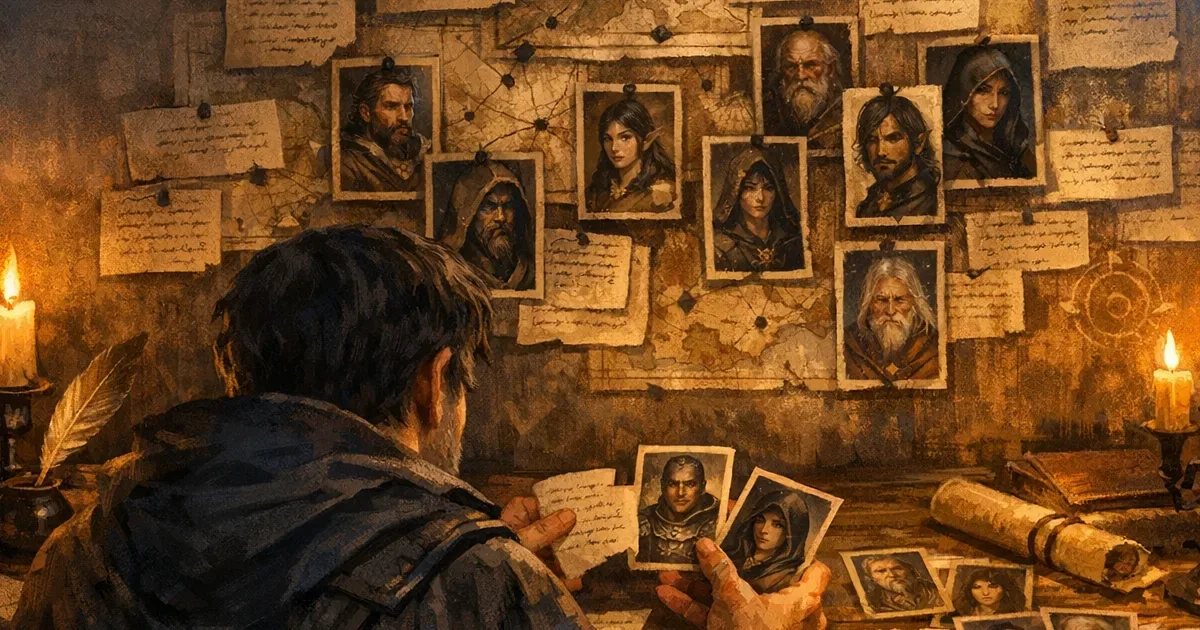
On 1 August I pulled another 500 public NPCs from CharGen and expected the same result as July: a crowd of humans, then a long way back to everyone else. Instead, the plain-Human share had fallen from 50.8% to 37.4%. That is a 13.4 percentage-point drop in one month, using the same sample size and the same read-only method.
The short answer to why did AI D&D NPC generators stop defaulting to human is that they have not stopped entirely. Humans are still the biggest single label. The interesting change is that the gap has narrowed, the labels have become much more specific, and the surrounding world data has become far more written-out. A generator that once returned tidy fields now gives me a stranger, noisier and more campaign-ready cast.
I run CharGen, so I am close to the tool and the people who use it. That makes this study useful and limited at the same time. I can see aggregate public output, not the private prompts behind it. I can compare the shape of the results, but I cannot claim that one model update, one prompt change or one user group caused the shift. The figures show what was published, not every NPC anyone generated.
Why did AI D&D NPC generators stop defaulting to Human?
The July study found plain Human at 50.8% of 500 NPCs. The August pull put it at 37.4%. If I count every label that contains a human lineage or a modified human description, the combined total reaches 45.4%, still below last month's plain-Human number.
| Measure | July 2026 | August 2026 | Change |
|---|---|---|---|
Plain Human label | 50.8% | 37.4% | -13.4 points |
| All human-lineage variants | not separated | 45.4% | below July plain-Human share |
| Distinct NPC race strings | recorded in first study | 117 | richer label variety |
| Strict two-word names | 82.2% | 81.8% | broadly stable |
The rest of the August top line is familiar fantasy material. Elves, half-elves, dragonborn, half-orcs and goblins all gained ground. The important point is not that one species suddenly won. It is that the long tail is doing more work. A DM who asks for a few tavern patrons is getting more chances to build a place with different histories, languages and assumptions before any deliberate editing.
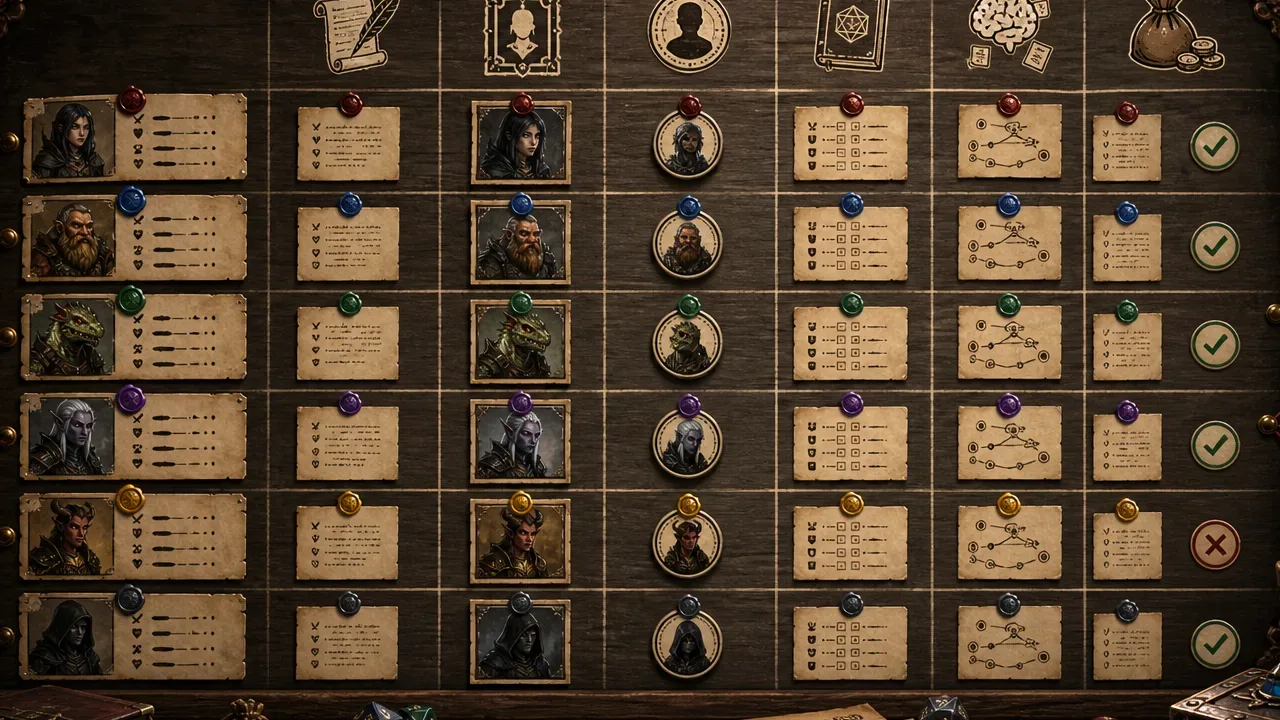
That does not make variety automatically good. A random pile of unusual labels is not a culture. It is raw material. I still want to know who has power, who is local, who is passing through and who is hiding something. The data simply says that the first draft is giving me more material to work with than it did a month ago.
The one product change I checked, and why it does not explain the drop
Since publishing this I went back through CharGen's own commit history looking for anything on my side that could have moved the number, because "the users changed" is a convenient answer for a person who owns the tool. I found one candidate, and it is worth admitting in public.
On 30 July 2026 I shipped a fix titled "forward NPC additionalDetails guidance to the backend". The NPC form had been collecting an "Additional Details" free-text box for months, but the request mapper never attached it to the outgoing request, so everything typed into that box was silently discarded. The sibling generators for Hazard, Puzzle and Species had been forwarding the same field correctly the whole time. If you typed "make her a wood elf smuggler with a debt problem" into that box and got back a human innkeeper, that is why, and I am sorry.
It is a tidy story and the dates kill it. The NPC sample runs from 18 July to 1 August, and the fix landed on 30 July. At most two of those fifteen days sit after the change, covering a small fraction of the 500 records. A fix that recent cannot move an aggregate of that size by 13.4 points. So it is a real bug with a real fix, it does make the generator behave better from 30 July onwards, and it is not the cause of the shift in this data.
That leaves the two explanations I cannot separate with two months of data: a changing creator base, which the German-language labels support, and ordinary sampling variance between two fortnights. Two points make a line, not a trend. If the September pull lands back near 50% then this was noise and I will say so in that post; if it holds near 37% the change is structural. I would rather leave that open than dress up a fortnight's variance as a movement.
How I gathered the August sample
I used the public CharGen entity API at api.char-gen.com/api/entities/public, with no authentication and no write access. I pulled the newest 500 public entities for each of three types, NPC, MONSTER and SETTLEMENT. Each type came from ten pages of 50 records, ordered newest first by creation date.
The NPC sample covers 18 July to 1 August 2026. The monster sample covers 20 to 31 July. The settlement sample stretches from 17 June to 1 August because settlements are created less often than NPCs. The July comparison uses the first CharGen study, Why Are Most Fantasy NPCs Human?, which used the same three entity types, the same 500-record sample size and the same public endpoint.
Every number in this article is an aggregate count across anonymised public entities. I did not name a creator, quote a private prompt or select a flattering example. At the time of collection, the public API contained 44,933 entities across 8,694 creators. That is a useful sense of scale, but this is still a sample of public work. People can publish differently from how they generate privately, and public records do not tell me why a field was written in a particular way.
The comparison is therefore descriptive. It can show that a label became more or less common. It cannot prove that the model changed because of a particular release, or that DMs have consciously changed their preferences. I would rather state that limit plainly than pretend a clean percentage is a complete explanation.
NPC race labels have become much more specific
The August sample contains 117 distinct race strings across 500 NPCs. That is a lot of variation for a field that often begins as a short choice in a generator form. Some strings are familiar D&D species. Others are lineage combinations, regional descriptions or labels that look as if the generator has tried to be helpful with a more precise identity.
Twenty-nine NPCs, 5.8% of the sample, carry a German-language race label. Mensch appears 22 times, alongside labels such as Hochelfe, Halbelfe, Waldelfe and Zwerg. I am not treating the German terms as errors. They are a signal that the public creator base is more international than an English-only interface suggests. They also expose a practical issue: a field can be semantically clear to one reader and awkward to search, filter or compare for another.
There is a detail in those German labels I missed on the first pass, and it is more specific than "some users write in German". Waldelfe means wood elf, Zwerg means dwarf, Hochelfe means high elf. Those are not only German translations of D&D species, they are the species vocabulary of Das Schwarze Auge, published in 1984 by Schmidt Spiel & Freizeit and Droemer Knaur, and the most successful roleplaying game on the German market, outselling D&D on its home turf. It ships forest elves, several dwarf lineages, goblins, orks and the lizardfolk Achaz as playable options.
I want to be careful not to overstate that. What the data proves is that a meaningful slice of people generating NPCs are typing in German. Whether they are running Das Schwarze Auge specifically, or D&D in German, is a hypothesis I cannot settle from race labels alone. The practical point stands either way: if your table plays in a language other than English, the generators will take a race in that language and run with it, and you are not restricted to the SRD spelling.
The first study's plain-Human result was easy to count because the field was tidy. The August result is more interesting and more annoying to put in a spreadsheet. When I analyse these records, I have to decide whether Mensch, Ashen Human, Returned and Human with cybernetic augmentation belong in one family or remain separate labels. Both choices answer a different question.
For a DM, that distinction matters at the table. If I want a world where humans are rare, I should not assume that changing a dropdown to Returned has created a genuinely different culture. If I want a cast with different visual silhouettes and story hooks, the broader label variety can still be useful. I would generate the first batch, then edit the labels into the terms my players will actually understand.
The CharGen NPC Generator is a good place to test that workflow. I can specify a race, role, region and prompt detail, then keep the useful results in a campaign rather than losing them in a download folder. That last step is where a generated list becomes a cast. Names, relationships and a place in the World Codex matter more than a rare label on its own.
Monster type has moved away from humanoid threats
The monster sample changed in a direction I did not expect. Humanoid fell from 42.6% in July to 22.8% in August. Undead rose from 11.4% to 16.8%, while Constructs moved from 9.2% to 11.8%. Boss-tagged monsters fell from 21.0% to 11.4%, and legendary-tagged monsters dropped from 16.0% to 4.2%.
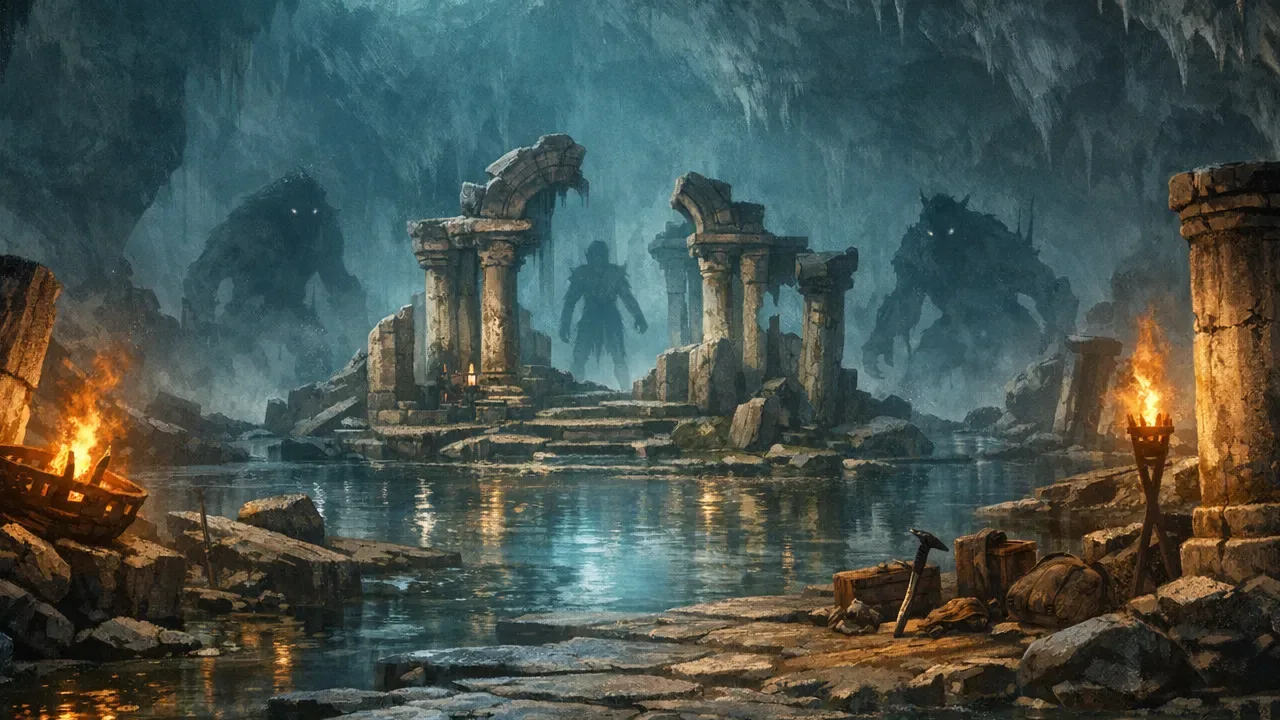
In plain language, this month's public sample looks less like a list of intelligent humanoid villains and more like a set of smaller threats, undead problems and constructed guardians. That is not a claim that the generator now prefers undead in every prompt. The newest 500 records are a moving slice, and a few active campaigns can change the mix. It is still a meaningful difference from July, especially when both studies use the same method.
I like the practical implication. A humanoid enemy often arrives with a social answer built in: who hired them, what do they want, who can be bribed, and what happens if they run away. An undead or a Construct asks a different set of questions. Who made it? What unfinished event keeps it moving? What material or ritual does it defend? The best Monster Generator result is not the strangest creature. It is the one that gives the session a problem the players can recognise.
The boss figures are also worth treating carefully. A drop from one in five to roughly one in nine does not mean DMs have lost interest in villains. It may mean the public queue currently contains more supporting encounters, or that people publish more quick monsters than centrepiece villains. The more useful takeaway is to look at your own roster. If every generated entry is labelled boss, the label stops doing useful work. If none are, your adventure may lack a clear anchor.
Challenge Rating has turned into prose
The Challenge Rating field is the messiest result in the study. Across 500 monsters, I found 274 distinct strings. Some are simple values such as 5. Others look like CR 29, mythic divine manifestation or Low individually, dangerous in a coordinated group near the pit.
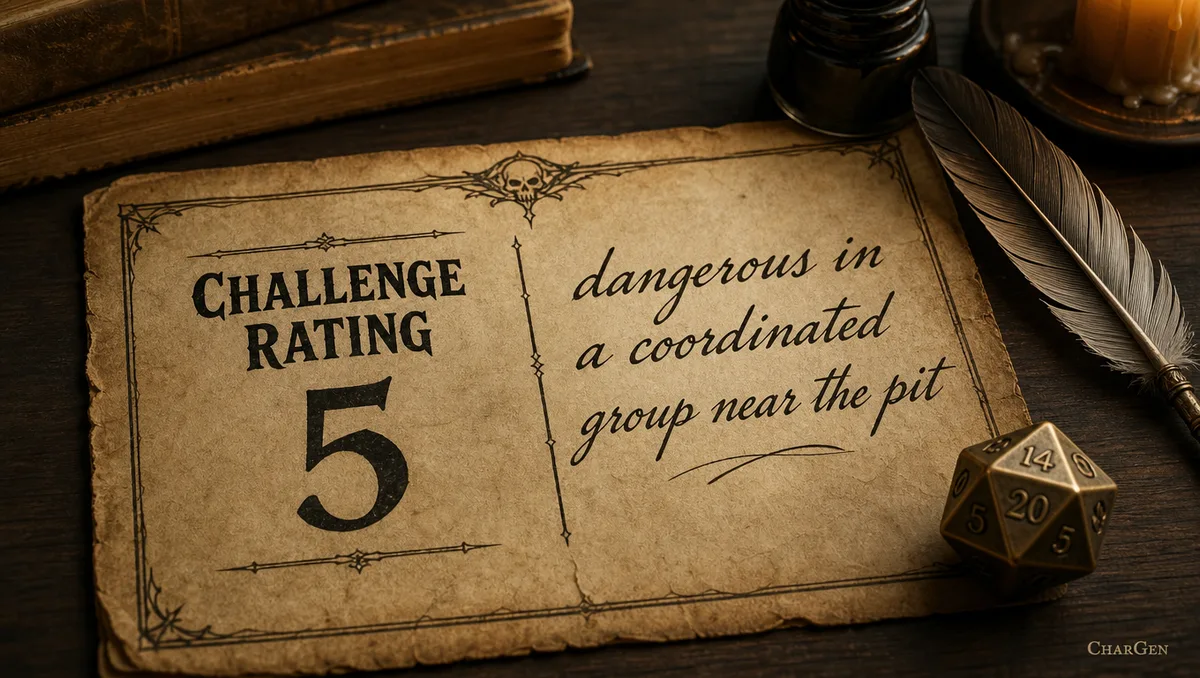
Only 8.2% of the sample still uses the plain Low, Moderate or Deadly shorthand. That makes the field less convenient for sorting and more useful for reading. A sentence can tell me that a creature is a poor solo fight but a real problem in a pack. It can also hide the number I need when I am trying to prepare a balanced encounter quickly.
My solution is not to throw away the prose. I copy the descriptive line into my notes, then add a separate working value for the actual table. If the generated monster says it is dangerous in a coordinated group, I decide how many creatures that means, what terrain helps them and what the party can learn before the fight. The encounter generator can help me turn that judgement into a playable scene, but no label should replace a DM's look at action economy and the party's current resources.
This is also a reminder that AI D&D challenge-rating variety can be useful only when the output has two layers. The first layer explains the fiction. The second layer gives me something I can compare with the party. A sentence that does both is brilliant. A sentence that does neither is just a colourful speed bump.
Settlement population is now a paragraph, not a number
The settlement result shows the same move from clean fields to descriptive writing. None of the 500 August settlements has a bare numeric population field. In July, the sample had a clean numeric median of 4,500. In August, every population field is prose.
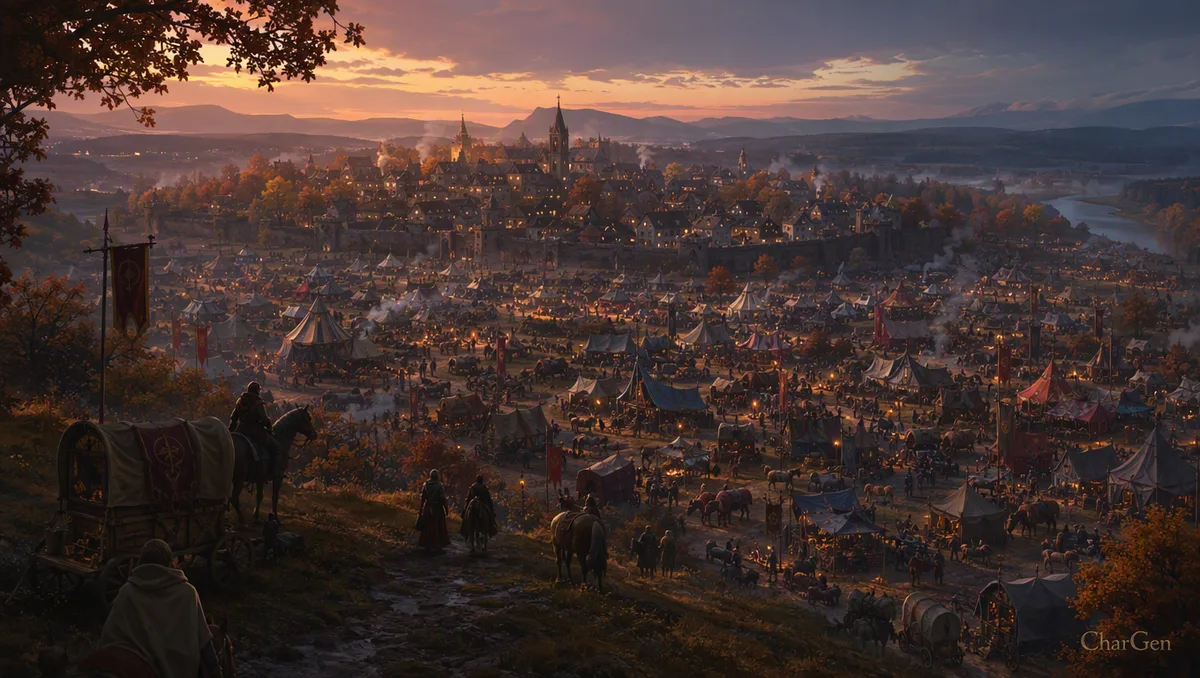
That prose is often useful. 72.4% of descriptions mention a seasonal or event-driven swing, such as a town rising to nearly 1,800 people during a caravan season. Half, 50.4%, break the population down by race. If I extract the first number in each description, the rough median is 1,200 residents and the mean is 13,892, pulled upward by a long tail that reaches 680,000.
The figures are not directly comparable to July's tidy median because the August field contains more than one kind of number. A description might mention a permanent population, a festival crowd, a military garrison and a seasonal peak. Picking the first number is a transparent shortcut, not a perfect demographic measure.
For a DM using a D&D settlement population generator, that is still a useful change in emphasis. Population is no longer just a scale marker. It is a pressure system. A caravan season creates temporary work and crowded streets. A city with a huge military presence has different rumours from a city whose number swells for a religious festival. If I keep the prose and add one working headcount to my prep notes, I get both the fiction and the table utility.
Settlement labels are changing in the same direction. Only 51.0% are a single word such as Town, Village or City. Nineteen percent are three words or more, with labels like Cloud-island metropolis and agrarian giant kingdom and Subterranean forge and restricted research facility. Town remains the most common extractable scale at 32.4%, followed by Village at 19.6%, City at 15.4% and Metropolis at 6.4%.
The Settlement Generator is most useful to me when I treat its output as a briefing rather than a finished gazetteer. I underline the location, the population pressure and the one faction that can make the place move. Then I cut anything my players will never need to hear.
Names did not change, and that is good news
NPC naming convention stayed almost perfectly still. In July, 82.2% of names followed a strict two-word, first-name-plus-surname pattern. In August, the figure is 81.8%.
I am glad this did not move with the race labels. Names are the part of a generated NPC that players have to say aloud, remember and write in their own notes. A stable two-word convention is not a failure of fantasy. It is a usability pattern. Tessa Falloway is easier to call across a noisy table than Ael'thys-of-the-Seven-Ashes, unless the latter has earned a whole scene. When I only need a readable name for a walk-on rather than a full NPC, the free D&D name generator gives me 10 at a time in whatever race and cultural style the region calls for.
The contrast is the useful finding. The generator is producing richer identity and setting labels while keeping names readable. That gives me room to spend my editing time on the details that change play, not on replacing every name with a pile of apostrophes.
What the study changes in my prep
I take four practical rules from the August numbers.
First, I treat the default as a prompt to review, not a verdict. If I generate ten NPCs and eight share the same species, I change the next prompt deliberately. I might ask for two locals, one recent immigrant, one person from a neighbouring culture and one person whose identity is central to the scene. The goal is not a quota. It is to stop the default from silently becoming the whole town.
Second, I keep a human-readable label beside the raw generator label. Mensch can stay in the source record, but the player handout may say Human if that is what the table uses. If a label is a specific lineage or cultural identity, I explain it in one sentence. That keeps international output visible without making the group decode a field during play.
Third, I split fiction from encounter maths. A prose Challenge Rating note, a seasonal population sentence and a vivid monster type are useful creative material. They are not substitutes for deciding how many actions the enemy gets, how many people are actually present and what the party can reasonably survive.
Fourth, I use the tools in a chain. I generate a cast with the NPC tool, give the settlement a population pressure, create a monster that belongs to the location, then write the session notes after the table has changed the facts. That is why the RPG Workshop and RPG Session Notes matter to me. A generated NPC becomes useful when their name, location and consequences survive the next session.
FAQ
Why did AI D&D NPC generators stop defaulting to Human?
They have not stopped completely. In the August 2026 sample, Human remained the largest single NPC race label at 37.4%, down from 50.8% in July. The public output also contained 117 distinct race strings across 500 NPCs, so the long tail became much larger.
What are the latest D&D NPC race statistics for 2026?
Across 500 newly published public CharGen NPCs collected on 1 August 2026, 37.4% used the plain Human label. Counting human-lineage variants brought the total to 45.4%. The sample also included German-language labels in 5.8% of records.
What changed in the AI D&D monster type data?
Humanoid fell from 42.6% of the July sample to 22.8% in August. Undead rose from 11.4% to 16.8%, and Construct moved from 9.2% to 11.8%. Boss and legendary tags also appeared less often in the August sample.
Why are AI-generated Challenge Rating fields so varied?
The August sample contained 274 distinct Challenge Rating strings across 500 monsters. Many records use descriptive prose rather than a single number or a Low, Moderate or Deadly label. Keep the prose for encounter flavour, then add a separate working difficulty for your party.
Are generated settlement populations reliable?
They are useful as prompts, not as audited census figures. All 500 August settlement population fields were prose, and 72.4% mentioned seasonal or event-driven changes. A DM should extract a practical headcount and keep the richer demographic description separately.
How can I test the findings myself?
Generate a small batch in the NPC Generator, set several races deliberately, and compare the results with an unqualified prompt. Use the Monster Generator and Settlement Generator to see whether the output gives you clean values, descriptive text or a mixture of both.
The result I care about is not a perfect percentage. It is a better first draft for Thursday's game. A town with one default human shopkeeper is fine. A town where every person, threat and population field defaults the same way is a missed opportunity. The August sample gives me more variety, more prose to edit and a clearer reminder to make the final decision myself.
Build an NPC Free