
How Much Do AI D&D Character Generators Cost in 2026?
How much do AI D&D character generators cost in 2026? Compare free tiers, real subscription prices, credits, and campaign-ready value.
I can spend £10 on a character generator and get one dramatic portrait, a month of campaign prep, or a small pile of credits that runs out just as the wizard's sleeves stop melting. How much do AI D&D character generators cost is therefore a better question than “which one has the cheapest plan?”
For a real campaign, I am pricing four player portraits, recurring NPCs, monsters, and tokens that still read at postage-stamp size. The subscription is only one part of that bill. Rerolls, model choice, export work, storage, and campaign memory matter too.
The same check helps with AI dungeon master pricing. A tool that writes a recap or stores a campaign may be cheaper than another image subscription, but it does a different job. I count the finished thing I need, not the number printed on the biggest plan card.
Prices checked 10 August 2026: I used CharGen's live pricing page and each vendor's own pricing or help page where one was available. Prices are shown in the currency advertised by the service. Plans, credit costs, taxes, and promotions can change, so check the linked page before paying.
How much do AI D&D character generators cost in 2026?
The honest range runs from free daily credits to $120 per month. The entry point for a serious paid image service is usually around £9.99 or $10 per month, but the unit being sold changes from one tool to the next.
| Tool | Free access checked 10 August | Paid entry or published price | What you are really buying | Main D&D catch |
|---|---|---|---|---|
| CharGen | 10 Gold daily, no card | Plus £9.99/month for 900 Gold; Elite £19.99 for 2,000; Ultimate £39.99 for 4,500 | A Gold balance across image, editing, audio, video, and tabletop tools | Premium models cost more than standard generations |
| Midjourney | No free plan listed on its current plan comparison | Basic $10/month or $96/year; Standard $30; Pro $60; Mega $120 | Fast GPU time, Relax time, privacy, and batch capacity | No built-in character sheet, token workflow, or campaign record |
| Neolemon | 20 credits, enough for five Character Turbo images | Creator $29/month for 600 credits, up to 150 images | A focused cartoon character-consistency workflow | Credits do not roll over and the style is deliberately narrow |
| NightCafe | 5 daily credits plus community rewards | PRO is a recurring plan; price and credit bundle are shown in the current account pricing flow | Model-specific image credits, community features, and rewards | Credit cost changes with model, size, and settings |
| Hotpot | Many products offer free exploration | No single public flat plan; credits and settings vary by product | Separate AI tools for art, characters, editing, and game assets | You need to choose the exact product before seeing the price |
| World Anvil | Free account | Master $4.50/month on annual billing; Grandmaster $8.25; Sage $25, excluding VAT | Private worlds, storage, maps, campaigns, and publishing controls | It stores campaign material, but it is not an image generator |
That table is why a single “cost per character” figure is usually fiction. Midjourney sells compute time, Neolemon sells cartoon generations, CharGen sells a flexible D&D balance, and World Anvil sells campaign storage. Those are different purchases.
CharGen pricing: Gold plus the rest of the campaign
CharGen is the odd one out in this list because I can start with an image, then keep working on the surrounding material. The Free plan gives 10 Gold daily. Plus costs £9.99 per month or £95.99 billed yearly and includes 900 Gold each month. Elite is £19.99 per month or £191.99 yearly for 2,000 Gold, and Ultimate is £39.99 per month or £383.99 yearly for 4,500 Gold.
There are one-time packs too: 300 Gold for £5.99, 900 for £14.99, 2,000 for £29.99, and 4,500 for £59.99. Packs make more sense for a one-shot or a burst of campaign prep than a subscription you might forget to cancel. Gold never expires. Subscription Gold can roll over into the Gold Bank up to six months of the plan's monthly allowance, according to the current pricing page.
The important detail is that Gold is not a promise of one identical image per credit. A standard image can cost one Gold, while premium models and non-image tools cost more. I use the cost shown beside the selected model before I press Generate. That is the number that matters, not the attractive “900 generations” shorthand that only works when every generation uses the lowest-cost model.
The other part of the price is the handoff. I can use the Character Generator, move approved artwork through the Token Maker, and use Generate when I want a different image workflow. If I am making a city contact, I may also need an NPC, a shop, a faction, and a session note. Keeping those jobs together does not make every render free, but it removes the hidden cost of exporting, renaming, and hunting for the same character next week.
That is why CharGen Plus is the sensible starting point for a DM who creates every week. Elite and Ultimate add larger allowances, commercial usage rights, and free Flux.Dev image allowances, but I would pay for them only when that capacity is genuinely useful.
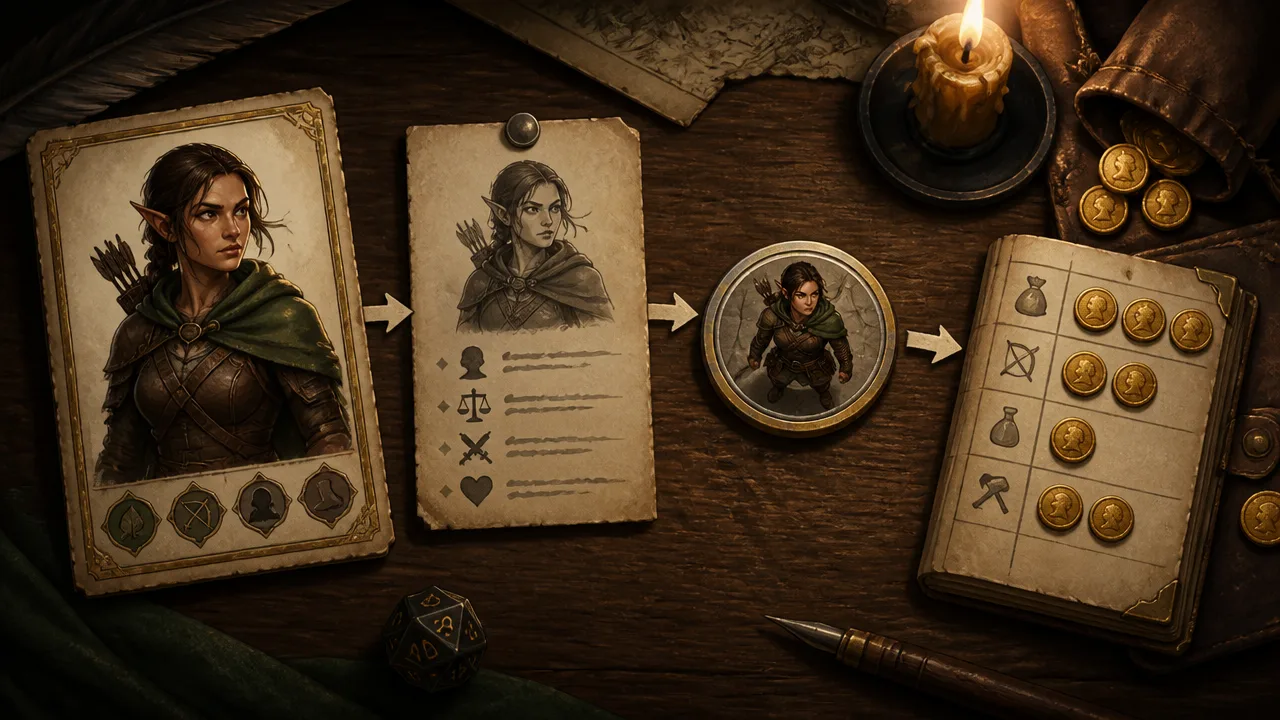
What Midjourney's $10 plan buys a D&D player
Midjourney's official comparison is refreshingly clear about its unit. Basic costs $10 per month, or $96 for a year paid upfront, and includes 200 minutes of Fast GPU time. Standard costs $30 per month, with 15 Fast GPU hours and unlimited image generations in Relax mode. Pro is $60 and adds 30 Fast hours plus Stealth Mode. Mega is $120 with 60 Fast hours. Annual plans are advertised at a 20% discount.
The choice is straightforward if the image is the product. I would try Basic for a few important portraits, and Standard for a party poster or a heavy batch where Relax mode is useful. Pro is the sensible step when private generation matters. A DM making a public villain reveal may not care. A commercial publisher or a player keeping a character private might.
The awkward bit is that Fast minutes are not the same as images. A prompt can return a different amount of work depending on the mode and job. You also need somewhere else for a character sheet, a VTT token, a campaign relationship, and a note that says why the paladin owes the ferryman money. Midjourney can be excellent value for a finished picture. It is less good value if you count the other tools and your own time afterwards.
Neolemon, NightCafe, and Hotpot use different credit maths
Neolemon is for consistent cartoon characters
Neolemon is a useful comparison because its price is easy to understand. A new account gets 20 credits, and Character Turbo costs four credits per image, so the free allowance covers five test images. The Creator plan is $29 per month for 600 credits, or up to 150 Character Turbo images. The credits do not roll over, and Neolemon currently describes the plan as monthly rather than annual.
I would choose it for a picture-book or comic-style campaign where one character must look the same across many scenes. I would not choose it just because $29 sounds cheaper than several reroll-heavy subscriptions. Its value depends on wanting the cartoon consistency features. A grim, painterly D&D party may need a different tool, and an NPC who only appears once does not need a 150-image allowance.
NightCafe is a good free test, but check the model cost
NightCafe's help centre says every user can claim a daily five-credit top-up, with extra credits from streaks, badges, and community activity. Its PRO plans add monthly Fast Credits, while credit packs are available if you do not want a subscription. Credits do not expire, but the cost of an image changes with the model, resolution, number of images, and reference images.
That makes NightCafe attractive for a DM who enjoys trying several models and does not mind a community-led interface. It also makes an old comparison table dangerous. I would open the model guide, check the base credit cost for the exact image, and then price the whole batch. A five-credit daily allowance can mean five simple drafts or one more expensive edit. The number alone does not tell you.
Hotpot does not pretend one price fits every tool
Hotpot's pricing page says most products offer free access for exploration, while commercial use and advanced settings require credits. It also says prices vary by product and settings, with the exact price appearing after you choose the tool and adjust its options.
That is less convenient for a comparison article, but it is better than inventing a universal rate. Hotpot has separate tools for AI characters, game assets, backgrounds, editing, and art. If you only need a quick portrait, try the relevant product first. If you need a repeatable campaign workflow, count the separate exports and edits before deciding that a free first generation is a bargain.
World Anvil is not an image generator, and that matters
I included World Anvil because many DMs asking about ai character generator software pricing are really trying to solve a storage problem. They want the portrait, character notes, private backstory, map pins, player permissions, and campaign history to stay in one place.
World Anvil's current pricing page shows a free tier, then Master at $4.50 per month when billed annually, Grandmaster at $8.25, and Sage at $25, excluding VAT. Master covers private content, maps, storage, and campaigns. Grandmaster adds custom templates, statblocks, random generators, and API access.
None of those plans gives you a portrait generator. That is not a criticism. If you already have art, World Anvil may be the better next purchase because it keeps the truth about your world in one place. Pair it with an art tool rather than calling it a cheaper character generator.
A fair way to compare the price of one campaign
I use a short brief instead of a vague question about “value”. For a dockside chapter, my test card might be:
| Asset | Quantity | Draft budget | What counts as usable |
|---|---|---|---|
| Player character portraits | 4 | 2 each | The same face still reads in a token crop |
| Recurring NPCs | 10 | 2 each | Clothing and signature prop survive a reroll |
| One-session NPCs | 8 | 1 each | A clear silhouette and readable expression |
| Monster, item, and location art | 6 | 2 each | The subject fits the encounter or handout |
| Total | 28 assets | 44 drafts | Count approvals, not the prompt total |
Under a one-Gold standard-image assumption, 44 drafts fit inside CharGen Plus's 900 monthly Gold allowance. That changes if I use premium models, animation, or endless rerolls. With Neolemon, the same batch uses 176 credits at four credits each, leaving room in the 600-credit plan if the cartoon style suits the campaign. With Midjourney, I compare Fast minutes and Relax availability instead of claiming a fixed image price.
The useful measure is cost per approved table asset. If I pay £9.99 and keep 20 assets, the working cost is about 50p each. Three hours moving files between free tools is not automatically better. Count money, time, privacy, rights, and continuity together.
My picks for three common D&D budgets
The free vs paid D&D character generator decision comes down to repetition. One portrait may fit a free allowance. A recurring cast, token set, and several edits need predictable capacity. The cheapest AI D&D art generator is not always the cheapest campaign workflow.
I have no budget and need one portrait. Start with CharGen's Free plan or NightCafe's daily credits. Make one clear brief, then check the model cost before planning a whole party around it.
I prep every week and need art plus campaign material. CharGen Plus is my practical pick at £9.99 per month. It gives regular standard-generation capacity and keeps the character, token, NPC, and generator workflow close together. Add a one-time pack for an occasional busy month.
I want one polished reveal image. Midjourney Basic is the low-commitment choice at $10 per month. Move to Standard for batch work and Relax mode. Pro only makes sense if Stealth Mode or extra Fast time matters.
I need a consistent cartoon cast. Neolemon's $29 Creator plan is easy to budget, but the benefit is specific. It suits a storybook-like campaign, not every D&D art request.
I need the campaign to remember itself. World Anvil is the adjacent purchase. Choose it for private lore, maps, player access, and world records, then pair it with an image generator if the table wants portraits.
Questions people ask about AI D&D generator pricing
Is free really free?
Usually, it means a limited daily allowance, trial credits, slower queues, or lower-cost models. It can cover tonight's portrait, but not a campaign once retries and edits enter the count.
What is the cheapest way to make a D&D character image?
Use a free allowance for the first concept, then stop comparing tools once you have a usable result. CharGen Free and NightCafe are sensible tests. The cheapest image is not useful if the face changes or the file cannot become a token.
Should I buy credits or subscribe?
Buy credits for a short task, such as a one-shot or NPC burst. Subscribe when you generate often enough to use the allowance. Write down the expected approved assets before paying.
Do I need a separate tool for tokens?
Not always. CharGen's Token Maker can turn approved artwork into a tabletop-ready token, while other image services usually leave that crop and export step to you. That extra step is part of the real price comparison.
Prices will keep moving. Write the campaign brief, count the drafts, check the model cost, and decide what “finished” means before subscribing. For my weekly D&D prep, that points to CharGen Plus. For one showcase image, Midjourney Basic is enough. Specialised tools earn their place for a consistent cartoon cast or private campaign archive.
Create Character Art in CharGenFrequently asked questions
- How much do AI D&D character generators cost in 2026?
- You can start at £0 with free daily credits, then move to paid plans from about £9.99 or $10 per month. The real cost depends on whether the service charges per image, per credit, GPU time, or a wider campaign workspace.
- Is CharGen free for D&D character art?
- Yes. CharGen has a no-card Free plan with 10 free gold daily. Paid plans start at £9.99 per month for Plus, and Gold costs vary by model, so a premium render does not always cost the same as a standard image.
- What is the cheapest AI D&D character generator?
- For occasional prep, a free tier can be the cheapest option. CharGen and NightCafe both offer recurring free access, while Midjourney starts at $10 per month and Neolemon starts at $29 per month. Compare the number of usable campaign assets, not only the entry price.
- Do CharGen Gold credits expire?
- CharGen says Gold never expires. One-time Gold packs do not expire, while unused subscription Gold can roll over into a Gold Bank up to six months of the plan's monthly allowance.
- Is World Anvil an AI character generator?
- No. World Anvil is a worldbuilding and campaign-management service. It belongs in a pricing comparison because it solves the adjacent job of storing characters, private lore, maps, and player-facing campaign material.
- How should I compare AI character generator prices?
- Choose one campaign brief, count the drafts and approved assets it needs, then compare the price of the whole workflow. Include retries, editing, tokens, storage, commercial rights, and the time spent moving files between tools.