
Why Are Most Fantasy NPCs Human? A CharGen Data Study
I analysed 1,500 AI-generated D&D entities. Over half of all NPCs are Human (50.8%). Here is why most fantasy NPCs are human, with the full data.
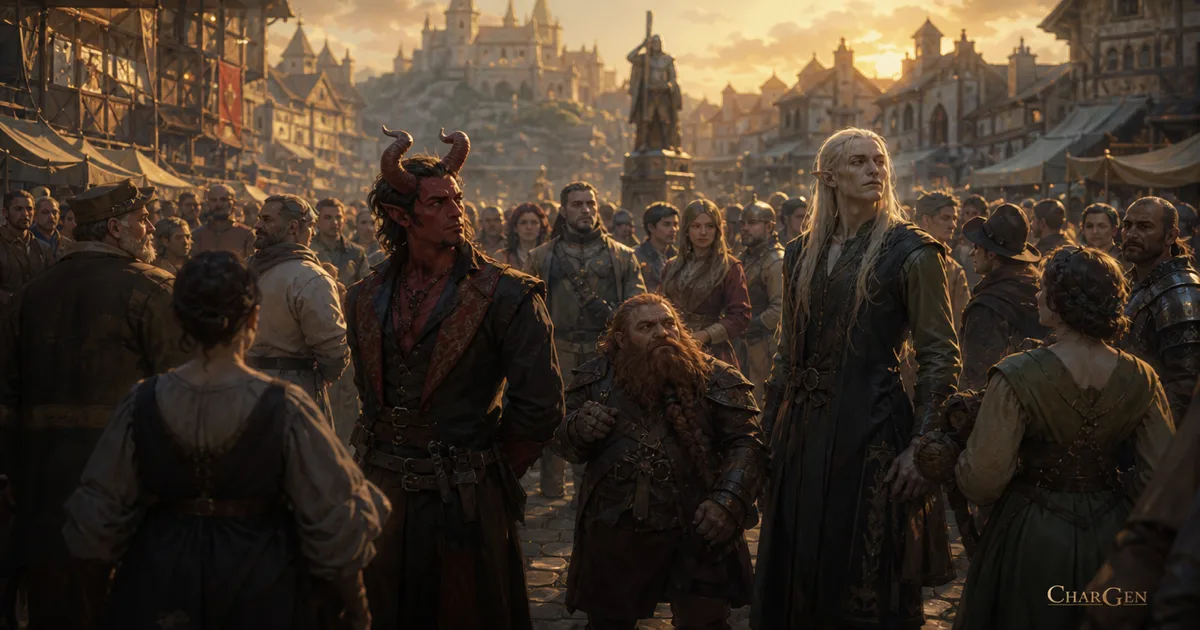
I pulled the 1,500 newest public entities off CharGen last week and counted what people actually make. The number that stuck with me: over half of every NPC generated, 50.8 percent, is a plain Human. Not a tiefling, not a dragonborn, not a warforged. A human. So why are most fantasy NPCs human, when the fantasy roster is free, sitting right there, and arguably the whole point of the genre? I run CharGen, an AI toolkit for tabletop RPGs, so I have a front-row seat to what tens of thousands of Dungeon Masters generate. This is the first of what I want to make a monthly data study, and the findings say as much about how we worldbuild as they do about any tool.
Quick note on the sample before the numbers, because a study is only as honest as its method. I took the newest 500 public entities each for three types, NPC, monster, and settlement, straight from CharGen's public entity API. No cherry-picking, no filtering by quality or creator. The full methodology is at the bottom. When I re-ran the NPC race count on a fresh 300-entity pull the day I wrote this, Human still came out on top at 56 percent, so the majority-human pattern is stable, not a fluke of one afternoon.
Over half of AI-generated D&D NPCs are Human
Here is the race breakdown for the 500 NPCs in the sample.
| NPC race | Share of sample |
|---|---|
| Human | 50.8% |
| Dwarf | 6.6% |
| Elf | 5.4% |
| Half-Elf | 5.0% |
| Everything else combined | ~32% |
Dwarf comes second at 6.6 percent, then Elf at 5.4 and Half-Elf at 5.0. So the single most common race outnumbers the next three put together, several times over. The long tail, tieflings, dragonborn, gnomes, halflings, goldfish-people you invented at 1am, splits the remaining third between it.
This is not a CharGen quirk. The 2024 Player's Handbook and the free System Reference Document both ship a wide species list, and humans have consistently sat near the top of published D&D character-creation trends for years. What surprised me is that the pattern holds even harder for the cast of side characters, the ones a DM rattles off in seconds. When you are picking a hero to play for months, you agonise. When you need a blacksmith for a scene that lasts four minutes, your brain reaches for the default, and the default is a person who looks broadly like the people at your table.
The takeaway is not that this is wrong. Humans are a fine anchor. A world where every innkeeper is a sentient crystal gets exhausting fast. The takeaway is that the gap between what we can generate and what we do generate is enormous, and it is worth closing on purpose now and then. More on that below.
Your monsters are mostly people too
I expected the monster sample to look like a bestiary. Dragons, oozes, aberrations, the classic dungeon fauna. It did not.
| Monster type | Share of sample |
|---|---|
| Humanoid | 42.6% |
| Undead | 11.4% |
| Construct | 9.2% |
| Beast, Dragon and Plant combined | under 15% |
Humanoid is the single largest monster type at 42.6 percent, more than double the next category. Undead follows at 11.4, Construct at 9.2. The traditional beasts, everything with claws and no scheme, make up under 15 percent between them. Generated monster rosters lean hard toward intelligent, humanoid-shaped threats, the bandit captain and the cult leader, rather than the giant spider in the cellar.
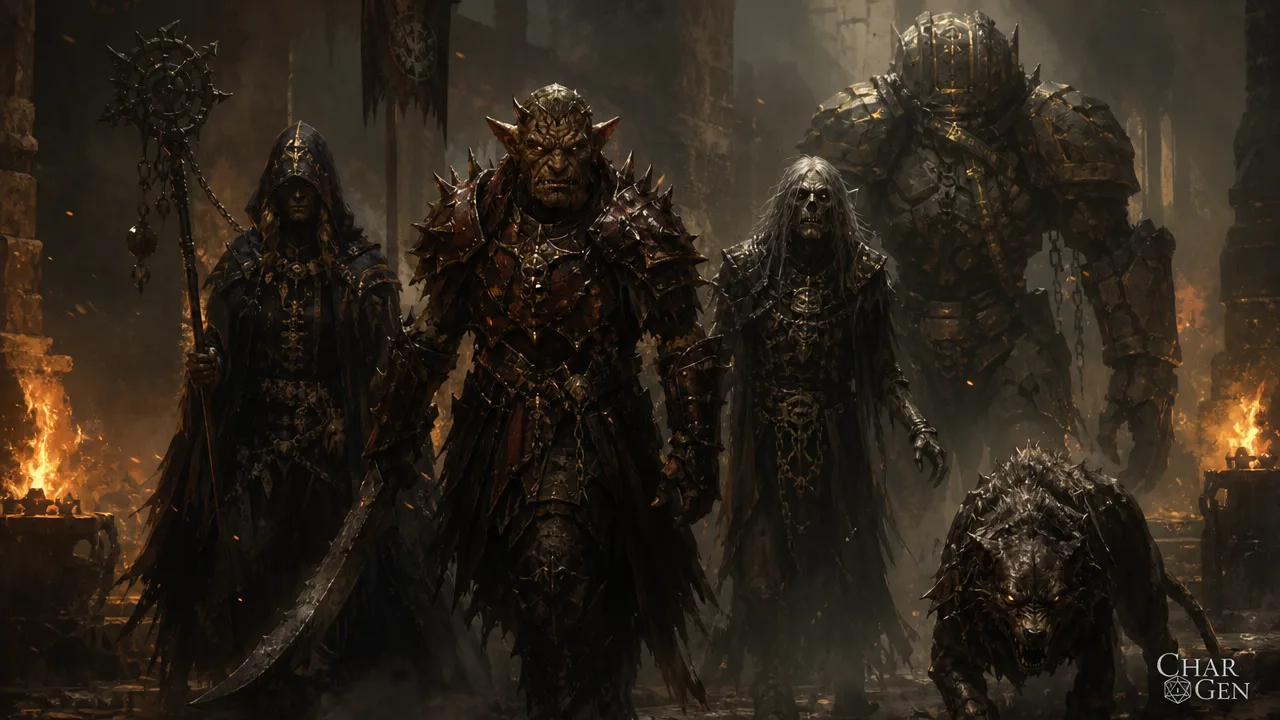
The other monster finding I keep thinking about: roughly one in five monsters generated is tagged as a boss, 21.0 percent, and a further 16.0 percent are tagged legendary. That is a striking share for a public sample. It suggests a large minority of monster generations are not filler encounters at all. They are the set-piece, the thing a DM builds a whole session around. People do not fire up a generator to make the fourth kobold. They fire it up when the fight needs to matter.
If you run a lot of combat, this squares with lived experience. The reusable stat blocks, the goblins and guards, you already have memorised or bookmarked. The generator earns its keep on the villain nobody has seen before.
The Construct figure is the one I did not predict: 9.2 percent, third place, ahead of every kind of beast. People are generating a lot of golems, animated armours, and clockwork horrors. I think that is a good instinct at work rather than a fixation on robots. A construct answers a question the moment it appears, someone built me, and someone built me to guard this. That is free plot. A wandering bear is a hazard; a bronze sentinel with a maker's mark is a mystery. The data suggests DMs feel that difference even if they have never said it out loud.
Settlement generation reaches for the grand
The settlement data has the clearest personality of the three. Town is still the most common single type at 28.6 percent, which makes sense, most adventures happen in towns. But look at what beats what underneath it.
| Settlement type | Share of sample |
|---|---|
| Town | 28.6% |
| Metropolis | 16.8% |
| City | 15.4% |
| Village | 14.8% |
Metropolis, the biggest tier, outranks the mid-sized City. People reach for CharGen when they want a headline location, the sprawling capital with districts and intrigue, not just another waypoint on the road. The measured populations back this up and they are properly bimodal: the median settlement sits at 4,500 residents, comfortable small-town scale, while the mean is dragged all the way up to 32,500 by a long tail of megacities, the largest topping 850,000 souls.
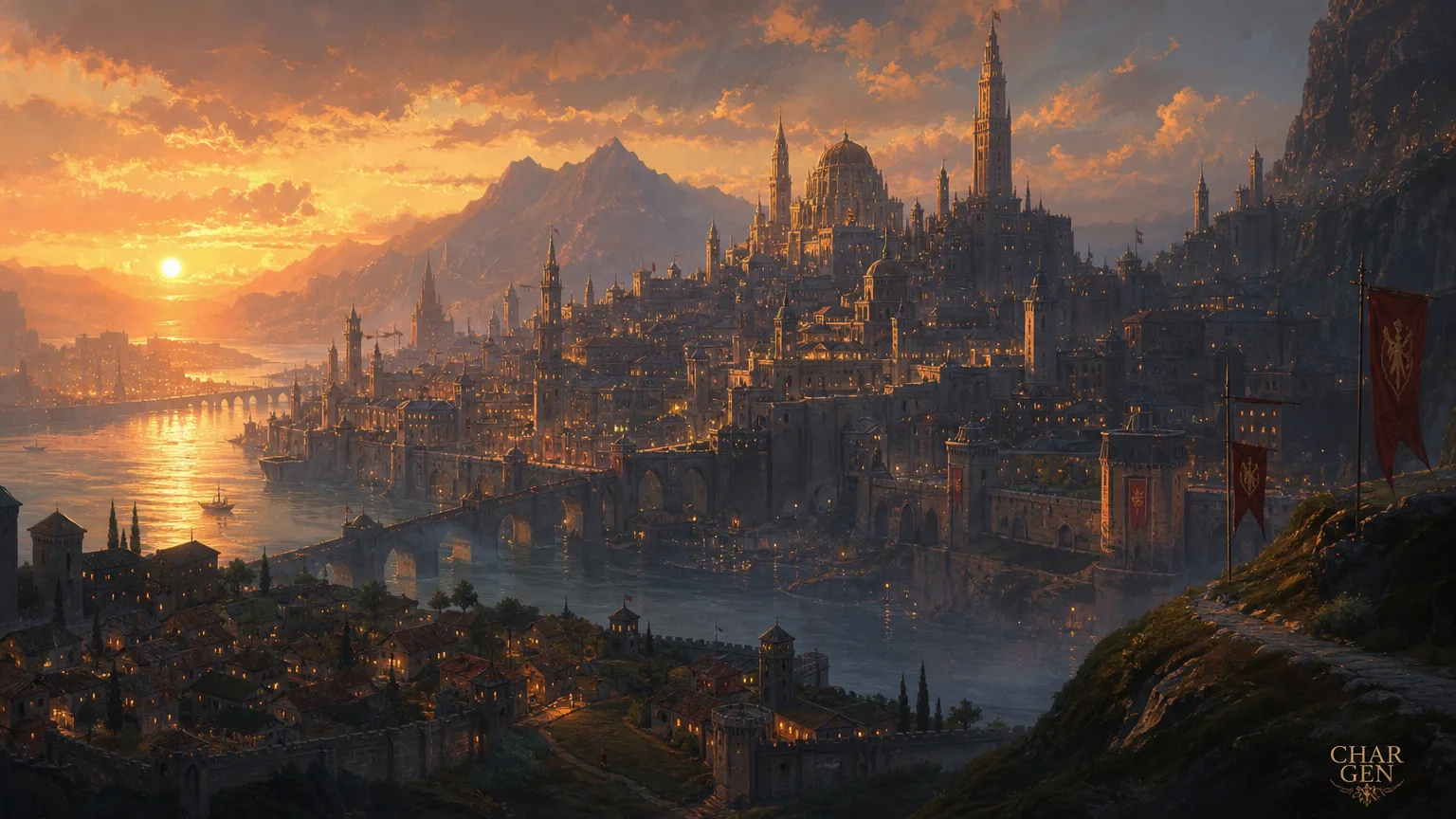
That population figure is not just trivia, it is a prompt. A settlement of 4,500 has one temple, one market day, and a militia that knows everyone by name, so a stranger is news. A metropolis of 300,000 has rival guilds, a dozen faiths, and enough anonymity for a body to go unnoticed for a week. When the generator hands you a number, read it as a brief for what kind of trouble the place can hide. I use the median-sized towns for the slow parts of a campaign and save the megacities for the arc that needs a crowd to disappear into.
So the average table is generating cosy market towns most of the time, then occasionally conjuring a city the size of a real-world capital when a campaign needs somewhere epic to end up. That is a healthy split. If you only ever build metropolises, your world has no texture, nowhere quiet for the party to lick their wounds. If you only ever build villages, the stakes never scale. The data shows people intuitively balancing the two, which is quietly reassuring.
NPC names are boringly realistic
Fantasy naming has a reputation for being all apostrophes and dropped vowels. The data says otherwise. A strict two-word, forename-plus-surname convention dominates at 82.2 percent of NPCs. Single-word names, your Grognaks and your Vex, are rare at 1.0 percent, and anything past three words is a rounding error.
In practice, fantasy naming looks a lot like real-world naming. Tessa Falloway, not Ael'thys the Unspoken. That tracks with what makes a name usable at the table: you have to say it out loud, remember it a week later, and not trip over it mid-sentence. A tidy forename and surname does all three. The evocative epithet is great on a boss and a chore on a barkeeper.
Most NPCs carry a real class, and casters rule
The last NPC cut is class, and it pushes back on the idea that generated NPCs are just scenery.
| NPC class | Share of sample |
|---|---|
| Commoner | 14.0% |
| Cleric | 8.6% |
| Fighter | 5.8% |
| Wizard | 5.2% |
| Rogue | 3.4% |
| Bard | 1.4% |
| Sorcerer | 1.2% |
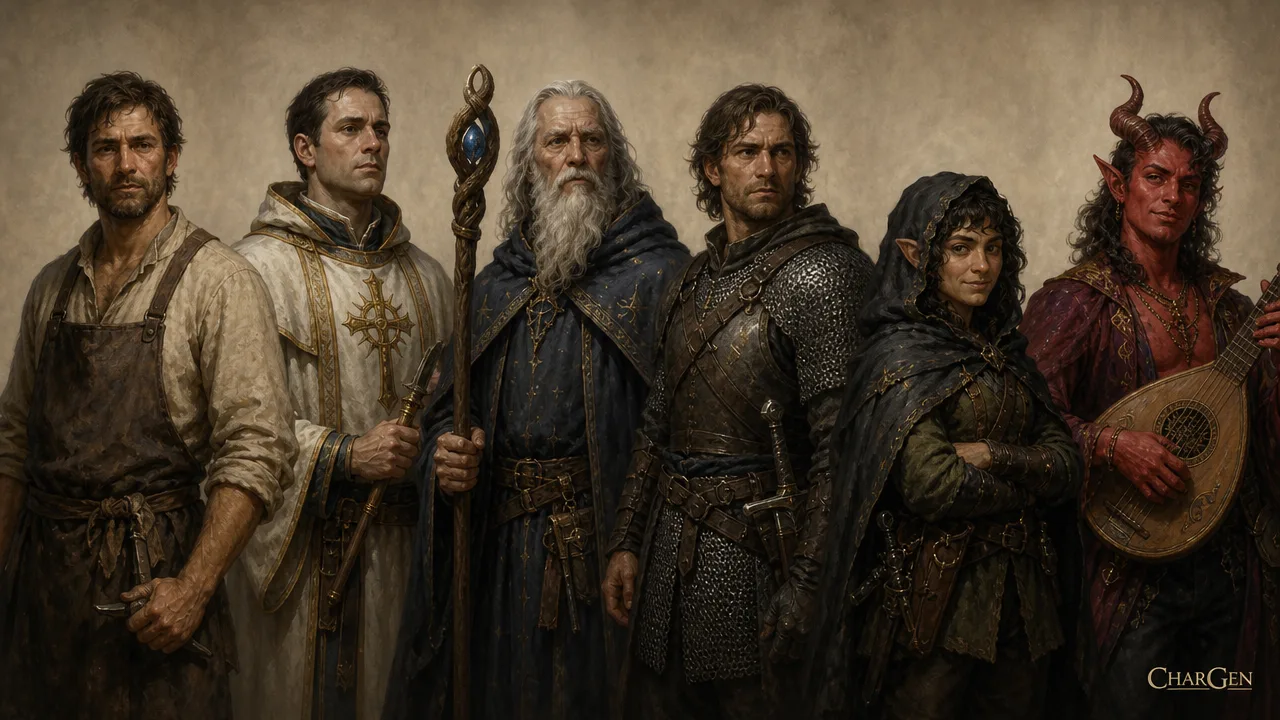
Commoner is the single most common class at 14.0 percent, which you would expect, most people in any world are just people. But add the casters together, Cleric at 8.6, Wizard at 5.2, Sorcerer at 1.2, Bard at 1.4, and they collectively outnumber Commoner. Throw in Fighter at 5.8 and Rogue at 3.4 and a clear picture emerges: most generated NPCs carry a mechanically meaningful class, not a blank "villager" tag. People are building side characters who could actually do something in a scene, cast a spell, pick a lock, hold a line.
What this means for your table
Data is only interesting if it changes what you do on Thursday night. Three practical things I took from this.
First, the human default is a habit, not a decision, and habits are easy to nudge. Next time you generate a batch of NPCs, force one in three to be non-human before you even read them. On the NPC generator you can set the race deliberately instead of leaving it to roll, and the moment you do, your tavern stops feeling like a costume-drama and starts feeling like a fantasy world. The tools give you the whole roster for free. The only thing stopping you using it is muscle memory.
Second, spend your generation effort where the data says it pays off, on the villains and the capitals. Nobody remembers the third guard. They remember the boss with a plan and the city with a personality. That one-in-five boss rate is people already doing this, and it is the right instinct. Reserve the deep, weird generations for the monsters that anchor a session, and keep a stock of plain humans on hand for everything else.
Third, lean into how usable your names and settlements already are. The two-word-name convention and the town-heavy settlement mix are not a failure of imagination, they are what actually works at the table. Fight the urge to over-flavour every barkeeper. Save the unpronounceable epithet for the one archfey who has earned it.
If you want to test any of this yourself, the settlement generator and the NPC tools are free to start, no credit card. CharGen runs a gold-based free tier: 25 gold when you sign up, 10 more for each daily login, and extra for commenting and competitions. Generating a character or a town costs gold, so logging in regularly keeps you stocked. Across the platform that free tier has produced over 830,000 images from more than 43,000 creators, and this study is a small window into what all of them are quietly building.
How I gathered this data
Transparency matters, so here is exactly what I did. The sample was drawn from CharGen's public entity API (api.char-gen.com/api/entities/public), read-only, no authentication. For each of three entity types, NPC, monster, and settlement, I pulled the newest 500 public entities, ten pages of fifty, ordered newest-first by creation date. The NPC sample spans 9 to 14 July 2026, the monster sample 26 June to 14 July, and the settlement sample 23 May to 14 July, since lower-volume types need a wider window to reach 500. Every figure is an aggregate count across anonymised public entities. No individual entity is named, quoted, or attributed to a creator. At the time of writing, CharGen holds 39,241 public entities across 7,954 creators, so this is a genuine slice of live community output, not a hand-picked gallery.
A caveat worth stating: public entities are a subset of everything made, and people may choose to publish differently from how they generate privately. The percentages are precise for what is public. Treat them as a strong signal about community habits, not a census of every NPC ever rolled.
FAQ
Why are most fantasy NPCs human? In this sample, 50.8 percent of generated NPCs were Human, well ahead of Dwarf at 6.6 percent. It comes down to the default: when a DM needs a side character fast, the brain reaches for the familiar. Setting the race deliberately on the NPC generator is the one-click fix.
What is the most common monster type? Humanoid, at 42.6 percent, more than double any other category. Intelligent, scheming threats beat classic dungeon beasts by a wide margin.
Are generated NPC names actually fantastical? Mostly no. 82.2 percent follow a plain two-word forename-and-surname pattern. Usable beats exotic when you have to say it out loud every session.
Ready to build a cast that is not 51 percent human? Start with the free NPC generator, then stock a town with the settlement generator and give it something to fear from the monster generator.