
D&D Campaign Primer Template: Give Players a Clear Start
Copy this D&D campaign primer template to explain the setting, tone, character options, expectations and starting situation without revealing GM secrets.
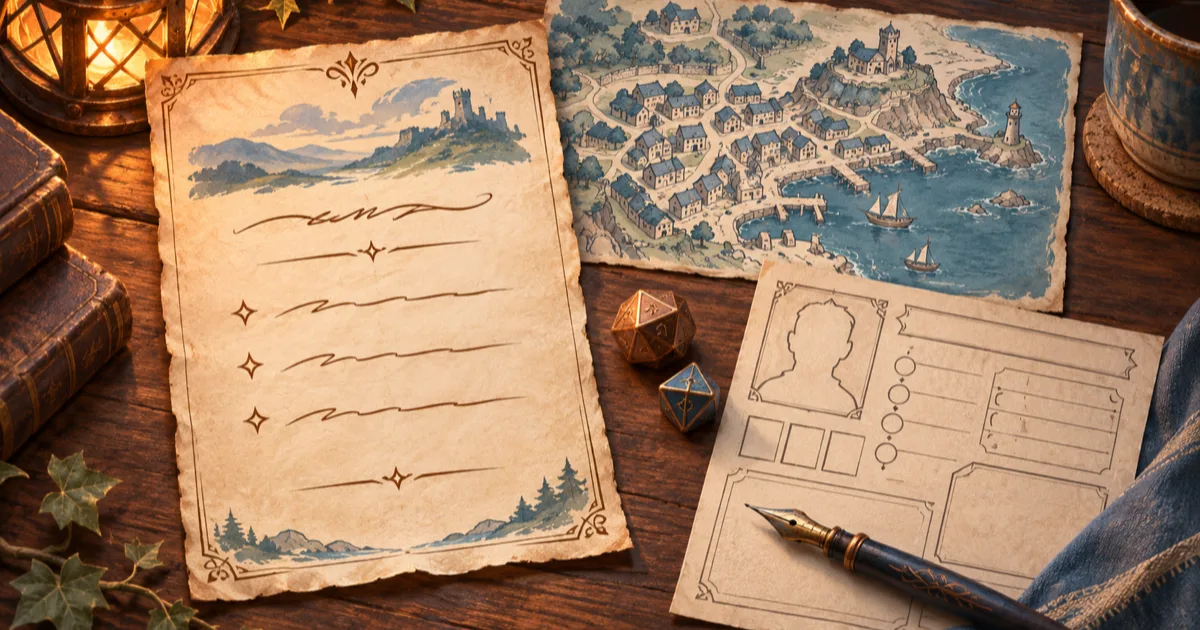
At session zero, a player asks whether their character knows why the old bridge is closed. The Dungeon Master pauses. The bridge is central to the first mystery, but the answer affects which background the player chooses. A D&D campaign primer template can settle that kind of question before anyone finishes a character sheet. It gives players the facts they need to make a character who belongs in the opening session. I prefer one page, with a second page only for rules the group must know before play.
What a D&D campaign primer template needs to do
A player primer answers a practical question: “What should I know before I make someone for this game?” It gives enough setting detail for useful character choices. It also sets expectations about tone, cooperation and table routines. It does not need to explain the whole world.
A primer is different from a pitch. The pitch helps a player decide whether the campaign interests them. The primer helps a player decide who their character is and how that character can join. A pitch might say “a coastal mystery about a town that distrusts its lighthouse”. A primer adds what locals know, what people are expected to do, and where the first session begins.
A primer is also different from the Dungeon Master's world notes. Your private notes can hold secret causes, villain plans and details that become clear later. Players need what their characters can know at the start. World Anvil's player primer guide makes the same reader distinction and suggests using ordinary public knowledge as the starting point. Sly Flourish's one-page campaign guide is another useful reference for a short player handout.
Use a table to check each detail before you share it:
| Detail | Put it in the primer when… | Keep it out when… |
|---|---|---|
| Setting fact | A new resident or visitor would know it | It explains a hidden cause or future reveal |
| Character option | It changes who can join or what a player can choose | It is a long catalogue the player can check later |
| Table expectation | The group needs to know it before making characters | The group can agree on it together at session zero |
| Starting situation | It helps a character arrive at the opening scene | It decides what the party must do next |
| Rumour | It gives the character a useful question or lead | It reveals which rumour is true |
A short guide can still carry a strong point of view. “The town is friendly” tells a player little. “The harbour is busy, but nobody discusses the bell tower after sunset” gives them something to ask about. State what is public. Leave room for players to decide what their characters think about it.
Give players limits early enough to change direction. If the campaign starts in one city, say whether a travelling character can arrive from elsewhere. If the setting has no firearms, write that in plain language. If a background or subclass needs approval, explain when to ask. Give players these limits before they write a backstory. That lets them make an informed choice.
I also include one sentence about the kind of teamwork the game expects. “Your character needs a reason to work with the group” gives players a clear limit. A long list of party roles can wait. Players can invent very different people, but they need a shared reason to stay in the same story. The primer should describe that boundary while leaving relationships open for the players to build.
Copy this one-page campaign primer template
Use the template below as a starting point. Replace every bracket with a fact your players need. Remove a field when it does not help character creation or the first session. The bracketed text is a prompt for you, not a paragraph to leave in the final handout.
CAMPAIGN NAME
[Short title]

THE PITCH
[Two sentences: what kind of campaign is this, and what brings the characters together?]

TONE AND CONTENT
[Genre, mood, expected level of danger, and any subjects the group should know about]

WHERE PLAY BEGINS
[Starting place, current situation, and one reason the characters are there]

WHAT CHARACTERS CAN KNOW
[Three public facts about the place, its people or its current problem]

CHARACTER CHOICES
[Allowed rules options, useful backgrounds, and anything the group should discuss first]

WHY THIS GROUP WORKS
[One reason strangers, rivals or colleagues would stay together]

HOW WE PLAY
[Session length, scheduling, house rules and where the group keeps updates]

YOUR OPENING QUESTION
[One choice or concern the characters can bring into session one]
The pitch should fit in two sentences. Give the players one image, one pressure and one source of agency. For example: “A salt town has missed three supply boats, and its warning bell rings after midnight. You could be a local, an investigator or a new crew member, and the town is asking for your help.” Players know where they are and why the group meets.
The “what characters can know” field should hold facts rather than hidden history. Write three short facts: “the north gate closes at dusk”, “ferrymen keep their own weather records” and “the bell rings each night”. Those details give players a shared starting point. They do not explain who caused the problem or what the bell means.
Character choices need clear limits. Say which rules book or edition you use. Name any banned options. Mention whether new players can ask for help with a class, background or character sheet. If the game starts at level three, say so before someone spends an evening building a level one character.
Keep logistics short. Put the regular day, session length, attendance rule and note location in the same place. You can link to a longer safety document or house-rule page. A primer should answer the basics without making players read every campaign note before they can choose a character.
Separate table agreements from setting facts. “The town elects its mayor” belongs in the setting section. “We pause play when someone needs a break” belongs in the group expectations. Both can matter before the first session, but they answer different questions. A player should be able to find each one without searching through a paragraph about local politics.
For rules, name the source and the level of flexibility. “Use the 2024 Free Rules” is clearer than “latest D&D”. If the group allows a class from another book, list it or say how to ask. Avoid promising every option is available when you have not checked it. A specific line about approval prevents a player from spending time on a build the Dungeon Master cannot support.
Choose which setting details players need
After you fill the template, check each sentence against a player decision. Does it help someone choose a background, understand the opening problem or follow a table rule? Keep it. If it only explains how a kingdom formed two centuries ago, move it to your campaign notes. A primer can name the old bridge and say why people avoid it. The builder, the flood and the council's role can stay secret.
Cut full biographies, long timelines and lists of every settlement. Link to a longer setting note when a player needs more context. Add details they need before character creation or session one. If a fact changes during prep, update the shared version and its date before sending it again.
Read the primer on a phone before you share it. Use headings to break the page into sections. Give every map a caption. Check that the file opens without special software, and that players can copy its text if they need to use a screen reader or translation tool. Keep a plain text version if your group uses one. These checks help people read the same information without changing how you run the game.
Example: The Bell at Lowwater
The following example is fictional. It shows how a few setting details can support several character concepts without directing the group towards one answer.
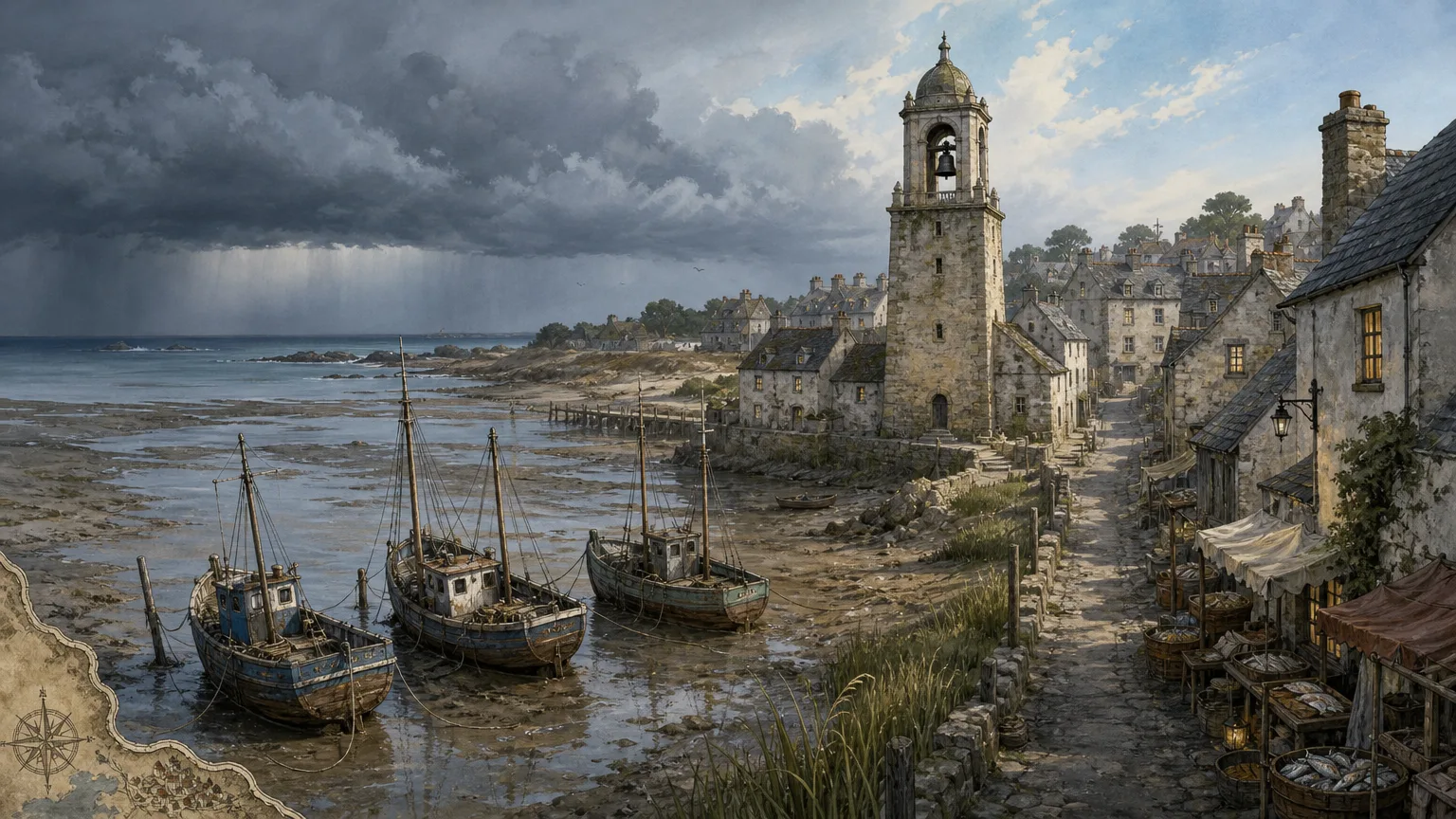
The Bell at Lowwater
Lowwater stands where the River Mere meets the sea. The tide uncovers the old road each morning and covers it before dusk. Three supply boats have missed their dates. The town's warning bell rings once after midnight, though nobody admits to pulling the rope.
We will play a character-led coastal mystery. Expect investigation, dangerous weather and difficult choices. Your character can be a local, a visiting expert, a sailor or someone who needs work. The first session begins at the harbour office, where the town offers a contract to find the missing boats.
Bring a character who can work with other people. They may distrust the town council or dislike boats. They still need a reason to take the contract. We start at level three with the 2024 rules. Ask before you use a character option from another book.
That excerpt leaves several useful openings. A ranger might know the marsh paths. A former guard might distrust the harbour office. A merchant's child might have a reason to care about missing cargo. None of those ideas require a player to know why the boats vanished.
The same primer gives the group agency. “The town offers a contract” describes an invitation. It does not promise that every character accepts. A player might ask for payment, investigate the bell first or find another lead. I would rather answer those questions than write a handout that quietly chooses the party's actions for them.
The fictional image above has one tower, a river mouth and a harbour. Those details support the primer's facts. It does not need labels for every street. A player can ask where the market sits. That question can become a useful detail during play.
Turn private GM notes into player-safe wording
Start with the note you wrote for yourself. Then ask what an ordinary person in the starting place could observe. Rewrite the visible fact as a sentence a character might hear. Keep the cause in your private notes until the players discover it.
| Private GM note | Player-facing version |
|---|---|
| The harbourmaster sold the boat's route to the raiders | The harbourmaster has not explained why the boat left before dawn |
| A spirit rings the bell to warn the town about a flood | The warning bell has rung at midnight for six nights |
| The town council plans to close the river road | The council has asked residents to avoid the old road after dark |
| One local family has hidden the missing crew | The fisher families disagree about where the missing boats were last seen |
The player-facing sentence should be true from the character's point of view. “The council is hiding something” is a conclusion. “The council has cancelled two public meetings” is an observation. Players can interpret the second line and choose what to do with it.
Check proper names, dates and rules terms before you send the primer. A changed name can make a player think they have found a clue. A wrong start level can affect every character choice. For this document, exact text matters more than an ornate layout.
Keep secrets in a separate place. A small font or warning label cannot protect a GM note in a shared file. Make a player copy and remove private notes. Then check the final file as one of the players who will receive it.
Primer, campaign pitch and session zero
These documents solve related jobs. Use each one for the decision it supports.
| Tool | When to send it | Main job | Typical length |
|---|---|---|---|
| Campaign pitch | Before someone joins | Help a player decide whether the campaign sounds right for them | A paragraph |
| Player primer | Before character creation | Give shared setting facts, character choices and expectations | One page |
| Session zero | Before play begins | Discuss characters, boundaries, rules and group routines | A conversation |
| Campaign wiki | During the campaign | Store details the group may need to find later | As long as the group needs |
A primer can prepare the conversation. It should not decide every question that belongs in session zero. Players may need to agree on character links and tone boundaries. Discuss absences and scene risk too. Reserve those topics for a live discussion, where people can ask follow-up questions.
The guide can also reduce repeat questions without closing off ideas. If the campaign allows only one non-human species, say that before character creation. If the town is unfamiliar to every character, say so. When a player asks for an exception, decide it with the group before it becomes a surprise rule during play.
Readability matters more than page design. Use headings such as “Where we begin” and “Rules for characters”. Keep each paragraph on one topic. Put the map beside the starting-place description and give it a caption. Use a phone-friendly layout. Some players will open the primer in a group chat before the call.
Send the same version to everyone. If one player gets a private rule or setting fact, note who knows it and why. A primer with different versions can be useful for a secret campaign, but label each copy clearly. For a normal group, a shared version avoids accidental differences during character creation.
Keep the primer useful after session one
Date the primer and keep one copy you can edit. Change a public fact when the group learns something new or when the campaign moves to a different starting place. Leave the old copy available if players may need to remember what they knew at the beginning.
Add a short change note when you revise it. “Updated the start level from one to three” is enough. Keep the explanation practical. A new player who already built a character needs to know whether anything changed for them. You do not need to restate the whole setting each time you add a town or a character option.
Ask one player to read the draft before you send it to the group. They can find terms that need an explanation or details that feel like spoilers. Ask one clear question: “Can you make a character from this?” Avoid the broad “What do you think?” Their questions expose missing information faster than private polishing.
Try two short read-throughs. Ask one player to choose a character and explain why they would accept the invitation. Ask a newer player to mark any name, rule or place they do not understand. If someone must invent a fact before choosing, decide whether it belongs in the primer. Leave other questions for play. Add only details that block a character choice.
I keep setting notes and session prep in CharGen Campaign Studio. It keeps campaign notes, sessions and World Codex records together. Campaign Studio does not publish a primer to every player. Send the approved handout through your group's usual channel. For next-session prep, see the guide to a D&D session planning tool. The D&D session scheduling guide covers player polls and attendance rules.
A character can also make the primer more useful. Ask each player to add one question about the starting place. A character generator can help a new player organise an idea. The player should choose the details that matter to them. CharGen's Character Generator helps build a D&D character from guided choices.
When the primer is ready, read it aloud once. Remove any sentence that does not affect a character choice, set an expectation or help players picture session one. Keep one open question at the end. It gives each player a place to begin.
Frequently asked questions
What is a D&D campaign primer?
A D&D campaign primer is a short player-facing guide to the setting, tone, starting situation and character choices. It helps players prepare without reading the Dungeon Master's private notes.
What should a D&D campaign primer include?
Include the campaign pitch, tone, starting place, character options, useful public facts, table expectations and the first decision players face. Keep hidden motives and future reveals in the Dungeon Master's notes.
How long should a D&D campaign primer be?
Start with one page. Add a second page only for rules or setting details that players need before character creation. Link to longer notes for anyone who wants more.
Is a campaign primer the same as session zero?
No. A primer gives players information before they make characters. Session zero is a conversation where the group agrees on characters, boundaries, rules and how the campaign will run.
Should a campaign primer reveal spoilers?
Share facts that a local resident, new recruit or invited guest would know. Keep hidden causes, future villains and planned twists in the Dungeon Master's private notes.
A good primer should leave players with enough information to make a choice and enough room to surprise you. Send the one-page guide with the invite. Keep the deeper history in the notes you control.
Organise your campaign notes in Campaign Studio