
Best D&D Quest Generators in 2026: 7 Tools I Tested
I tested seven D&D quest generator tools in 2026 for hooks, scenes, NPCs, twists, exports, and fast one-shot prep for DMs.
Last Friday, my players left the planned road and followed a lantern into a flooded marsh. I had a map, three NPCs, and no reason for the lantern to exist.
A D&D quest generator can solve that problem, but only if it gives you more than a dramatic title. I need an objective, a reason to act, people with clear motives, and a result that changes the next scene.
I tested seven public tools against the same brief: four level 5 characters investigate a lighthouse that has sent the same distress signal for three nights. The keeper is missing. The light now points inland. I wanted a one to two session quest with one social scene, one dangerous location, a choice at the end, and a reward that could matter later.
The tools split into three groups. Some give you ten quick ideas. Some give you a shaped hook with a villain, deadline, and twist. A few produce a full quest packet with scenes and encounters. Those are different jobs, so I have kept the categories clear.
What I tested in each D&D quest generator
I used five checks for every tool. The same brief went in where the public workflow allowed a prompt. Where a tool only exposes tables or sample results, I judged the output it actually shows instead of pretending it creates a full adventure.
| Check | What I wanted | Why it matters |
|---|---|---|
| Concrete objective | A clear thing the party must do | “Investigate the light” is weaker than “find the keeper before the next signal” |
| Table structure | Scenes, locations, encounters, or steps | A DM needs a route through the idea, not only a premise |
| Player agency | Choices, failure routes, or consequences | The party should be able to reject the obvious plan |
| Campaign detail | NPC motives, links, rewards, and future effects | A side quest should give the next session something to use |
| Handoff | Copy, export, save, PDF, or a usable result page | Prep is only finished when the result survives the table |
I also checked the public pages on 28 August 2026. Prices, free limits, and account rules change often. Treat the table as a snapshot, and check the live tool before you pay for a long campaign.
Quick comparison of the seven tools
| Tool | Best for | Output I found | Access | Main limit |
|---|---|---|---|---|
| CharGen Quest Generator | A full quest that connects to campaign prep | Hook, three to six scenes, encounters, named NPCs, twists, d6 complications, rewards, and success or failure branches | Free tier with an account | Review the encounter balance and generated rules text |
| donjon | Ten fast adventure seeds | Theme, goal, hook, plot, climax, villains, settings, and complications | Free, no account | You must turn the seed into scenes and stat blocks |
| LitRPG Adventures | AI-written narrative quests | Plots, twists, objectives, rewards, NPCs, and outcomes | Membership or credits | The result is broad fantasy content, not a campaign graph |
| RPG Builder | A short shaped side quest | Goal, complication, reward, and twist, with a type and tone choice | First generation free | It is an outline, not a full session packet |
| Tools and Taverns | A free hook with a deadline | Read-aloud hook, villain, objectives, complication, twist, reward, deadline, location, and key NPC | Free, no account, seed URL | The output stays concise and needs expansion |
| QuestForge | Side quests inside a 5E campaign platform | One-off or multi-stage side quests, plus campaign, NPC, encounter, and world tools | Product account flow | The public page shows less detail than the in-app generator |
| Adventure Generator | A complete one-shot with a runner | Narrative, NPCs, locations, loot, stat blocks, cover art, PDF, editor, combat tracker, and dice | App sign-up flow | It is too large when you only need tonight's hook |
The important result is not one universal winner. It is the gap between a quest seed and a playable packet. I would not use a ten-line random idea as if it were a complete adventure. That is how a five-minute generator becomes a two-hour writing job.
1. CharGen, best for a complete D&D quest
CharGen is my pick when I need a quest that can move into the rest of my campaign. The Quest Generator has a Quick Description (Optional) field, then controls for Quest Type, Game System, Difficulty, Party Level, Duration Estimate, and Theme. An Additional Prompt field appears when I need more control.
The quest types include Heist, Rescue, Investigation, Escort, Kill / Hunt, Retrieve, Defend, Explore, Diplomatic, Mystery, and Other. Duration options are One-shot, 1-2 sessions, and 3+ sessions. That matters because a one-shot should not arrive with seven scenes and a cast of twenty.
For my lighthouse brief, I set Quest Type to Investigation, Game System to D&D 5E, Difficulty to Hard, Party Level to 5, and Duration Estimate to 1-2 sessions. My prompt was: Four level 5 characters investigate a lighthouse that sends a distress signal inland every midnight. The keeper is missing. Include a suspicious harbour official, a social scene with the keeper's apprentice, a flooded light chamber, a choice between saving the keeper and stopping the signal, and a reward linked to a coastal faction.
The public feature page describes the resulting shape clearly. A generated quest can include a thematic name, tagline, hook and premise, objectives, three to six numbered scenes with embedded encounters, two to four named NPCs, one to three twists, a d6 complications table, scaled rewards, and resolution branches for success and failure.
That structure is the main advantage. If the group refuses the apprentice's offer, I have a complication to use. If they save the keeper, the signal continues. If they break the lens, the coastal faction loses its warning system. The result gives me decisions to run, not only prose to read.
CharGen also suits linked prep. I can send a named NPC to the NPC Generator, create a creature with the Monster Generator, or move the quest into Session Prep. The World Codex can keep the people and places attached to the campaign instead of leaving them in a separate note.
There is a limit. The difficulty field is a guide, not a balance calculator. I still check the monsters, terrain, rests, and reward against my group. Free generation needs an account, and editing saved results is a paid feature.
Generate a Quest Free2. donjon, best for fast random ideas
donjon has been in my emergency prep folder for years. Its current fantasy tools include a Random Adventure Generator, a Fantasy Random Generator, a Five Room Dungeon Generator, and separate D&D 5e and D&D 5.5 tools.
The Random Adventure Generator builds a frame from fields such as Theme, Goal, Story Hook, Plot, Climax, General Setting, villains, a character encounter, a deathtrap, a chase, and a moral dilemma. The current public output gives me a numbered list of ten ideas. One result has a sage asking adventurers to expose a corrupt aristocrat. Another asks the party to recover an evil artefact from a lost city during a plague.
That is a good volume of raw material. I can press the button before a session and find one premise that fits the party. I can also use the Fantasy Random Generator when I need a patron, location, class, or creature to fill a gap.
The limit is equally clear. donjon gives me the ingredients. I must decide which scene comes first, what the villain wants, what happens on a failed check, and why the party cannot walk away. Its separate Five Room Dungeon Generator adds a useful five-part location, but it is still a location outline rather than a connected campaign quest.
Use donjon when the blank page is the problem. Do not use it when you need a complete handout in ten minutes.
3. LitRPG Adventures, best for AI-written quest detail
LitRPG Adventures takes the prose-first route. Its public page promises detailed quests with unique plots, twists, clear objectives, meaningful rewards, relevant NPCs, plot hooks, and outcomes. The sample outputs cover a lost relic, a haunted hamlet, and a city under siege.
I like this option when I have a strong tone but no wording. A haunted lighthouse, a diplomatic mission to a monster court, or a siege at a ruined bridge can become a longer narrative draft quickly. The tool is useful for finding the part of the idea I had not written down yet.
The cost model needs attention. The membership page says RPG tools can cost from 0 to 10 credits, depending on the generator and the selected personal or commercial licence. Current membership options include a $5 monthly Bronze plan and one-time credit packs. Check the live page before you compare the price with a free random table.
LitRPG Adventures is a broad fantasy writing service. It does not give me the same campaign-level links as CharGen, and I would not assume that a generated encounter follows the rules of my chosen edition. I would copy the useful premise into my campaign notes, then build the mechanics separately.
4. RPG Builder, best for a short shaped side quest
RPG Builder's Quest Generator keeps its promise narrow. It generates a D&D quest with a goal, complication, reward, and twist. The public page offers ready-made starting points such as The Missing Ledger, The Night Market Murders, The Impossible Vault, and The Beast of Redmoor.
The workflow has a type and tone choice. You can start from a prepared setting, generate a quest, reroll the twist, and attach the result to an NPC, faction, or region. The page says the first generation is free.
That is a sensible shape for a side quest. The result tells me what the party wants, what makes the task difficult, what they gain, and what changes the meaning of the job. It avoids the empty output that says “find the lost treasure” and stops there.
RPG Builder does not present the same full scene structure as CharGen. I would use it for a one-page outline, then add a location, cast, and encounter. Its other generators make that follow-up practical, but the quest itself is deliberately small.
5. Tools and Taverns, best for a free hook with a deadline
Tools and Taverns is the cleanest choice when I want a free result with no account. Its current quest page can produce a title, read-aloud hook, villain and motive, primary and secondary objectives, complication, twist, reward, deadline, location, and key NPC.
The deadline is the useful part. A hook becomes easier to run when the party knows what changes if they wait. The tool also supports mystery, combat, diplomacy, exploration, heist, and random themes. The difficulty label runs from Easy to Deadly, but it is a label for the prompt, not proof that the encounters are balanced.
Every result has a seed in its URL. I can copy the link to another DM and they can reopen the same quest, twist and all. The site says the results are free to use in home games, streams, and published work without attribution.
The output is short. That is a benefit for a hook and a limit for a full session. For the lighthouse, I would still need to write the apprentice scene, map the flooded chamber, and decide what the coastal faction offers after the party chooses.
6. QuestForge, best for a 5E campaign platform
QuestForge is a 5E-compatible tabletop platform with a character builder, NPC generator, encounter generator, campaign generator, world generator, and side quest generator. Its public page describes side quests as one-off or multi-stage, with hooks, objectives, complications, and rewards.
That mix is useful for a DM who wants the quest beside the rest of the campaign. A side quest can sit next to its NPCs, encounters, and wider world rather than living as a loose text file.
My caution is about the public evidence. The landing page shows the feature list, but the detailed quest result sits behind the product flow. I would make one test account before committing a campaign. Check the actual scene count, export options, rules baseline, and whether the campaign links persist after the first generation.
QuestForge makes sense when the platform matters as much as the hook. If you only want ten ideas with no setup, donjon is faster.
7. Adventure Generator, best for a complete one-shot
Adventure Generator aims above a normal side quest. Its public workflow starts with an idea and produces a complete one-shot with narrative, NPCs, monster stat blocks, locations, loot, and AI-generated cover art.
The app also advertises a Markdown editor, a formatted PDF, an interactive session runner, a combat tracker, and a dice roller. Each creature and NPC can include abilities, actions, and tactical notes. That makes it the closest match for a DM who wants to generate, edit, print, and run one adventure in one product.
The trade-off is scale. If my group needs a missing-person hook for the final thirty minutes of a session, a complete one-shot is more material than I can review. It also uses an app sign-up flow, so I would check the current price and export limits before choosing it for regular prep.
A hook is not the same as a quest
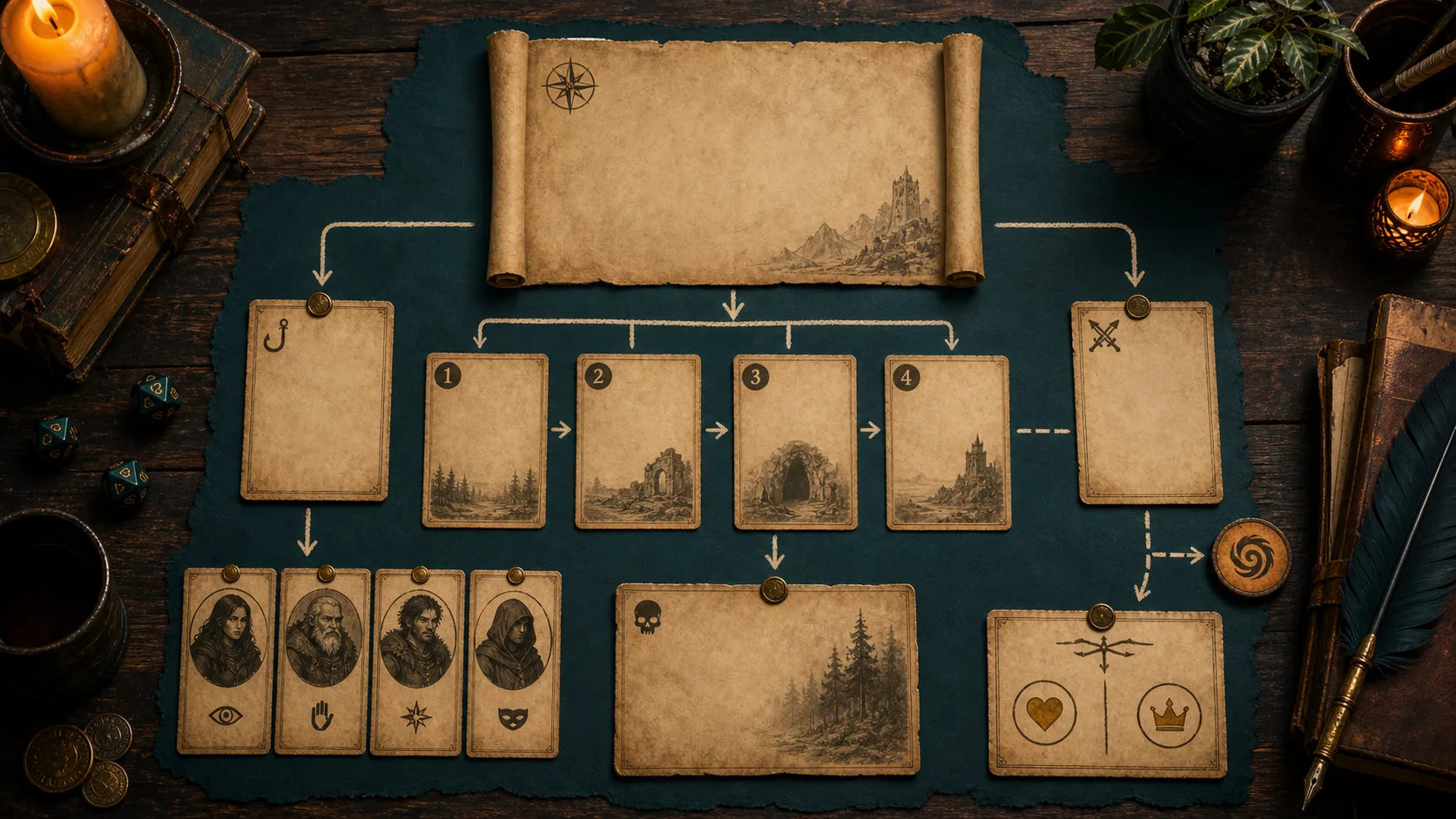
The 2024 Dungeon Master's Guide adventure guide describes four useful planning steps: lay out the premise, draw in the players, plan encounters, and bring the adventure to an end. I use those steps to judge generated output.
| Output level | What it gives you | What you still write |
|---|---|---|
| Seed | A patron, goal, place, and threat | The full reason to act and every scene |
| Hook | An inciting event, villain, deadline, and reward | The route, encounters, and ending |
| Quest outline | Scenes, objectives, cast, twist, and failure route | Rules checks, map detail, and table wording |
| Full one-shot | A written adventure, stat blocks, locations, and handout | Editing, balance checks, and player-facing cuts |
Most free random generators stop at the first two rows. That is not a flaw. A quick seed can be better than a long adventure when I want to write the important parts myself.
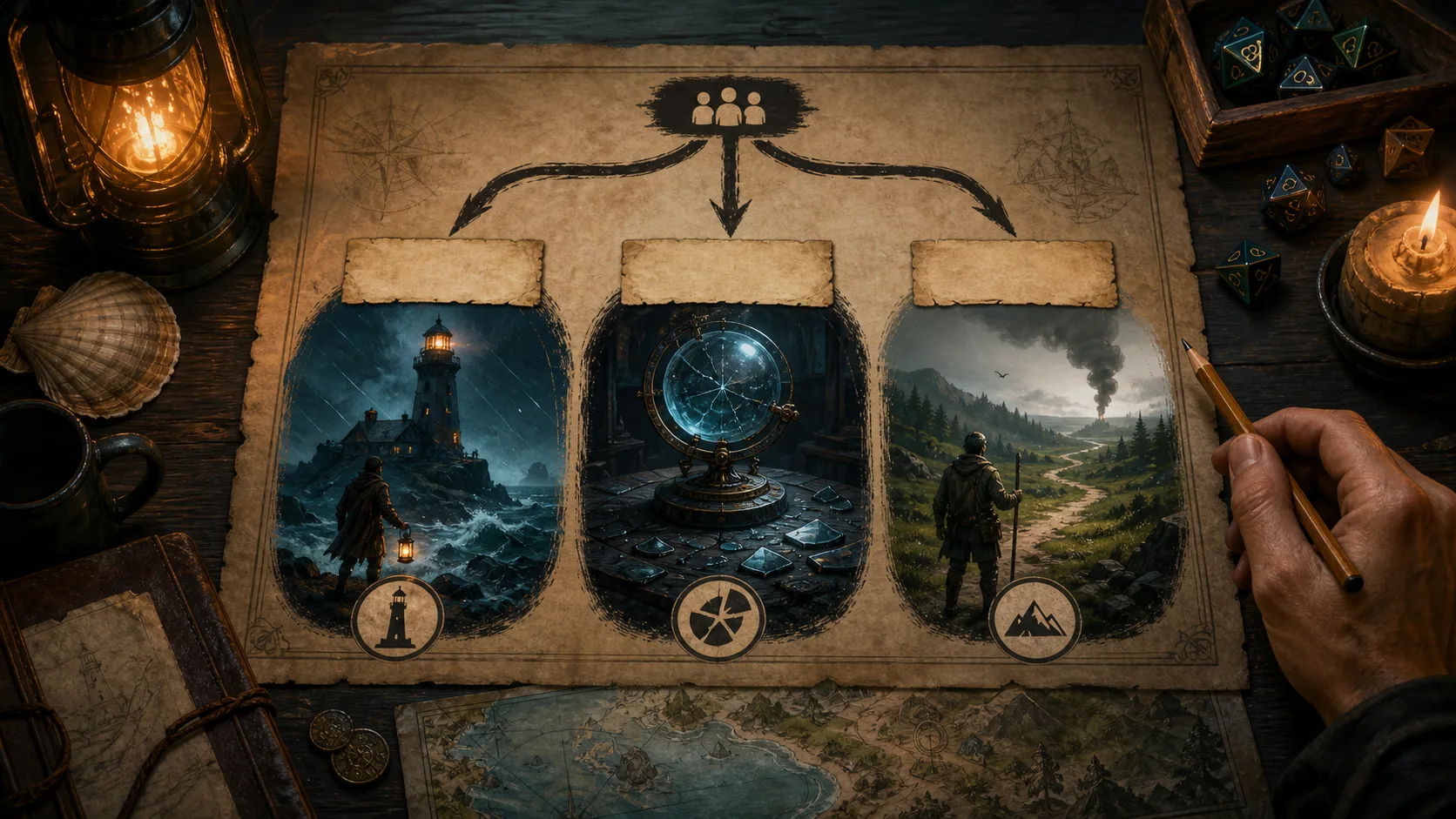
The problem starts when a tool describes a quest as complete but leaves the party with no decision. A useful result answers five questions:
- Who needs something?
- Why must the party act now?
- What makes the objective difficult?
- What changes after success or failure?
- What can the party do when it refuses the obvious route?
CharGen performs best on the last two questions because its public output includes resolution branches and per-scene failure modes. Tools and Taverns performs well on the first three. donjon is excellent at giving me a large set of starting points.
Check the rules before you run the quest
Quest generators are not rules authorities. A Hard label can mean a dangerous mood, a high-level villain, or an encounter budget. It does not tell me if four level 5 characters can survive the room after the previous scene used half their spell slots.
I check every generated encounter against the system my group uses. For D&D, I confirm the monster stat blocks, conditions, damage, spell wording, rest assumptions, and treasure. I also check if the tool used 2014 rules or the revised 2024 rules, which D&D Beyond now labels as 5.5e in parts of its site.
The best D&D encounter generators guide helps with that second pass. I use a generator for a first draft, then adjust the number of enemies, terrain, cover, escape routes, and stakes. A hard encounter should create pressure. It should not remove the party's options by accident.
System-neutral quests need the same check. A mystery, escort, or heist can move between D&D, Pathfinder, and other games. The stat block, skill language, action economy, and rewards cannot move without edits.
My 15-minute workflow for a usable quest
I use this process when the session is close and the blank page is making the problem feel bigger than it is.
1. Name the table job
Write one sentence that explains why this quest belongs in the campaign. “The lighthouse keeper is missing” is a start. “The keeper is missing, and the signal now points inland towards the faction that protects the coast” gives the party a reason to care.
2. Set the party and the length
Write the number of characters, their level, the game system, and the available time. A one-shot needs a short route. A three-session arc can support a second location and a cast member who changes sides.
3. Add one campaign fact
Use a named NPC, faction, location, unresolved rumour, or previous choice. A quest attached to the campaign feels different from a random job board entry. It also gives the generator something concrete to preserve.
4. Generate one draft
For CharGen, I set Quest Type to Investigation, Game System to D&D 5E, Difficulty to Medium or Hard, Party Level to the party's level, and Duration Estimate to 1-2 sessions. I keep the prompt to one paragraph. I do not add every possible twist before I see the first result.
5. Check the middle scene
Many generated quests have a good opening and ending but a weak middle. Ask what the party can learn, lose, or change in scene two. Add a social choice, environmental problem, puzzle, chase, or encounter that reveals new information.
6. Make failure playable
Failure should change the route. The keeper escapes but loses the lens. The faction gets the signal first. The lighthouse floods and blocks the safe exit. None of those outcomes ends the session. They give the next scene a new shape.
7. Prepare the handoff
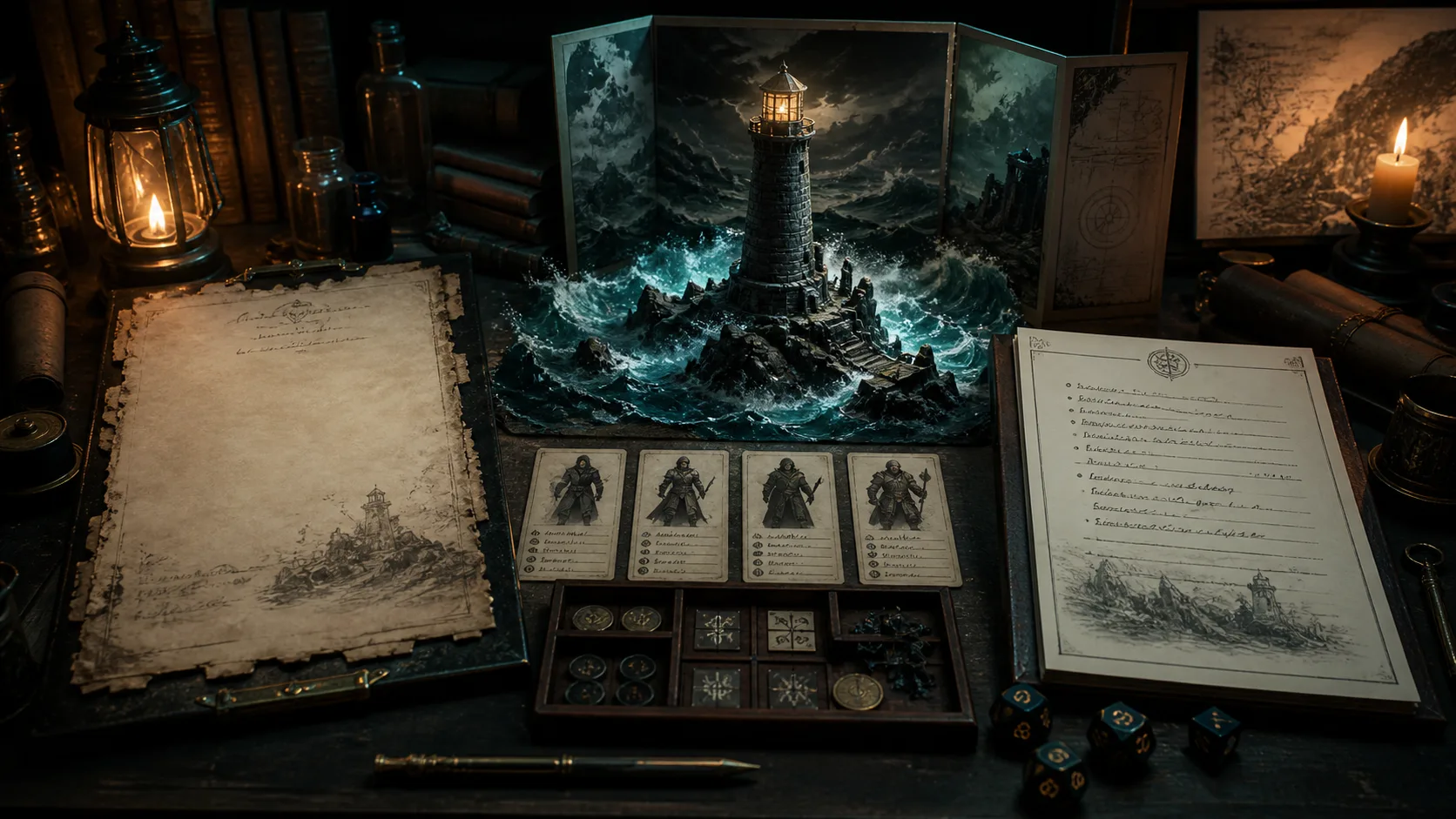
Cut anything the players should not see. Keep the hook, visible NPC details, first location, encounter notes, reward, and one consequence on the session page. Save the villain's motive and the true twist for the DM copy.
If the quest needs more support, I create the named NPC in the NPC Generator, make a creature in the Monster Generator, and add the final record to World Codex. For a wider bundle, Session Prep can place the quest beside locations, people, and handouts.
Which quest generator should you choose?
| Your real need | Start here | Why |
|---|---|---|
| A full quest with scenes and failure routes | CharGen | The output is shaped for a table and links to wider campaign prep |
| Ten premises in one minute | donjon | It gives a lot of random combinations with no account |
| A free hook with a deadline | Tools and Taverns | The result is short, shareable, and easy to reopen from its seed URL |
| A short side quest with a twist | RPG Builder | Goal, complication, reward, and twist arrive in a compact outline |
| AI-written fantasy prose | LitRPG Adventures | It gives detailed narrative material and several quest styles |
| A side quest inside a 5E platform | QuestForge | The public product includes campaign, NPC, encounter, and world tools |
| A printable one-shot with a runner | Adventure Generator | It combines writing, stat blocks, PDF export, and live table controls |
I would not force one tool to do every job. Use donjon to find a strange premise. Use Tools and Taverns when the party needs a quick deadline. Use CharGen or Adventure Generator when you need enough structure to run the result without writing the missing half yourself.
FAQ
What is the best D&D quest generator in 2026?
For a complete quest, I would start with CharGen's Quest Generator. It gives me a hook, scenes, encounters, cast, twists, complications, rewards, and success or failure branches. I use donjon or Tools and Taverns when I only need a quick premise.
What is the best free D&D quest generator?
donjon and Tools and Taverns are the easiest free options because they do not need an account. RPG Builder offers a free first generation. CharGen also has a free tier, but you need an account to generate and save the result.
Can AI make a balanced D&D quest?
It can make a useful first draft. It cannot know how tired your party is, how well the players use their abilities, or which house rules you allow. Review each encounter and reward. Treat the generator's difficulty label as a starting signal.
Can I use these tools for a one-shot?
Yes. Choose a one-shot duration where the tool supports it, or keep the generated quest to three main scenes. Adventure Generator is built around complete one-shots. CharGen can make a one-shot or a longer arc. A random hook from donjon needs more work before it is ready.
How do I keep a generated quest connected to my campaign?
Use one existing name, place, faction, or unresolved decision in the prompt. Then link the generated NPCs and locations to your campaign records. CharGen supports that handoff through World Codex and Session Prep. Any other tool can work if you copy the final facts into your campaign notes.
My recommendation
Choose the output size before you choose the generator. Use donjon for a pile of sparks. Use Tools and Taverns for a quick hook with a deadline. Use CharGen when you want a full quest that can move into NPCs, encounters, locations, rewards, and campaign records.
Give the tool one concrete objective and one consequence for failure. Then check the middle scene and the encounter rules before the players arrive. That small review is what turns generated text into a quest you can run.
Create Your First D&D Quest