
CharGen vs Neolemon: AI D&D Character Art in 2026
CharGen vs Neolemon for D&D character art in 2026. Compare consistent cartoon characters, tokens, party art, models, editing, and costs.
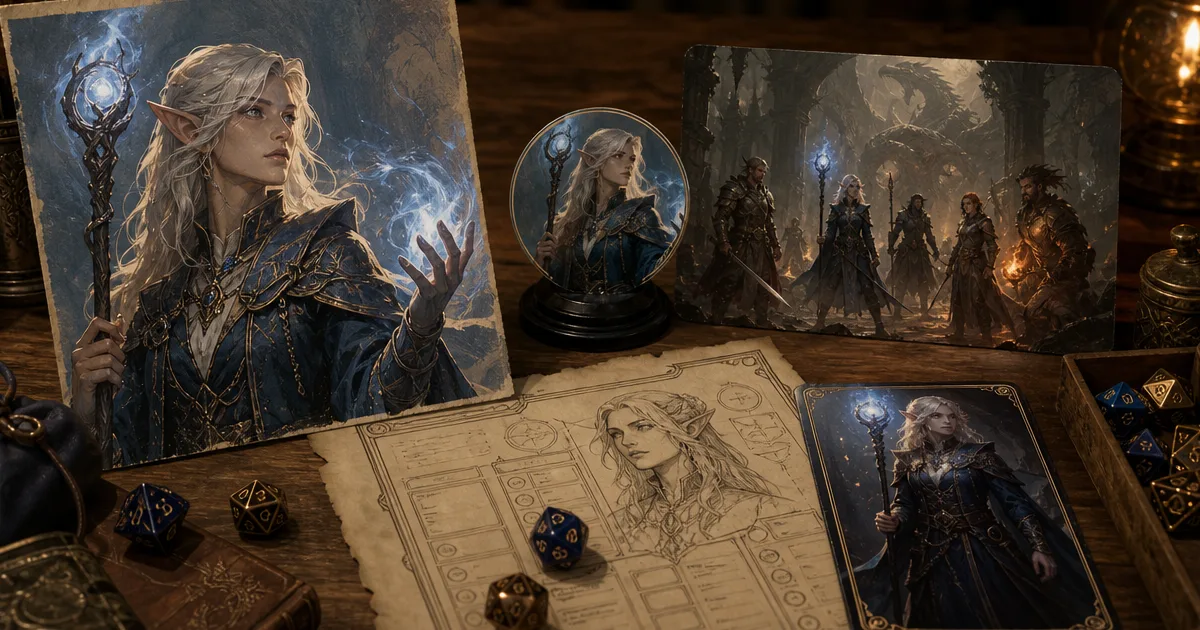
CharGen vs Neolemon comes down to what needs to happen after you make the first image. Neolemon is built around keeping an illustrated or cartoon character recognisable across scenes, poses, and expressions. CharGen is built around the D&D workflow around that image: fantasy portraits, tokens, party art, generators, and campaign assets in the same place. Both can make a memorable elf wizard. They are not solving the same Tuesday-night problem.
If I were illustrating a storybook cast in a single cartoon style, I would test Neolemon first. If I were preparing next week's game, where that wizard also needs a token, a group image, and a place beside the NPCs and map I have already made, I would start with CharGen's character generator. That is the useful answer, not a pretend knockout.
The short answer
Neolemon has a sharp, deliberately narrow strength. Its tools are aimed at keeping a cartoon or illustrated character looking like themselves across many scenes. Its own D&D guide describes Character Turbo, Action Editor, Expression Editor, Photo to Cartoon, and Multi Character as the relevant workflow. That is a good fit when one visual identity has to carry a comic, a children's-book feel, an animated sequence, or a long set of scene illustrations.
CharGen is my better fit for a tabletop campaign because the image does not stop at the portrait. I can create a half-orc ferry captain, turn the portrait into a VTT token, make a party portrait, then keep building the people, places, and encounters around that character. It is a wider tool, which is useful only if you will use that width.
| If you need... | Better starting point | Why |
|---|---|---|
| A recurring illustrated cast in one cartoon look | Neolemon | Its product is centred on locked character identity, pose, and expression changes |
| A D&D portrait that becomes a token quickly | CharGen | The portrait and token workflow are made for tabletop handoff |
| A party image alongside individual character art | CharGen | Party Portrait is built around an adventuring group and scene choices |
| A stylised story sequence with the same face in many frames | Neolemon | Its Action and Expression tools are aimed at repeat character variation |
| Fantasy art across several models and styles | CharGen | The image workspace gives you model and style choice rather than one illustrated lane |
| More campaign assets after the art exists | CharGen | NPCs, monsters, maps, session material, and worldbuilding sit close to image work |
That table is the whole comparison in miniature. Pick the workflow, then pick the tool. Do not buy an illustrated consistency tool when you really need a token pipeline. Do not choose a broad RPG toolkit if your only job is producing fifty clean cartoon panels of the same protagonist.
CharGen vs Neolemon: the practical D&D difference
The words "character consistency" can mean two different things at a D&D table. One means the face, clothes, and art style stay stable as the character runs, laughs, fights, and changes expression. The other means the character stays connected to what they do in the campaign: their token, party, relationships, locations, and the notes that tell you why the party trusts them.
Neolemon is very direct about its first goal. Its D&D art guide frames the service around an illustrated character that can return in new poses, expressions, and scenes. That clarity is refreshing. It also admits the limitation: the cartoon or illustrated direction is not ideal if you want grim realism, a wide spread of visual styles, or a full video studio.
CharGen is stronger on the second meaning. A visual character can begin in the image generator, become a token, appear in a group portrait, and then sit beside the generated campaign material you actually use when the players ask an unexpected question. I like that because most D&D art does not live alone. The portrait of a suspicious dock official becomes more useful when I can put it on the map, give it a token ring, and remember that the party owes them a favour.
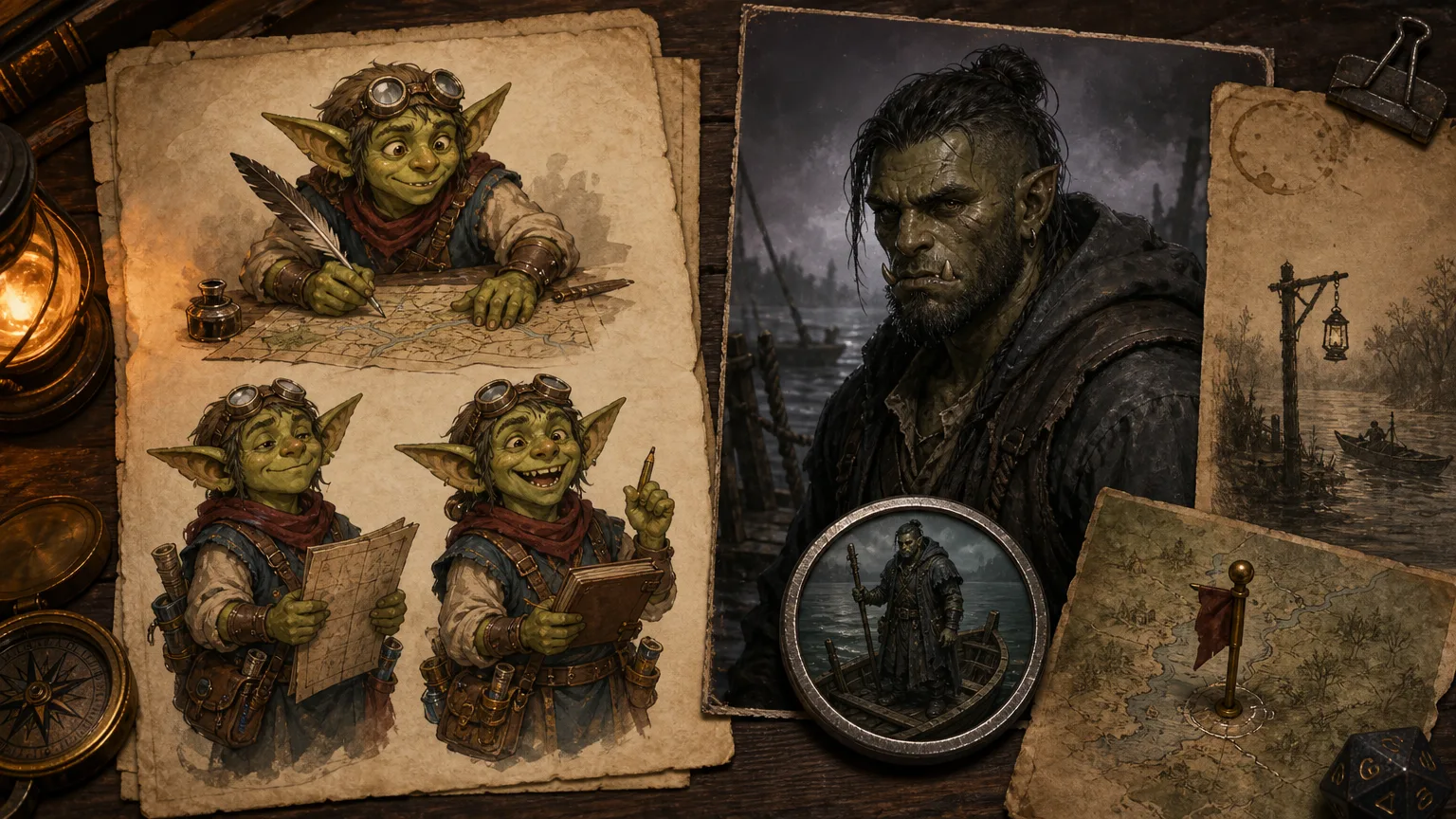
Neither approach makes the other wrong. It just changes what you have to do next. With Neolemon, I would expect to export my image and take it to the rest of my tabletop stack. With CharGen, I would expect the next step to be available in the same RPG-focused environment.
Where Neolemon is the better choice: a stable illustrated cast
Say I am running a cosy, bright campaign with a regular cast: a goblin cartographer, a dwarf paladin, and an anxious human wizard. I want a player handout after every session, and every handout should read as though it came from the same illustrated book. That is exactly where Neolemon looks appealing.
Its process separates the permanent parts of the character from the situation. I make the base character once, then ask for a new pose, an expression, or a scene. The practical benefit is not merely aesthetic. If the cartographer has a short green cloak, a missing left ear, and a battered brass telescope, those details have a better chance of remaining visible when I make the "arguing with the paladin in a flooded archive" version next month.
That sort of stability is difficult with a general text-to-image prompt alone. Even a good prompt can drift: the telescope becomes a spyglass, the cloak changes colour, and the face quietly becomes someone else. I would use Neolemon when accepting a tighter illustrated look is a feature, not a compromise.
There are two cautions. First, consistent does not mean automatic. I would still check the output before showing it to players, especially with non-human fantasy anatomy, layered armour, or a large party scene. Second, I would not describe it as the right choice for every style. A bleak oil-painted warlock, a rough pencil monster sketch, and an anime dragon rider may need a different visual direction.
Where CharGen is the better choice: art that has a job at the table
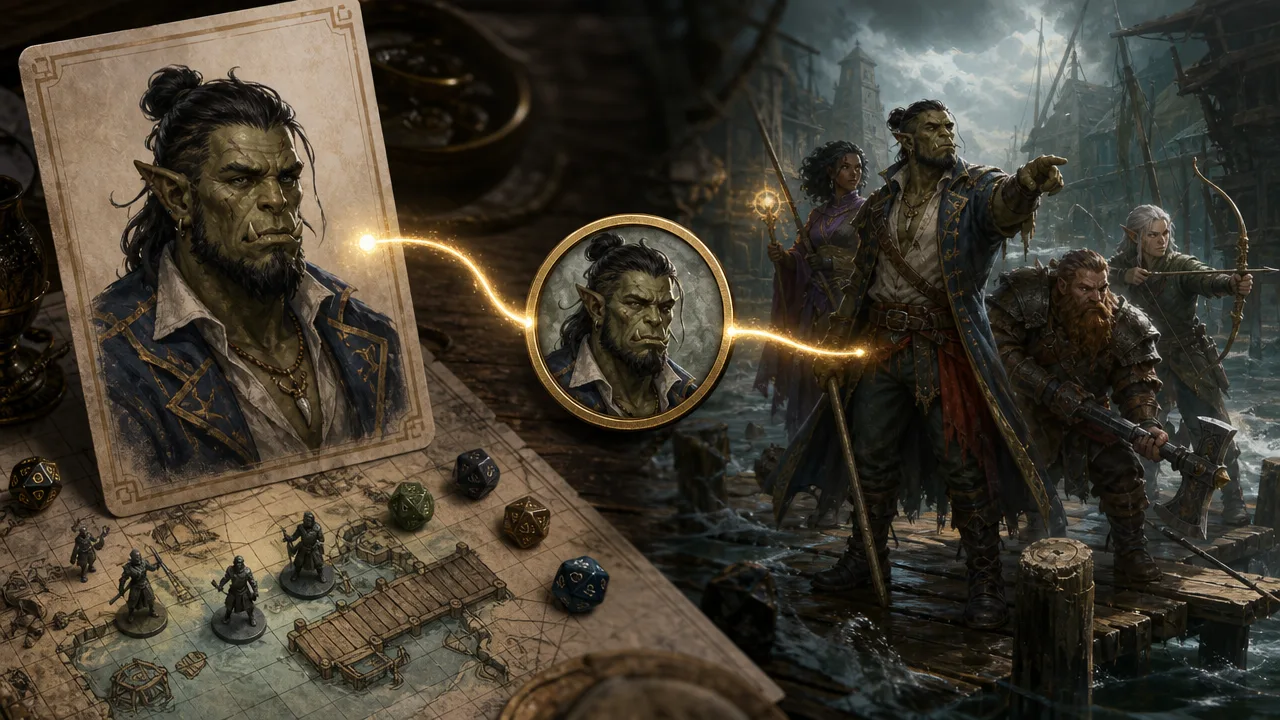
My usual campaign example is much messier. The party has decided that a ferry captain who appeared for five minutes is now their contact in the flooded district. I need a portrait, but the portrait needs to become an asset I can use on Roll20 or Foundry. I may later need that same character in a party scene, on a session recap image, or beside the tavern and quest that made them important.
That is where I reach for CharGen. I start on Generate with a concrete character brief: half-orc ferry captain, weathered green coat, chipped brass whistle, practical expression, rain-soaked dock district. I make the portrait first. Once one feels right, I send it through the Token Maker instead of opening another editor and faking a circular crop myself.
The token step sounds small until you have fifteen NPCs. In a real prep session, small handoffs are where time disappears. I prefer a tool that makes the D&D output obvious: portrait for the handout, token for the VTT, party image for the recap, then a proper NPC entry if this person keeps returning.
CharGen also gives me more room to choose the visual approach. I can work through its image models and style options instead of committing the campaign's visual identity to one cartoon lane. That freedom has a cost: I need to keep my own references and prompts organised when consistency matters. There is no magic button that excuses sloppy direction. I keep a short character card with the face, hair, silhouette, signature gear, colour accents, and the words I do not want to lose from one image to the next.
Models, editing, and the sort of control that matters
There is a trap in these comparisons where every feature becomes a tick in a huge table. I do not care that an app has twelve buttons if I only need three of them. For D&D, I care about three controls: can I set the visual identity, can I change an image without starting from zero, and can I produce something usable in the format my table needs?
Neolemon's controls are character-centred. Its D&D material lists Action Editor for pose changes and Expression Editor for face direction, eyes, eyebrows, and mouth shape. That is exactly the level of adjustment I would want for a repeated illustrated hero. If the ranger has to look worried during negotiations, then delighted after finding the hidden door, I do not need a new character. I need the same character with a changed emotional beat.
CharGen's controls are RPG-centred. The benefit is less about a single facial expression and more about moving between image tasks. I can make character art, revise an existing image, produce an item or monster, and work with the outputs as campaign material. When I want the same party to appear together, Party Portrait is a more direct answer than rebuilding a scene from separate portraits in another product.
My rule is plain. Use a character-identity editor when the personality of the illustration is the project. Use a multi-model RPG image workspace when the image is one part of the prep kit.
Free start and price: compare the job, not a headline number
The most concrete current Neolemon numbers I could verify are 20 free credits for new users, a Creator plan starting at $29 per month with 600 credits, and Character Turbo at 4 credits per image. That gives a rough ceiling of 150 Character Turbo generations before other activity, although real projects use credits on revisions and experiments too. It is a sensible way to test whether its illustrated consistency is worth a subscription for your campaign.
CharGen is free to start with a gold-based system, and the cost is shown before an image action rather than hidden until after the result. The exact gold cost changes with the selected image model, resolution, and work being done, so I would not flatten it into a fake monthly comparison. Open the generator, choose the model you actually want, and judge the cost against the result you need.
| Question | Neolemon | CharGen |
|---|---|---|
| Can I test it before paying? | Yes, 20 free credits are advertised for new users | Yes, free-to-start gold workflow |
| What is the verified paid starting point? | Creator plan starts at $29/month | Costs depend on the selected image action and are shown before generation |
| What is the clearest value test? | Build one recurring illustrated character through several scenes | Make one D&D portrait, token, and campaign-use image you will actually use |
| What should I not assume? | That every art style fits its cartoon-first focus | That one prompt alone will keep a character identical in every future scene |
Do the smallest useful test. For Neolemon, make a base character and three emotional or action variations. For CharGen, make a portrait, a token, and a party or campaign scene. In both cases, evaluate the output at the size you will show players, not only as a pretty thumbnail.
Two workflows I would actually use
Workflow one: the recurring NPC
For an illustrated campaign diary, I would begin with Neolemon. Build the NPC once, make a neutral portrait, then create the three scenes the campaign is likely to reuse: greeting the party, arguing in public, and reacting to bad news. Give the NPC a short visual card outside the tool anyway. Write down the coat, hairstyle, eye colour, prop, and pose tendencies. Consistency works best when the human running the campaign is consistent too.
For a VTT-heavy campaign, I would begin with CharGen. Make the portrait with a brief that names the role and a visual tell. Turn the approved portrait into a token. If the NPC becomes important, create their related campaign entity and put their image in the session material where I will see it before play. The difference is not image quality. It is that the work ends in a playable object.
Workflow two: the party scene after a level-up
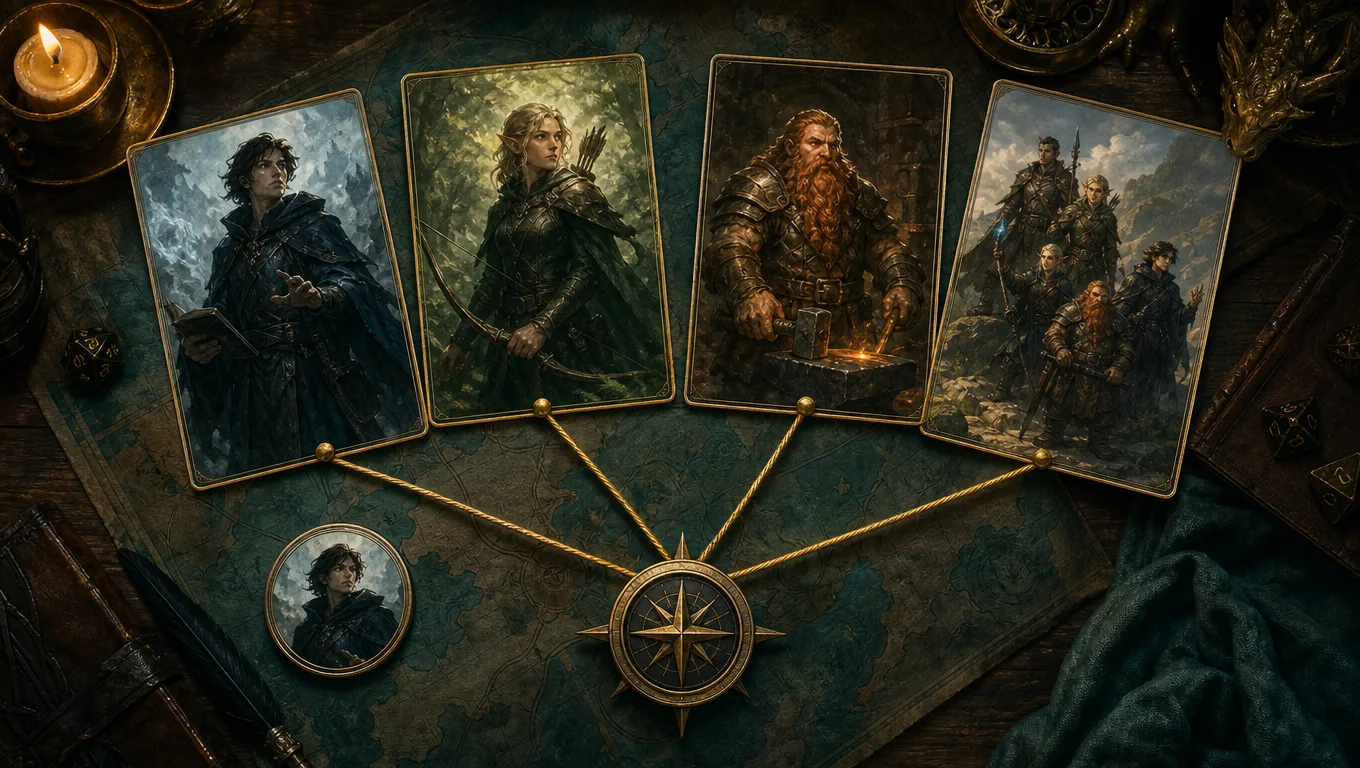
When I want a group shot after a major campaign change, CharGen is my starting point. I would update each character's few non-negotiable details, then use Party Portrait to set the group and scene. That is faster than hoping a generic group prompt remembers each character's relative scale, gear, and role. I still inspect it carefully. A visual victory lap is not improved by a bard holding the barbarian's axe upside down.
If the group has already committed to Neolemon's illustrated look, I would keep the individual characters there and compose the scene using its multi-character route. That can make sense when the visual identity itself is the campaign's signature. I would not switch tools just because a comparison table told me to. Existing art direction has value.
Which should you choose?
Choose Neolemon if you want a controlled, cartoon or illustrated recurring cast and you are happy to handle the tabletop handoff yourself. Its consistent-character focus is specific enough to be useful, especially for campaign comics, story recaps, and scenes where expressions matter.
Choose CharGen if you want AI D&D character art to feed directly into game prep. It is the better fit for a portrait that must become a token, a party scene, an NPC, or part of the wider campaign workflow. It also makes more sense if your table uses several visual styles rather than one illustrated treatment.
I would not choose either only because a search result says it is the "best". Make one real character with the awkward details your campaign needs. Test a second pose, a token, and a group scene if those are part of the job. The right tool is the one whose output you use at the table, not the one that gives you the nicest first thumbnail.
Create a D&D Character in CharGenFrequently Asked Questions
Is CharGen or Neolemon better for D&D character art?
Neolemon is the stronger fit for a stable cartoon or illustrated character across many expressions and scenes. CharGen is the stronger fit when the image needs to become tabletop content, such as a D&D portrait, VTT token, party image, or campaign asset.
Which tool is better for consistent characters?
Neolemon is specifically designed around character consistency in a cartoon or illustrated style. CharGen can keep a campaign more consistent through good reference material, prompts, and image editing, while also giving the character a route into tokens, party art, and RPG assets.
Can CharGen or Neolemon make VTT tokens?
CharGen has a dedicated Token Maker for converting a character image into a tabletop-ready token. Neolemon focuses on character illustrations, so you should plan on taking the finished image to your preferred token-making step.
Is there a free way to test CharGen and Neolemon?
Neolemon advertises 20 free credits for new users. CharGen is free to start with a gold-based system. Test each service with the same character brief and judge the result on the job you actually need it to do.