
The Well Market
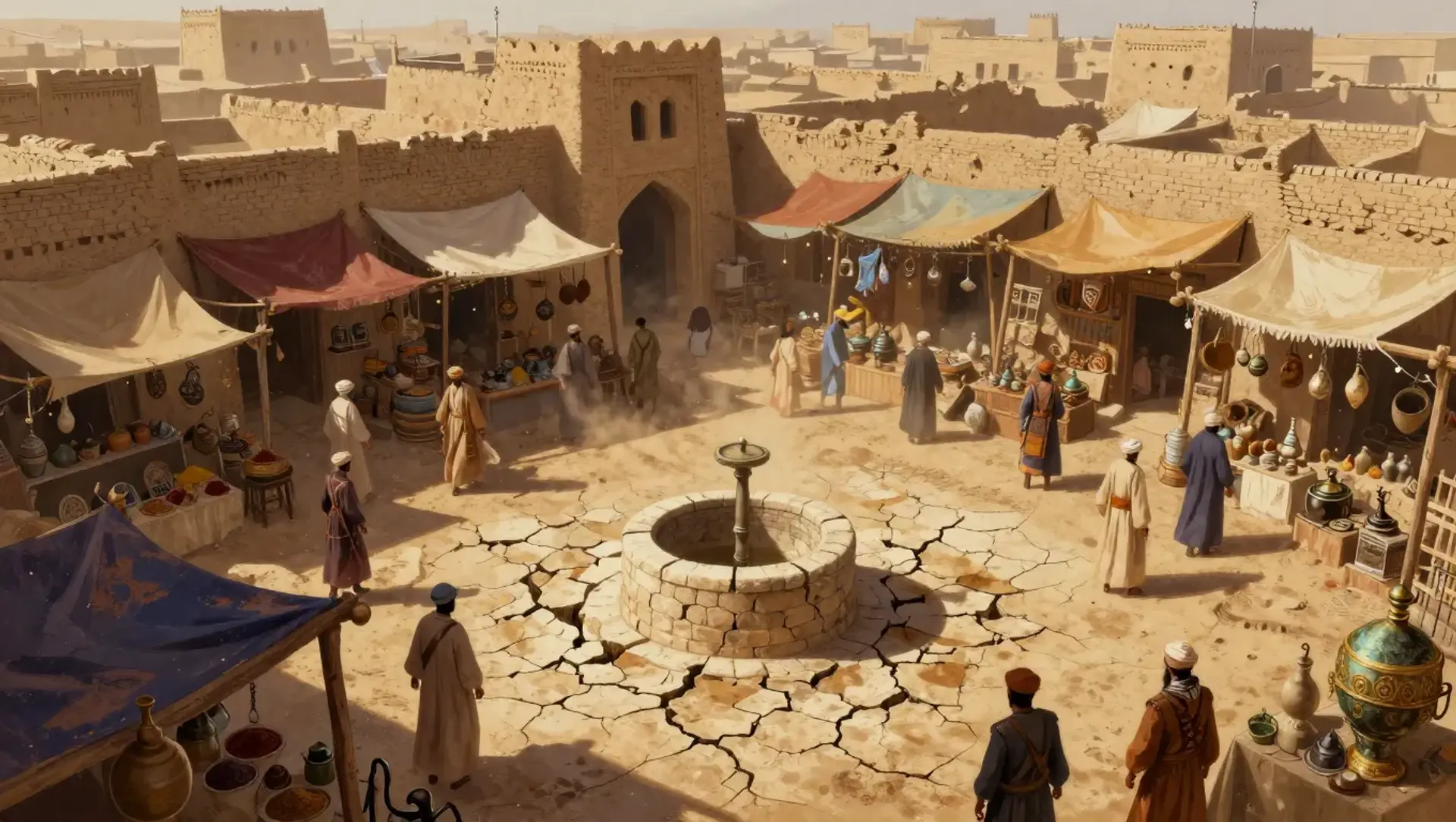
This large desert bazaar sprawls across a cracked square and several adjoining lanes at the center of a rundown village. Leaning stalls, faded awnings, and sun-bleached walls crowd around a shallow well and a broken fountain that no longer runs. Even in its worn state, the bazaar remains the village’s heart, where Elves, Humans, Dwarves, and Orcs come to trade water, food, tools, and rumors. It is loud by day, dangerous by night, and essential to everyone who hopes to survive the desert.
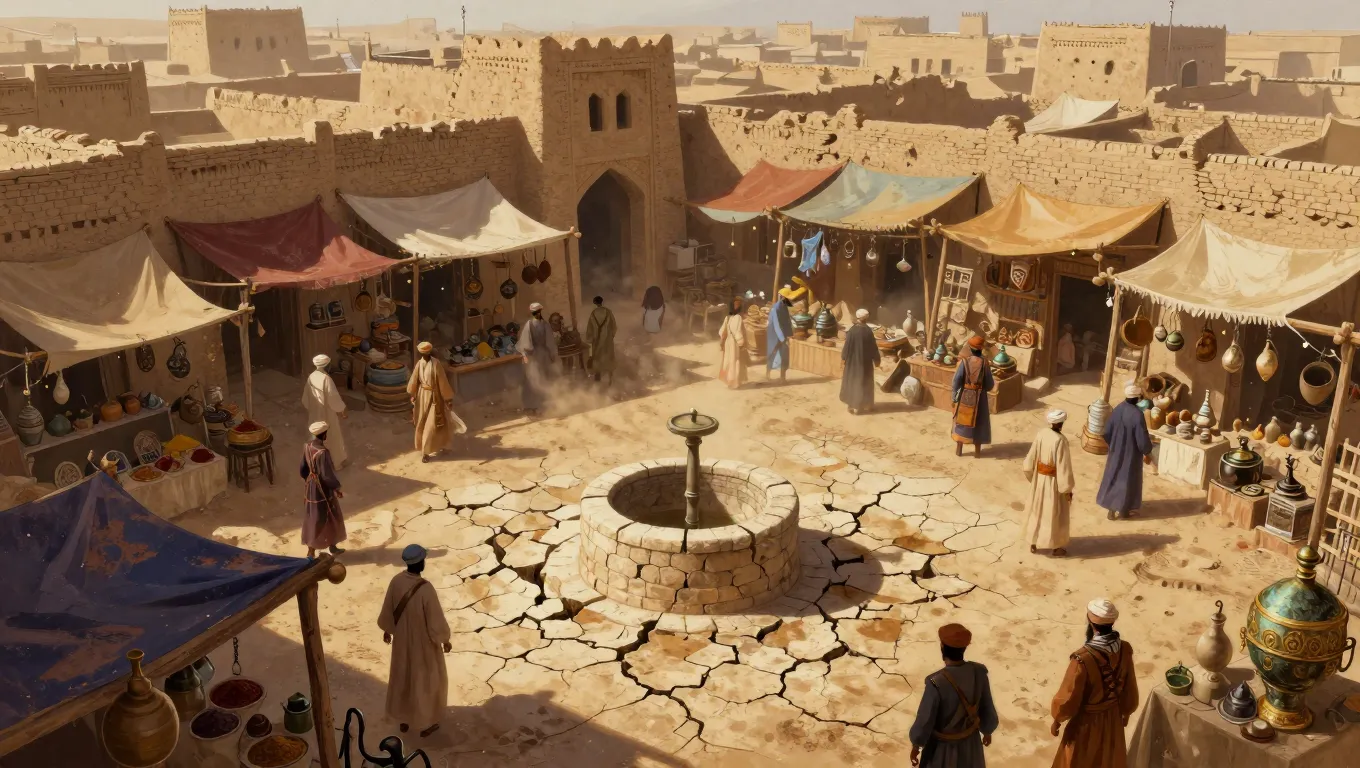
This large desert bazaar sprawls across a cracked square and several adjoining lanes at the center of a rundown village. Leaning stalls, faded awnings, and sun-bleached walls crowd around a shallow well and a broken fountain that no longer runs. Even in its worn state, the bazaar remains the village’s heart, where Elves, Humans, Dwarves, and Orcs come to trade water, food, tools, and rumors. It is loud by day, dangerous by night, and essential to everyone who hopes to survive the desert.
Sharp, patient, and hard to impress, with a practical streak and a quiet sense of humor
History
Stalls and Layout
The bazaar is divided into rough lanes rather than formal stalls. The most reliable sellers keep to the center row under patched awnings, where cloth canopies are tied to leaning poles and old date-palm beams. The outer lanes hold cheaper goods, used gear, scavenged pottery, dried meat, rope, scrap metal, and questionable medicine. The east end is where caravan crews unload after sunset, while the west edge near the well is where day laborers, beggars, and casual buyers crowd together. Prices are usually a little higher than in a proper trade town, but the bazaar is still the only place for miles where every race can bargain face to face.
Common Goods and Trade
The bazaar’s trade is built around survival. Common goods include water skins, salt, lamp oil, camel tack, pottery, onions, millet, bolts of cloth, arrow shafts, spearheads, iron pots, leather sandals, spices, and repair work for tools and weapons. Elves tend to bring dyed cloth, carved trinkets, medicine, and fine needles. Dwarves usually handle repairs, metalwork, and sturdy hardware. Humans dominate food, hauling, and general trade. Orc merchants are known for hides, beasts of burden, hard travel rations, and practical weapons. A few high-end buyers occasionally seek relics, desert glass, old coins, or map fragments from ruins in the dunes.
Trade Customs and Prices
Most merchants here do not trust coin alone. Water rights, labor favors, salt, bolts of cloth, and protection on the road all count as bargaining currency. A traveler who wants a fair deal should be ready to offer something practical, not just gold. Prices shift with the weather, the caravan routes, and rumors of trouble in the desert. The local custom is to haggle loudly but finish with a shared cup of tea if the deal is sealed. Anyone who refuses tea is often treated as either dishonest or dangerous.
Security and Dangers
The bazaar is loosely watched by a rotating market guard made up of village toughs, caravan guards, and a few retired adventurers. They do not prevent every theft, but they do keep open violence low and settle disputes before blades come out. The biggest threats are pickpockets, counterfeit water seals, bad coin, and the occasional raider who tries to blend into the crowd. After dark, most stalls are shuttered and the outer lanes become unsafe, though a few illicit dealers still work by lantern light.
Denizens
Sharp, patient, and hard to impress, with a practical streak and a quiet sense of humor
An experienced dealer in grain, cloth, and caravan contracts. She is famous for spotting lies in a heartbeat and never overpaying for anything.
A broad-shouldered dwarf who repairs tools, armor, and wagon parts from a cluttered forge stall. He grumbles constantly but does honest work.
An elf spice merchant who keeps immaculate records and knows which caravans are late before anyone else. He trades information as readily as saffron.
An orc guard captain who enforces order in the market with a heavy staff and a sharper memory than most expect. She prefers fines to bloodshed.
Rumors & Plot Hooks
- 1.A hidden cistern beneath the bazaar still holds clean water, but only a few people know how to reach it.
- 2.A caravan from the south vanished in the dunes, and some of its cargo may have been quietly sold here.
- 3.One of the tea sellers is passing messages for raiders outside the village.
- 4.A buried vault beneath the old fountain contains goods left by merchants who never returned.
- 5.The market guard has been paying extra attention to a certain stall because counterfeit coins have started appearing.
Classified Entry
Beneath the broken fountain is a sealed service tunnel leading to an older underground storage chamber. The chamber still contains a hidden cache of emergency supplies, a few valuable trade records, and a map showing a lost route to an oasis that has not been used in years.
Turn The Well Market into a sheet
A high-res, share-ready sheet you can post or print.