
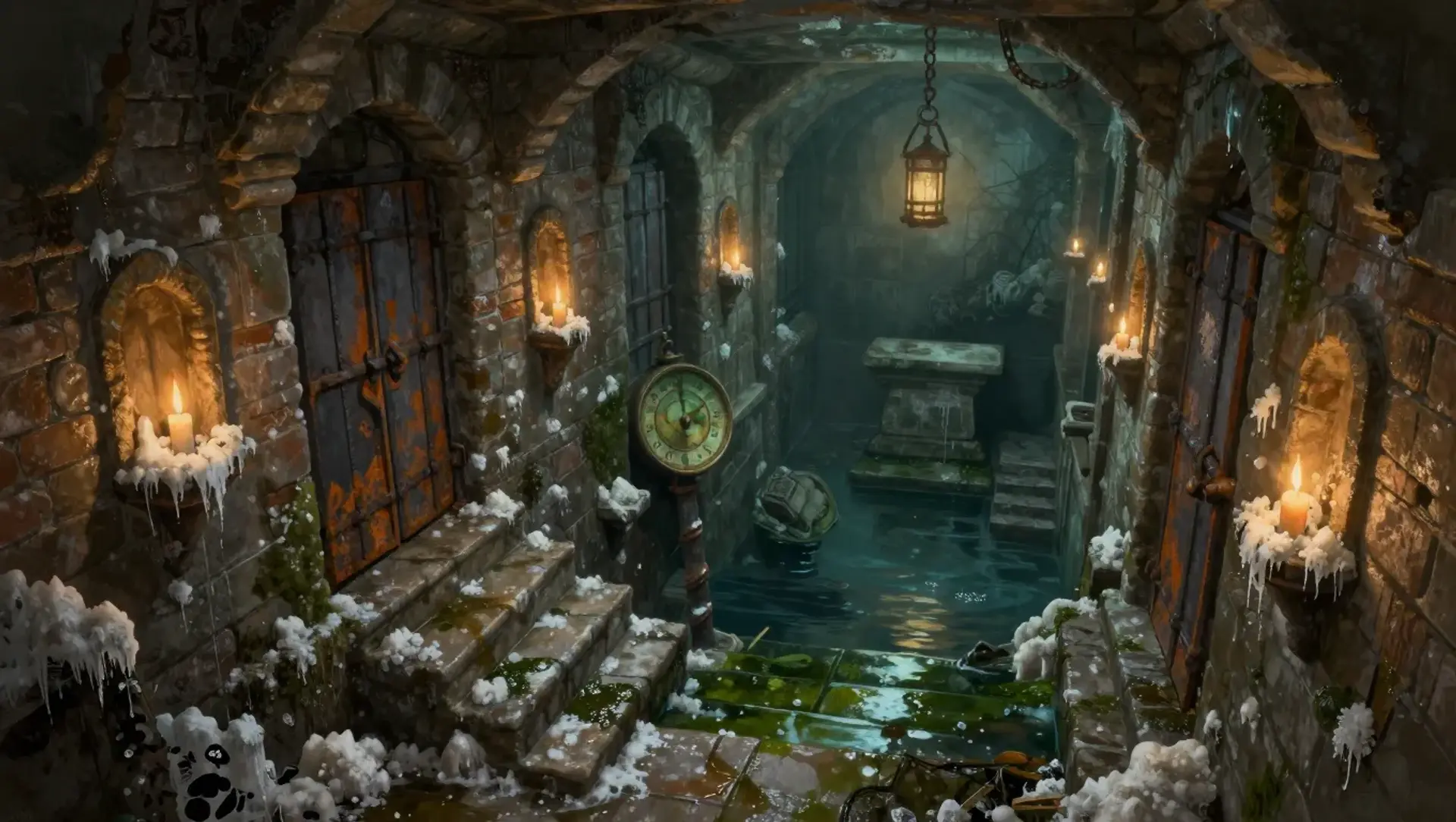
The Drowned Stair
The Drowned Stair is a sealed descent beneath the temple in WaterWall, a narrow stone stairway that drops below the foundations and vanishes into the tidewater undercity. The first half is dry at low tide, though slick with moisture and lined with old drain channels. Farther down, the steps disappear under dark water that rises and falls with the sea. Officially, no one goes there. In practice, everyone with influence in WaterWall knows the path, knows the hours when it can be used, and knows better than to ask who else has taken it.
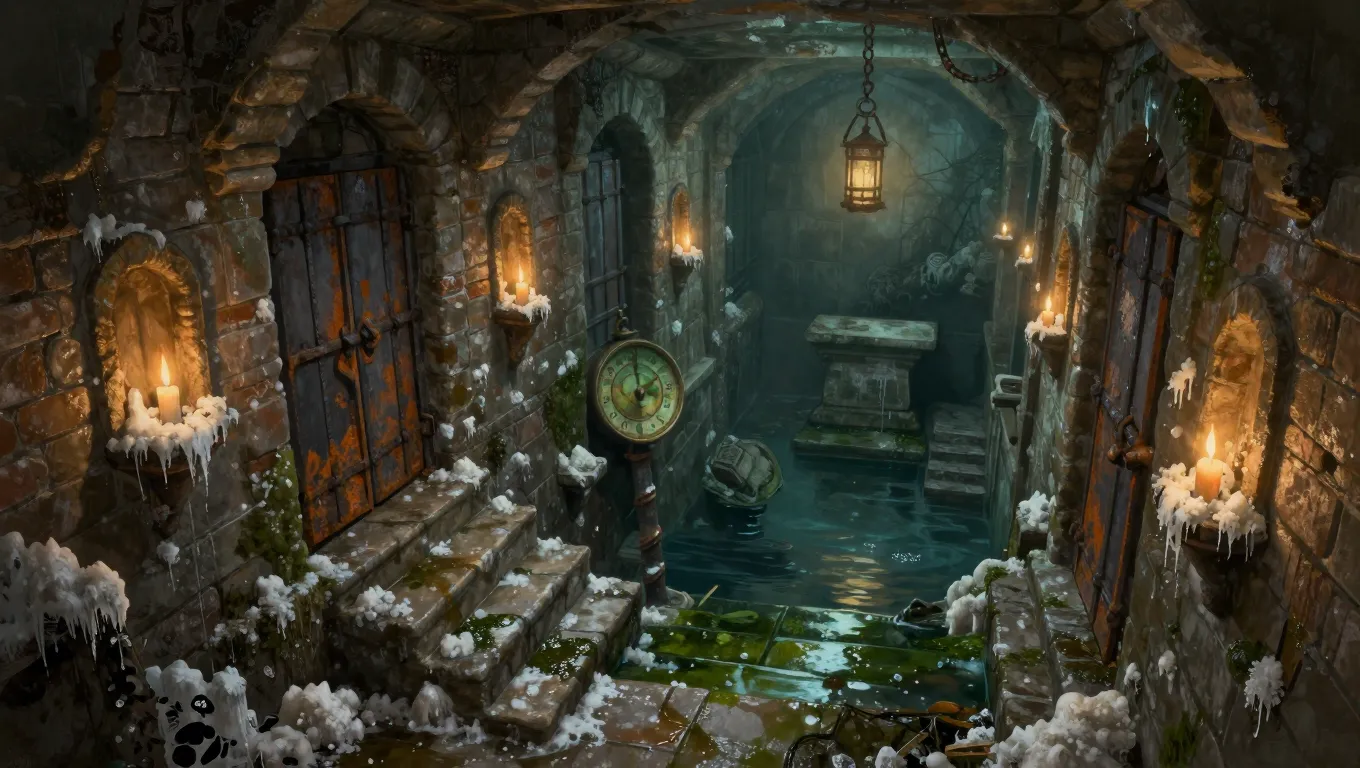
The Drowned Stair
Cold, damp, and hushed, with the sound of water moving somewhere below the floor and the faint smell of brine, wax, and old stone
The Drowned Stair is a sealed descent beneath the temple in WaterWall, a narrow stone stairway that drops below the foundations and vanishes into the tidewater undercity. The first half is dry at low tide, though slick with moisture and lined with old drain channels. Farther down, the steps disappear under dark water that rises and falls with the sea. Officially, no one goes there. In practice, everyone with influence in WaterWall knows the path, knows the hours when it can be used, and knows better than to ask who else has taken it.
Reserved, practical, and protective of its secrets
History
Private Rites
The stair is not open for public worship, but the priests use it for private rites tied to mourning, cleansing, and oath-making. At low tide, when the lower steps are merely wet instead of submerged, the temple will quietly send a trusted acolyte or two below with lanterns and salt bowls. These visits are never recorded in the temple ledger. Locals believe the stair is where broken vows are formally buried, and a small offering of black wax or river salt is often left at the top landing by those hoping to mend a secret wrong.
Sacred Relics
The lower landings hold a handful of objects that the temple claims are too dangerous or too sacred to display. Most are practical things rather than glittering relics: a cracked bronze basin said to have been used when WaterWall was founded, a tide-marked prayer wheel, several sealed ossuary jars, and a ring of iron keys for doors that no longer exist. One reliquary, a lead box bound in waxed cord, is never opened in the temple itself. The priests insist that whatever is inside is best left to the sea and the saints.
Security and Access
The stair is watched more carefully than the temple admits. A pair of waterlogged iron doors block the first descent, but the real security lies in custom, not locks. Only the high priest, a senior acolyte, and two city officials are said to know the full route downward. Hidden bells in the walls can be rung from above if someone tries to force the doors. At high tide, the lower chambers flood quickly enough to discourage intruders, and the current can pin the unwary against the steps.
Known Visitors
Among the priesthood, the stair is treated as a place for difficult conversations. Confessions that might ruin families, trade houses, or public office are often brought here and spoken in whispers at the edge of the water. Several prominent people in WaterWall are rumored to have met below the temple to settle disputes, trade favors, or bury evidence of scandal. Officially, the temple denies such meetings. Unofficially, it keeps careful track of who has come and gone.
Denizens
Reserved, practical, and protective of its secrets
The temple's public face and unofficial keeper of the stair's keys. She is calm, watchful, and speaks as if every sentence has been weighed twice.
A soft-spoken acolyte who records private visitors in a ledger that does not exist. He is nervous in daylight and unnervingly precise at night.
An older city official who knows the stair's use for quiet negotiations and resents how often the temple holds leverage over civic affairs. He is polished, patient, and deeply concerned with appearances.
Rumors & Plot Hooks
- 1.A hidden chamber below the flooded steps contains a map to tunnels under all of WaterWall.
- 2.The stair is where the temple disposes of evidence from scandals that would shame the city.
- 3.A priest once went down during a storm and came back speaking with the voice of someone long dead.
- 4.Important people in WaterWall are quietly blackmailed with whatever is stored in the lower shrine.
- 5.There is a dry passage beneath the floodline that never appears on any official plan.
Classified Entry
Behind the lowest flooded landing is a narrow maintenance passage sealed with old mortar. It leads to a private chamber where the temple, and a few city officials, store kompromat, oath records, and one ancient tide chart that predicts when parts of WaterWall will fail. The chamber also contains a hidden escape route into the seawall, known only to the highest-ranking priests and the city reeve.
Turn The Drowned Stair into a sheet
A high-res, share-ready sheet you can post or print.