
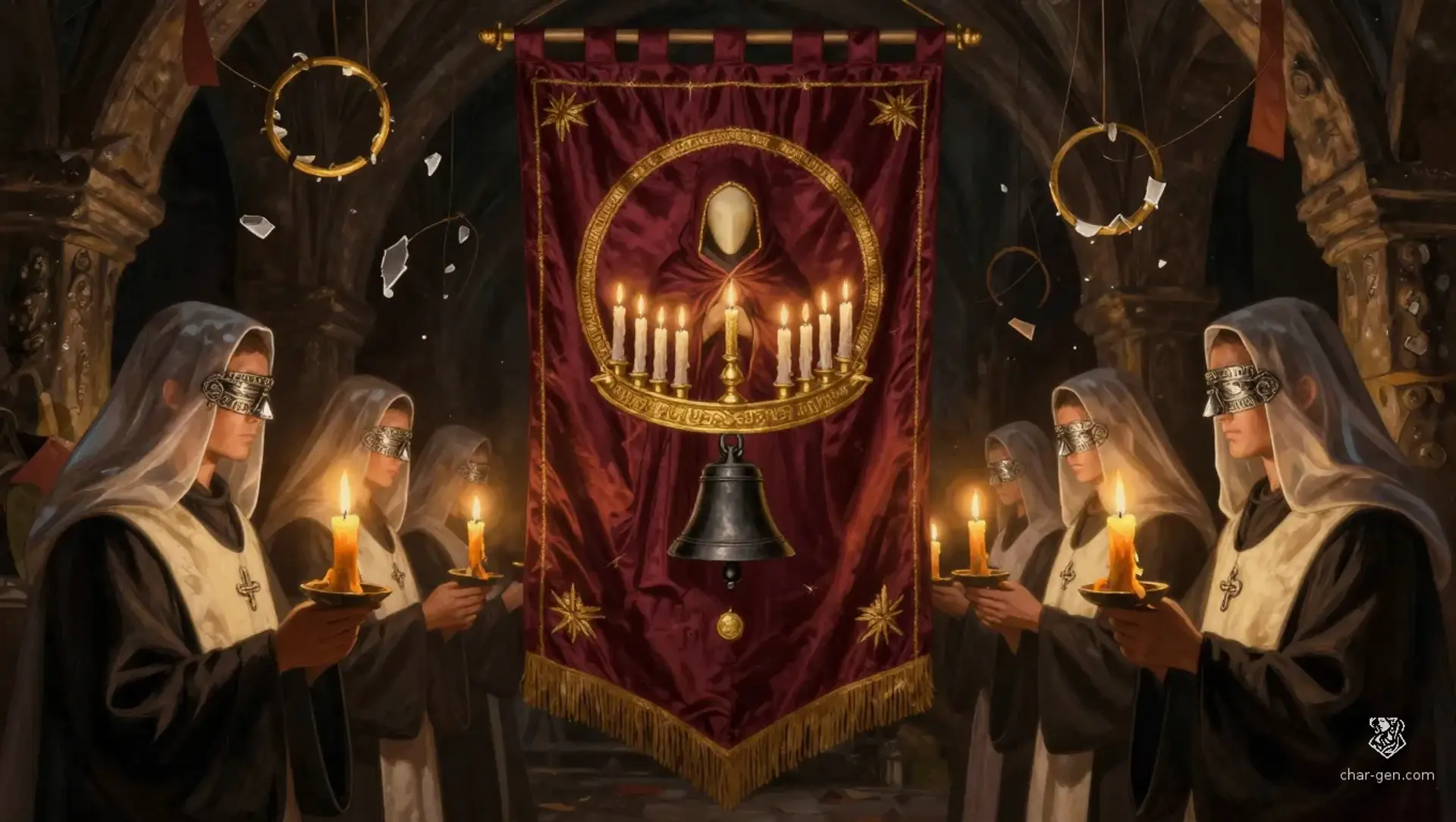
The Order of the Still Bell
In its first decade, the cult was little more than a mourning circle hidden beneath Saint Veyr's church. It survived by helping the poor, burying the unclaimed, and trading labor for protection. When the famine ended, many drifted away, but the remaining members had learned something dangerous: silence could be weaponized. They could share secrets without speaking, evade informants, and move as one body through a hostile city. Their second decade brought expansion into the river wards and market lanes, where their silent processions became a local curiosity and then a feared sign that someone was about to disappear. The watershed moment came nine years ago during the Silence of Burg. A fire in the scriptorium killed seventeen clerks, erased tax records, and left three competing authorities blaming each other. The cult stepped in as peacekeepers, offering food, burial rites, and quiet labor. In exchange, it gained access to sealed archives, derelict shrines, and the ear of desperate citizens. From that crisis onward, it stopped being a comfort circle and became an institution. Today it is no longer merely a group of believers. It is a regional network of silence, patronage, and increasingly audacious theology.
Turn The Order of the Still Bell into a sheet
A high-res, share-ready sheet you can post or print.